What machines are included in an HDPE water pipe extrusion line?
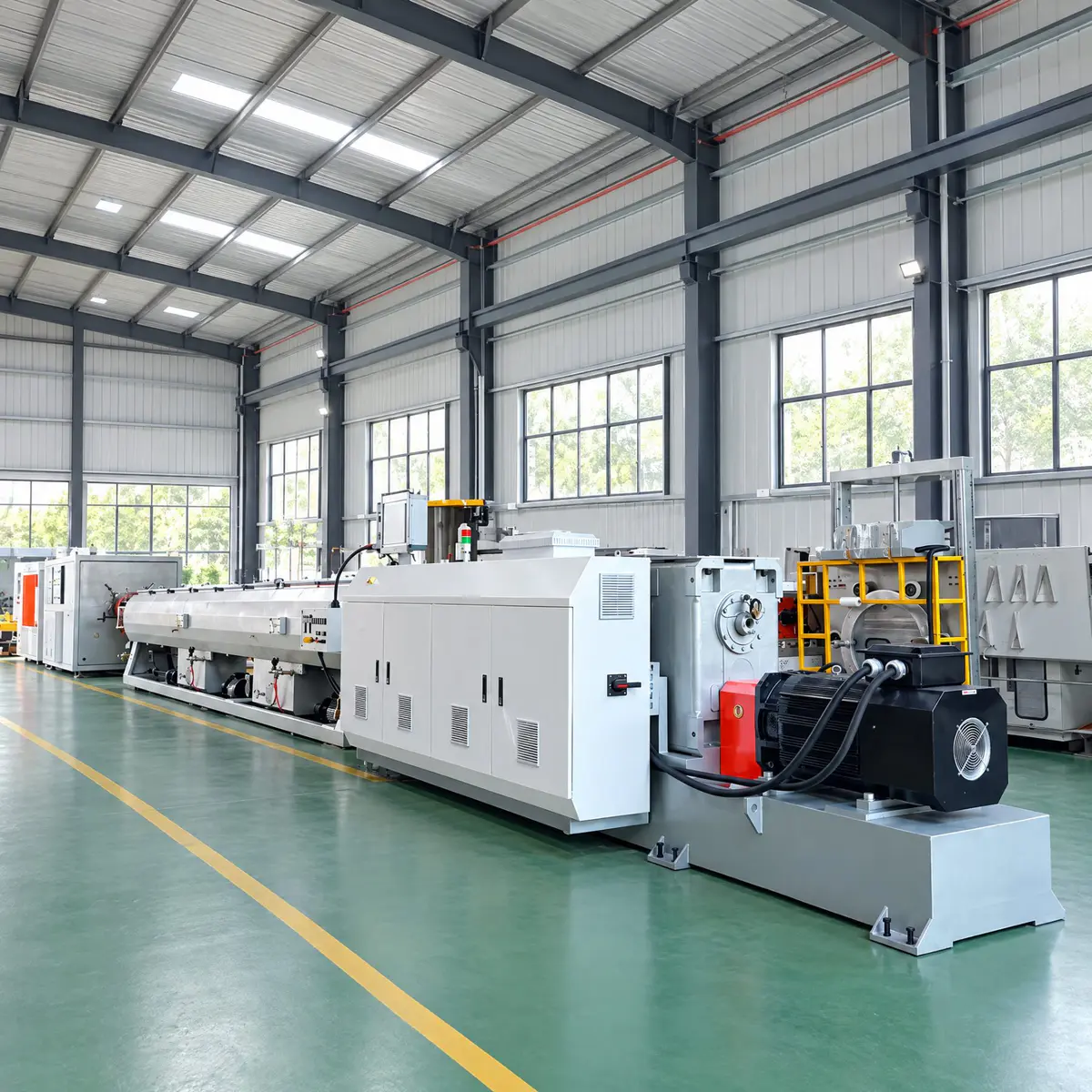
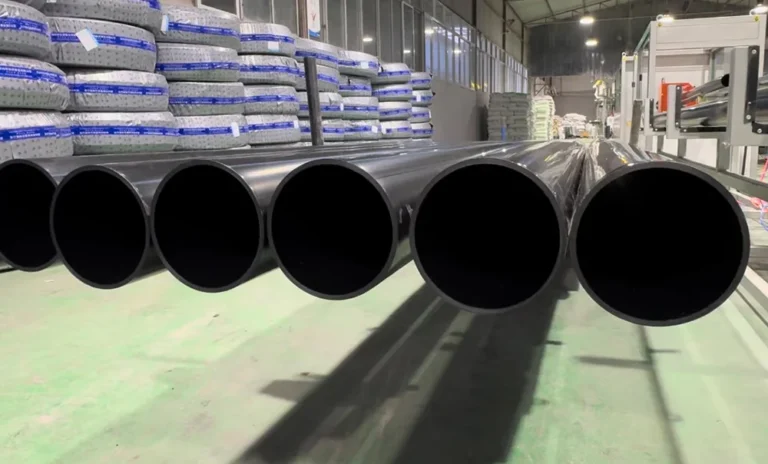
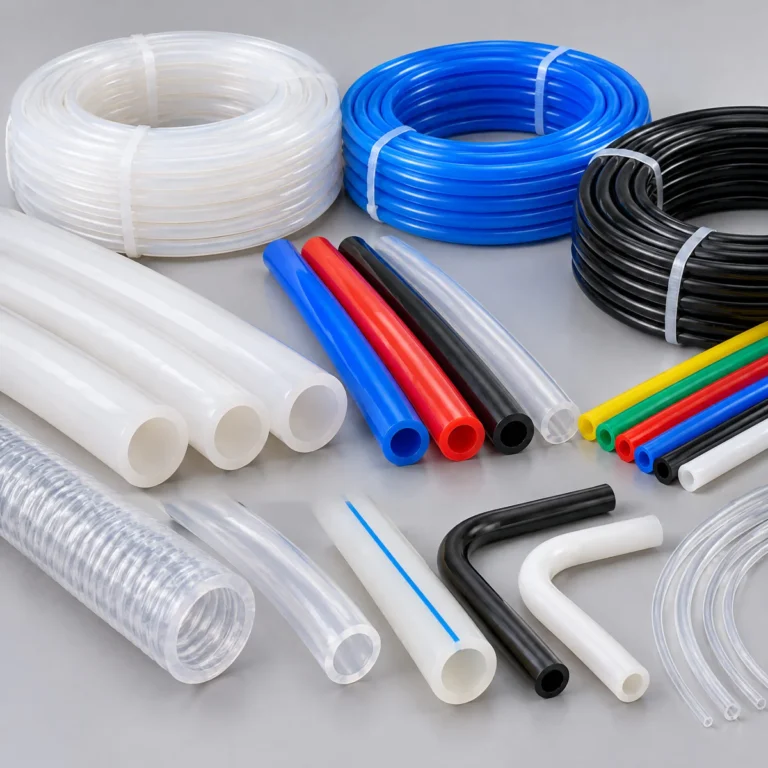
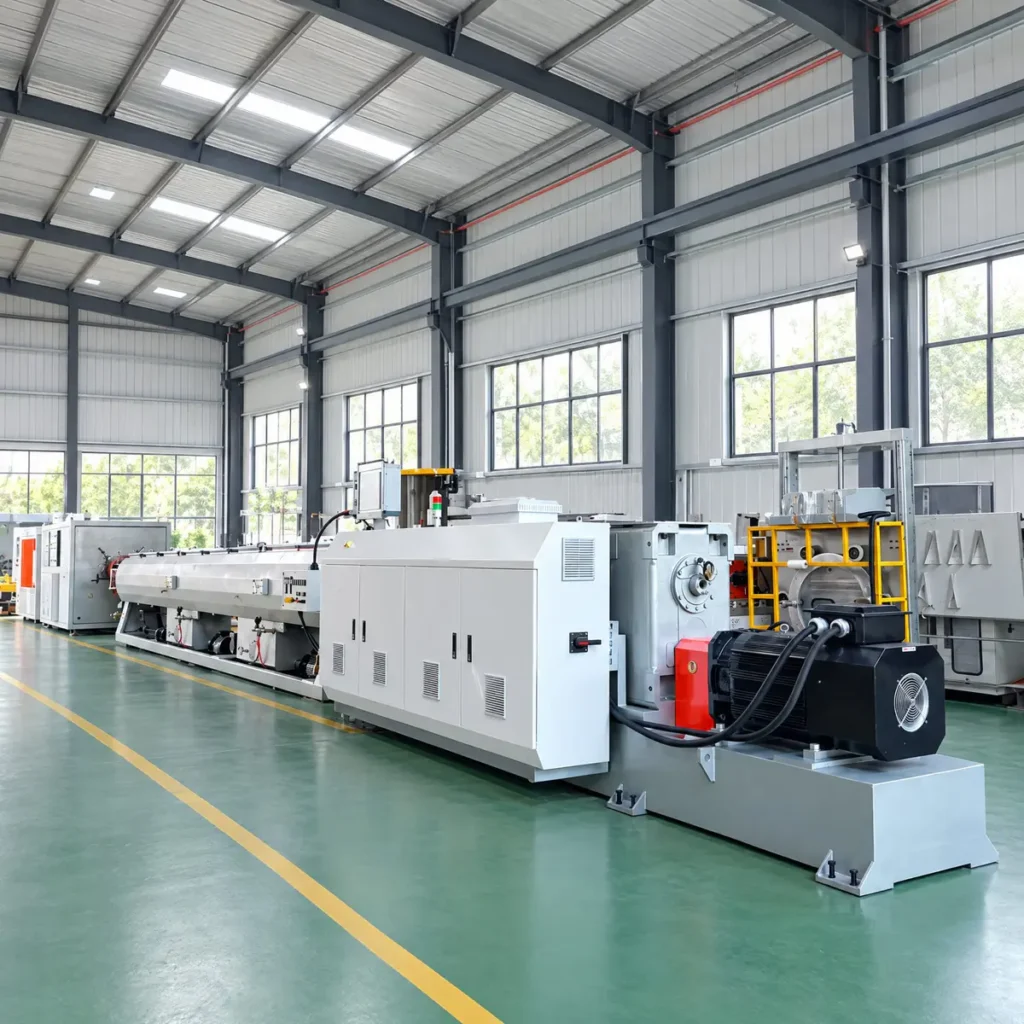
HDPE water pipe extrusion lines are complete production systems that convert PE/HDPE raw material into finished pipes for water supply, drainage, irrigation, and industrial pipeline applications. For buyers planning a medium or large diameter pipe project, understanding each machine in the line helps them compare configurations, estimate capacity, and choose a reliable supplier.
This article explains the main machines included in an HDPE water pipe extrusion line, using the Φ110–Φ315mm PE/HDPE three-layer pipe extrusion production line supplied by QTech-Machinery as a practical reference.
1. What is the basic process of an HDPE water pipe extrusion line?
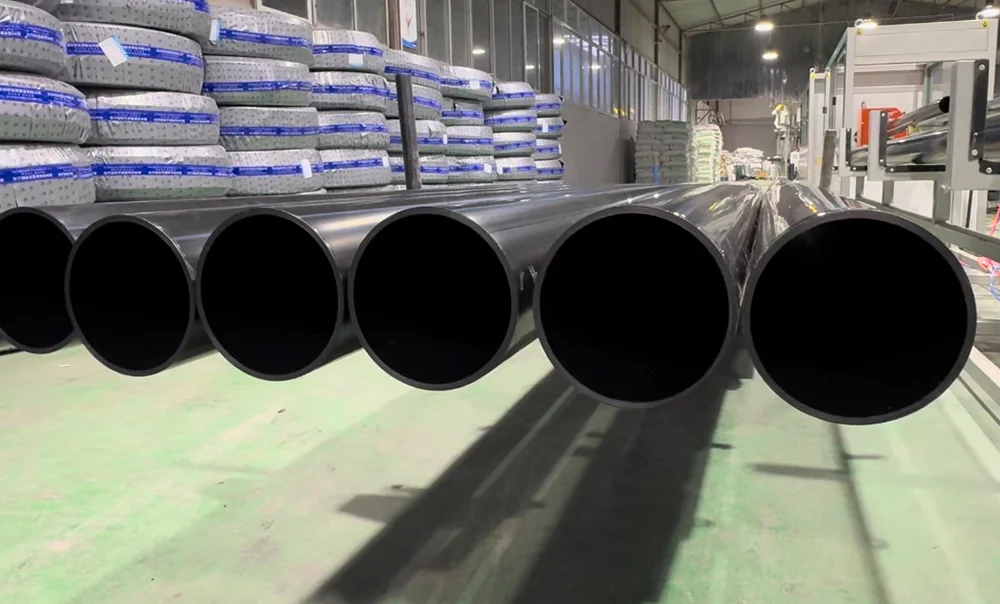
An HDPE water pipe extrusion line usually includes feeding, drying, extrusion, co-extrusion, die forming, vacuum calibration, cooling, haul-off, cutting, and stacking.
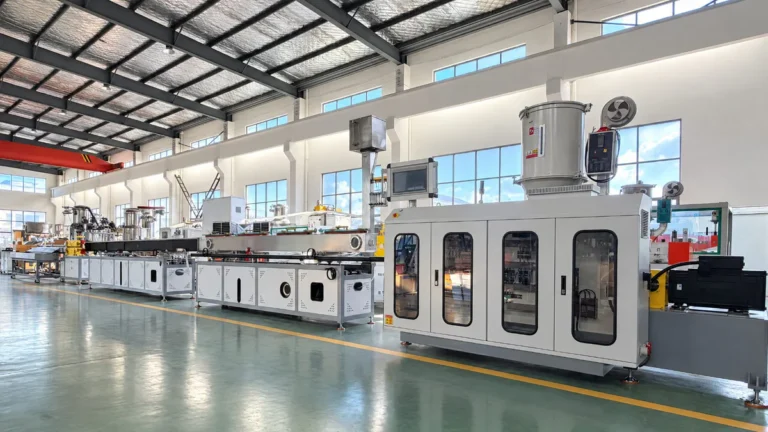
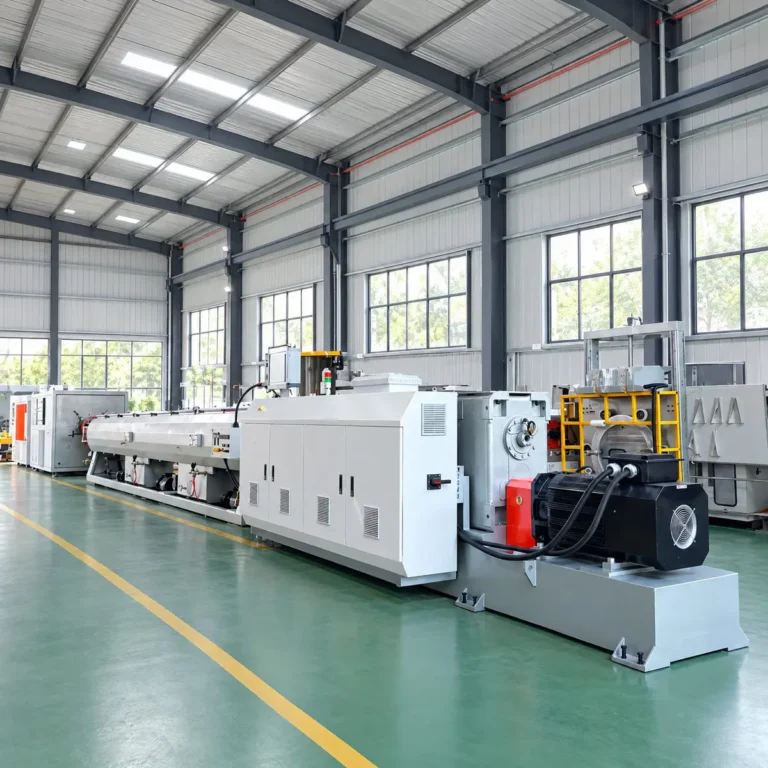
A complete HDPE water pipe extrusion line is not just one extruder. It is a continuous production system where each machine affects the final pipe quality. The general process starts with PE/HDPE raw material loading and drying, then moves to plasticizing and extrusion through the main extruder. The melt enters the pipe die head, where it is shaped into a round pipe.
After pipe forming, the hot pipe passes through a vacuum calibration tank for sizing and roundness control. Then it goes through spray cooling tanks, haul-off equipment, a cutting machine, and finally an automatic stacker or collection system.
In the QTech-Machinery Φ110–Φ315mm PE/HDPE three-layer pipe extrusion production line, the complete process includes automatic feeding, hopper drying, SJ75/38 main extrusion, SJ50/33 auxiliary extrusion, SJ25/25 color line extrusion, three-layer die head forming, 9m vacuum calibration, two 8m spray cooling tanks, four-caterpillar servo haul-off, chipless cutting, and automatic pneumatic stacking.
This type of configuration is suitable for customers who need one complete HDPE water pipe extrusion line for water, drainage, and irrigation pipes, instead of purchasing separate machines from different suppliers.
Related internal link: Φ110–Φ315mm PE/HDPE Three-Layer Pipe Extrusion Production Line Case
Industry references also describe pipe extrusion lines as integrated systems that include material handling, extruder, die, vacuum tank, cooling, haul-off, cutter, and downstream equipment.
2. Why does the line need automatic feeding and drying equipment?
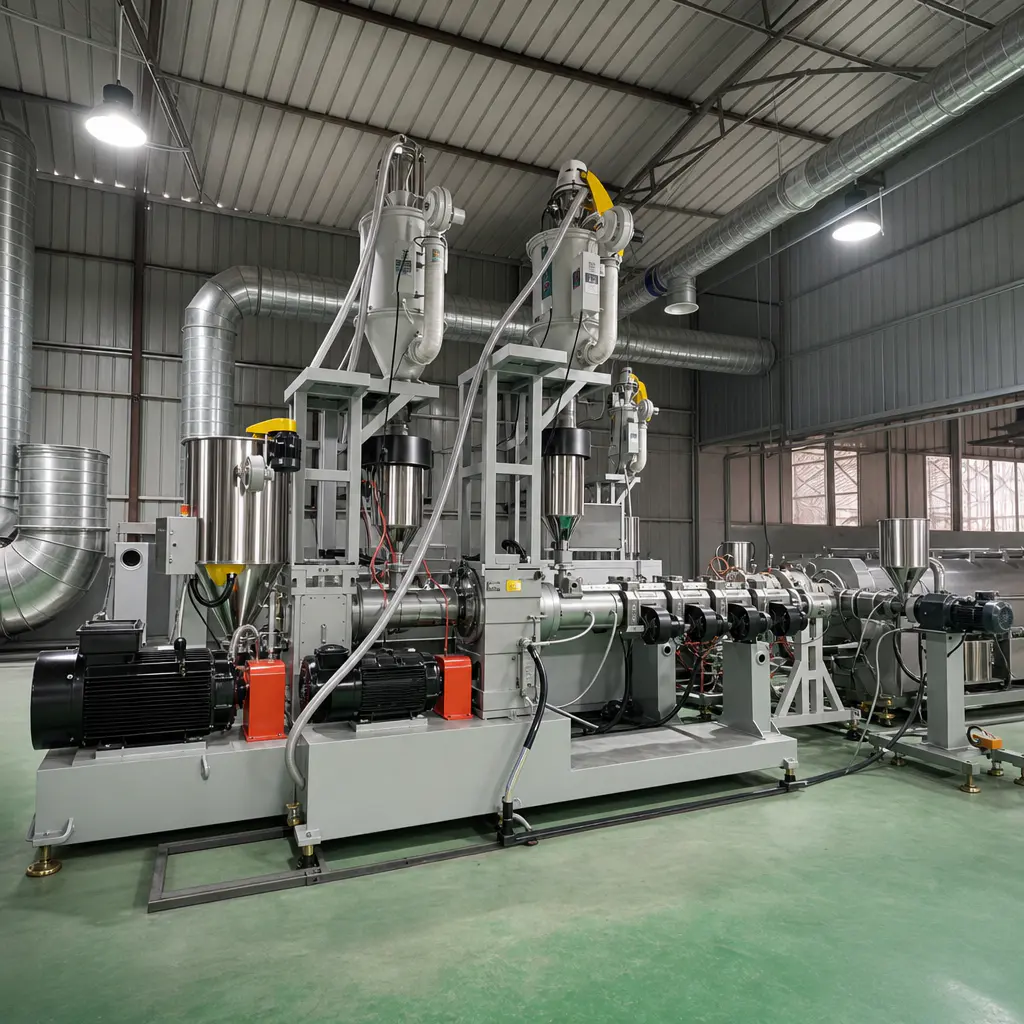
Automatic feeding and drying equipment help keep the raw material supply stable and prepare PE/HDPE material for more consistent extrusion.
The first stage of an HDPE pipe production line is material handling. Vacuum loaders transfer PE/HDPE raw material into the hopper automatically, reducing manual labor and helping the line run continuously. Hopper dryers prepare the material before extrusion, which is especially useful when production conditions require moisture control and cleaner processing.
For the Φ110–Φ315mm PE/HDPE three-layer pipe extrusion line, QTech-Machinery configures vacuum loaders and hopper dryers for the main and auxiliary extruders. This allows raw material to be fed into the extrusion system smoothly and reduces interruptions during production.
A stable feeding system is important because inconsistent material supply may affect extrusion pressure, output stability, wall thickness, and surface quality. In commercial pipe manufacturing, this is not a small detail. It directly influences the ability of the production line to run for long periods with stable pipe dimensions.
QTech-Machinery’s advantage is that the feeding and drying system is matched with the extruder output, pipe diameter range, and customer production target. Instead of providing a general machine list, we design the material preparation section according to the actual pipe application and capacity requirement.
3. What role does the main extruder play in HDPE pipe production?
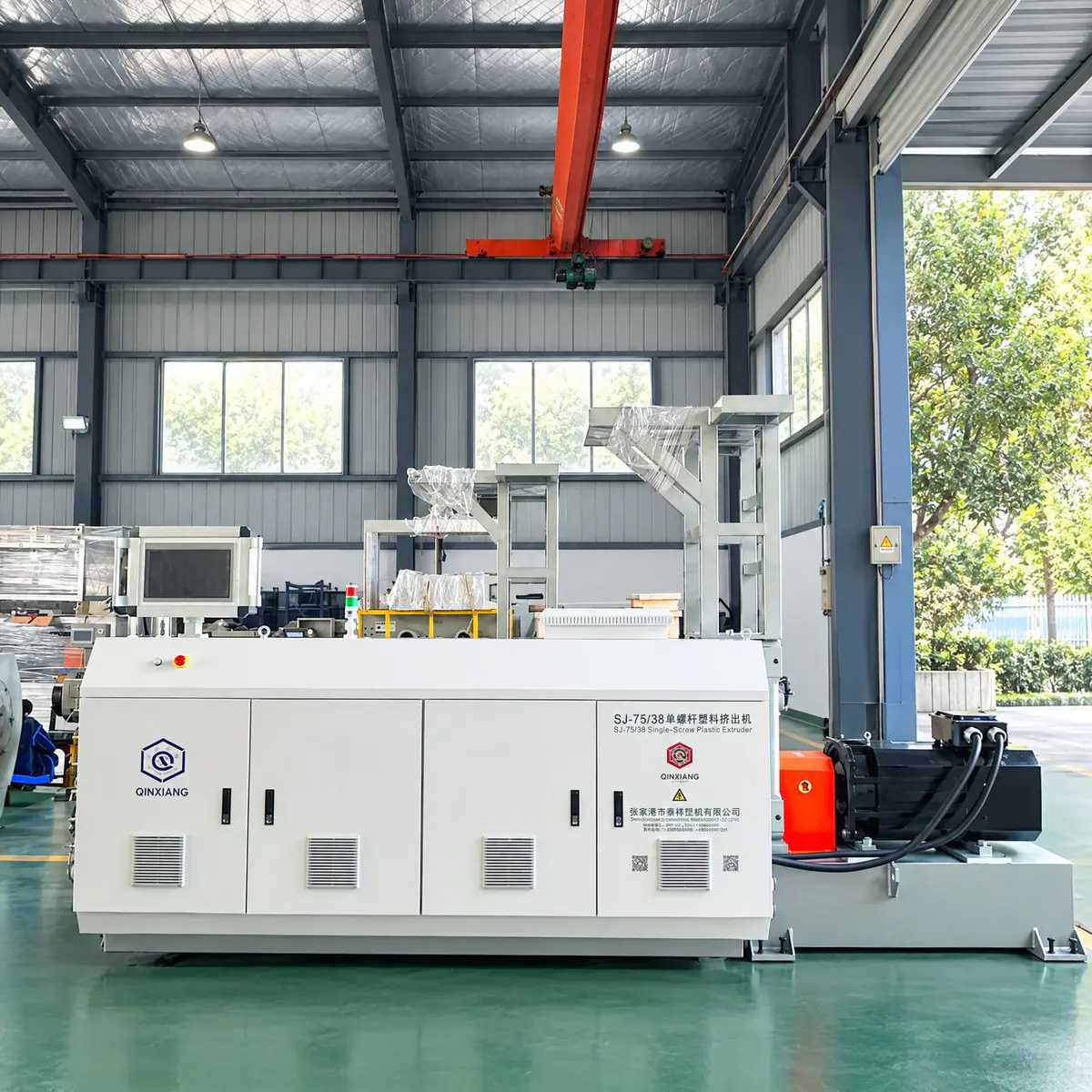
The main extruder melts, plasticizes, and pushes PE/HDPE material into the die head to form the main pipe body.
The main extruder is the core machine of an HDPE water pipe extrusion line. Its screw design, motor power, gearbox performance, heating system, and control accuracy all affect pipe output and quality.
In the QTech-Machinery project, the main extruder is an SJ75/38 single screw extruder. It is designed for PE/HDPE processing and has an output range of approximately 300–600kg/h, depending on pipe size, wall thickness, material formulation, and operating conditions. The screw diameter is 75mm, and the length-to-diameter ratio is 38:1. This long screw design supports better plasticizing and stable melt delivery for medium and large diameter HDPE pipes.
The main extruder uses a 160kW AC motor and ABB inverter control. The adjustable screw speed range of 0–180rpm allows operators to match the extrusion output with downstream haul-off speed and pipe specifications.
For buyers, the main extruder should not be selected only by motor size or screw diameter. It must match the pipe diameter range, expected output, die head, cooling length, and haul-off capacity. QTech-Machinery helps customers select the extruder based on practical production conditions, not just a standard catalog model.
Internal link suggestion: QTech-Machinery Home Page
Industry discussions often emphasize that extrusion speed and downstream traction must be coordinated to avoid pipe diameter fluctuation. This is why the extruder and haul-off system should be considered together.
4. Why are auxiliary and color line extruders used in a three-layer HDPE pipe line?
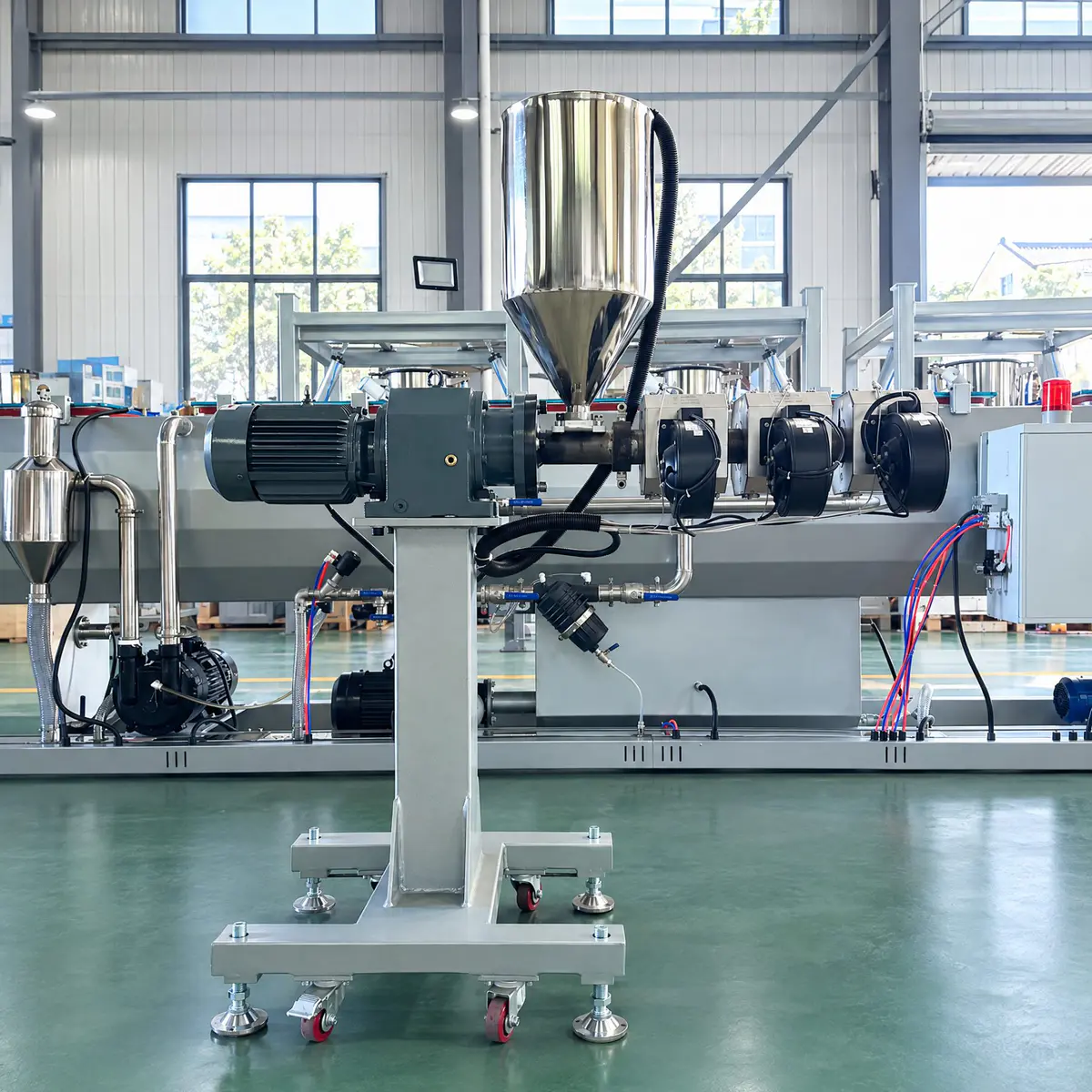
Auxiliary and color line extruders are used for co-extrusion layers and pipe marking, allowing the line to produce three-layer HDPE pipes with identification stripes.
A three-layer HDPE pipe extrusion line requires more than one extruder. The main extruder supplies the primary pipe material, while the auxiliary extruder supplies another layer for co-extrusion. A color line extruder can add marking stripes on the pipe surface, which is common for water supply, drainage, irrigation, and industrial pipe applications.
In the QTech-Machinery Φ110–Φ315mm project, the complete extrusion section includes:
| Machine | Model | Function |
|---|---|---|
| Main extruder | SJ75/38 | Main PE/HDPE plasticizing and extrusion |
| Auxiliary extruder | SJ50/33 | Co-extrusion layer supply |
| Color line extruder | SJ25/25 | Pipe stripe marking |
The SJ50/33 auxiliary extruder has an output range of about 30–80kg/h and a 22kW motor. The SJ25/25 color line extruder has an output range of about 1–5kg/h, suitable for color marking and identification stripes.
The advantage of this configuration is flexibility. Customers can produce pipes for different markets and identification requirements. For example, blue stripes are often used for water pipes, while other colors can be selected according to local standards or customer branding.
QTech-Machinery can adjust the extruder combination based on pipe structure, layer ratio, raw material plan, and production budget.
5. How does the pipe die head affect pipe quality?
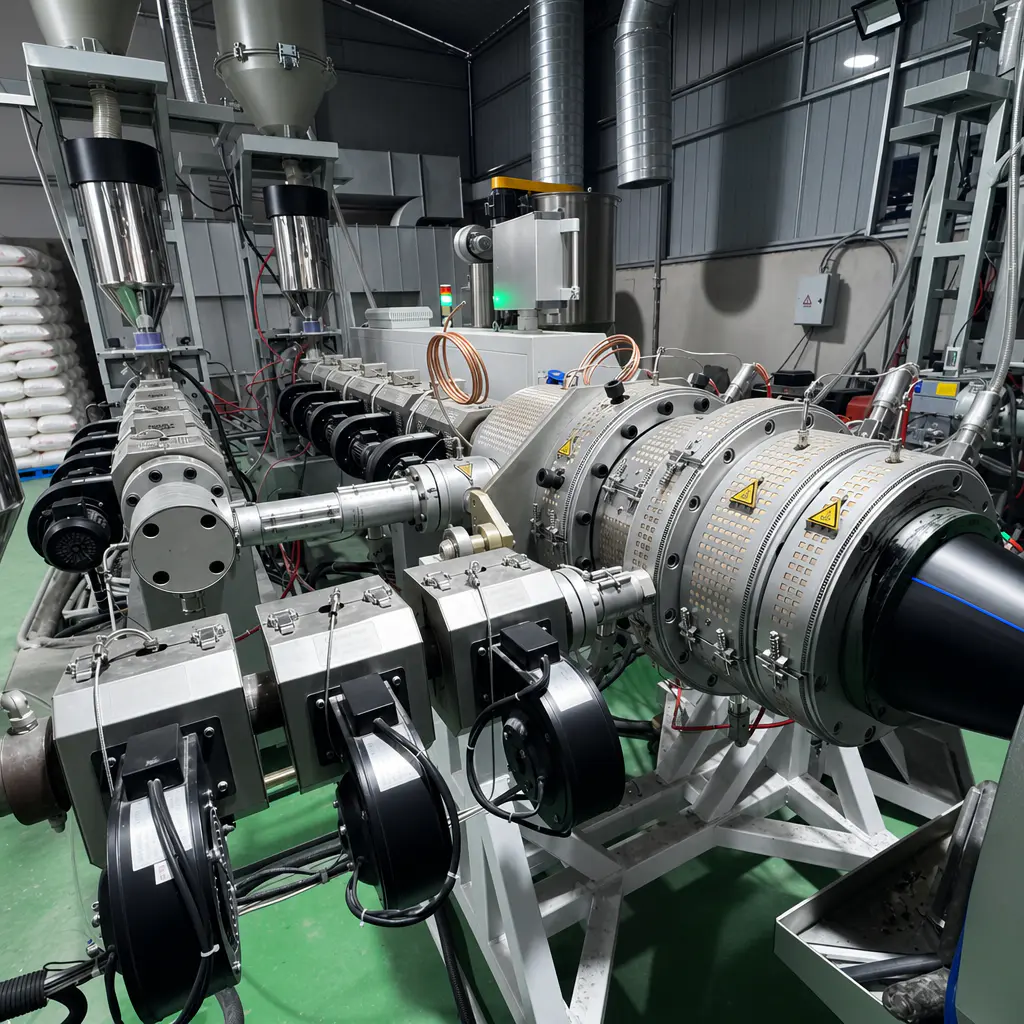
The pipe die head shapes the molten PE/HDPE material into a pipe and affects wall thickness distribution, layer structure, and pipe surface quality.
The die head is where the molten material becomes a pipe shape. In a three-layer pipe extrusion line, the die head must distribute different material layers evenly and maintain stable flow around the pipe circumference.
For the Φ110–Φ315mm PE/HDPE three-layer pipe extrusion production line, QTech-Machinery supplies a three-layer pipe die head matched with the main extruder, auxiliary extruder, and pipe diameter range. The die head is designed for stable material distribution and continuous pipe forming.
A well-designed die head helps improve:
| Quality factor | Why it matters |
|---|---|
| Wall thickness stability | Reduces material waste and improves pipe strength |
| Layer distribution | Supports three-layer pipe structure |
| Roundness | Helps downstream sizing and calibration |
| Surface finish | Improves finished pipe appearance |
| Production stability | Reduces adjustment time during operation |
Buyers should pay attention to whether the die head is designed for their exact pipe diameter range and material type. A die head that is not properly matched with the extruder or cooling system can cause uneven wall thickness, unstable pressure, and poor pipe surface.
QTech-Machinery’s advantage is complete line matching. We do not only supply the die head; we match it with the extruder output, calibration sleeve, vacuum tank, cooling tanks, haul-off, and cutter.
6. Why are vacuum calibration and spray cooling tanks important?
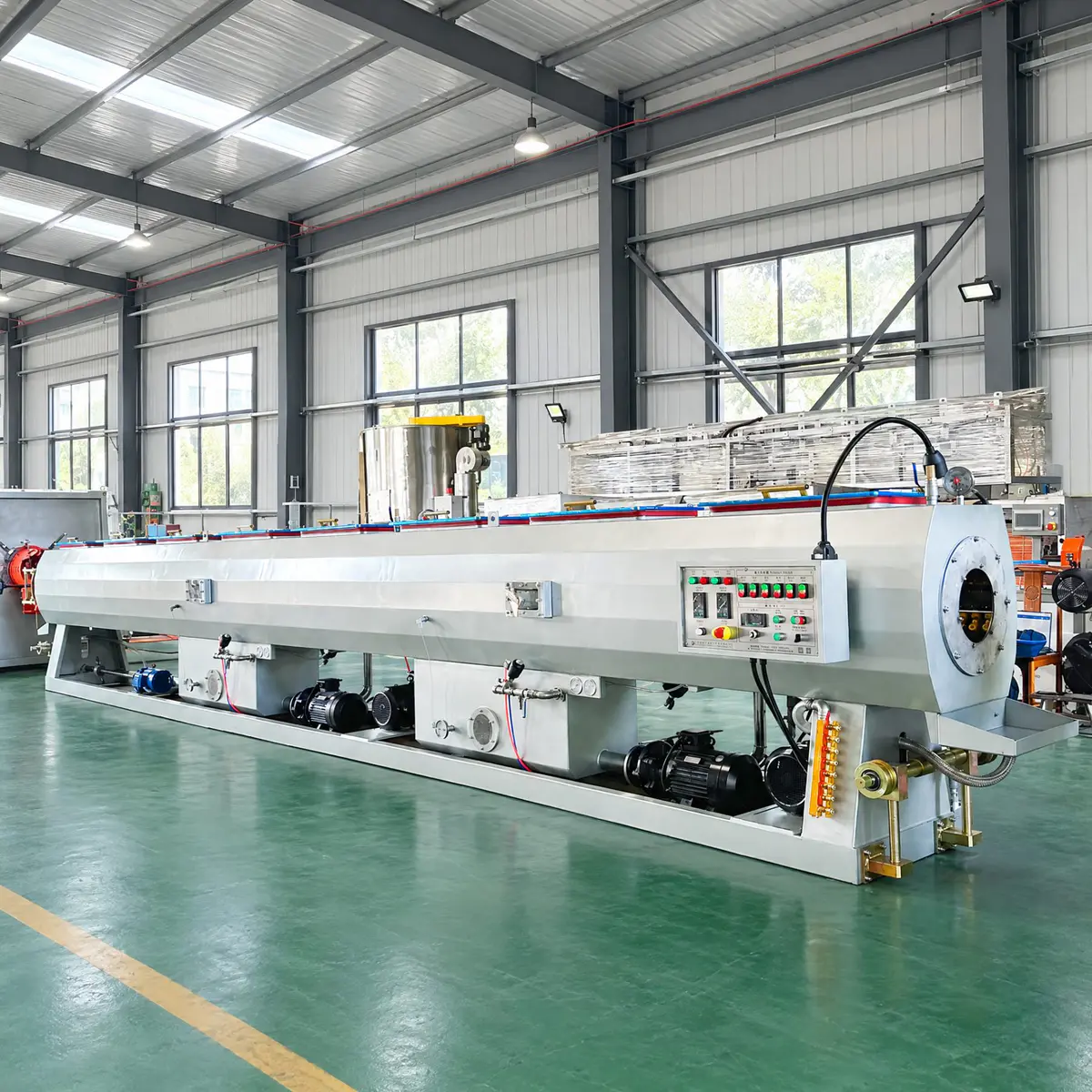
Vacuum calibration and spray cooling tanks control pipe size, roundness, cooling efficiency, and shape stability after extrusion.
After the pipe exits the die head, it is still hot and soft. It must be shaped and cooled carefully. The vacuum calibration tank uses vacuum pressure and water cooling to control pipe outer diameter and roundness. After that, spray cooling tanks continue cooling the pipe until it is stable enough for hauling and cutting.
In the QTech-Machinery Φ110–Φ315mm project, the downstream cooling system includes:
| Equipment | Specification | Main function |
|---|---|---|
| Vacuum calibration tank | 9m | Pipe sizing, roundness control, initial cooling |
| Spray cooling tank 1 | 8m | Further cooling |
| Spray cooling tank 2 | 8m | Shape stabilization before haul-off |
For medium and large diameter HDPE pipes, cooling length is very important. If the pipe is not cooled enough, it may deform during haul-off or cutting. If cooling is uneven, the pipe may show ovality, internal stress, or unstable dimensions.
QTech-Machinery configures sufficient cooling length for the Φ110–Φ315mm range. This is especially useful for customers producing water supply pipes, drainage pipes, irrigation pipes, and industrial pipeline products.
External technical references also mention that HDPE pipes normally pass through vacuum calibration and spray cooling sections to achieve dimensional precision and surface quality.
7. What machines are used for pipe traction and cutting?
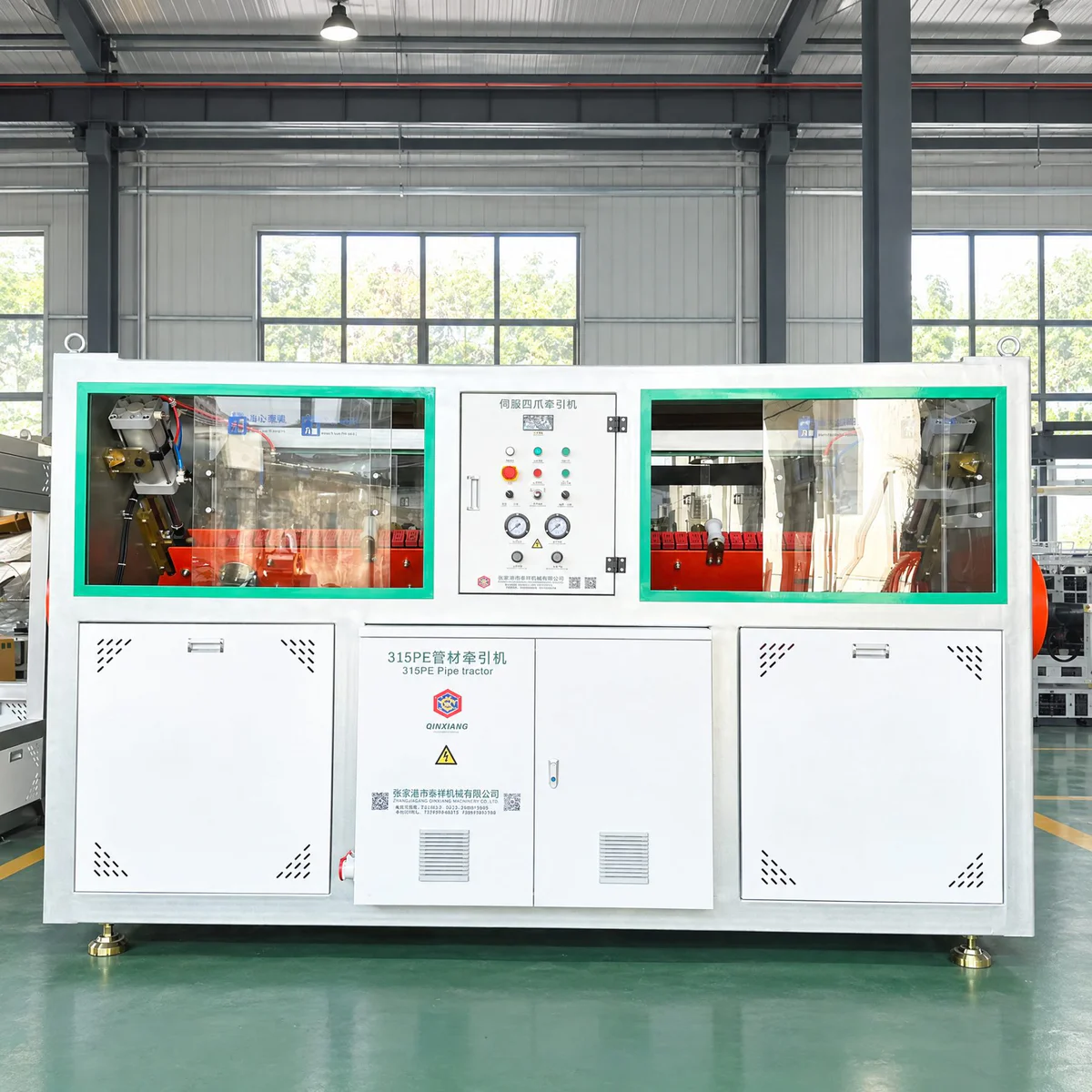
A haul-off machine pulls the pipe at a controlled speed, and a cutting machine cuts the pipe to the required length.
The haul-off machine is responsible for pulling the pipe forward at a stable speed. Its speed must be coordinated with extrusion output. If the haul-off speed is unstable, pipe wall thickness and diameter may fluctuate.
For the QTech-Machinery line, a four-caterpillar servo haul-off machine is used. It provides stable traction for medium and large diameter HDPE pipes. The traction force is about 18000N, and the haul-off speed range is 0.1–8m/min. The system uses four 1.5kW servo motors to improve traction stability and speed control.
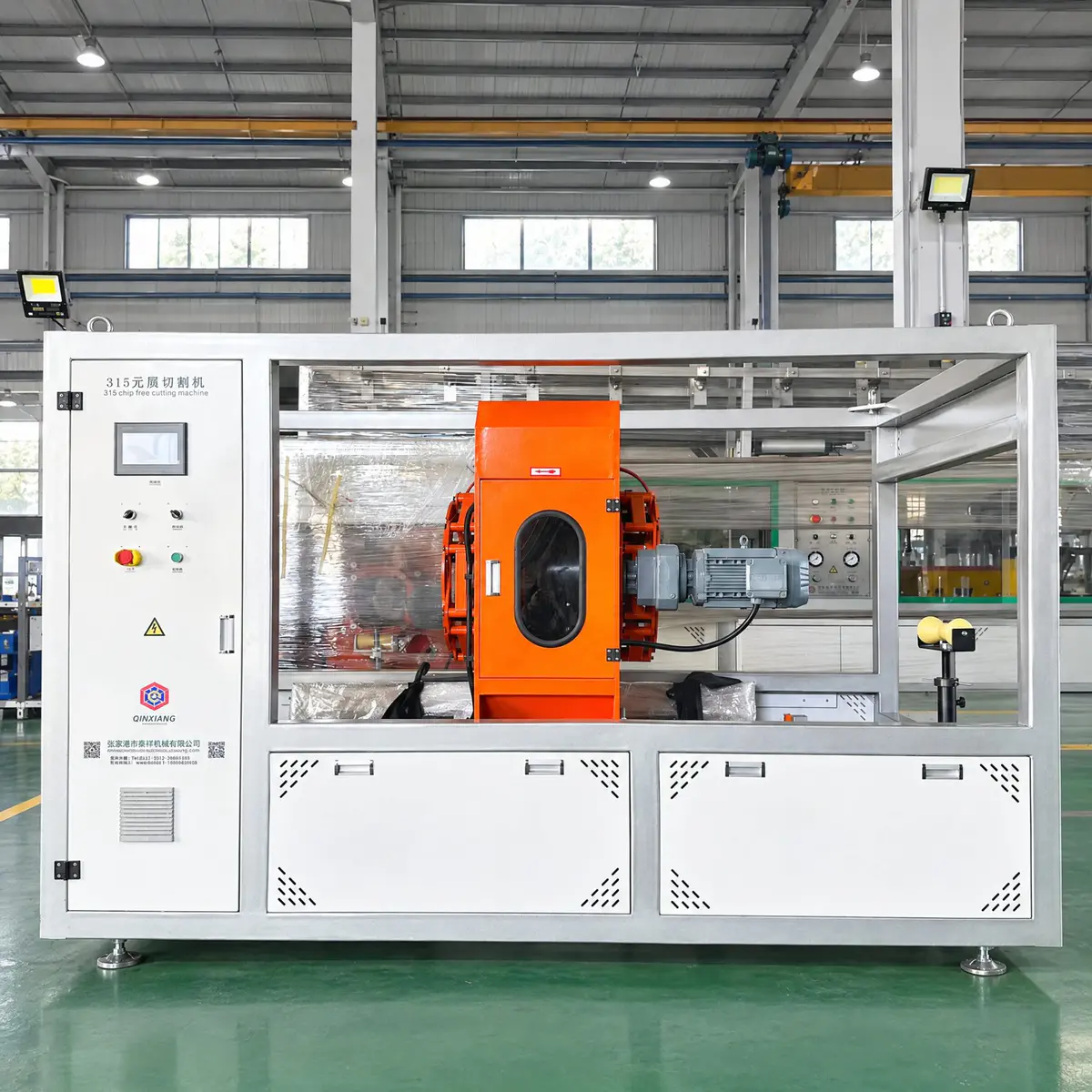
After haul-off, the pipe enters the chipless cutting machine. This cutting method is cleaner than traditional cutting methods that create more chips or dust. For HDPE water pipe and drainage pipe production, chipless cutting helps keep the production area cleaner and reduces the need for additional chip collection.
| Machine | Main benefit |
|---|---|
| Four-caterpillar servo haul-off | Stable pipe traction and speed control |
| Chipless cutting machine | Cleaner cutting with less dust and fewer chips |
| Meter control system | Supports fixed-length pipe production |
QTech-Machinery’s advantage is that the haul-off and cutting units are selected according to pipe diameter, wall thickness, output, and cutting requirements. This helps customers achieve smoother continuous operation and better finished pipe handling.
Industry references also point out that downstream equipment such as caterpillar haul-off and cutting systems are standard parts of pipe extrusion lines.
8. What should buyers check before choosing an HDPE water pipe extrusion line supplier?
Buyers should check pipe range, output, layer structure, automation level, cooling length, control system, technical documents, and supplier support.
Choosing an HDPE water pipe extrusion line is not only about price. A suitable line must match the buyer’s pipe market, workshop conditions, material plan, output target, and local power supply.
For example, the QTech-Machinery Φ110–Φ315mm PE/HDPE three-layer pipe extrusion production line was designed for a customer planning to manufacture medium and large diameter plastic pipes for water supply, drainage, irrigation, and industrial applications. The line has a designed output of 350–650kg/h and an installed power of approximately 360kW. Standard power is 380V / 50Hz / 3 Phase, and customization is available according to local requirements.
Before choosing a supplier, customers should confirm:
| Selection point | What to check |
|---|---|
| Pipe diameter range | For example, Φ110–Φ315mm |
| Pipe material | PE, HDPE, or special formulation |
| Pipe structure | Single-layer or three-layer co-extrusion |
| Output target | For example, 350–650kg/h |
| Application | Water, drainage, irrigation, gas, industrial pipe |
| Cooling length | Enough for pipe size and output |
| Haul-off type | Suitable traction force and speed control |
| Cutting method | Chipless or other cutting method |
| Control system | PLC + touch screen, easy operation |
| Supplier ability | Complete line design, installation support, documents |
QTech-Machinery provides complete production line solutions instead of only selling separate machines. Our support can include configuration design, equipment supply, layout planning, installation guidance, commissioning support, operator training, and technical documents.
Internal link suggestion: QTech-Machinery Cases
Customer selection steps for an HDPE pipe extrusion line
| Step | Customer action | Why it matters |
|---|---|---|
| 1 | Confirm pipe diameter range | Determines extruder size, die head, cooling length, haul-off, and cutter |
| 2 | Confirm pipe application | Water, drainage, irrigation, or industrial pipes may require different configurations |
| 3 | Confirm pipe structure | Single-layer or three-layer co-extrusion affects extruder configuration |
| 4 | Confirm output target | Helps select motor power, screw design, and downstream equipment |
| 5 | Confirm workshop layout | Ensures the full line fits the factory space |
| 6 | Confirm local power supply | Allows correct electrical design and customization |
| 7 | Review quotation and machine list | Helps compare complete configuration, not only price |
| 8 | Confirm technical support | Installation, commissioning, training, and documents reduce project risk |
Complete product list QTech-Machinery can provide
For an HDPE water pipe extrusion line, QTech-Machinery can provide the following machines and systems:
| Product category | Available equipment |
|---|---|
| Material handling | Vacuum loader, hopper dryer, dosing and feeding equipment |
| Extrusion system | Main single screw extruder, auxiliary extruder, color line extruder |
| Control system | PLC control, touch screen, inverter control, meter weight control system |
| Pipe forming | Single-layer or multi-layer pipe die head, calibration sleeve |
| Calibration and cooling | Vacuum calibration tank, spray cooling tank |
| Haul-off system | Caterpillar haul-off machine, servo haul-off machine |
| Cutting system | Chipless cutting machine, planetary cutting machine depending on pipe needs |
| Collection system | Automatic pneumatic stacker, pipe collection table |
| Auxiliary equipment | Water system, air system connection, electrical cabinet, spare parts |
| Technical services | Layout design, installation guidance, commissioning support, operator training |
For the referenced Φ110–Φ315mm PE/HDPE three-layer project, QTech-Machinery supplied a complete line from feeding to stacking, including SJ75/38 main extruder, SJ50/33 auxiliary extruder, SJ25/25 color line extruder, three-layer die head, 9m vacuum calibration tank, two 8m spray cooling tanks, four-caterpillar servo haul-off, chipless cutter, and automatic pneumatic stacker.
Related case link: Φ110–Φ315mm PE/HDPE Three-Layer Pipe Extrusion Production Line
Documents QTech-Machinery can provide
| Document type | Purpose |
|---|---|
| Technical proposal | Shows recommended line configuration and process design |
| Quotation sheet | Lists equipment, price, and optional items |
| Machine configuration list | Helps customers compare models and specifications |
| Factory layout drawing | Helps plan workshop space and production flow |
| Electrical requirement sheet | Helps prepare power supply and installation conditions |
| Water and air requirement sheet | Helps prepare cooling water and compressed air |
| Operation manual | Guides machine operation and daily use |
| Maintenance manual | Supports routine maintenance and troubleshooting |
| Spare parts list | Helps prepare wearing parts and backup components |
| Installation guidance document | Supports line installation and commissioning |
| Test running video or inspection record | Helps customers check equipment before delivery when available |
Practical configuration table: Φ110–Φ315mm PE/HDPE three-layer pipe extrusion line
| Item | Configuration |
|---|---|
| Supplier | QTech-Machinery |
| Project type | PE/HDPE three-layer pipe extrusion line |
| Pipe diameter range | Φ110–Φ315mm |
| Material | PE/HDPE |
| Pipe structure | Three-layer co-extrusion |
| Applications | Water supply, drainage, irrigation, industrial pipe |
| Designed output | 350–650kg/h |
| Installed power | Approx. 360kW |
| Standard power | 380V / 50Hz / 3 Phase |
| Main extruder | SJ75/38 single screw extruder |
| Auxiliary extruder | SJ50/33 single screw extruder |
| Color line extruder | SJ25/25 extruder |
| Calibration | 9m vacuum calibration tank |
| Cooling | Two sets of 8m spray cooling tanks |
| Haul-off | Four-caterpillar servo haul-off machine |
| Cutting | Chipless cutting machine |
| Stacking | Automatic pneumatic stacker |
| Customization | Available according to local power, layout, and pipe standards |
Recommended internal links
You can add the following internal links naturally in the blog:
Related external references and technical notes
When reviewing public technical discussions and extrusion equipment guides, several practical points appear repeatedly.
Many pipe extrusion guides describe a complete line as a combination of material handling, extruder, die, vacuum sizing, cooling, haul-off, cutting, and stacking equipment. This matches the actual machine structure used in most HDPE pipe production lines.
Technical articles also point out that haul-off speed must be coordinated with extrusion speed, because unstable traction can cause pipe diameter fluctuation. In practical factory operation, this is one reason why servo haul-off control is valuable for medium and large diameter HDPE pipes.
Other extrusion references explain that HDPE pipe usually passes through vacuum calibration and spray cooling sections to achieve stable pipe dimensions, roundness, and surface quality. This supports the need for sufficient cooling length in a Φ110–Φ315mm line.
Downstream equipment references also mention vacuum calibration tanks, cooling tanks, caterpillar haul-off machines, cutting machines, and stackers as important parts of plastic pipe extrusion systems.
These external references support a practical conclusion: when buyers choose an HDPE water pipe extrusion line, they should not evaluate only the main extruder. They should review the full system, including feeding, extrusion, die head, calibration, cooling, haul-off, cutting, stacking, control system, and supplier support.
References
- Plastic Pipe Extrusion Line Guide: PVC, PE & HDPE
- Introduction to Pipe Extrusion Process, Equipment, Quality Control
- HDPE Pipe Extrusion Line – Process, Components & Single Screw Extruder
- Downstream Equipment in Plastic Extrusion
Conclusion
An HDPE water pipe extrusion line normally includes feeding equipment, drying equipment, main extruder, auxiliary extruder, color line extruder, pipe die head, vacuum calibration tank, spray cooling tanks, haul-off machine, cutting machine, stacker, and control system.
For customers planning to produce medium and large diameter PE/HDPE pipes, the QTech-Machinery Φ110–Φ315mm PE/HDPE three-layer pipe extrusion production line provides a complete reference configuration. It is suitable for HDPE water pipes, HDPE drainage pipes, PE irrigation pipes, and industrial pipe applications.
The main advantage of QTech-Machinery is complete line integration. We help customers match the extrusion system, die head, cooling section, haul-off, cutting, stacking, layout, and technical documents according to real production needs. This makes the line easier to install, easier to operate, and better suited for long-term commercial pipe manufacturing.