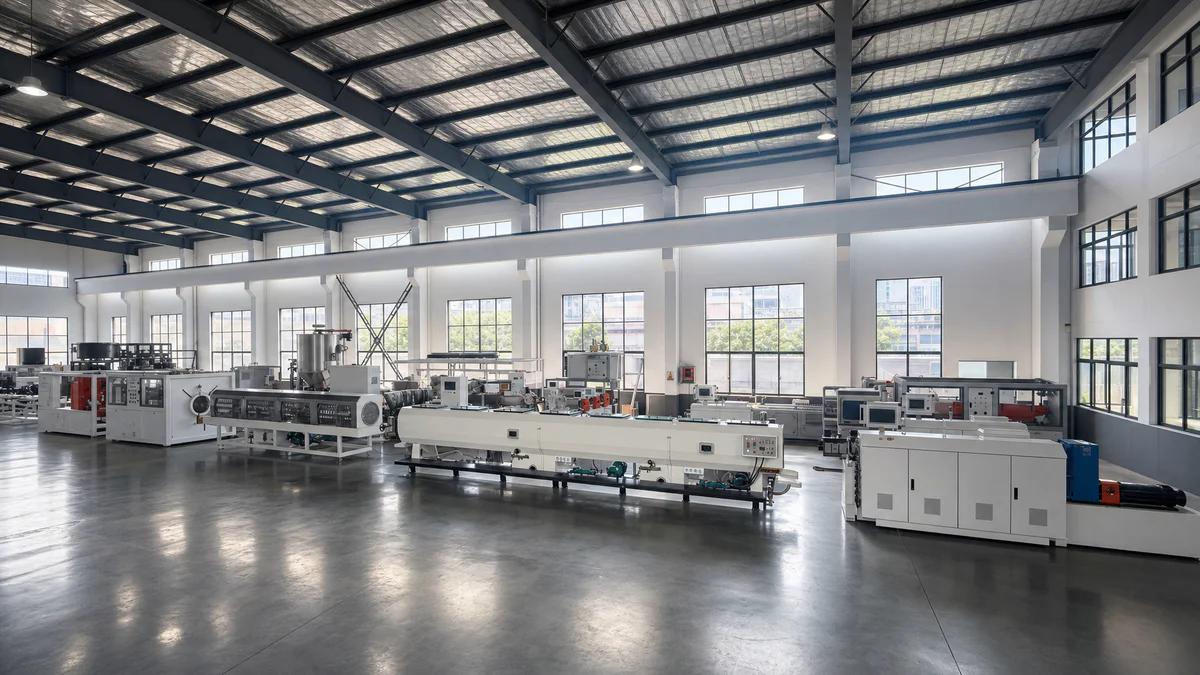
Manufacturing Capability Cut And Built In House
In house screw and barrel, gearbox and die machining.
The parts that decide how your pipe runs are cut in our own workshop in Zhangjiagang. Around them we fabricate the tanks and frames, build the downstream machines, wire the cabinets and assemble the complete line, so the machine on your contract is the machine we build, run and crate.
Screw And Barrel
Geometry, L/D and wear protection set to the material you run.
Gearbox And Die Heads
Drives sized to torque; die bodies and tooling cut from solid.
Tanks, Frames And Cabinets
Fabricated, welded and wired for your line and your supply.
From Raw Steel To A Running Line
One section per part of the build: what we make, how it is made and what your order decides. The workshop and the path a machine follows through it are on Our Factory; how every build is checked is on Quality Control.
In House Scope
Made here, bought in
Screw And Barrel
Cut for your material
Gearbox And Drive
Sized to torque
Die Heads
Machined from solid
Tanks And Frames
Stainless and welded steel
Downstream Machines
Haul-off to stacker
Cabinets And Assembly
Wired, then joined as a line
What It Means For You
Lead time, custom, parts
FAQ
Screws, dies, brands, parts
Configuration Request
Send your material and pipe
Quality Control
How each build is checked
What We Make, And What We Buy In
A pipe line runs only as steadily as the parts that touch the melt and carry the load, and those are made here. Standard motors and electrical parts are bought from recognised makers, and you are free to name the brand your maintenance team prefers.
Screw And Barrel
Flights cut to the approved geometry, barrel bore checked, surface treatment added where the formulation calls for it
Your order: Material, output, L/D, wear demand
Gearbox And Drive
Gearbox machined and assembled to the drive, with torque and lubrication set during the build
Your order: Screw layout, torque, operating speed
Die Heads And Tooling
Bodies and tooling cut from solid, flow channels ground and polished, heaters and thermocouples fitted
Your order: Pipe sizes, layers, extruder interface
Tanks
Stainless fabrication and welding, spray and vacuum piping laid out inside, pumps installed
Your order: Pipe range and line configuration
Frames
Fabricated and welded in the workshop, with bases machined flat where centre height depends on it
Your order: Centre height, pipe length, load
Downstream Machines
Haul-offs, cutters, bellers, winders, stackers and packing units built and aligned
Your order: Pipe OD, cut length, socket or coil format
Electrical Cabinets
Cabinets wired and programmed in house, then tested with the machine they control
Your order: Voltage, frequency, standard, panel language
Bought In
Motors, inverters, contactors and similar electrical components from internationally recognised makers
Your order: Preferred brand for local service
Start with the part that decides how your material melts and moves, which is the screw and barrel.
Screws And Barrels Cut For Your Material
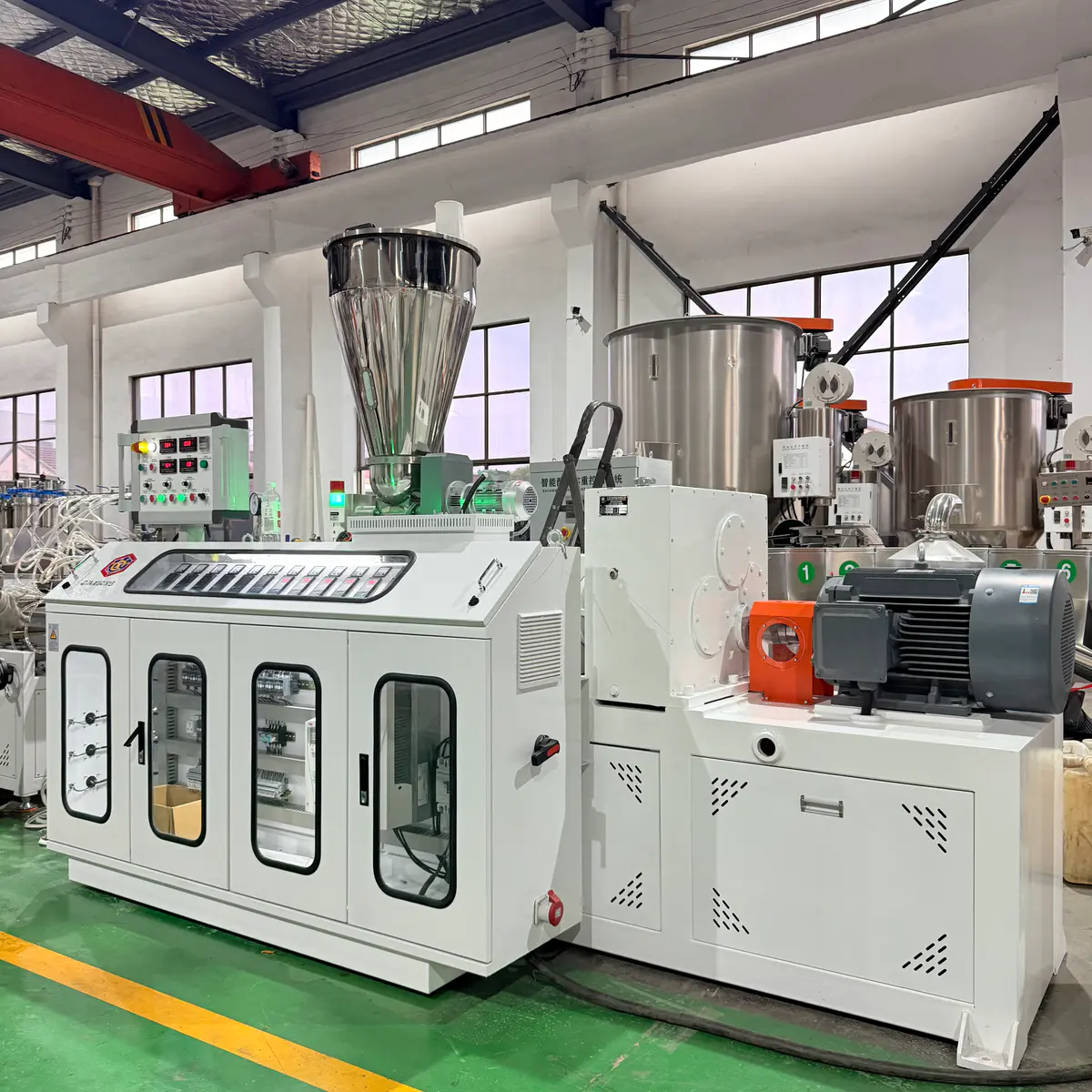
The screw and barrel decide how material is fed, melted, mixed and pushed to the die, and how fast the unit wears through continuous running. We machine them in house and fix the specification against your resin or formulation instead of a model sheet.
Feed Zone
Sized for the form you feed: pellets, powder or dry blend.
Compression Zone
Shaped to melt fully without piling on shear heat.
Metering Zone
Holds steady melt pressure at the die at your target rate.

Confirmed Before Machining
- Screw type and flight geometry
- Screw diameter and L/D ratio
- Screw and barrel steel for your wear conditions
- Surface treatment and wear protection
- Heating and cooling layout along the barrel
More on matching the extruder to your pipe: extruders.
Conical twin screw, set from your dry blend recipe, filler level and output. A high filler recipe gets its own review, not a copy of a standard one.
Single screw for polyolefin pipe, with geometry and L/D picked for stable melt quality across the whole output range.
CaCO3, regrind and other demanding feeds wear a unit faster, so wear protection is settled before the specification is approved.
A well cut screw still needs a drive behind it that delivers steady torque through a full shift.
Gearboxes Built For Torque
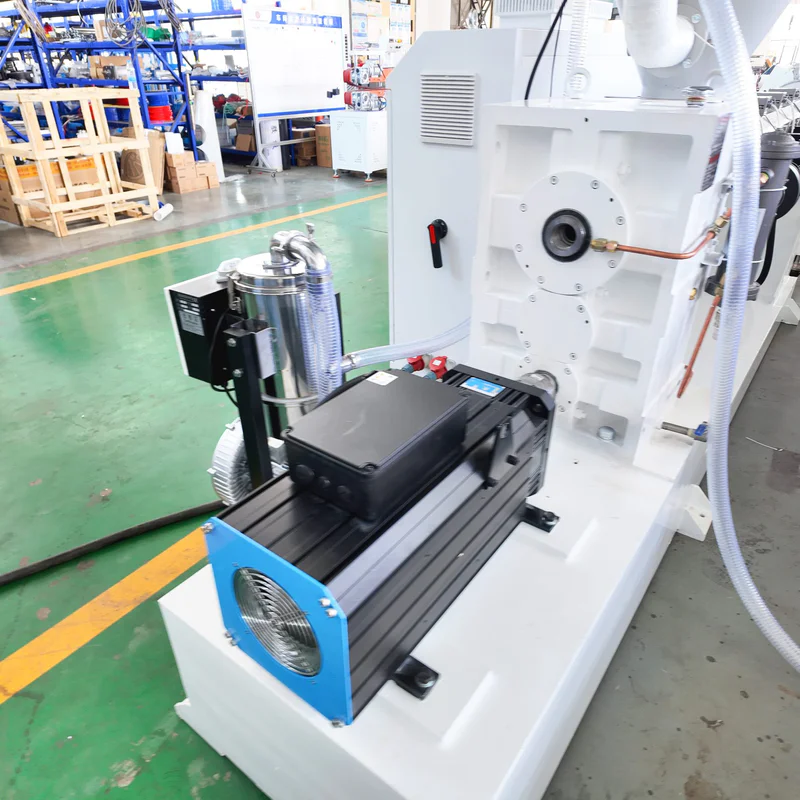
The gearbox carries the torque your process creates hour after hour, which is a different number from the kW printed on the motor. Our gearboxes are machined and assembled in house, then mated to the drive with torque and lubrication set during the build.
Selected On Load
Screw layout, expected torque, operating speed, lubrication and cooling all go into the gearbox choice.
Hardened Gearing
A hardened gearbox paired with an AC or servo vector motor, matched to your processing load and screw speed.
Speed Held Steady
The drive keeps screw speed under control across the full range when the production load shifts.
Run Under Drive
Rotation direction, gearbox noise and transmission behaviour are checked with the motor running before packing.

Between the extruder and your pipe sits the die head, where the inside matters more than the outside.
Die Heads Machined From Solid Steel
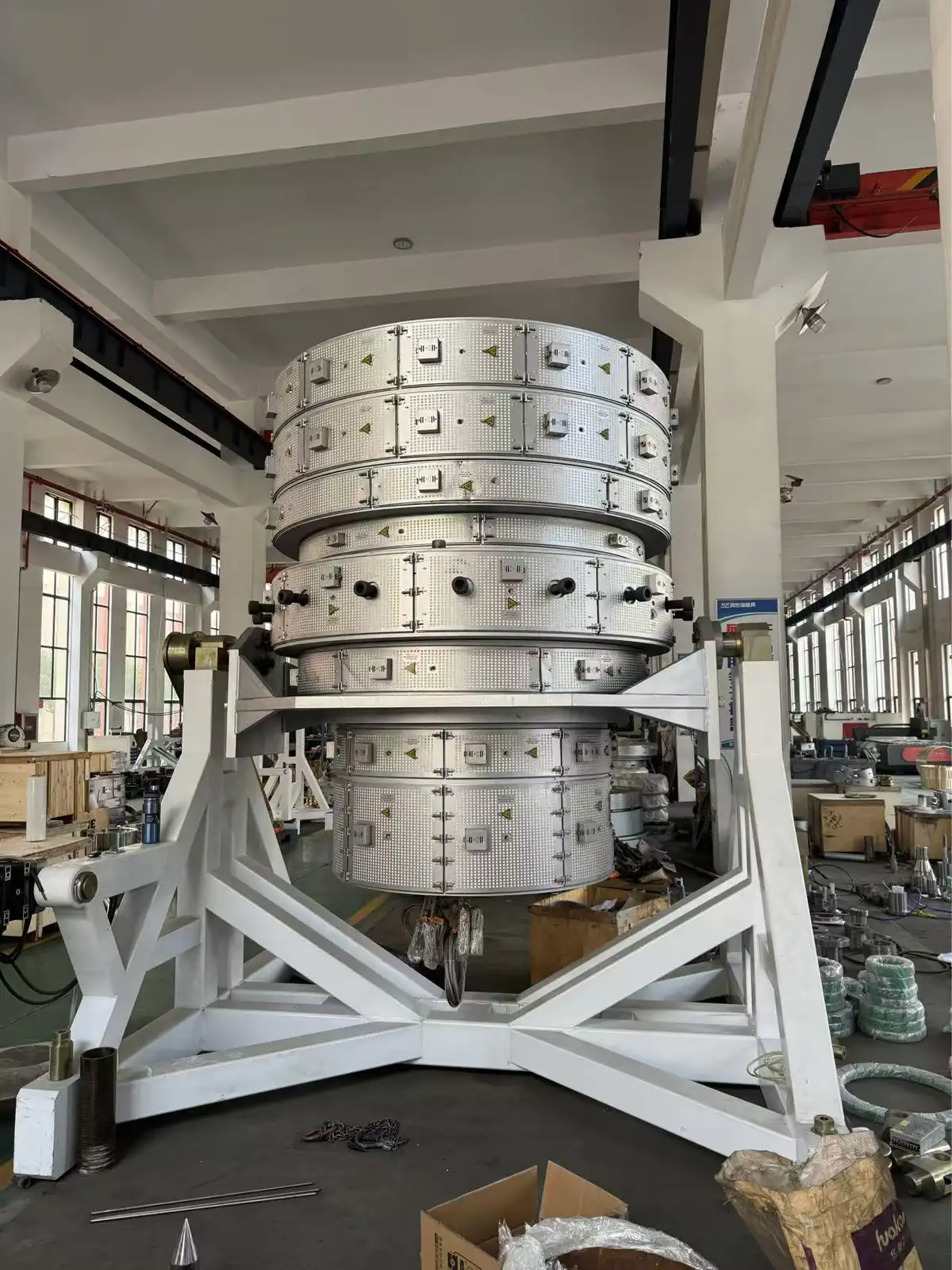
A die head is judged by a channel nobody sees once it ships. Bodies and tooling are cut from solid against the drawing you approve, including the face that bolts onto your extruder, so a replacement head lands on the machine you already own.
On large PE sizes the spiral distribution and land length follow your OD and SDR range. For multilayer pipe, the layer structure goes into the first drawing, because extra melt inlets cannot be added to a single layer head later. Full detail is on the die head page.
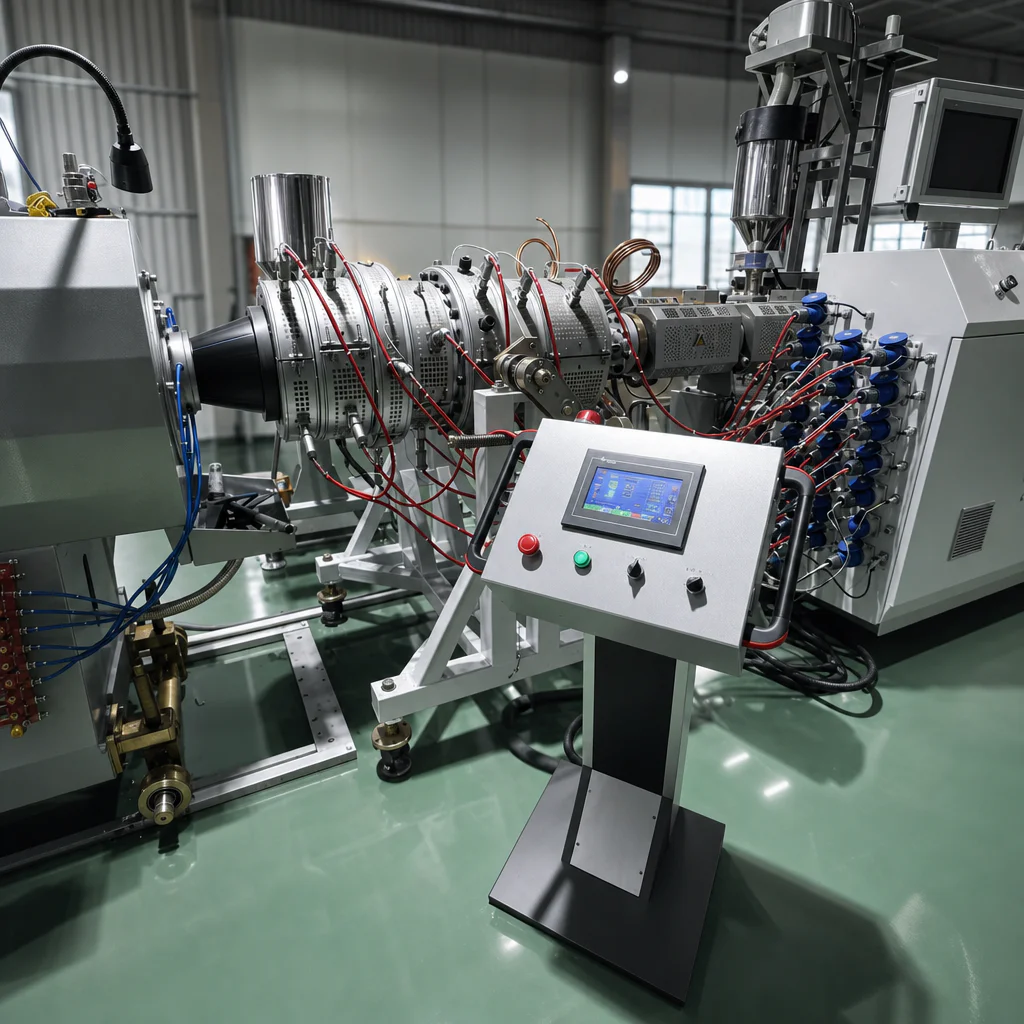
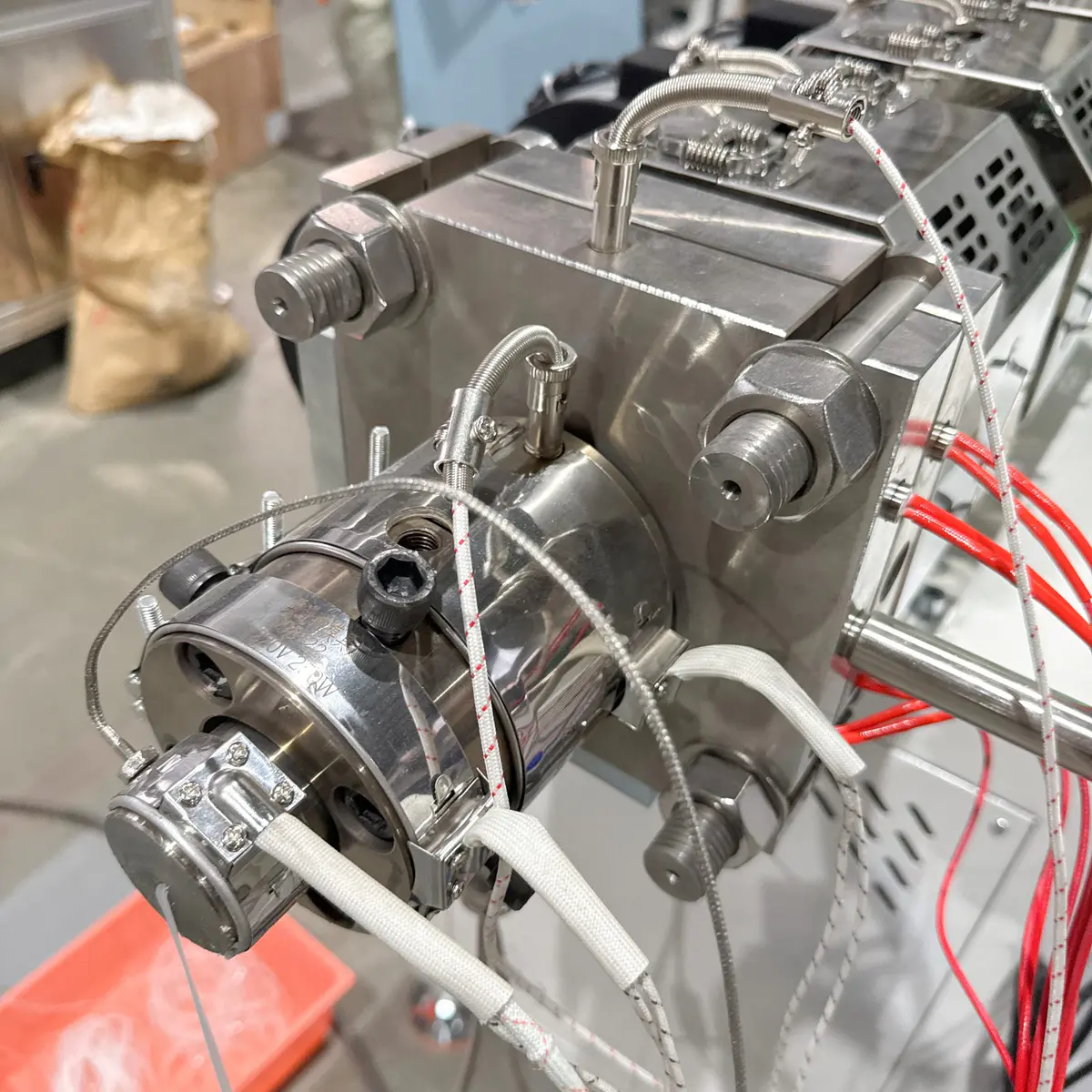
CNC Machining
Body and tooling cut from solid to the confirmed drawing, extruder interface included.
Flow Channel
The path your melt follows, shaped so material keeps moving evenly to the die gap at the output you run.
Grinding And Polishing
Flow surfaces and the die land finished so melt does not hang up and the pipe surface comes out clean.
Part Inspection
Each part measured before assembly. One that misses its drawing is machined again.
Assembly
Mating faces checked as the head goes together, so it seals under melt pressure, not only on the bench.
Heaters
Heaters and thermocouples fitted and wired for your voltage, ready for the electrics on your line.
Once the pipe leaves the die, stainless tanks and welded frames take over the sizing, cooling and support.
Stainless Tanks, Welded Frames
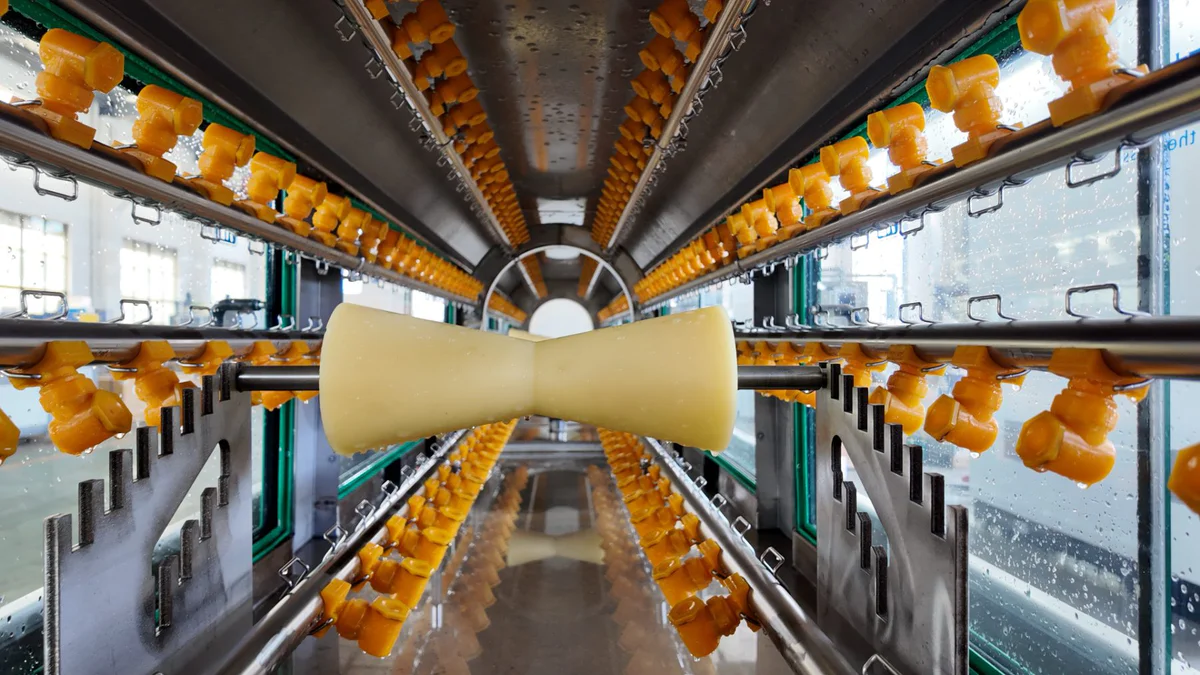
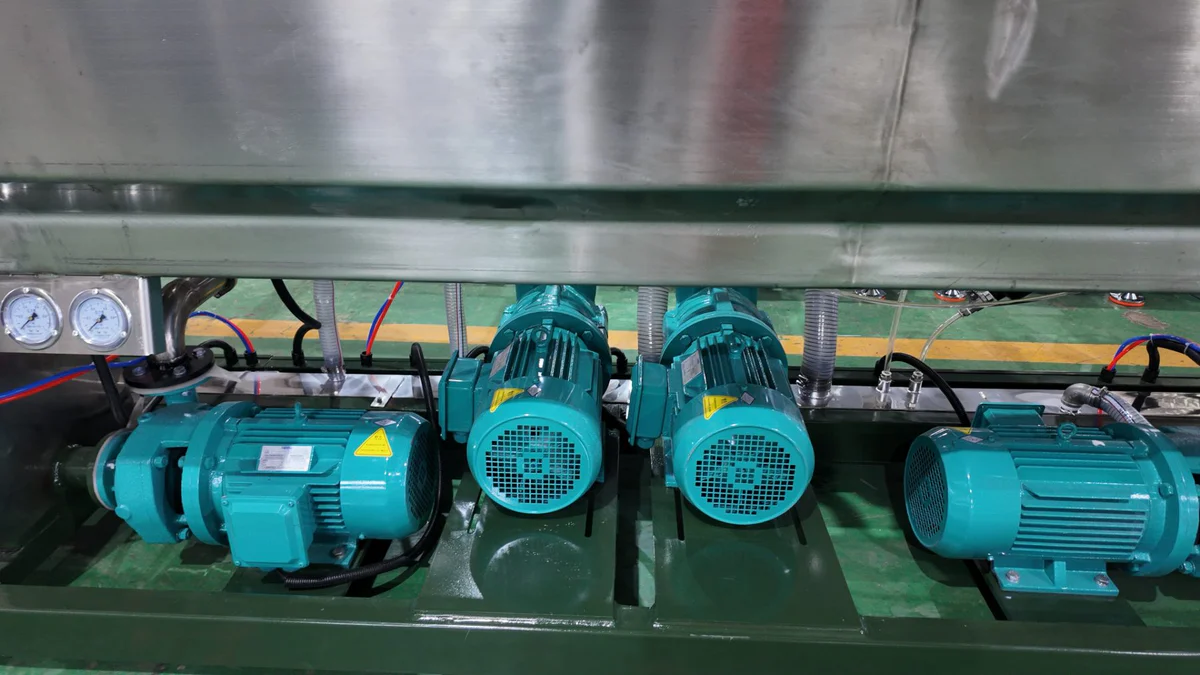
Vacuum calibration and spray cooling tanks are fabricated in stainless steel and assembled here around your pipe range. The frames under the extruder and the downstream machines are welded in the same workshop and machined where the centre height depends on them.
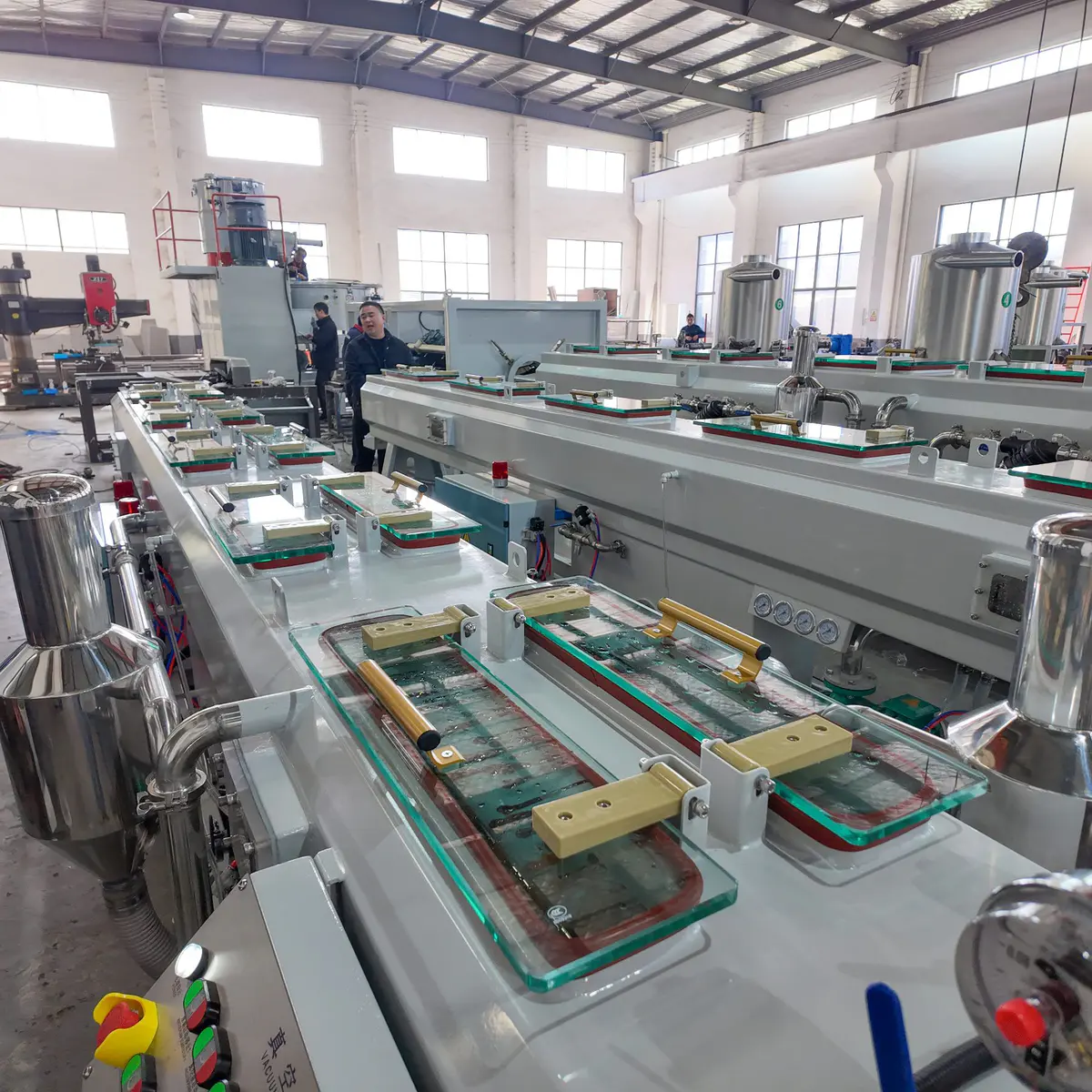
Vacuum And Spray Cooling Tanks
- Stainless body fabrication and tank welding
- Internal water piping and spray nozzle layout
- Vacuum pipelines, pumps and drain points
- Filtration and pipe supports in spray tanks
- Water run through the circuit before shipping
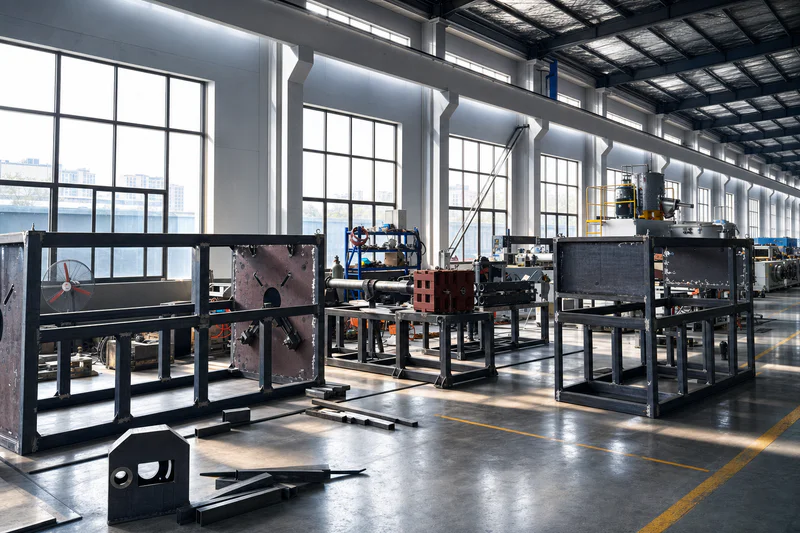
Machine Frames And Bases
- Frames fabricated and welded for haul-offs, cutters, stackers and packing units
- Extruder bases machined flat so the centre height holds
- Coiler frames welded, stress relieved and machined flat
- Support positions planned for the pipe length you run
Frames are hidden once the machine sits on them, which is why they are checked before assembly; see Quality Control.
The machines that follow the tanks come out of the same workshop, all the way to the stacker and the packing unit.
The Rest Of The Line, Built Here Too
Haul-offs, cutters, bellers, winders, stackers and packing units are built in our workshop, along with the dosing and mixing equipment upstream. Each one is made for the pipe range and format you confirm, so the machines are matched to each other before they reach your floor.
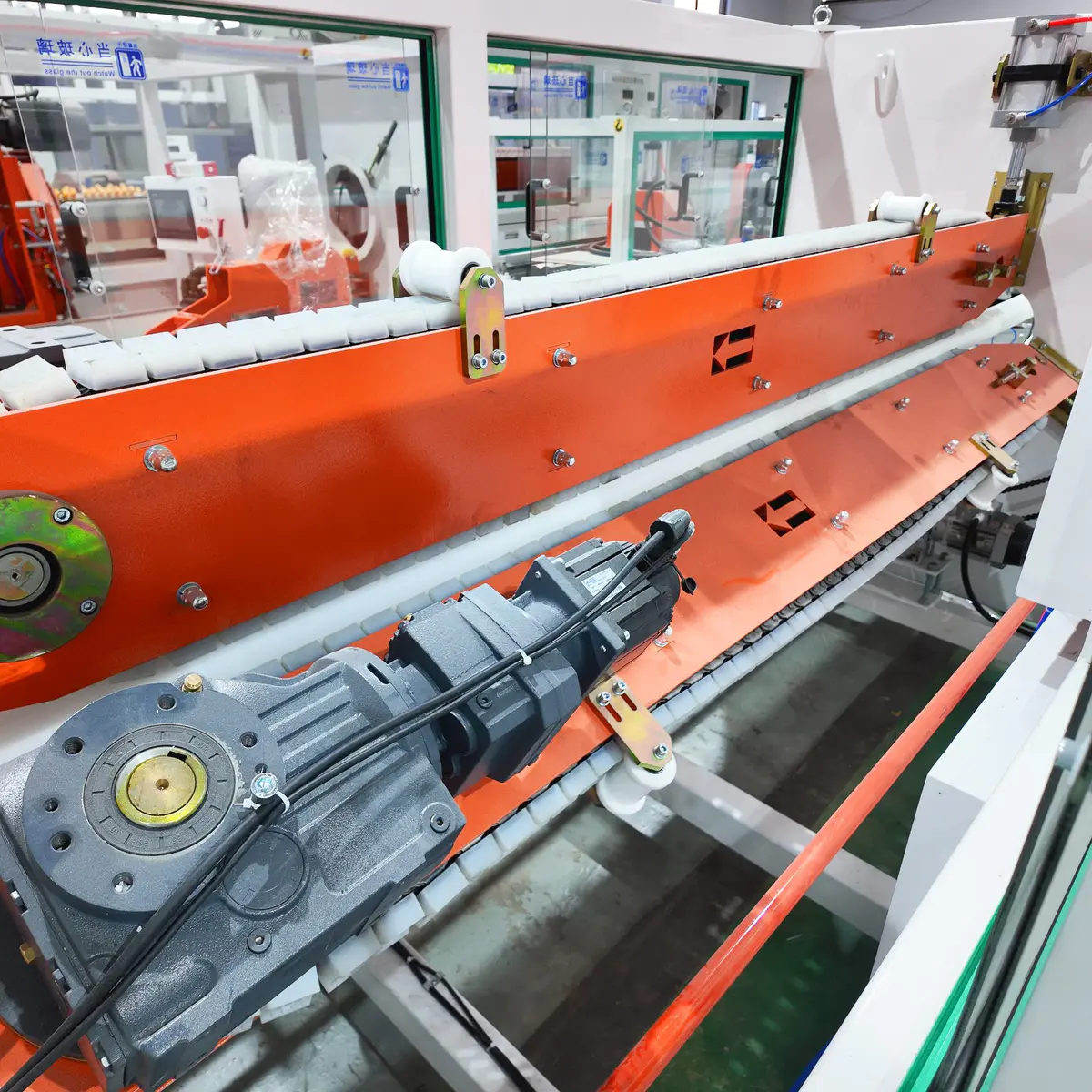
Haul-Offs
Frame, caterpillar assembly, pad fitting, drive integration, alignment and pneumatic piping.
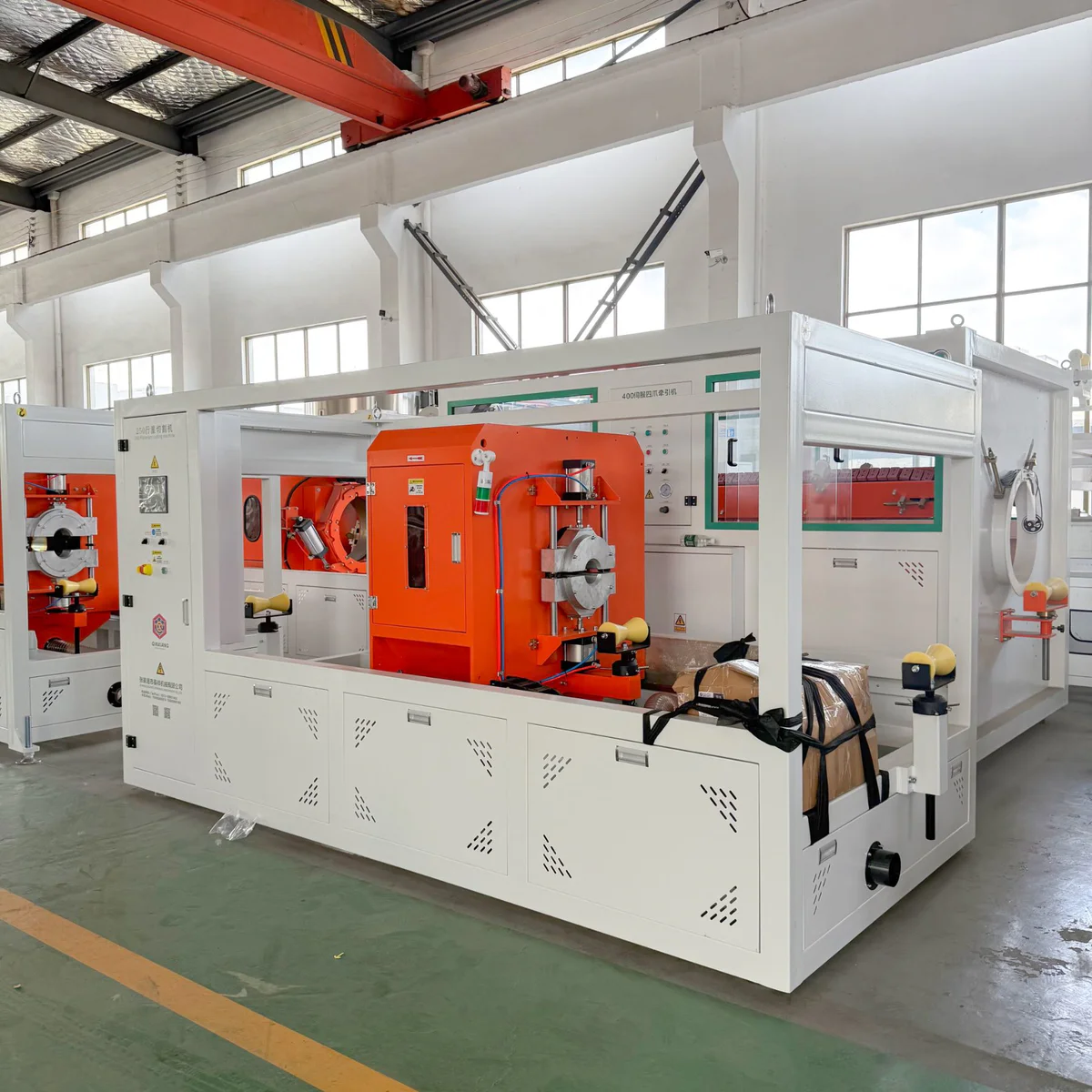
Pipe Cutters
Frame machining, carriage assembly, cutting unit and clamp installation, then wiring.
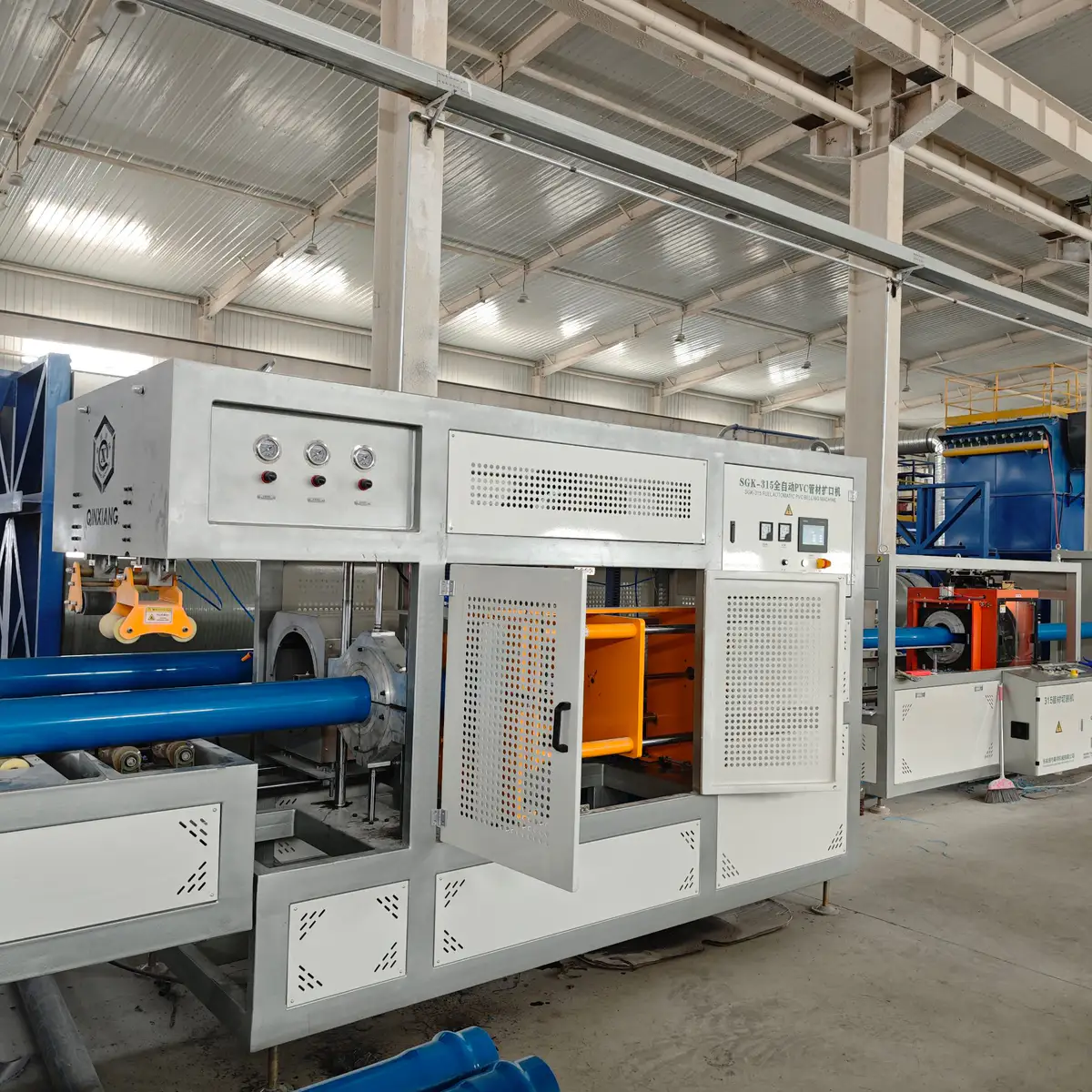
Belling Machines
Mandrel and mold machining for your socket, heating oven, pipe transfer and cooling.
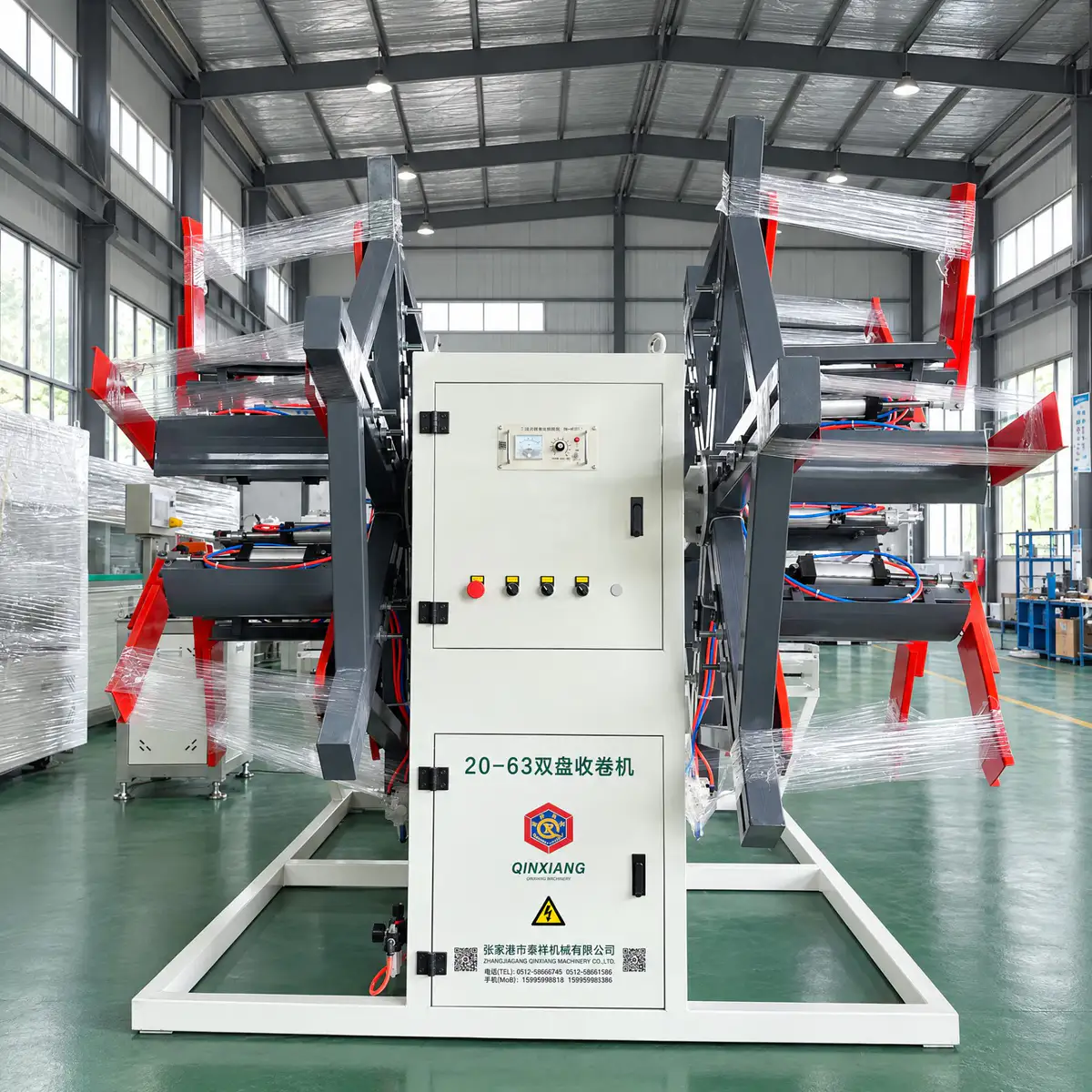
Winders
Drum and reel machined to your coil size, traverse, tension control, cutting and strapping.
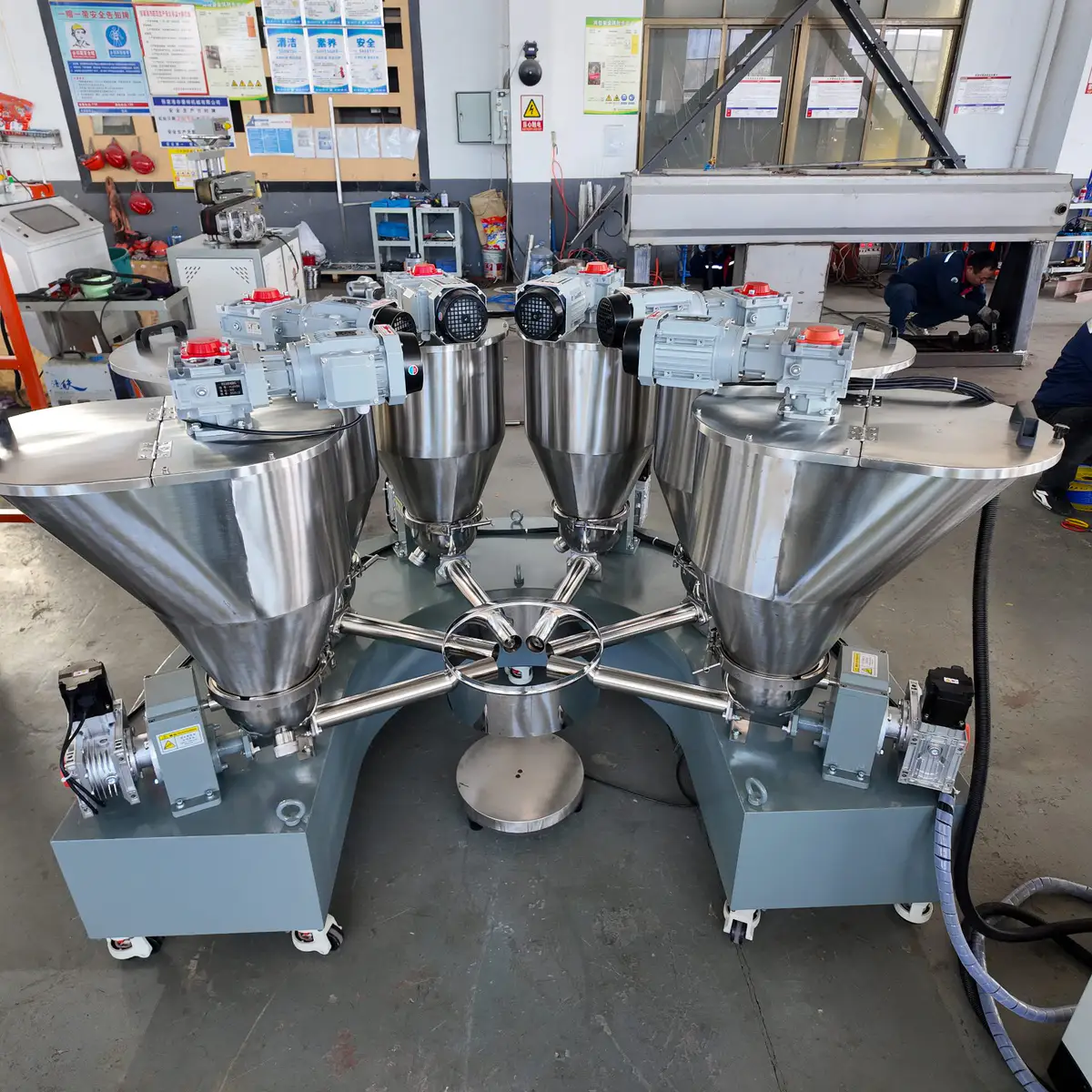
Dosing And Feeding
Hopper fabrication, dosing screw machining, load cell mounting and weighing calibration.
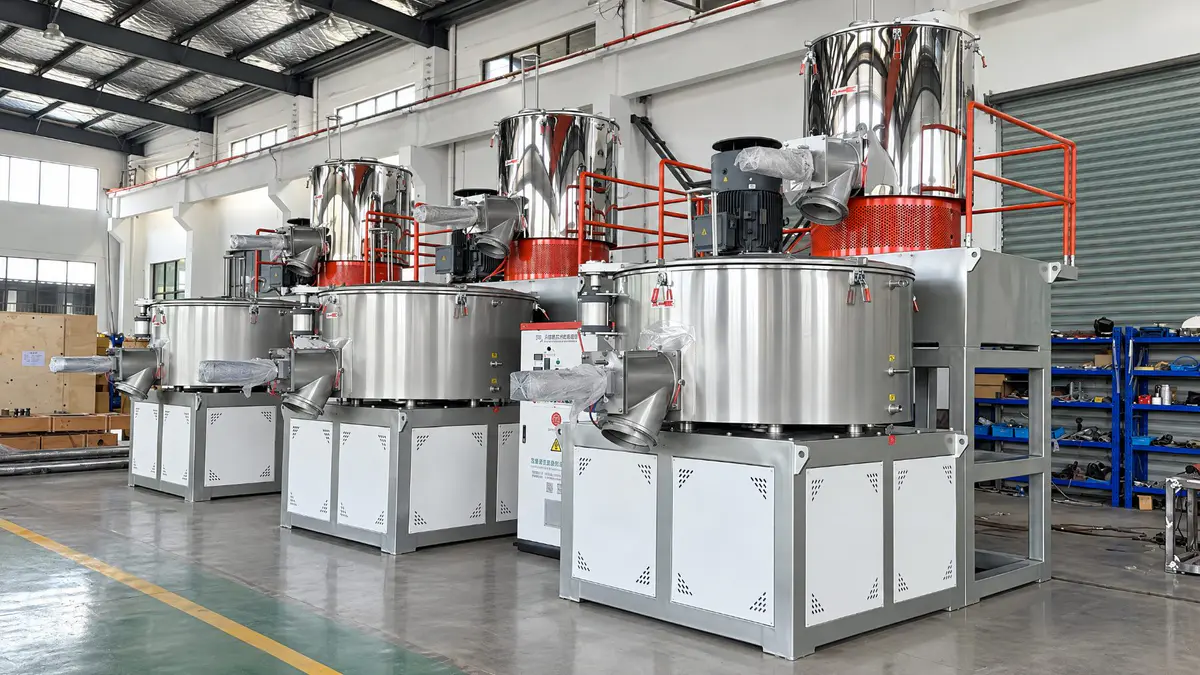
Mixers
Vessel fabrication, cooling jacket welding, and blades and shafts machined in house.
Every one of these machines needs a cabinet, and the last job is to wire them and join them into one line.
Cabinets Wired, Lines Joined
Control cabinets are built for your supply voltage and frequency, programmed before testing and set up in the language your operators read. Then the extruder, die, tanks and downstream machines are connected and run together as one line.
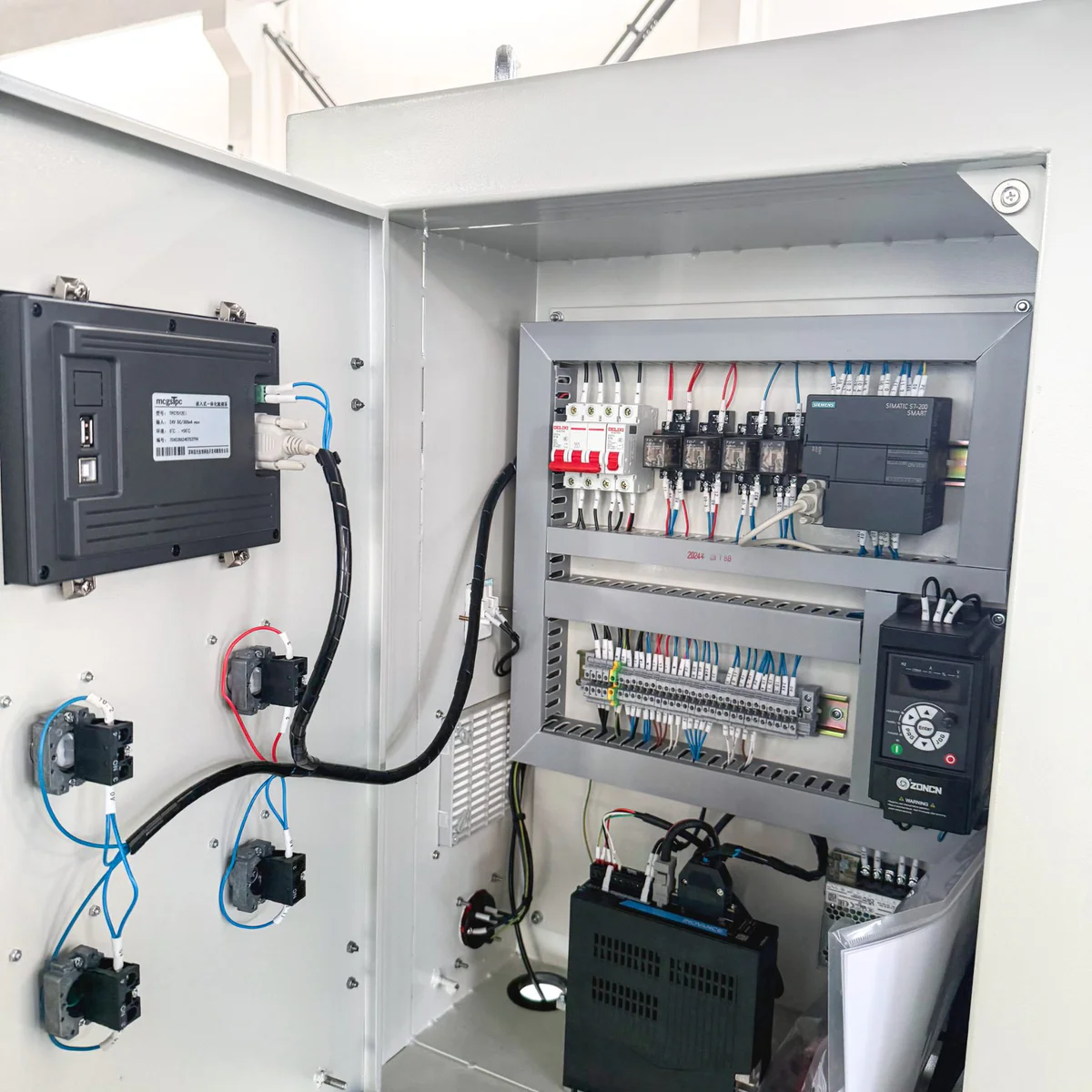
Electrical Cabinets
Contactors, breakers, relays and temperature controllers are chosen for reliable running and for maintenance your team can do on site. Motors, inverters and other electrical parts come from internationally recognised makers; if you rely on one brand for local service, tell us before the cabinet is closed out.
What The HMI Can Show
Replacing one machine on an existing line? We check which signals it has to share with the equipment you already run.
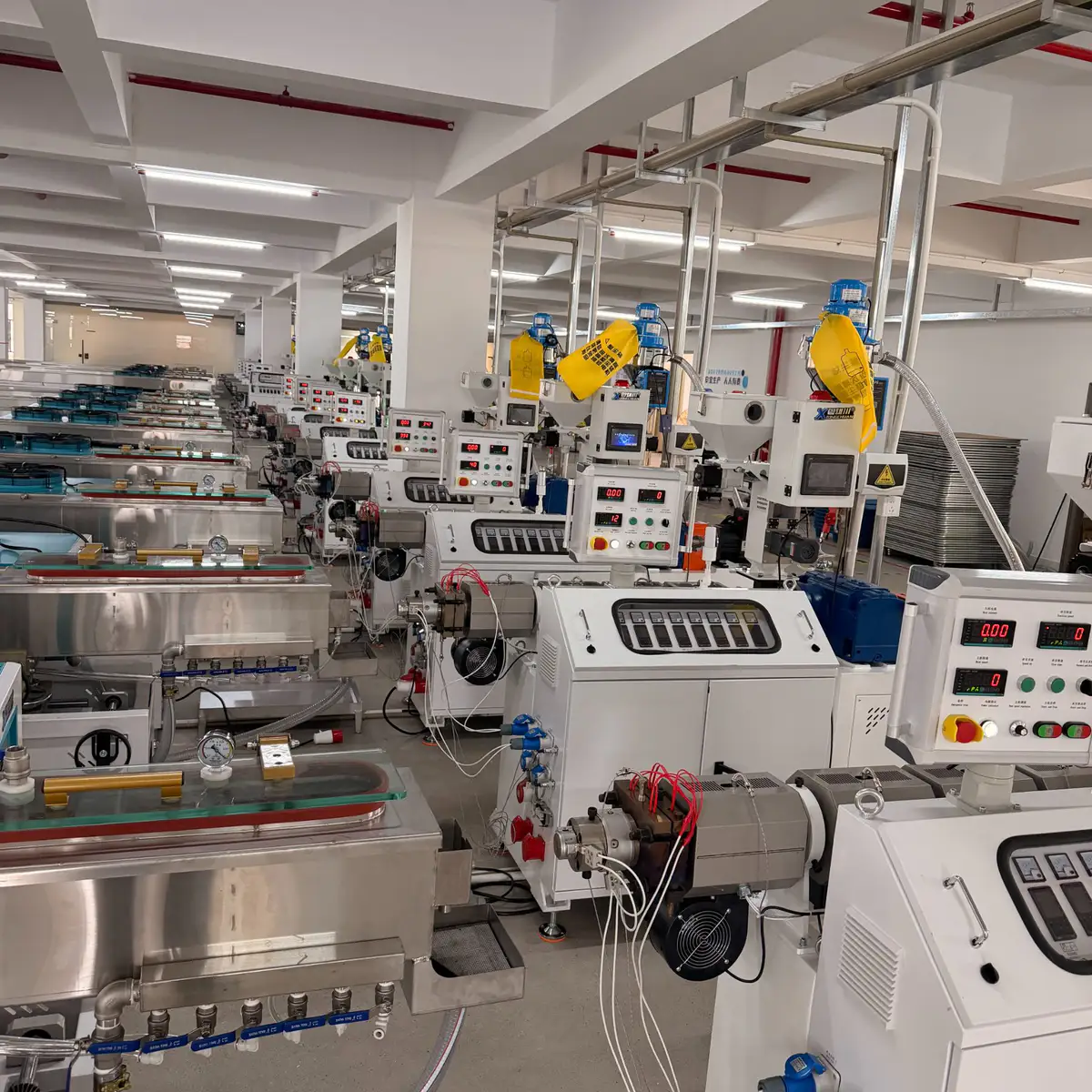
Line Assembly
Machining, assembly, cabinet wiring, electrical integration and downstream matching all sit inside one project. When the units are ready, they are connected in sequence and checked as one line: speeds following each other, signals passing between machines, centre heights meeting.
- Extruder, die and downstream joined and run as a line
- Build photos at the stages that matter to you
- Factory visit or video walkthrough before the run test
The checks and the run test are covered step by step on Quality Control; complete line options are on Pipe Extrusion Lines.
Making these parts ourselves changes three things you will notice as a buyer: the schedule, the custom work and the spares.
Lead Time, Custom Work And Spares
In house machining is not a slogan on a brochure. It shows up in how your project is scheduled, how far a configuration can bend to your pipe, and how easy the right parts are to get later.
A Schedule You Can Follow
Lead time is confirmed with your quotation, and the technical proposal carries a delivery plan. While your machine is built, you can watch it happen.
- Build photos at the stages you care about
- Visits or video walkthroughs during production
- A part that misses its drawing is remade in the workshop that cut it
Custom Work That Reaches The Parts
Because the critical parts are cut here, a custom order changes the steel, not just the paint and the nameplate.
- Screw geometry for your formulation and filler
- Die interface taken from your existing extruder
- Tooling for each pipe size in your range
- Layer and stripe structure in the first drawing
- Voltage, frequency, standard and panel language
Spare Parts Matched To Your Machine
Before shipment we work out, from your final configuration, which parts are worth keeping on your shelf.
- Heating elements, thermocouples and seals
- Lubrication parts and selected electrical components
- Wear parts such as haul-off pads, blades and belling molds
- Final drawings and tooling identification for the next size change
If a standard part is easy to buy near you, we say so instead of adding it to the crate.
Manufacturing Questions
What buyers ask when they want to know how much of a machine is really made in our workshop.
Yes. Screws and barrels are machined in our workshop in Zhangjiagang, after the geometry, L/D, steel and any wear protection have been agreed against the material you will process.
Motors, inverters and standard electrical components such as contactors and relays, from internationally recognised makers that are easy to source in most markets. Screws, barrels, gearboxes, die heads, tanks, frames and cabinets are made or built here.
Yes. If your plant relies on a particular brand for local spares or service, name it before the cabinet design is finalised and we build around it.
Yes. The interface is taken from your actual machine, you approve the drawing, and the acceptance checks are agreed before machining starts, so the finished head is judged against what both sides signed.
Tell us the filler type and percentage, the recycled share, your daily running hours and the output you need. Wear protection and surface treatment are then specified before the screw and barrel are approved, instead of being discovered as a maintenance bill.
Yes. We send progress photos at the stages that matter to you, and you are welcome to visit the factory or join a video walkthrough before the run test.
It depends on the configuration, from a single machine to a complete line. The lead time is confirmed in your quotation, and the technical proposal includes the delivery plan the build follows.
The list comes from your final configuration, the material you run and your running hours. For a first order it usually covers heating elements, thermocouples, seals, lubrication parts and selected electrical components, plus wear parts on the downstream machines.
Specify It Before We Cut Steel, With Maggie
Send your material, pipe range and output target, or the extruder you want a die head for. Maggie replies within 24 hours with a configuration and a quote.

Maggie
Sales, QTech Machinery
Replies within 24 hoursEvery message from this page comes to me. Tell me what you process and what pipe you need, and I come back with the screw, drive, die and downstream configuration, plus a real quote.
If an existing machine of yours can stay in the line, I will say so before you spend money replacing it.
Maggie
Sales, Zhangjiagang Qinxiang Machinery Co., Ltd.
- Screw, barrel and die specified for your material
- Cabinet built for your voltage and standard
- Build photos during production
- Spare parts list from your final configuration
Tell Us What You Need Built
Fields marked are required.