Stable Feeding And Accurate Dosing For Pipe Extrusion
Dosing, blending and material feeding systems for PVC, HDPE, PE and PPR pipe extrusion. Send your resin, masterbatch, additives, filler or regrind list, and you get a feeding capacity and dosing method matched to your recipe and your extruder output.
Material
Pellet / Powder / Regrind
Ingredients
1 / 2 / 3 / 4+
Extruder Output
Based On Your kg/h
Dosing Method
Volumetric / Gravimetric
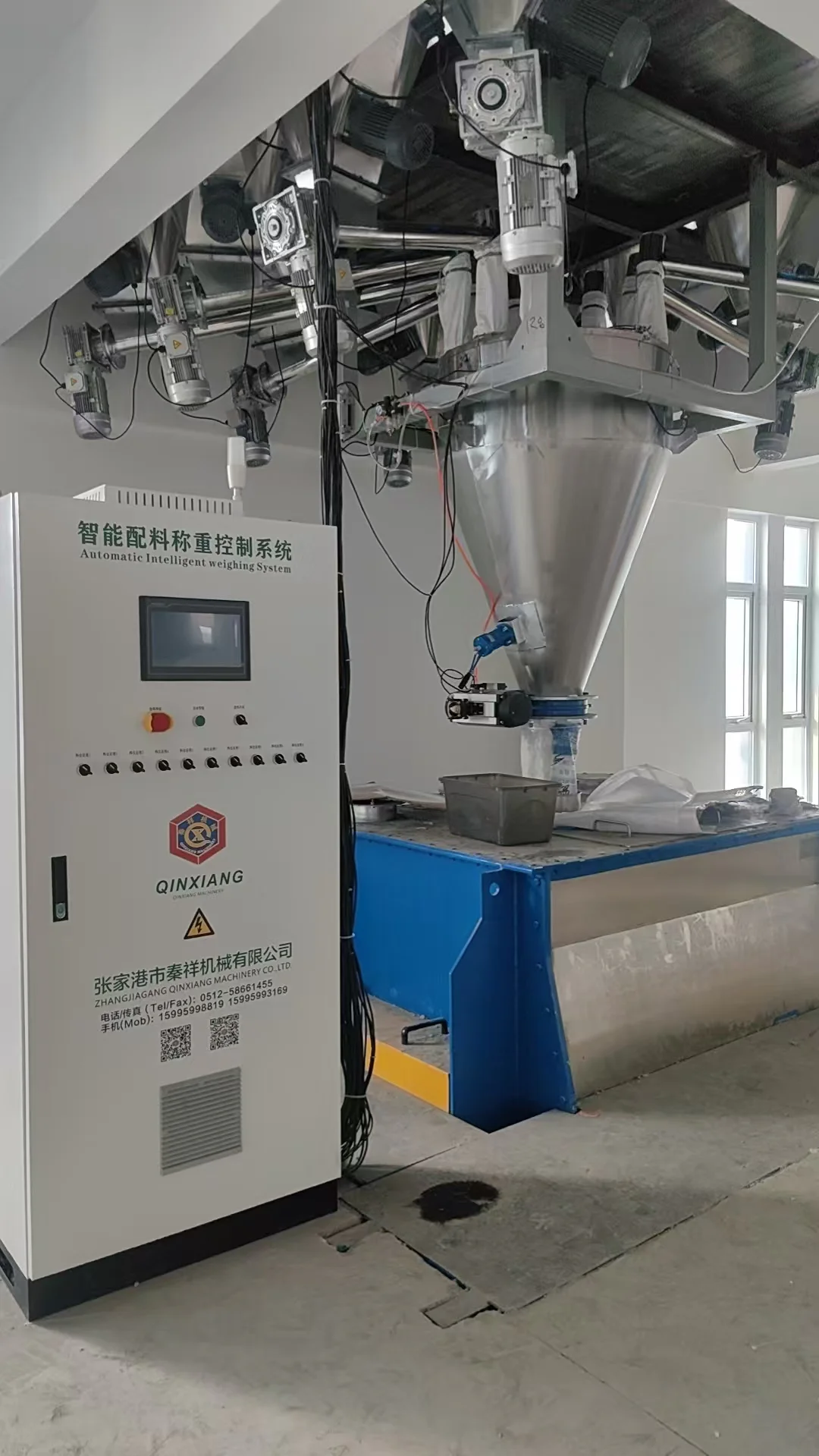
Get To The Right Dosing Setup Faster
Jump to whatever matters first, whether you are choosing between volumetric and gravimetric, sizing feeding capacity to your extruder, or getting your recipe in front of us for a configuration.
Materials & Recipe
Resin, masterbatch, additives, filler, regrind
Equipment Types
Loaders, blenders, feeders, mixers
Volumetric vs Gravimetric
Which dosing method your recipe needs
Material Flow
From bag or silo to the extruder hopper
Recipe & Material Cost
Dosing accuracy and cost per kg of pipe
Extruder Integration
Matched to your kg/h and hopper
Feeding Problems
Bridging, blocking, ratio drift
Cleaning & Changeover
Color or recipe change in minutes
Existing Line Upgrade
Add dosing to the line you already run
Factory & Inspection
Built and run tested before shipment
FAQ
Voltage, lead time, warranty
Send Your Recipe
Send your recipe, configuration in 24 hours
Start With Your Materials And Recipe
The right feeding and dosing configuration starts with what you actually put into the extruder. Material form, bulk density, number of ingredients and mixing ratio all decide which feeder fits, especially once your formulation includes powder, filler or regrind.
Pick the pipe you run below. Each recipe puts a different demand on the feeding system.
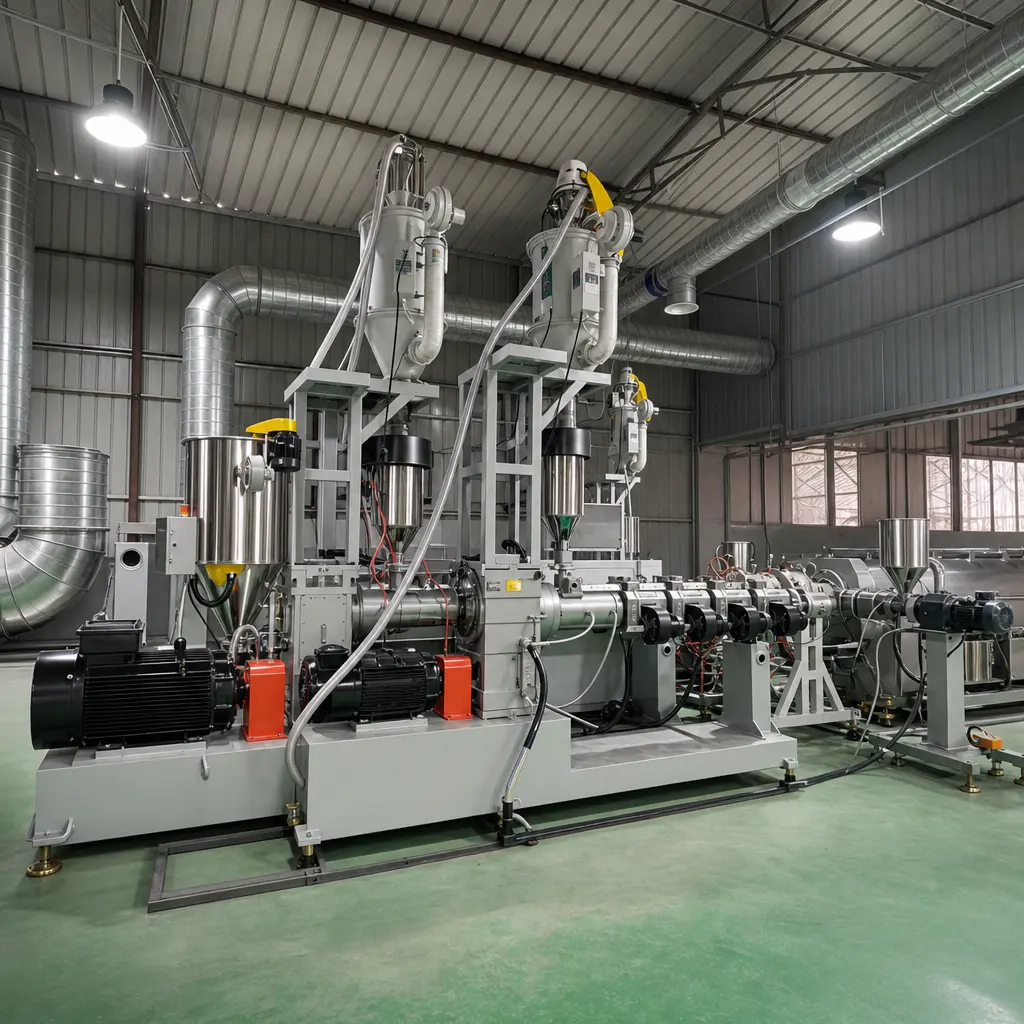
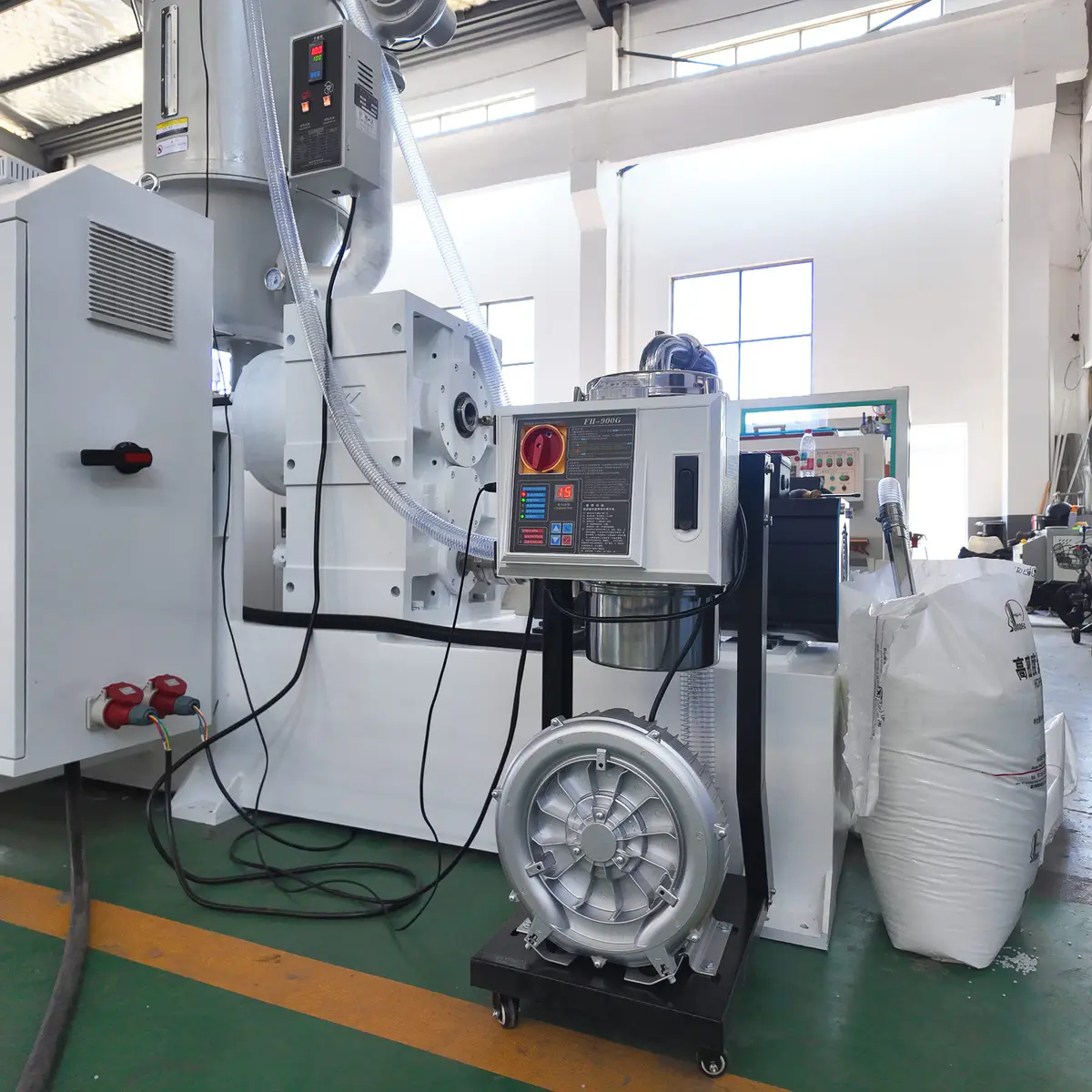
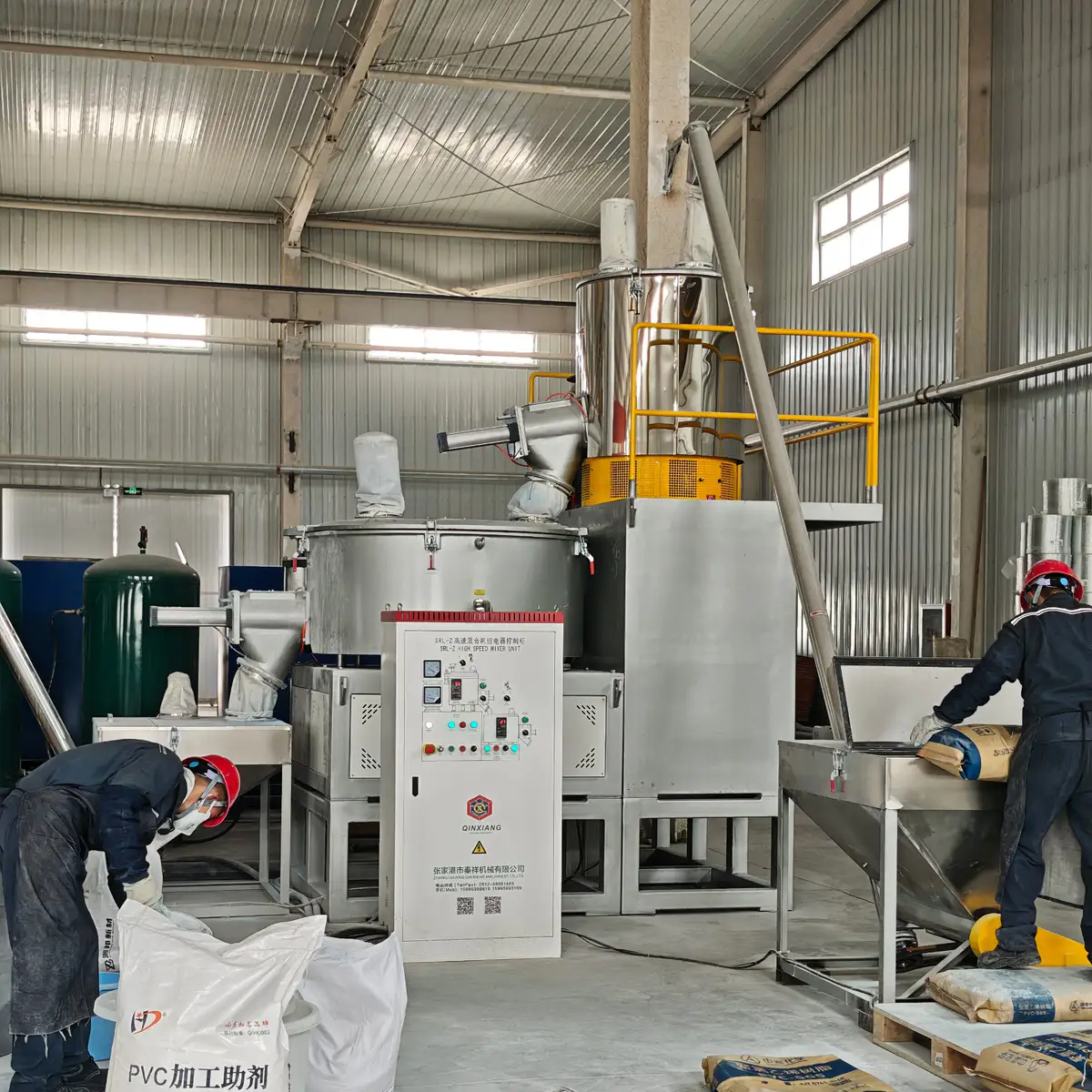
What We Need To Know
Send these details before we select anything. They let us pick the feeding method, dosing principle, hopper and feeder configuration around your actual process, not only around the extruder capacity.
Half of this is fine to start with. If you do not know the bulk density or the accuracy target, say so and we will work from your material and recipe.
- 01 Material type and formpellet, powder, dry blend or regrind
- 02 Number of ingredients1, 2, 3 or more components
- 03 Mixing ratio of each ingredientpercent by weight is enough
- 04 Total required throughputkg/h at the extruder
- 05 Regrind or filler percentageand whether it varies by batch
- 06 Bulk densityif available
- 07 Required dosing accuracyif specified
- 08 Existing extruder model or feeding layouta photo of the hopper area helps
Choose The Equipment By Feeding Task
Conveying, dosing and blending are three different jobs. What you need depends on whether you are moving material, controlling one ingredient, holding a multi component recipe, or handling powder and regrind that will not flow like clean pellets.
Six equipment types cover the range. Most lines use two or three of them together.
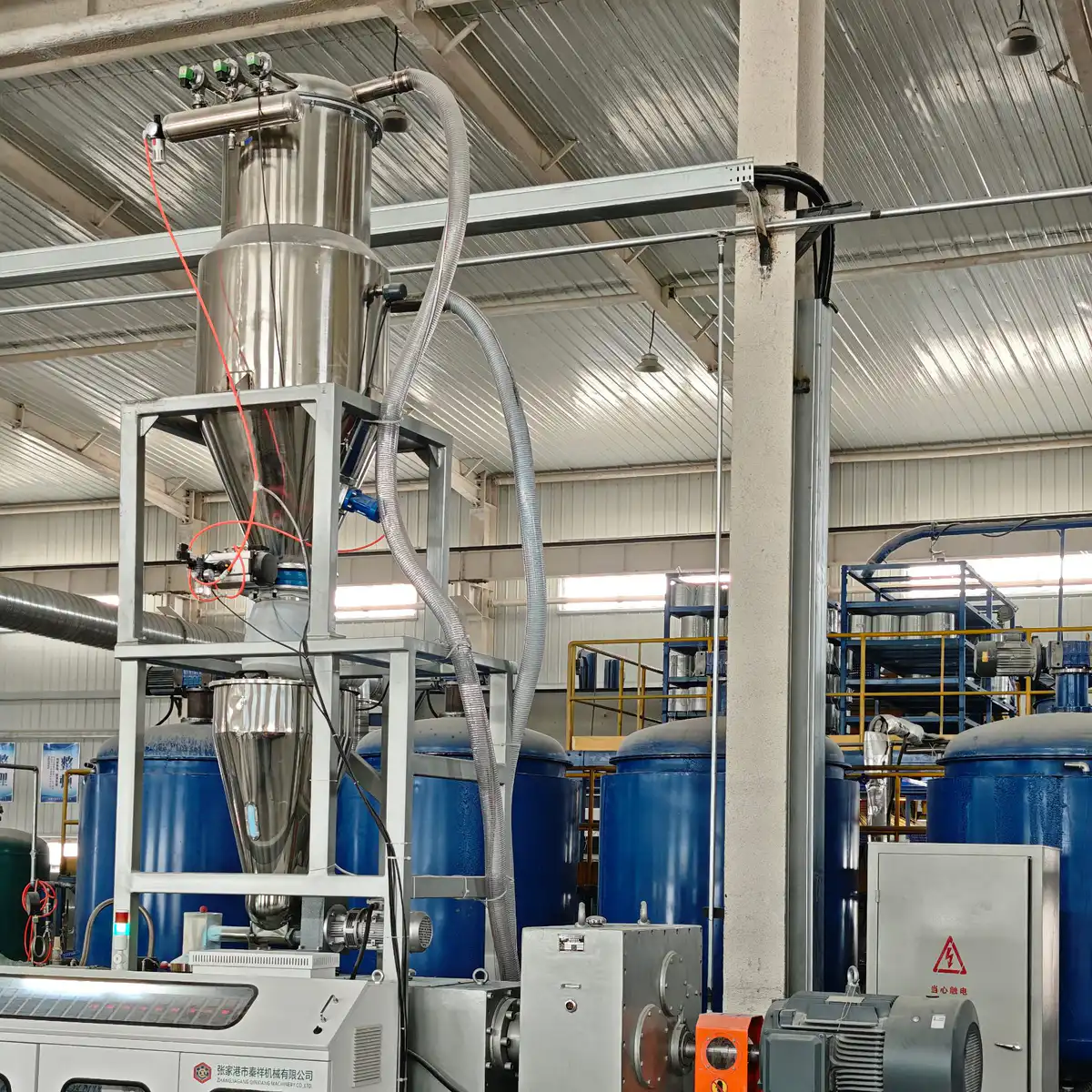
Material Feeding Systems
Move resin, powder or regrind from storage to the extruder hopper and hold a continuous supply. This is the transport layer of your line. It does not control the recipe, it makes sure the machines that do are never starved.
Best for: Material conveying, hopper loading and centralized feeding
Volumetric Dosing Systems
Meter material by screw or dosing unit displacement. A practical choice when your bulk density stays fairly stable and you do not need tight accuracy. Lower cost, simple to run, and it holds ratio well as long as the material stays consistent.
Best for: Masterbatch, additives and stable pellets with moderate accuracy needs
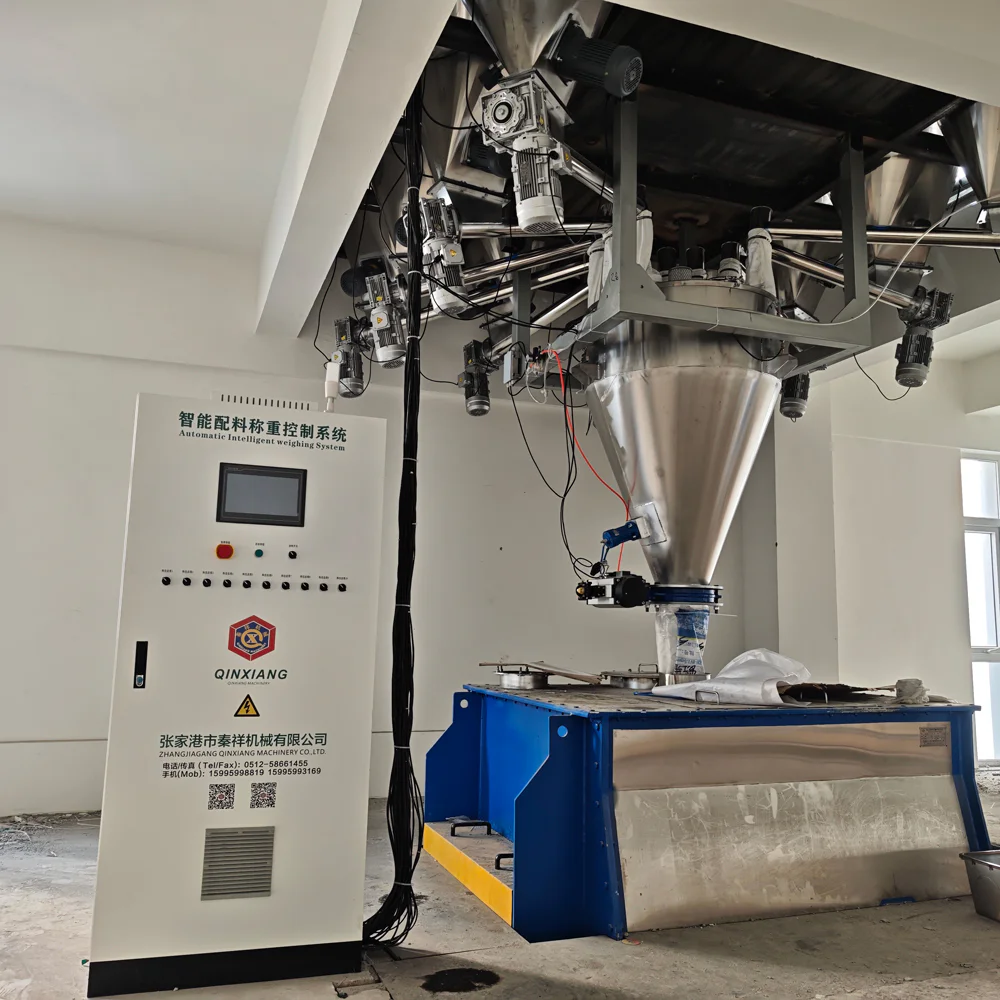
Gravimetric Dosing Systems
Weigh the actual material and correct the feed rate from that weight feedback. When your recipe accuracy matters or your material varies batch to batch, this is what keeps the ratio where you set it instead of where the material happens to flow.
Best for: Precise recipes, expensive additives, regrind and changing bulk density
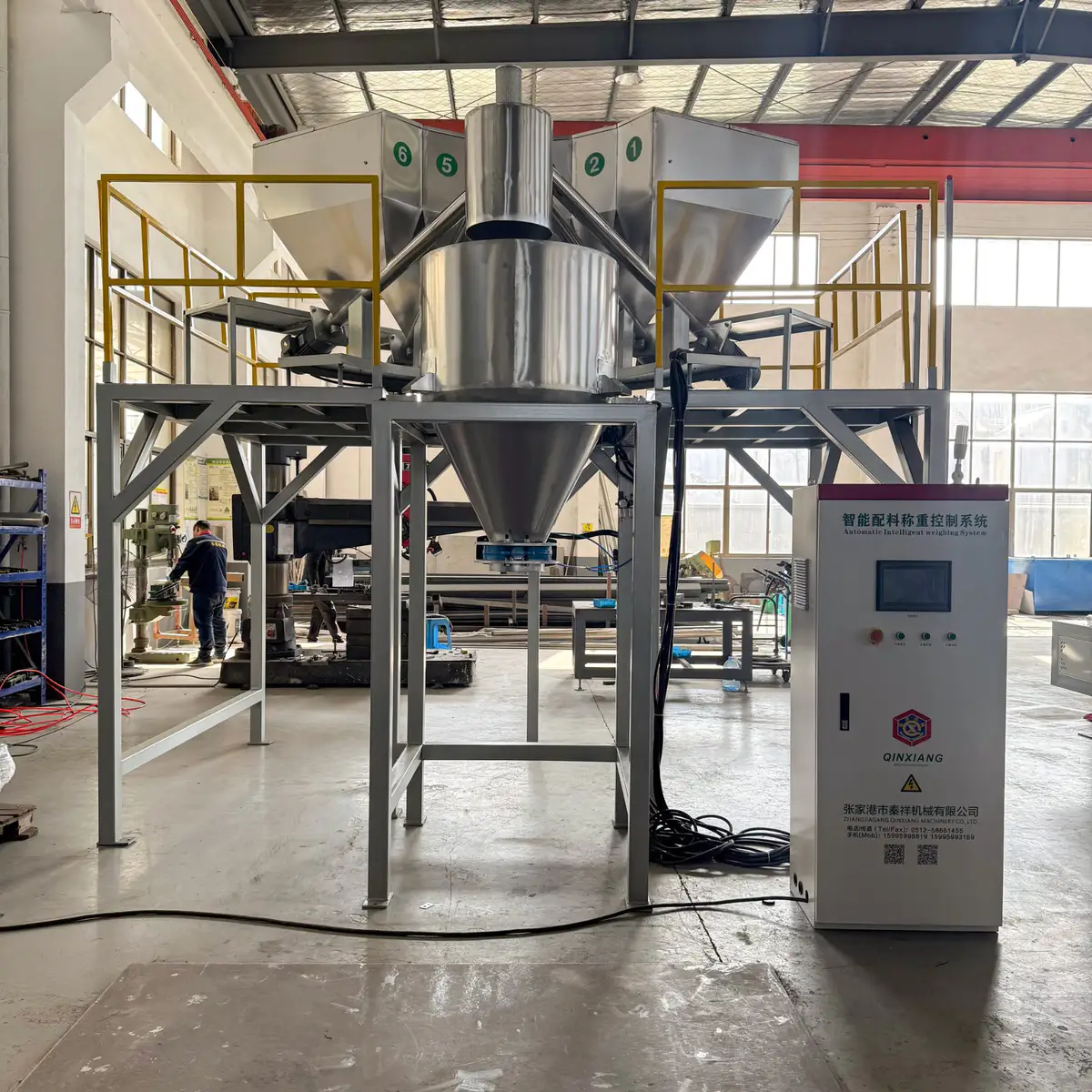
Loss-In-Weight Feeders
Measure how fast the weight in the hopper drops and use that rate to control the actual feed continuously. You get a real kg/h reading instead of an assumed one, which is what you want when output stability drives your wall thickness.
Best for: Continuous gravimetric feeding where stable kg/h output is required
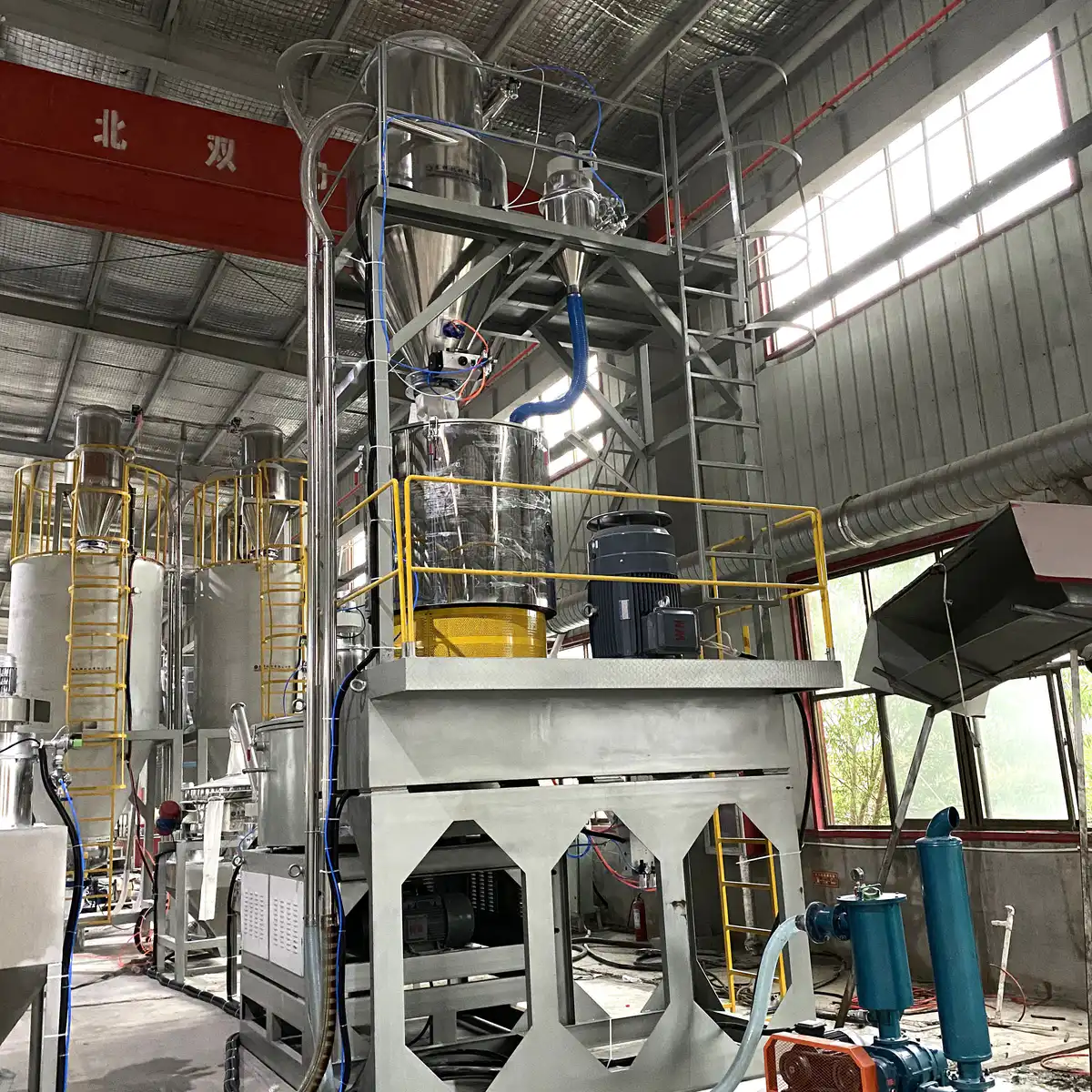
Gravimetric Blending Systems
Control several ingredients by weight before they reach the extruder, so the ratio between resin, masterbatch, regrind and additives stays where your formulation says it should be. Recipes are stored and recalled, not re-dialed by hand on every shift.
Best for: Multi component recipes and repeatable formulation control
Powder & Filler Feeders
Built for PVC powder, CaCO3 and other materials that do not behave like pellets. Hopper geometry, agitation and feeder type are picked from how your material actually discharges, which is the part most standard feeders get wrong.
Best for: PVC dry blend, high filler recipes and materials prone to bridging
Every Dosing System Is Voltage And Control Configured
Feeders, blenders and loaders are built to your local voltage, frequency and safety standard before shipment, and the control panel is set in the language your operators read. Confirm your market when you send the inquiry so the panel, motor and load cell setup are quoted correctly the first time.
If the system will sit on an extruder you already run, send the extruder model and a photo of the hopper area. Mounting flange, hopper height and signal connection to the extruder control are all part of the same quote.
Volumetric Or Gravimetric Dosing?
Both methods dose stably once they are matched to the right job. The real difference is how the system decides how much material it is actually feeding.
Choose from your material consistency, your recipe tolerance and what your process control needs, not from the price gap alone.
Highlighted cells mark the stronger fit for that requirement.
Volumetric Is Enough When
- You run clean pellets with a bulk density that holds steady
- Your masterbatch or additive ratio has room in the tolerance
- You use no regrind, or the regrind percentage is fixed
- You want a lower system cost and a panel anyone on shift can run
Recalibrate at every material change and a volumetric unit holds your ratio well.
Go Gravimetric When
- Bulk density moves between batches or between suppliers
- Your recipe tolerance is tight, or the additive is expensive
- Regrind percentage changes with whatever comes off the line
- You need real kg/h figures and a record of what each run consumed
Weight feedback corrects the feed rate while the line is running, not at the next calibration.
Many lines run both, volumetric on the bulk resin and gravimetric on the additive that has to stay exact. Send your recipe and we will tell you where each one belongs.
Pellets, Powder And Regrind Do Not Feed The Same Way
A feeder that runs clean on uniform pellets can stall on PVC powder, CaCO3 or irregular regrind. Shape, bulk density and flow behavior decide how evenly your material leaves the hopper and reaches the dosing screw.
If the hopper does not discharge evenly, no amount of dosing accuracy downstream will fix the ratio.
Predictable
Pellets
Uniform pellets flow the way you expect, which makes them the easiest material to convey and meter. That said, feed performance still shifts when you change pellet size, switch resin supplier or move to a different formulation, so a feeder calibrated on one grade is not automatically right for the next.
What We Check
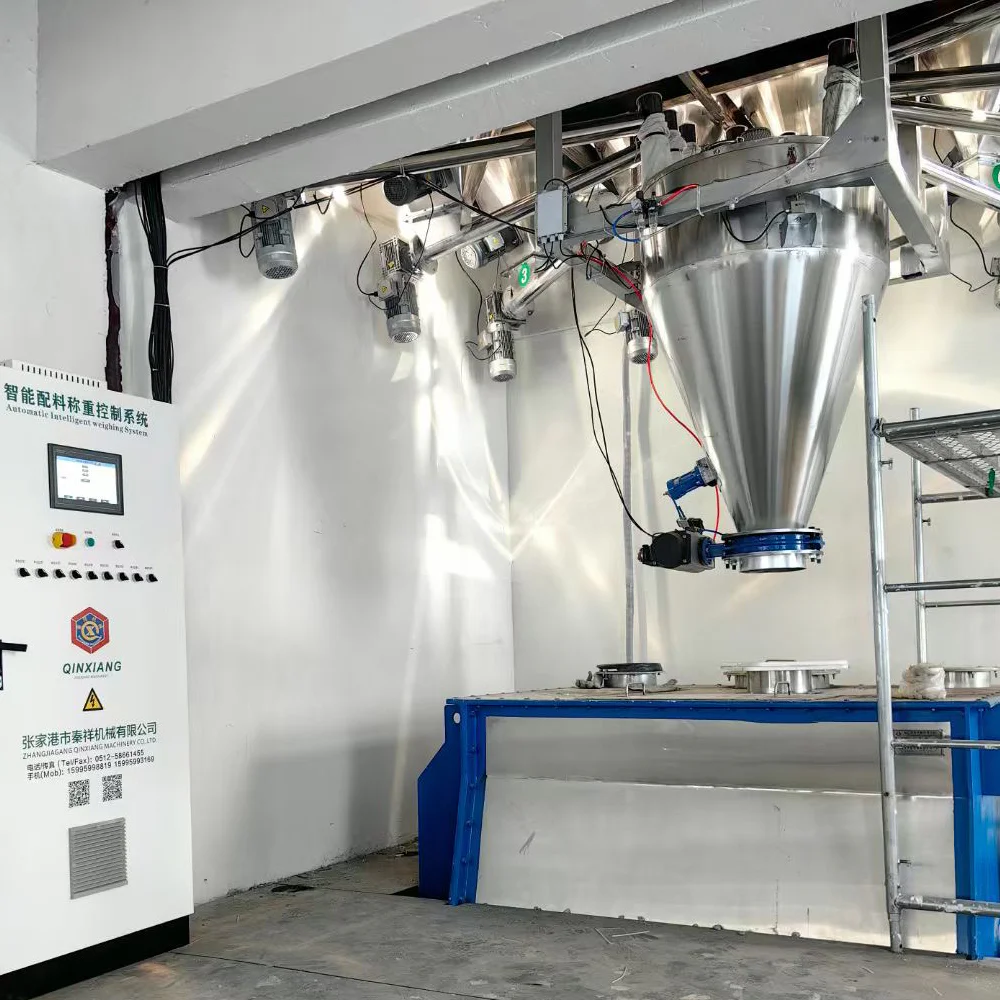 Bridging Risk
Powder & Filler
PVC powder, CaCO3 and fine additives compact under their own weight, arch above the outlet and then release in bursts. High filler content usually needs a different hopper and feeding arrangement from your pellet lines, not just a smaller screw on the same unit.
What We Check
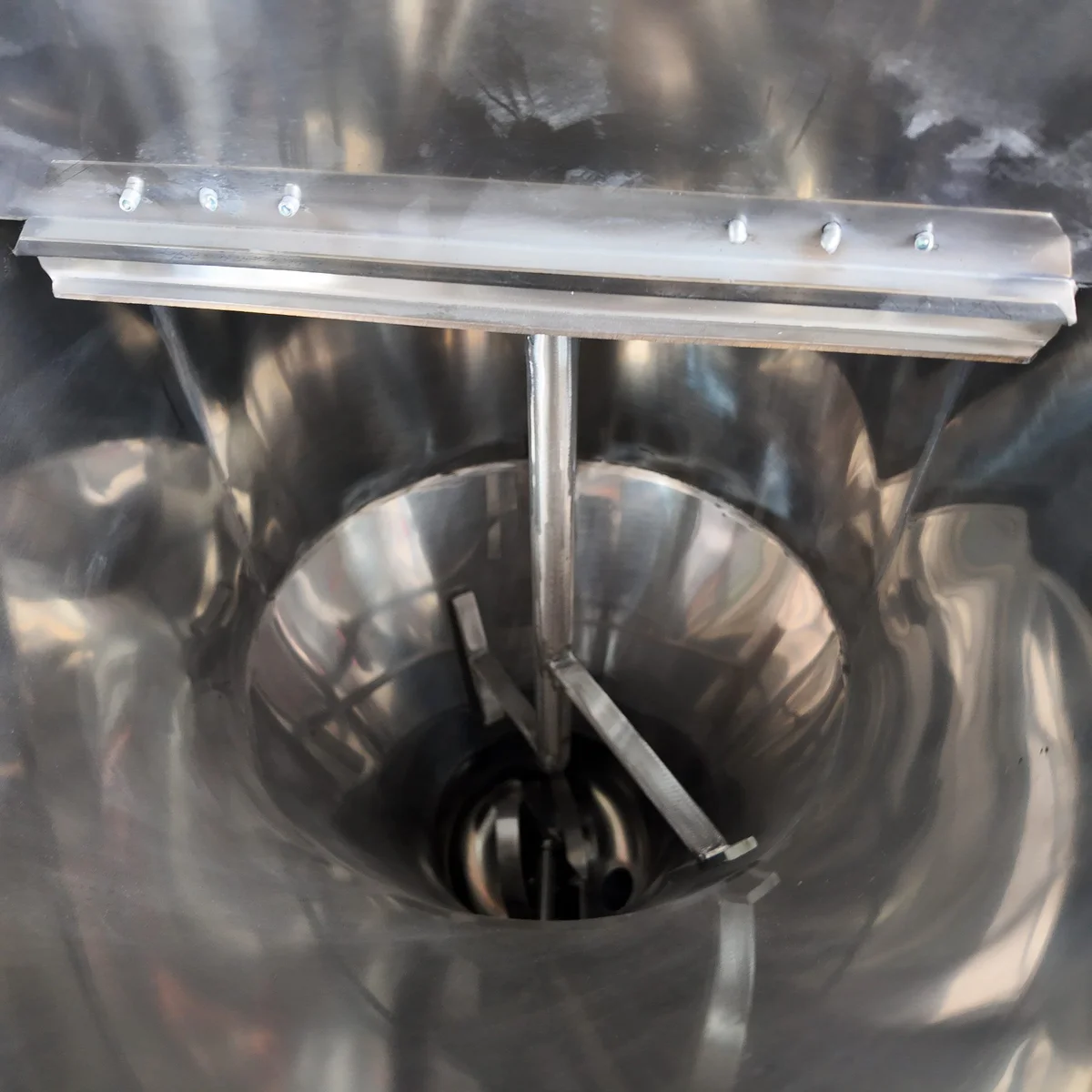 Varies By Batch
Regrind & Flakes
Regrind changes on you. Particle size, shape and bulk density move with whatever came off the line that day. Irregular flakes interlock and bridge inside the hopper, so you get intermittent feeding even when the average capacity on paper looks more than sufficient.
What We Check
Send a photo of your material and the bulk density if you have it. That one detail changes the hopper and screw selection more than the kg/h number does.
When Material Does Not Flow Properly
These four turn up in almost every hopper we are asked to look at. All of them happen above the dosing screw, which is why a more accurate feeder never fixes them on its own.
The answer sits in hopper geometry, agitation and how you refill.
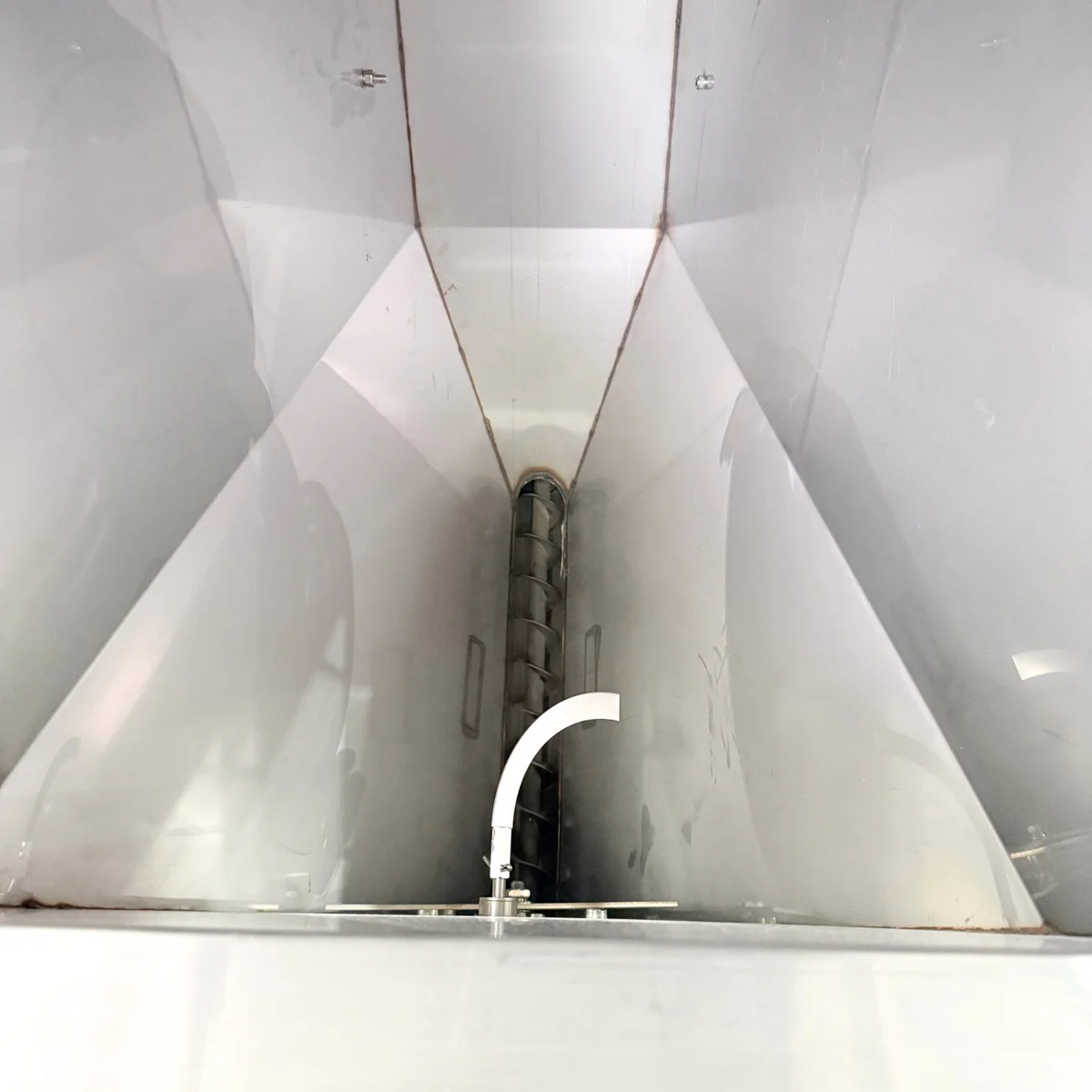
Bridging
Material forms an arch above the outlet and stops coming down while the hopper still looks full. Your feeder keeps turning and the extruder keeps pulling, but nothing is being delivered.
On the line: hopper level barely drops, output falls off, and someone ends up tapping the side of the hopper every few minutes.
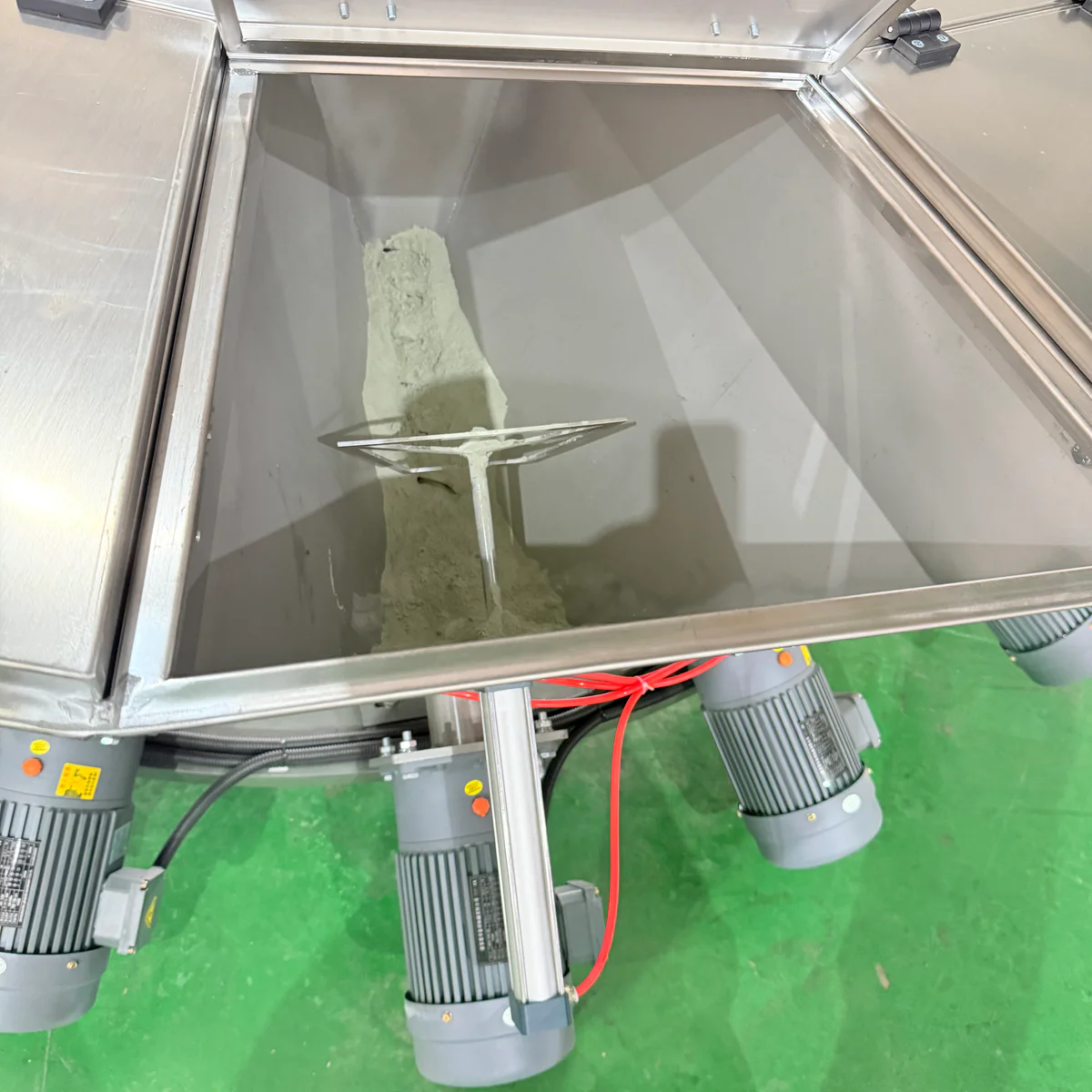
Rat-Holing
Material drains through one narrow channel down the middle while everything against the hopper wall stays where it is. The feed keeps running, so the problem hides until the channel collapses.
On the line: you keep refilling on top of material that never moves, and the old stock at the walls ages in place.
Flake Interlocking
Irregular regrind particles catch against each other and choke the path toward the feeder. Average capacity looks more than sufficient on paper, but the material only releases when the pile shifts.
On the line: feeding comes in bursts, and your regrind percentage swings from one minute to the next.
Material Buildup
Powder and additives cake around the outlet and on the feeding components, and the effective opening closes a little every hour. Nothing stops, the rate just quietly moves away from what you set.
On the line: the feed drifts across a shift, and nobody catches it until the finished pipe no longer matches the last batch.
If any of these sound like your hopper, describe what you are seeing and send your material. We will tell you whether it is a hopper problem, an agitation problem or a feeder problem before you buy anything.
The Feeder Must Match The Material
On a difficult flow material, adding motor power does not solve the feeding problem. It pushes harder against the same arch. Hopper geometry, screw configuration, agitation and the refill arrangement have to be chosen from how your material actually behaves in the hopper.
If you run powder, filler or regrind, send the four items below with your inquiry. That is enough for us to configure the feeding section around your material instead of around a catalogue number.
Material Form
Pellet, powder, dry blend, flake or regrind
Particle Size
Approximate is fine, a photo works too
Bulk Density
If you have it, and whether it varies
Required kg/h
Per feeder, or total at the extruder
Small Dosing Errors Add Up Over A Full Production Day
A deviation that looks harmless on a single reading turns into real money once your line runs around the clock. It matters most when your recipe carries expensive additives, color masterbatch, virgin resin or a controlled regrind percentage.
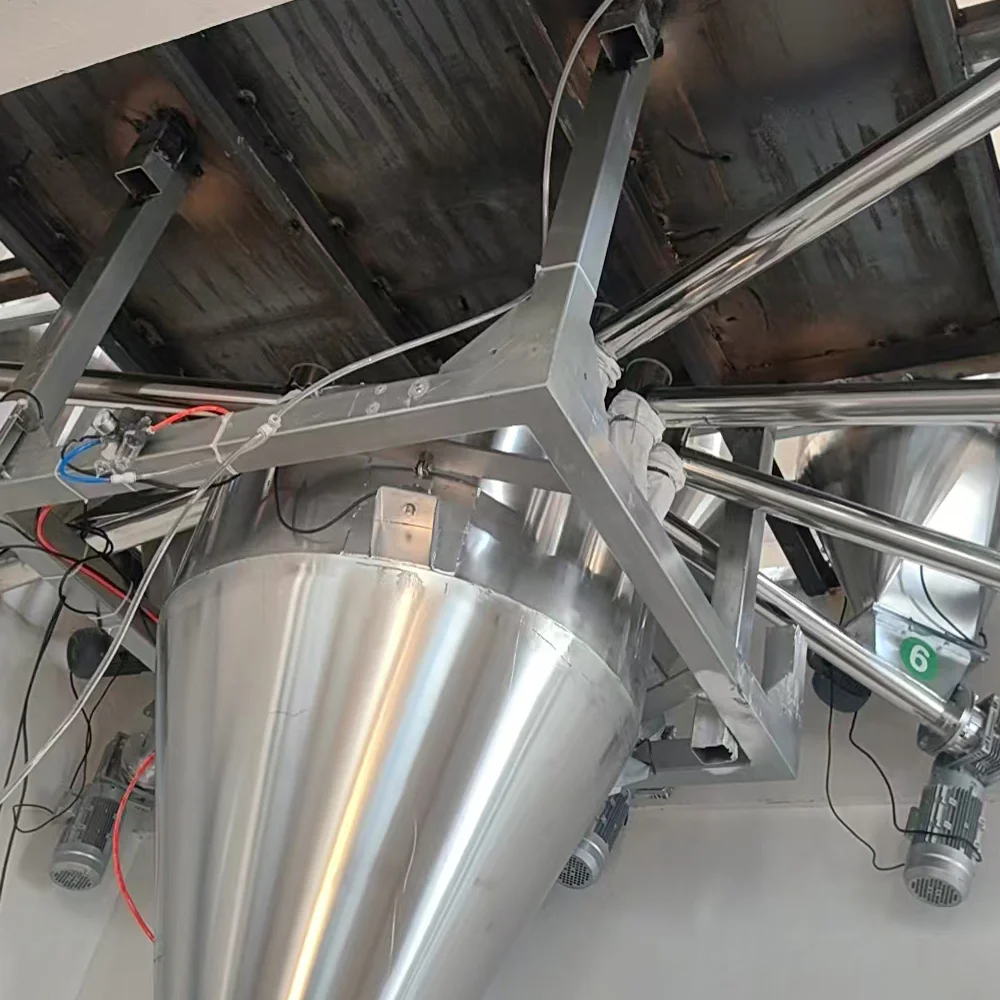
Control The Ratio, Not Just The Feed Rate
For every ingredient, the question is not only how many kilograms per hour the feeder can deliver. It is whether your required proportion holds from the first hour of the run to the last.
Define the six conditions on the right and the answer becomes obvious: how much dosing control your process actually needs, and where the simpler system is already enough.
Define Before You Select
Total Extrusion Output
The kg/h your line has to hold
Percentage Of Each Ingredient
By weight, for every component
High Cost Ingredients
Where overdosing actually hurts
Regrind Or Filler Content
Fixed percentage, or does it move
Allowed Recipe Tolerance
How far off setpoint you can live with
Records Or Traceability
Whether each run has to be logged
Make Dosing Follow The Extrusion Process
Your material consumption moves with extruder output, so a dosing system running as an isolated unit will always be one step behind the line. Where your line configuration allows it, dosing control is linked to the extrusion process so the ingredient ratios follow the actual production rate.
Here is the chain that has to stay connected.
The Chain
Recipe
What you specified
Dosing Control
Setpoint per ingredient
Actual Material Flow
What each feeder delivers
Extruder Output
kg/h at the screw
Line Speed
Haul-off, metres per minute
Pipe Weight Per Metre
What your customer pays for
Break the link anywhere in the middle three and your recipe stops matching your output. The three coupled stages move together on a running line, which is why the dosing setpoints have to move with them.
Follow Extruder Output
When you change screw speed or your required throughput moves, the dosing rate has to move with it while every ingredient stays at its specified share.
This is where lines running masterbatch, additives, filler or regrind lose the most, because the drift only shows once you look at a full day of material.
Keep The Recipe During Speed Changes
Raising or lowering line output should never quietly change your formulation. Ramp up for a bigger order and the pipe coming off the line has to be the same pipe.
The control system coordinates the dosing setpoints so each component keeps following the recipe while the production rate moves.
Manage Recipes And Settings
If you run several formulations, recipe management saves your operators from setting everything by hand each time and makes it easy to return to parameters that already work.
Depending On The Control Configuration
- Recipe storage and recall
- Ingredient setpoints
- Actual feed rate display
- Low material and feeding alarms
- Calibration functions
- Production data recording
Coordinate With The Extruder You Already Run
On an existing line, how far the integration can go depends on what your extruder already gives us to work with. Some control systems hand over a clean speed or output signal, others do not, and that decides the interface before anything else does.
The point is not to make the feeder react to another machine. It is to hold your material ratio while the line changes production rate.
Send the eight items on the right and we will confirm the communication method and control scope from your actual extruder and electrical configuration, before anything goes into production.
Before We Define The Interface
Extruder Model
And the control system on it
Throughput Range
Lowest and highest kg/h you run
Speed Or Output Signal
Whether the extruder can output one
Current Feeding Method
What sits on the hopper today
Dosing Components
How many ingredients to control
Recipe Control Needed
Manual setting or stored recipes
Communication Interface
What the panel supports
Electrical Configuration
Voltage, frequency, panel language
When Feeding Problems Start Affecting Production
Unstable feeding does not automatically mean the feeder is undersized or the dosing system is inaccurate. The cause can sit in the material flow, the hopper, the dosing screw, the refill system, the conveying line, the weighing system, or in the material supply upstream of all of it.
Start from the symptom you actually see on the line, then work down the feeding path.
Pick Your Symptom
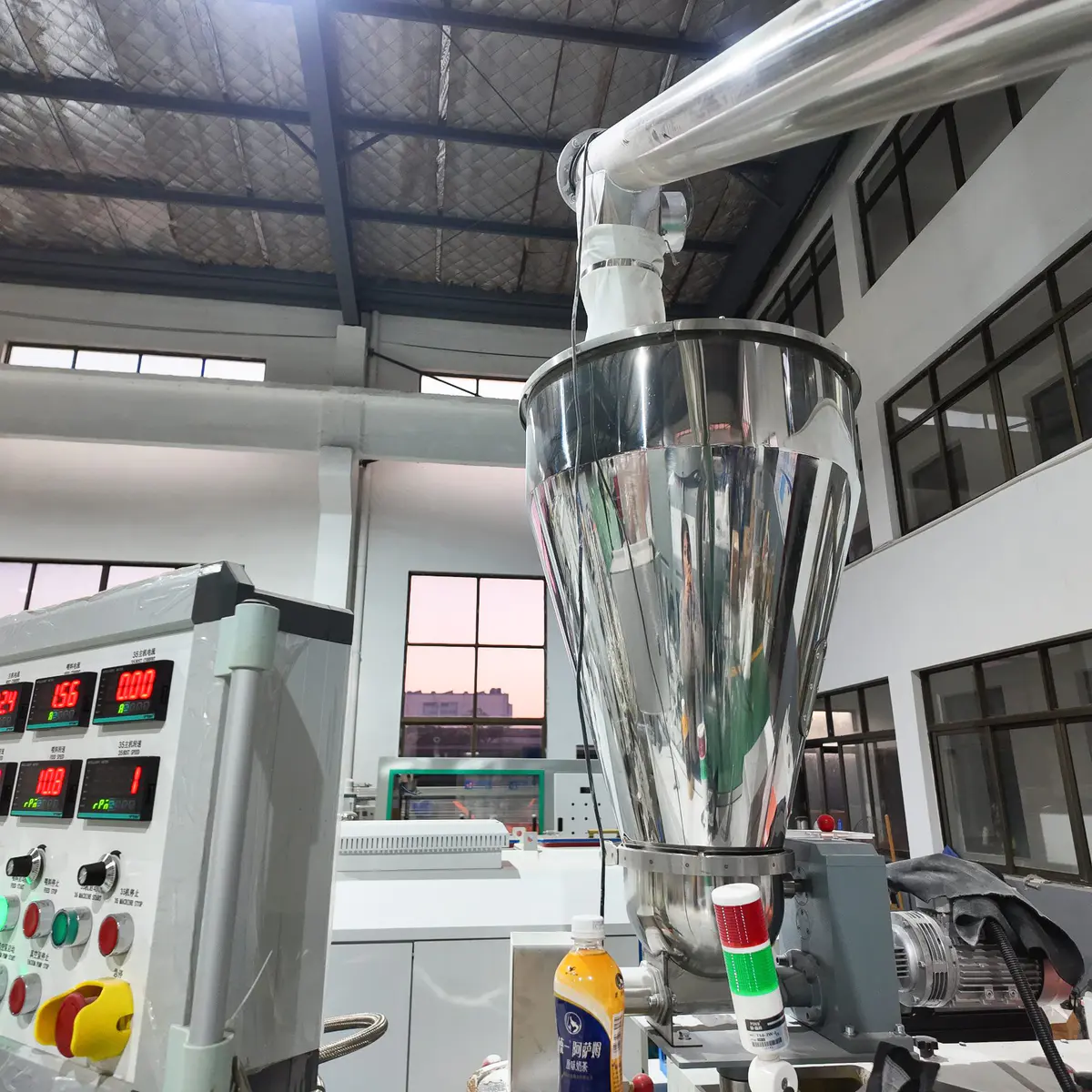
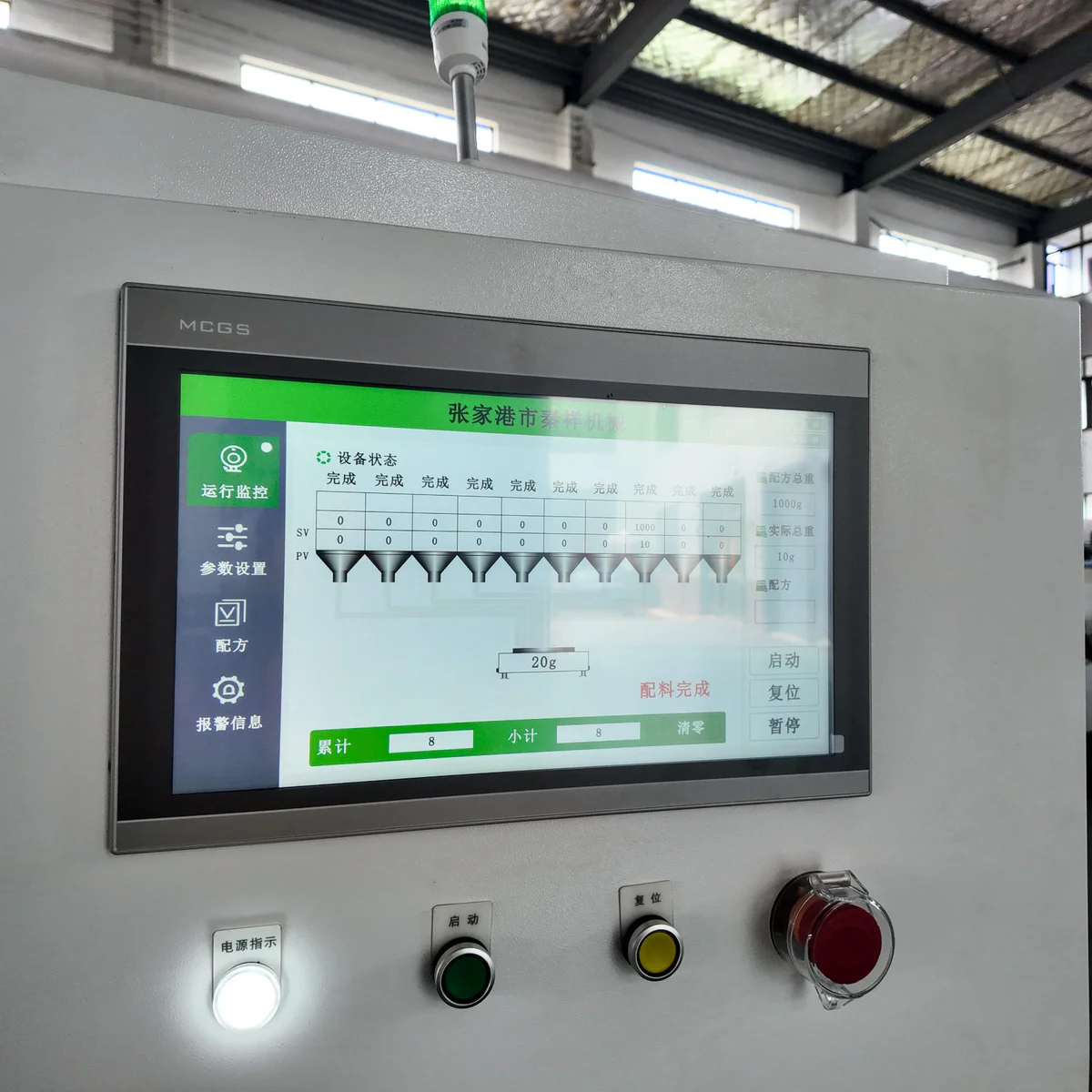
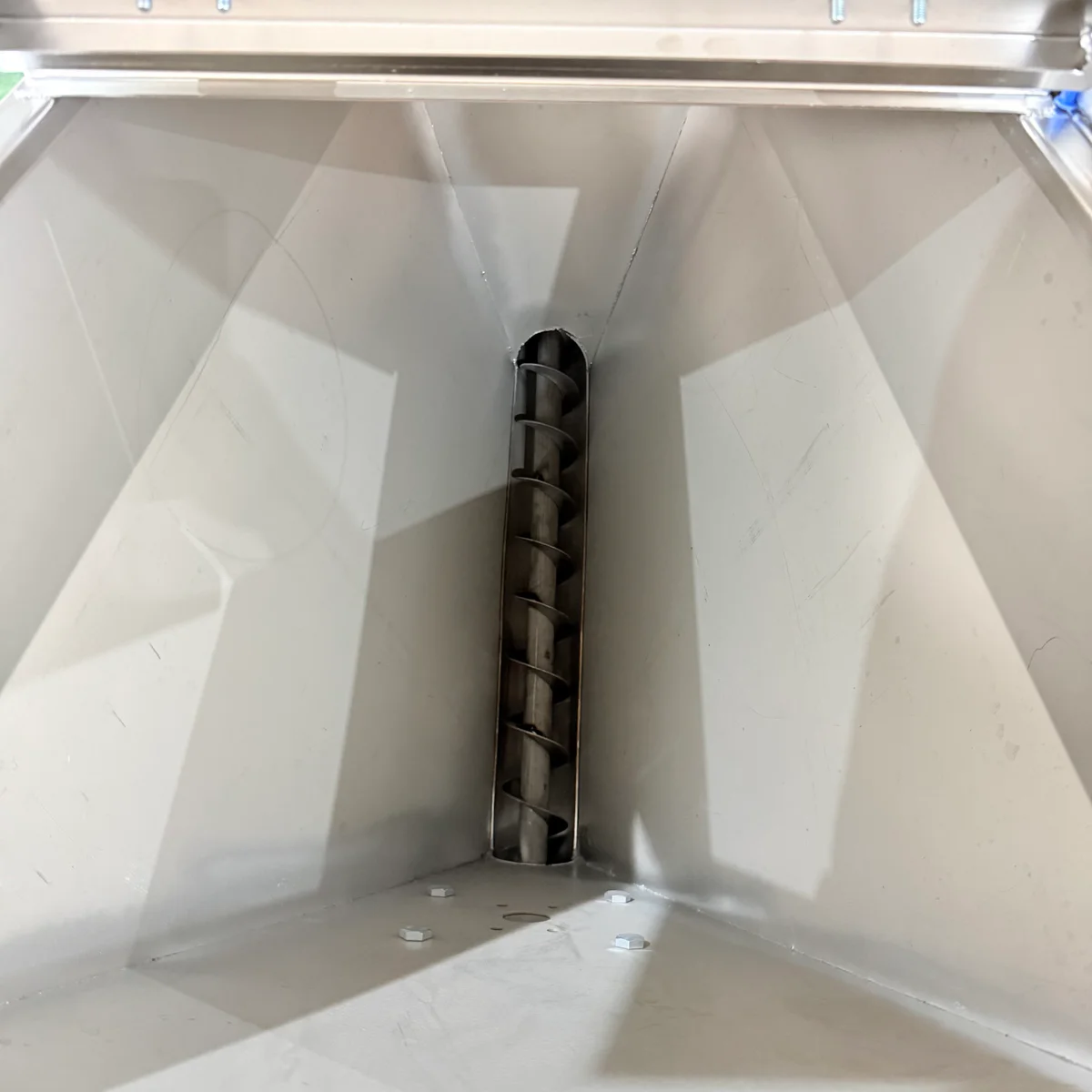
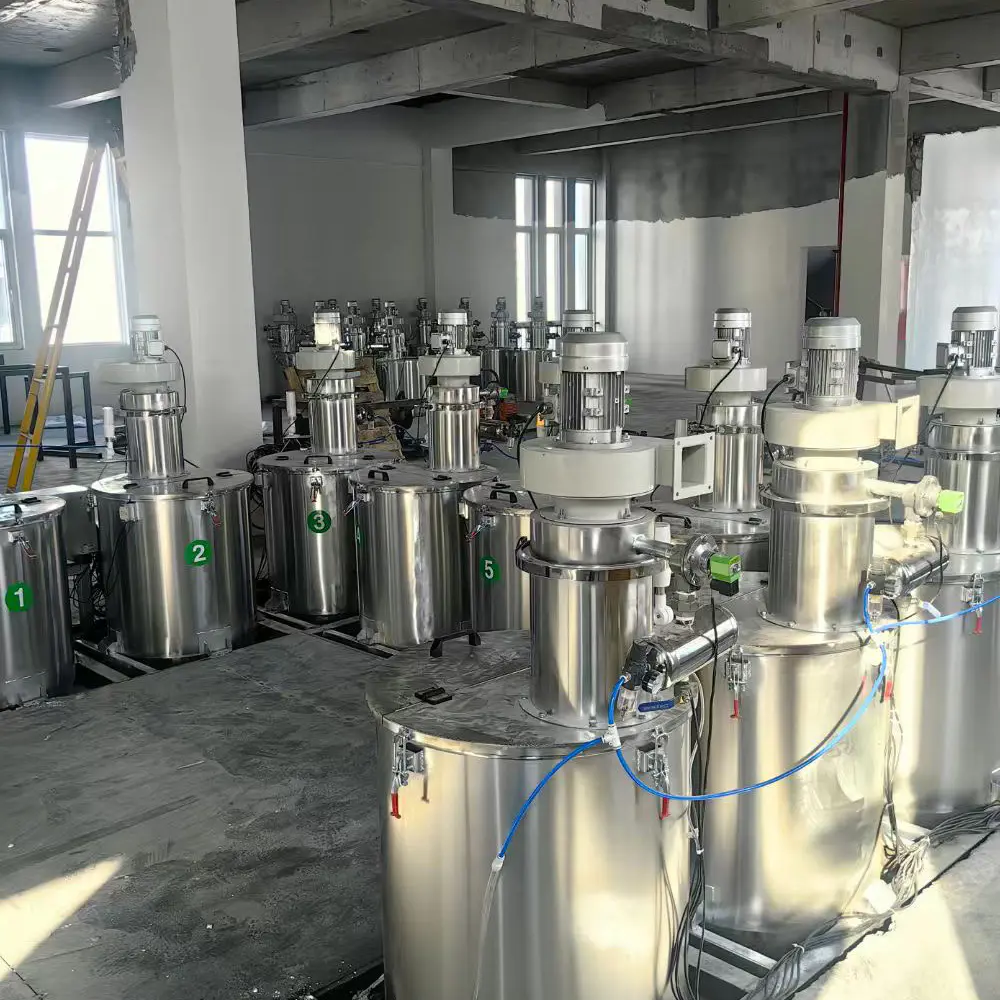
Do Not Diagnose The Feeder In Isolation
A feeding problem can start before the dosing unit, inside it, or after it. Finding where the material flow first becomes unstable is worth more than raising feeder speed or replacing parts without knowing the cause.
Tell us which symptom you see and where along this path it starts. That is usually enough for us to narrow it down before anything is quoted.
Where Does It First Go Wrong
Material Supply
Storage and conveying
Hopper Flow
Discharge behavior
Dosing
Screw and control
Refill
Valve and weighing
Extruder
Where you see it
The symptom always shows up at the right end of this path. The cause rarely does.
Reduce Residual Material Between Two Recipes
Switching material or formulation is not only a control system operation. Resin, masterbatch, powder or regrind left in the hopper, the dosing screw or the conveying path goes straight into your next run.
So the feeding system has to be judged on cleaning access, not only on dosing accuracy. Four things decide how fast your changeover actually is.
Remove Material From The Feeding Path
Before you change a recipe, clear whatever is left out of the hopper, the dosing unit and the connected feeding path, as far as your equipment configuration allows. The material you miss is the material that shows up in the first pipes of the next run.
Pay Particular Attention To
- Hopper corners and outlets
- Dosing screw and housing
- Mixer or blender chamber
- Flexible hoses and conveying lines
- Refill hopper
- Filters and material traps
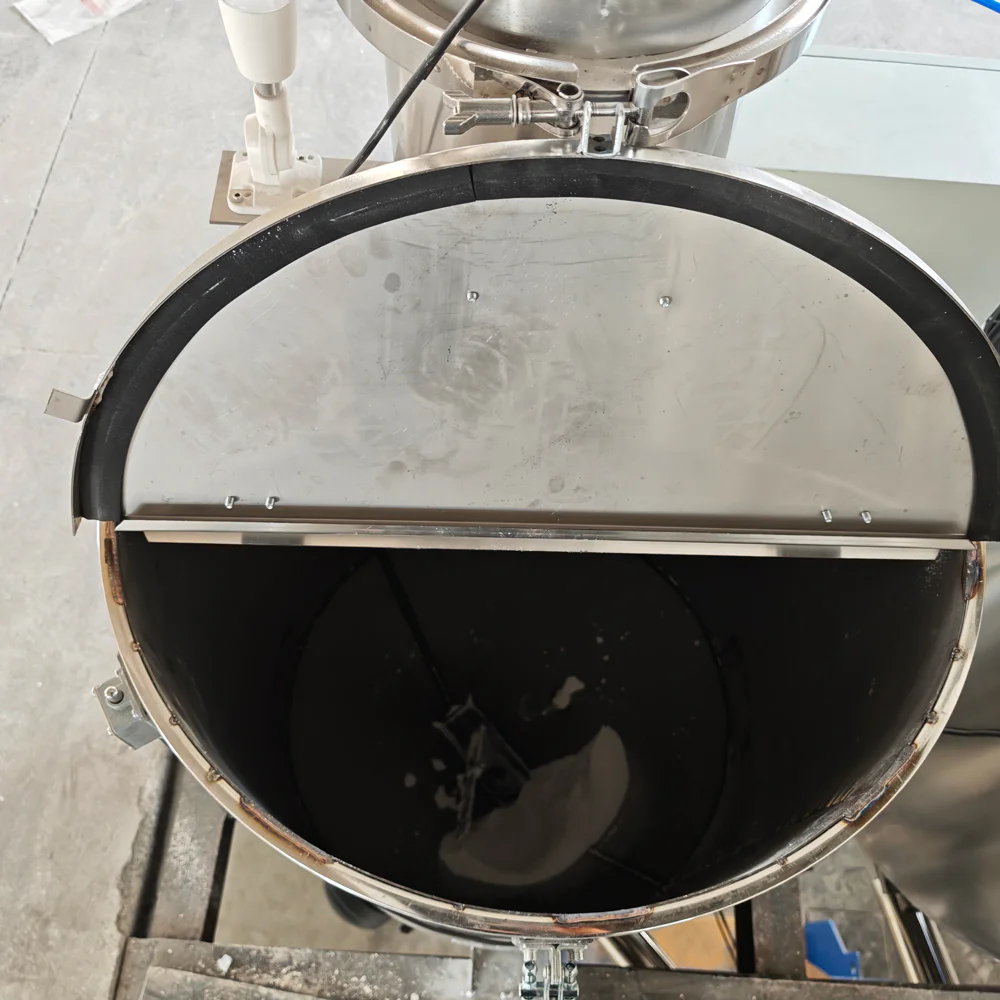
Reduce Dead Zones
Every internal area where material can sit makes your color and formulation changes slower and less reliable. Dead zones are not something you tune out later. They are built into the equipment.
If you change over often, hopper geometry, screw access and the number of material retention points belong in the selection conversation, before the line is installed, not after your operators have been fighting it for six months.
Worth Deciding Early
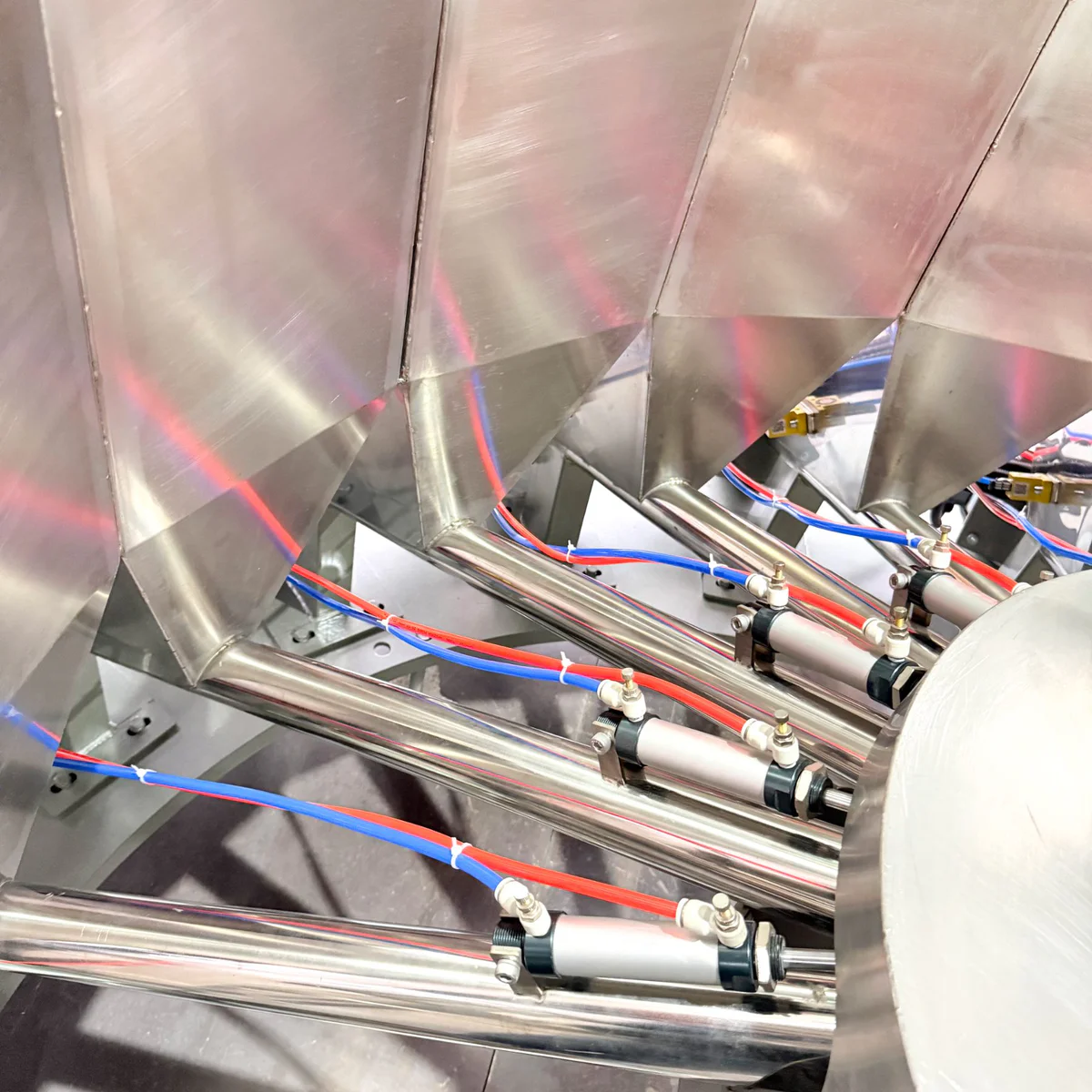
Make Routine Cleaning Accessible
Anything that needs cleaning regularly should be reachable without pulling half the unit apart. If a cleaning step takes tools and twenty minutes, it quietly stops happening on a busy shift.
Depending On The Equipment Design
- Hopper opening and internal access
- Dosing screw removal
- Mixer access
- Filter cleaning
- Material discharge
- Inspection of remaining material
Match the cleaning method to the material. Fine powder, sticky additives and irregular regrind all need a different routine from standard pellets.
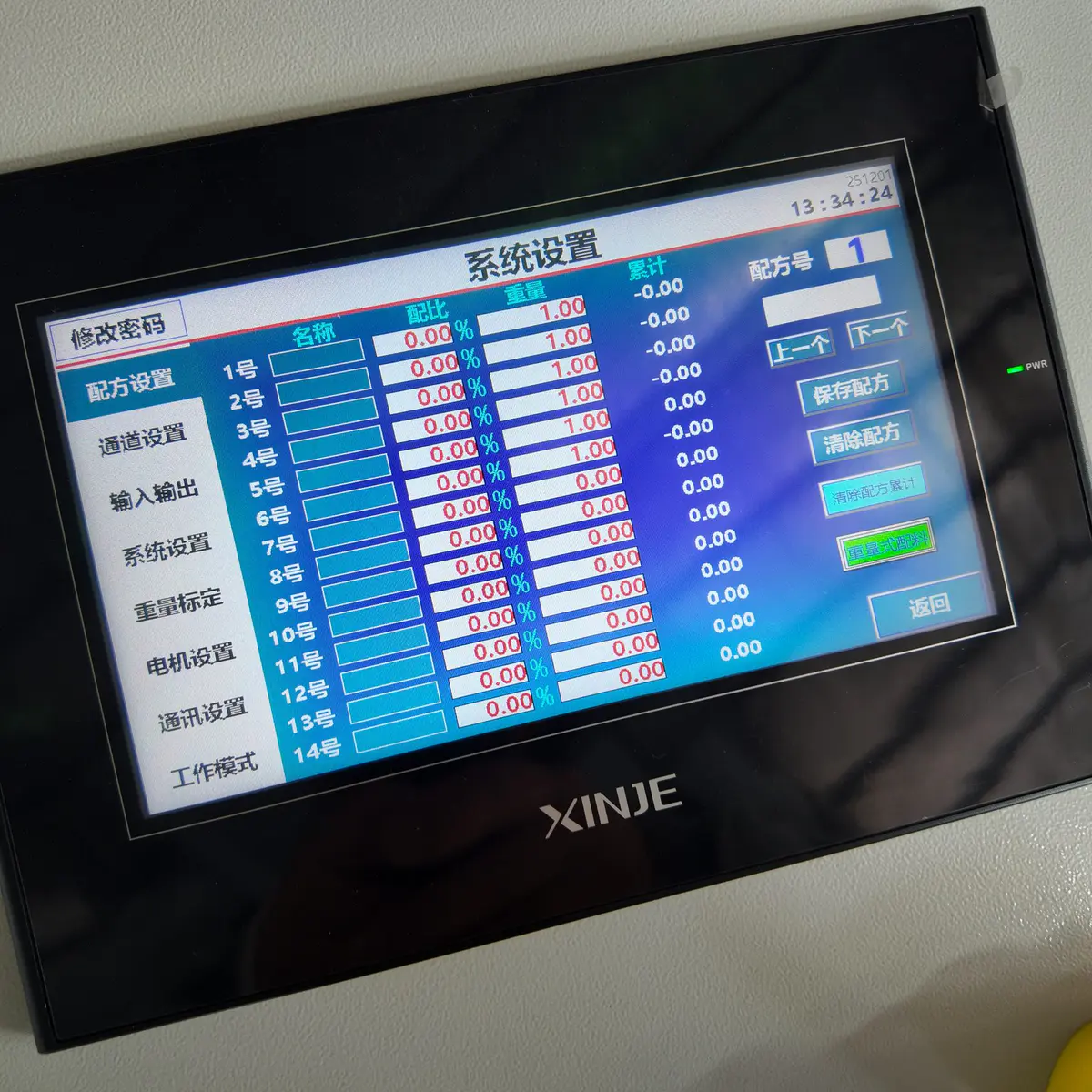
Confirm The New Recipe Before Restart
After cleaning, the next run should not depend on someone changing the recipe name on the screen. Seven checks, two minutes, and you do not scrap the first bundle of pipe.
Confirm Before You Start
- Correct material connected
- Correct ingredient percentages
- Previous material removed
- Feeder calibration where required
- Dosing screw and hopper correctly reassembled
- Recipe parameters correctly loaded
- Material flow stable after startup
Changeover Starts With Equipment Design
If your production changes color, formulation or regrind percentage often, tell us how often those changes happen and which materials are involved. Two changeovers a week and two a shift are not the same machine.
That is what decides whether hopper access, screw removal, cleaning points and recipe management need extra attention in your configuration, or whether the standard arrangement already covers you.
Add Dosing Control To The Line You Already Run
You probably do not need a new extruder. If the problem is material feeding, recipe control or dosing consistency, the fix goes in above the machine you already have.
Your material system, feed throat, available space and control interface decide what fits. The rest of the line stays where it is.
-
Existing Line
Kept as it is
-
Upgrade Module Added
Loading, dosing, recipe control, sized to your extruder
-
Existing Extruder
Same machine, same footprint
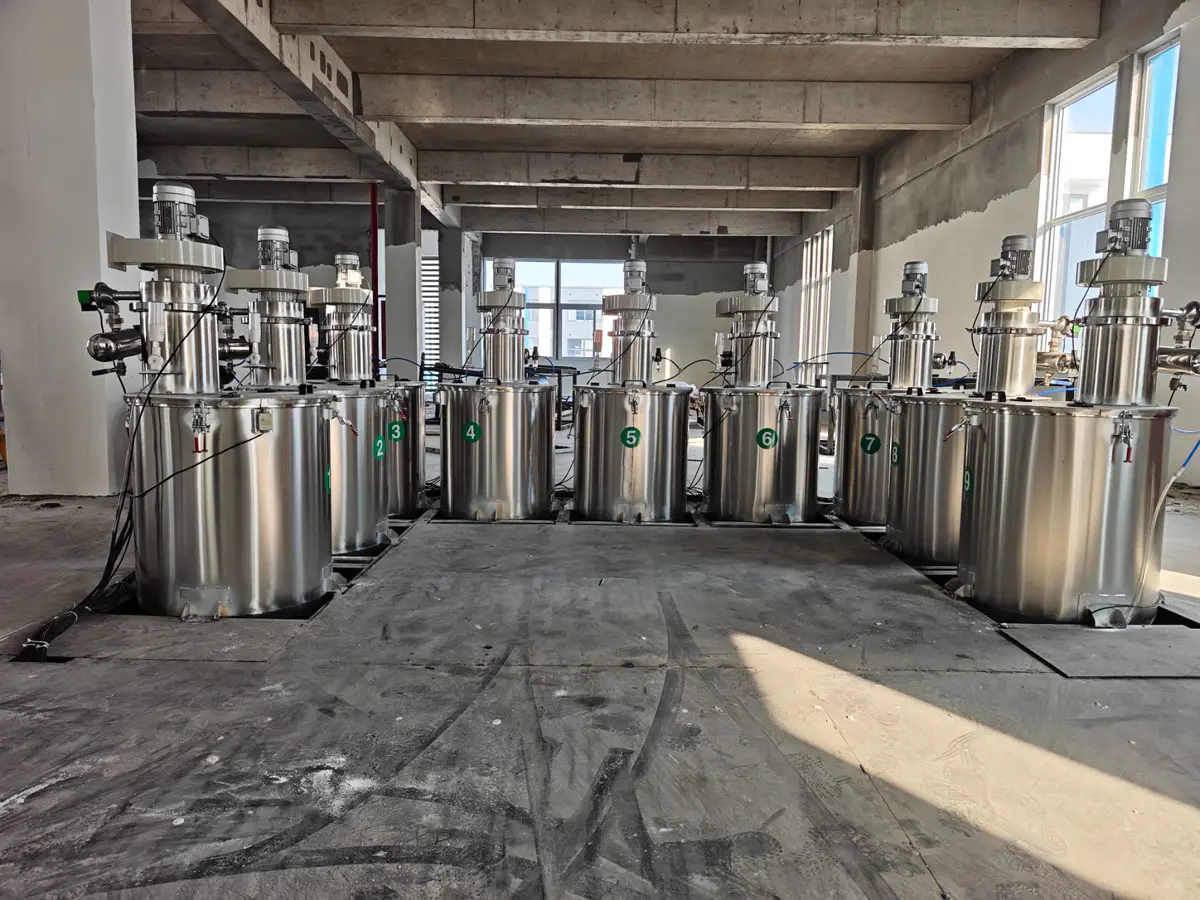
A dosing module fitted above an extruder that was already in production. Nothing downstream was touched.
Where Most Existing Lines Start
Most retrofit inquiries fall into one of these three. If yours does, the configuration is already familiar to us.
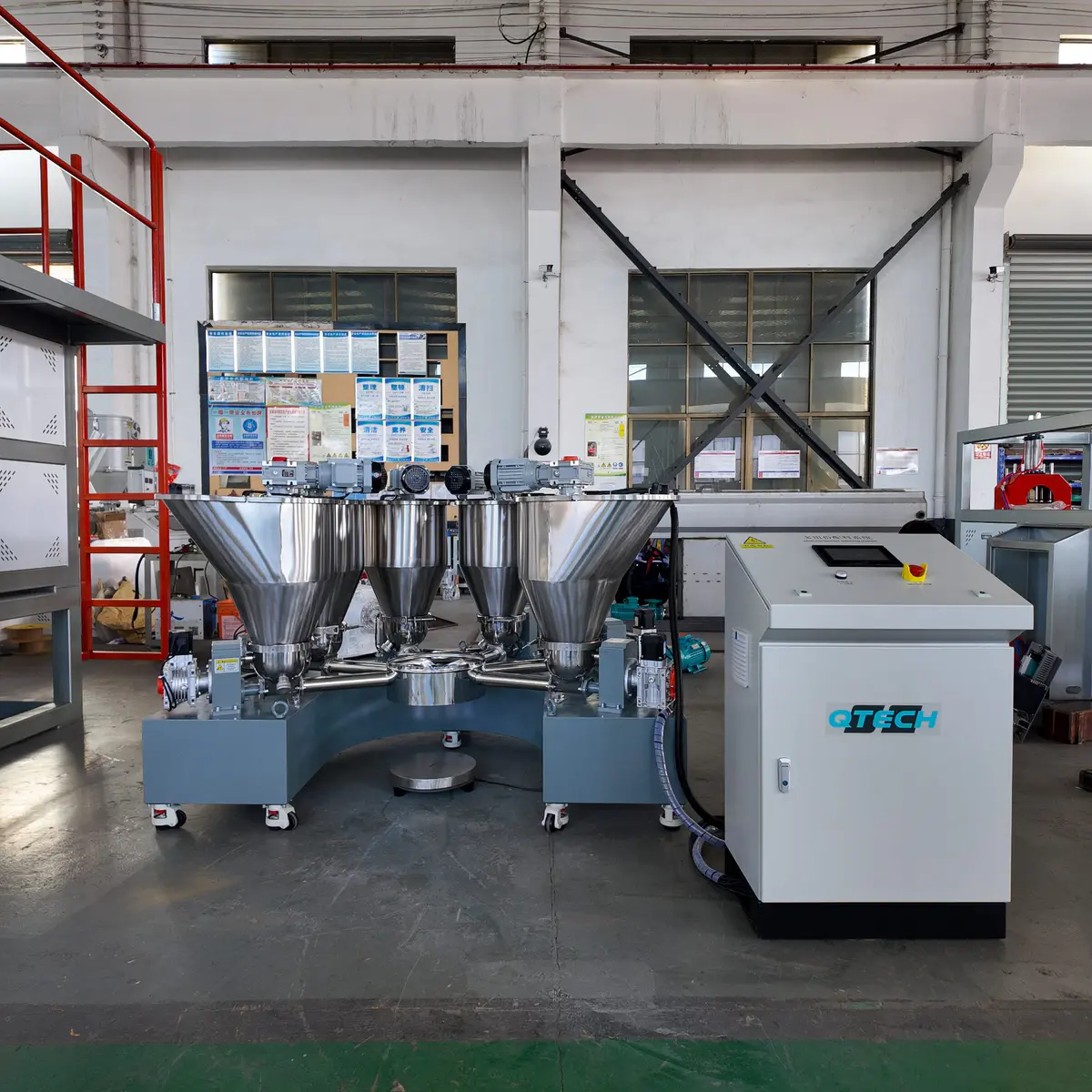
From manual mixing
To Automatic Dosing
The recipe stops depending on who is mixing that shift. Setpoints replace buckets, and the same batch comes back the same way tomorrow.
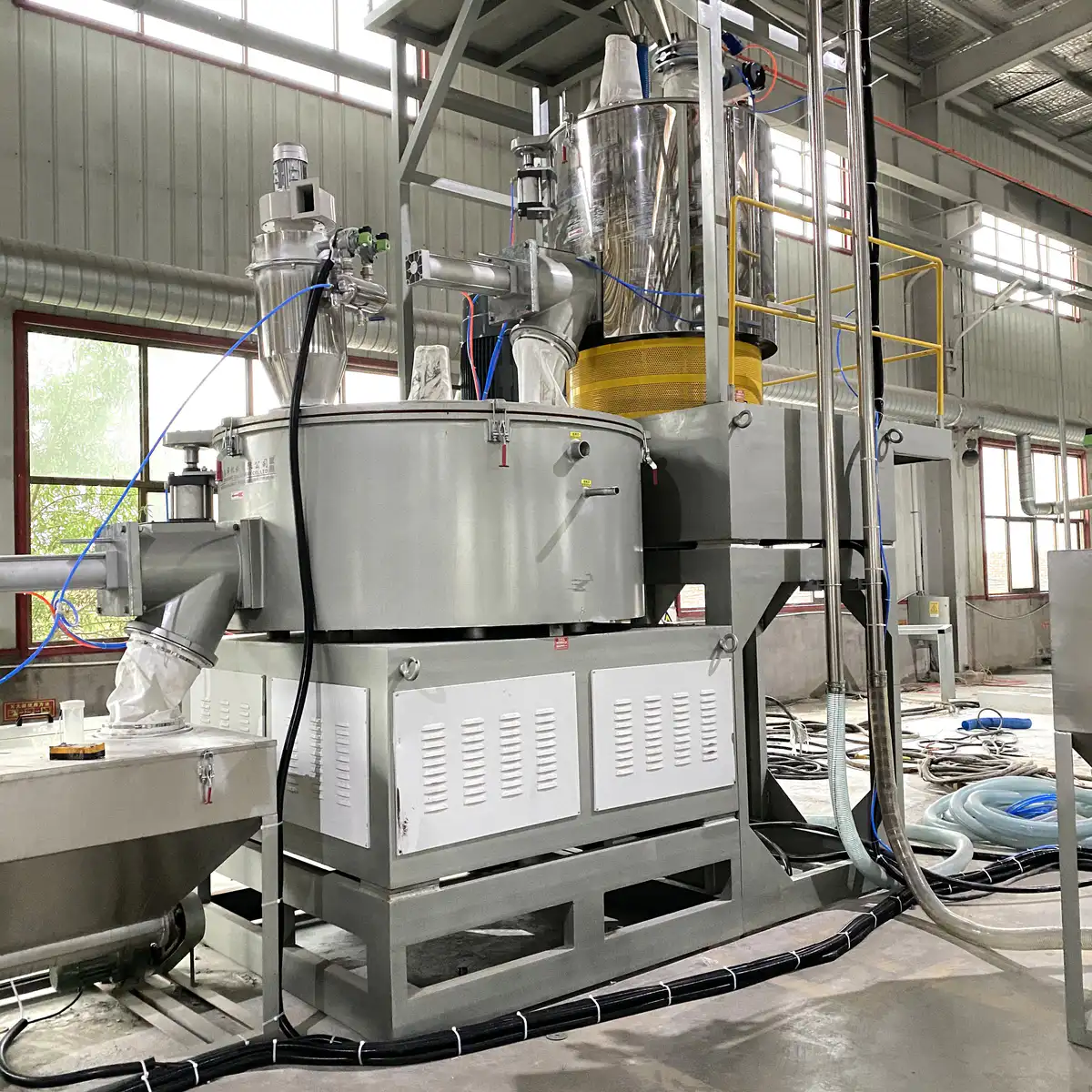
From a simple loader
To Gravimetric Control
You get a real kg/h reading instead of an assumed one, and weight feedback corrects the feed while the line is running.
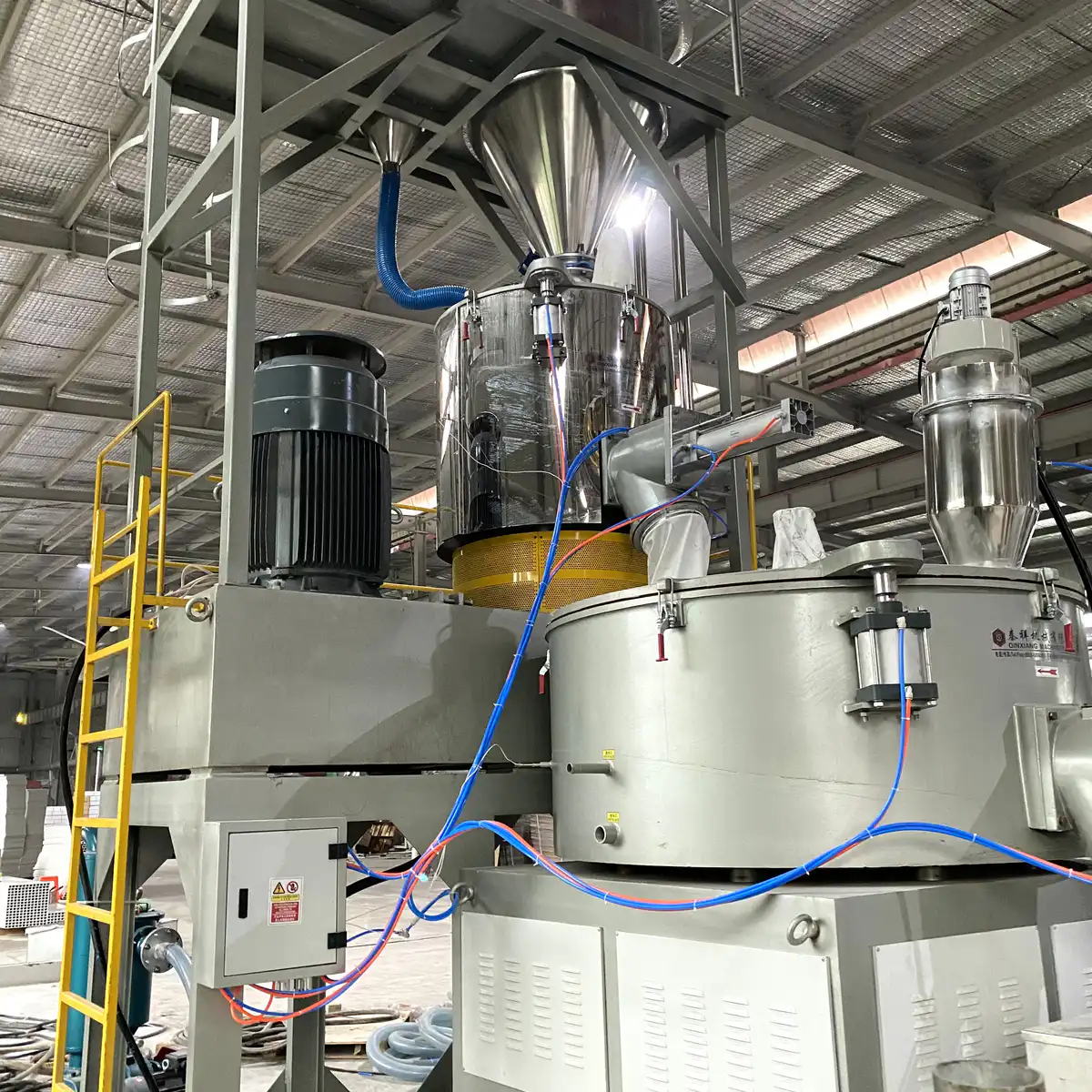
From virgin only
To Virgin Plus Regrind Or Additive
Bring your own regrind back into the recipe at a percentage you control, instead of one that moves with whatever the hopper does that hour.
Height above the feed throat is the first thing we ask about. A photo of this area answers half the checklist.
Eight Things And We Can Configure It
Send these and the upgrade gets built around your existing line, not treated as a new extrusion project.
- 01Extruder Model
- 02kg/h Range
- 03Materials & Recipe
- 04Feed-Throat Size
- 05Available Height
- 06Current Feeding
- 07Control System
- 08Line Photos
See How Your Dosing And Feeding System Is Built
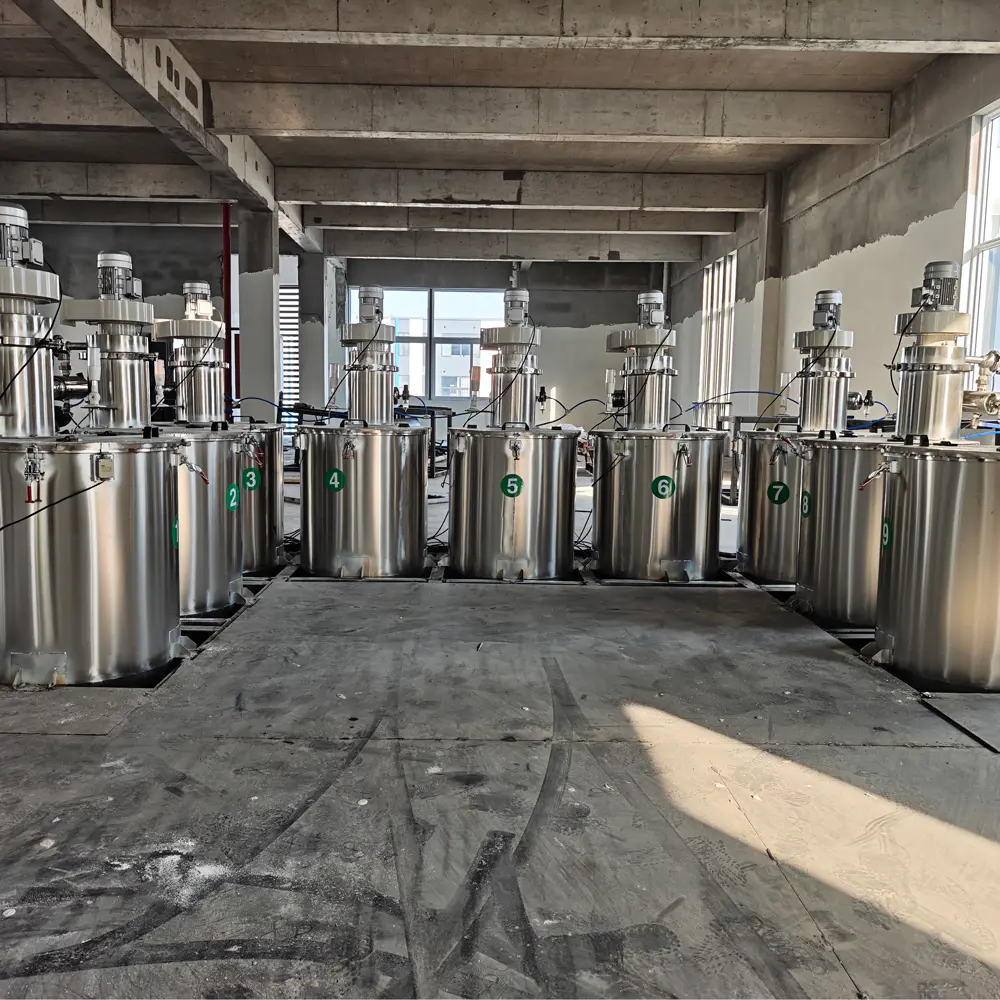
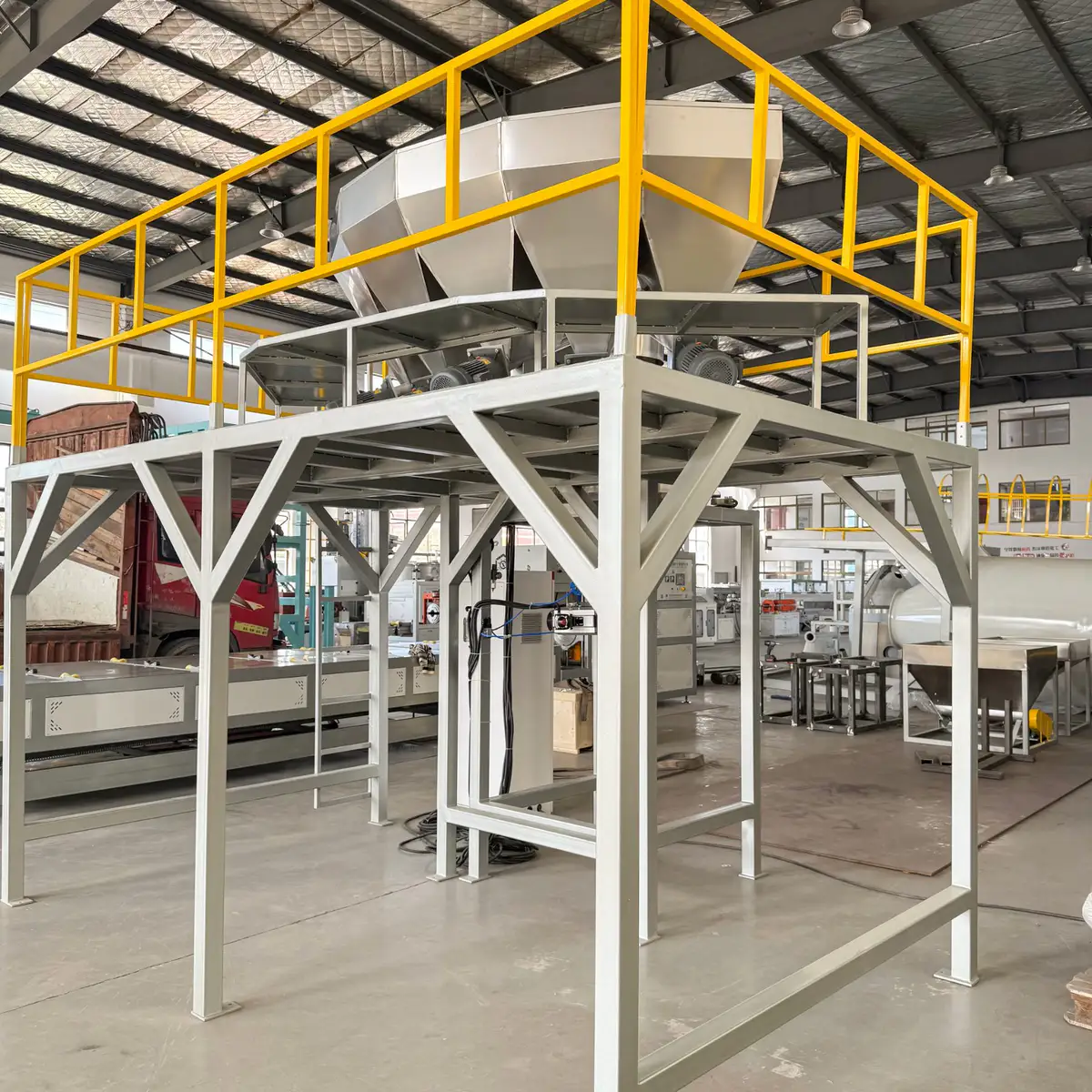
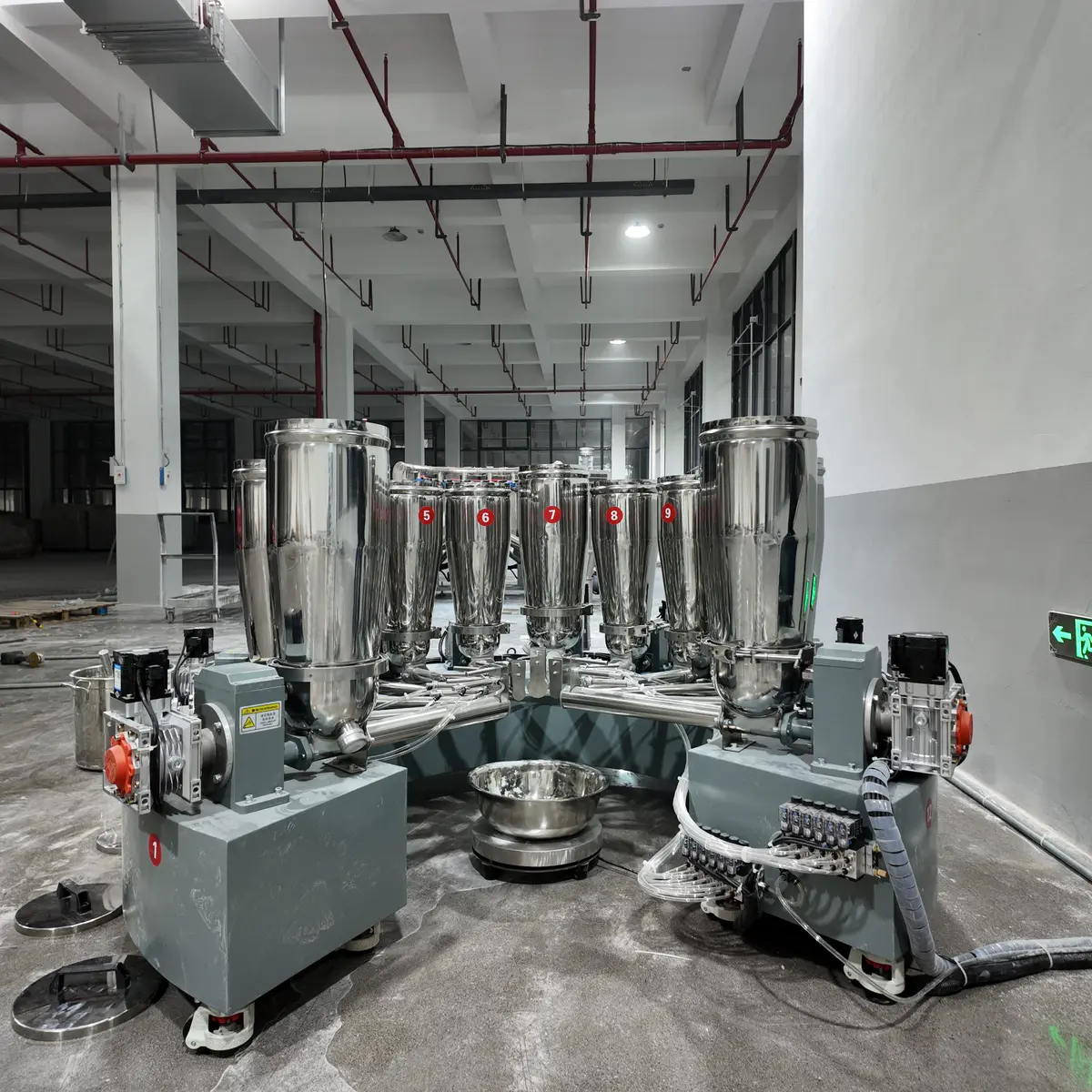
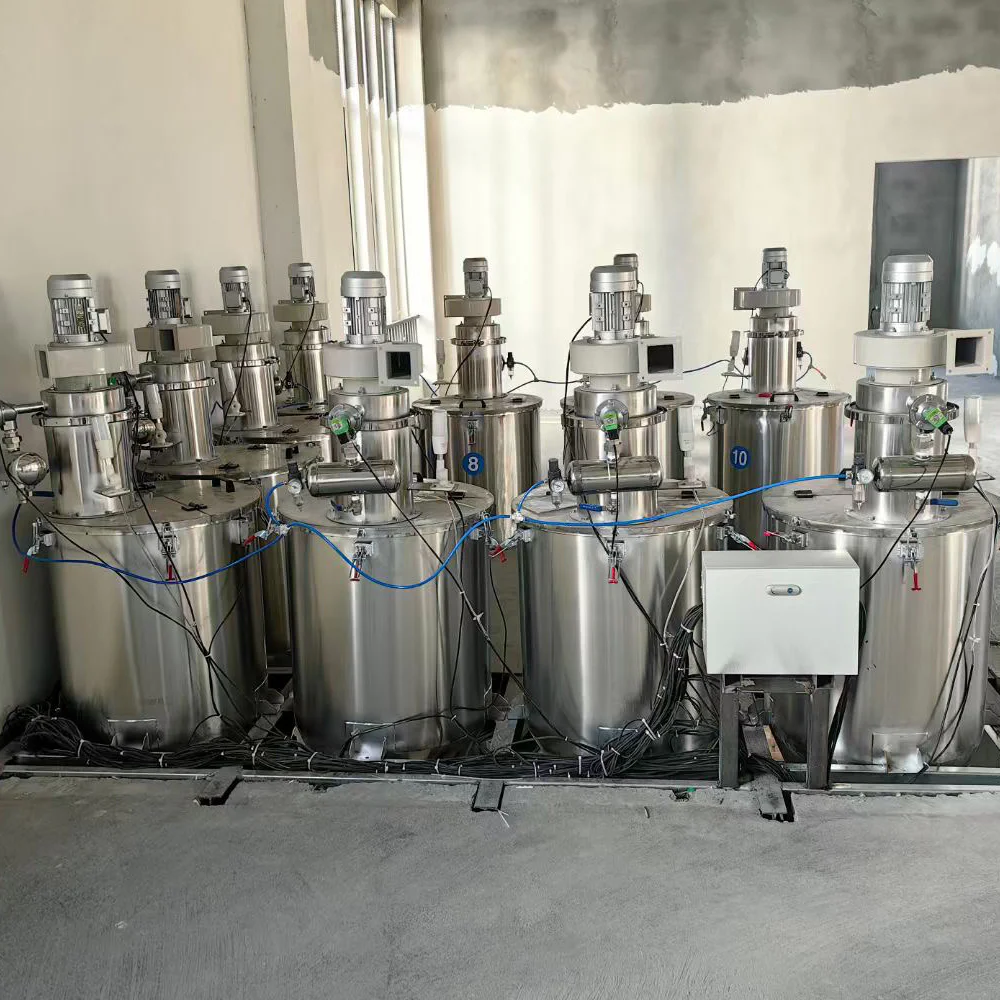
From hopper fabrication and dosing screw assembly to weighing components, control cabinets and final system integration, every unit is built around your material, your feeding method and your production requirement. These are the components, the assembly work and the completed systems as they look before testing, so you can judge the factory on what is actually made here.
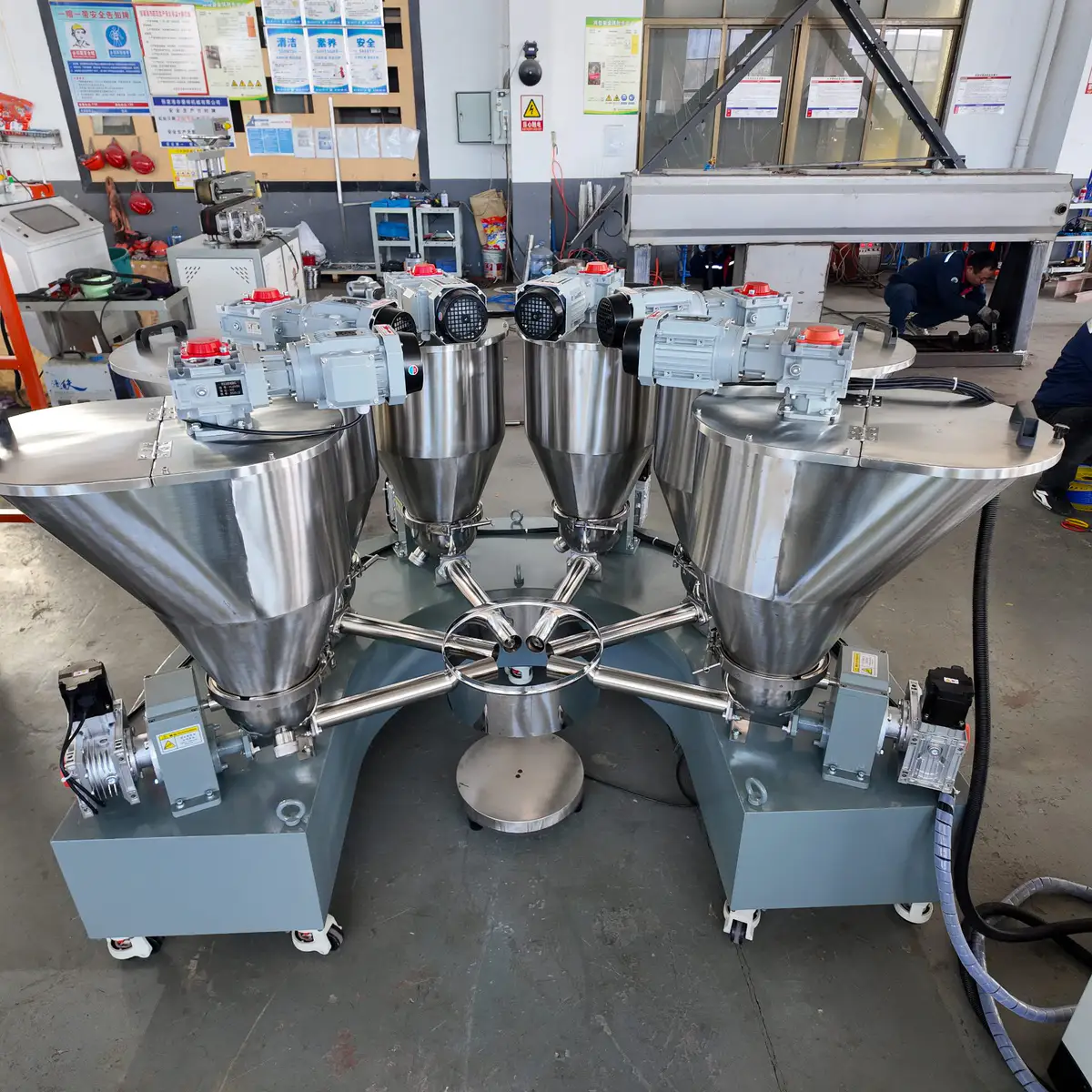
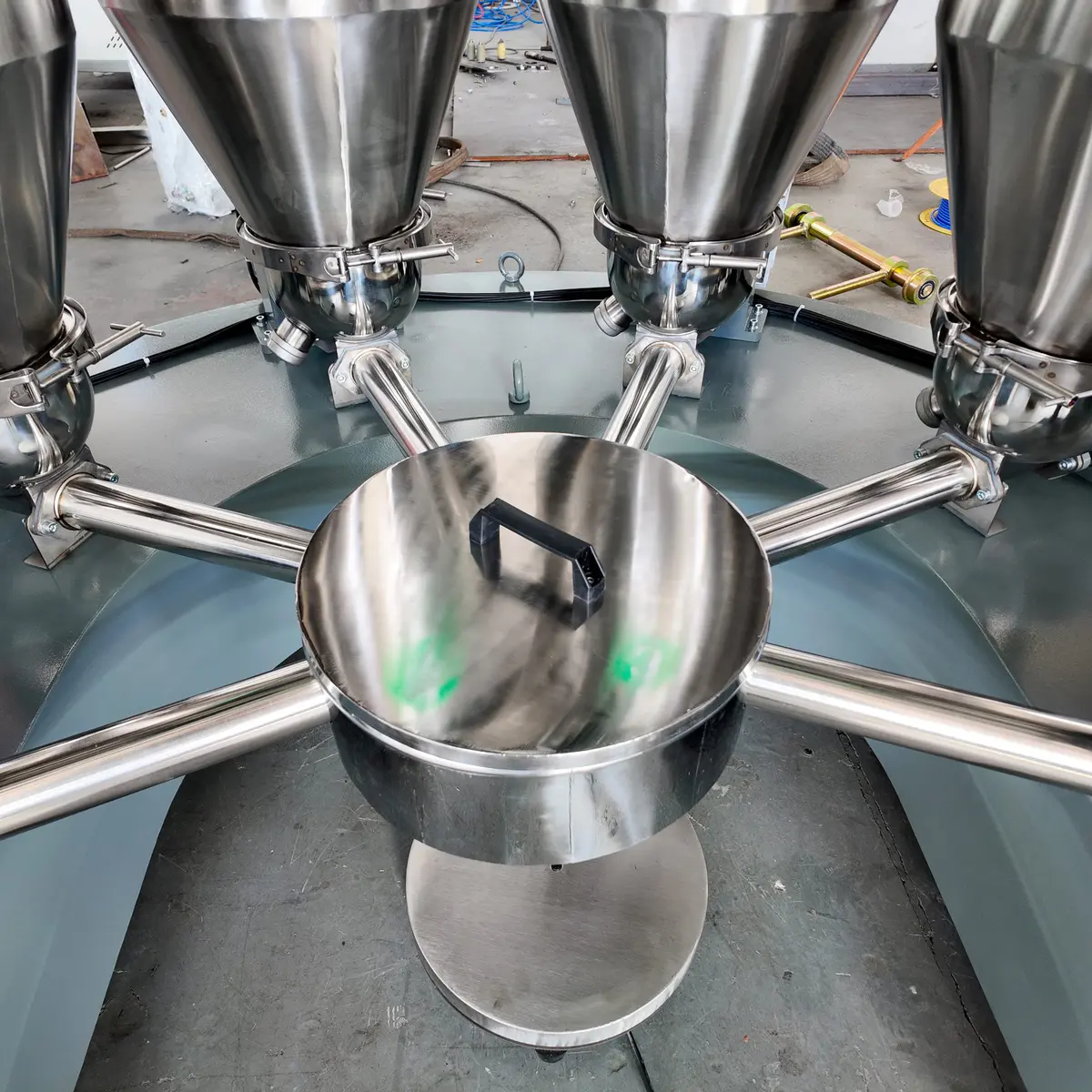
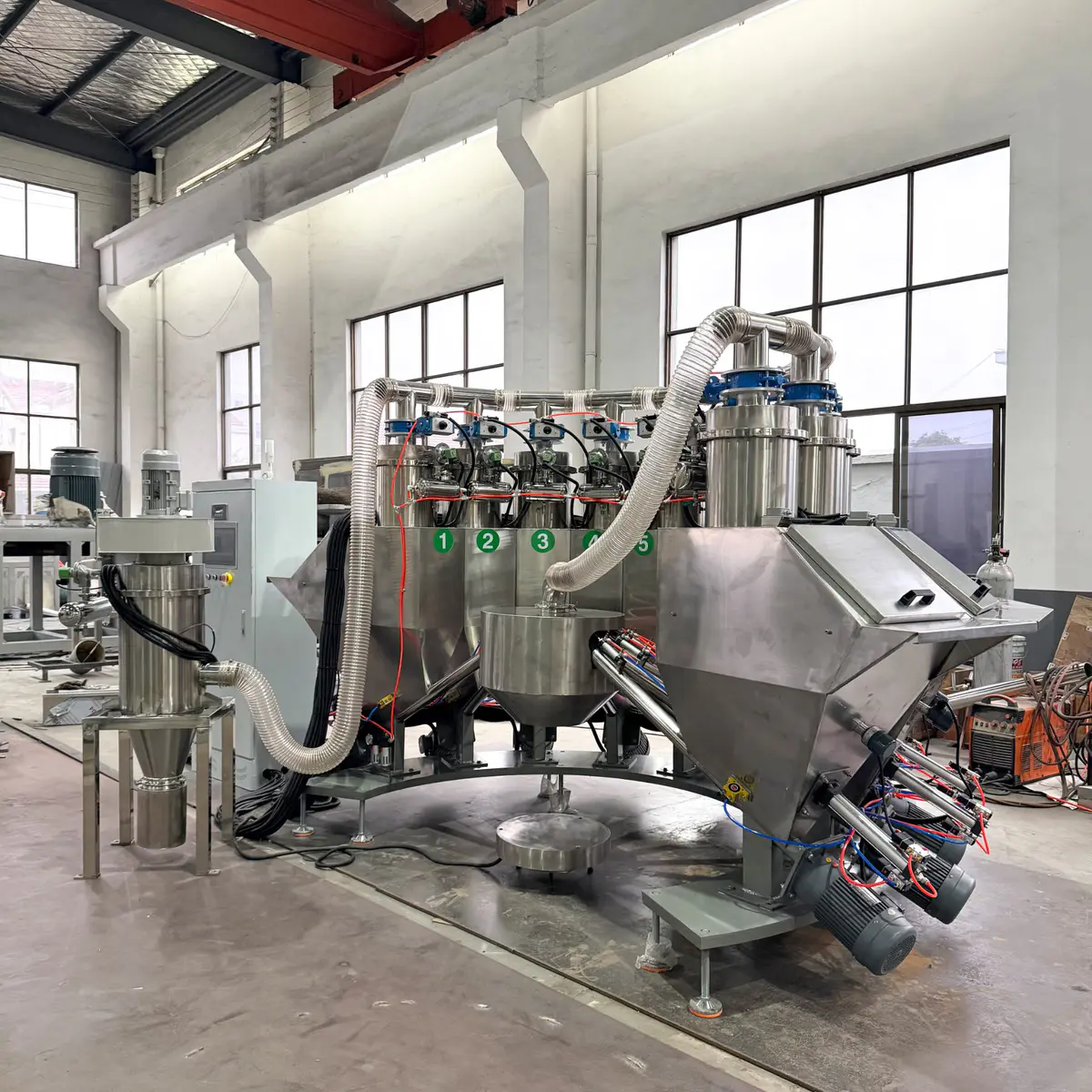
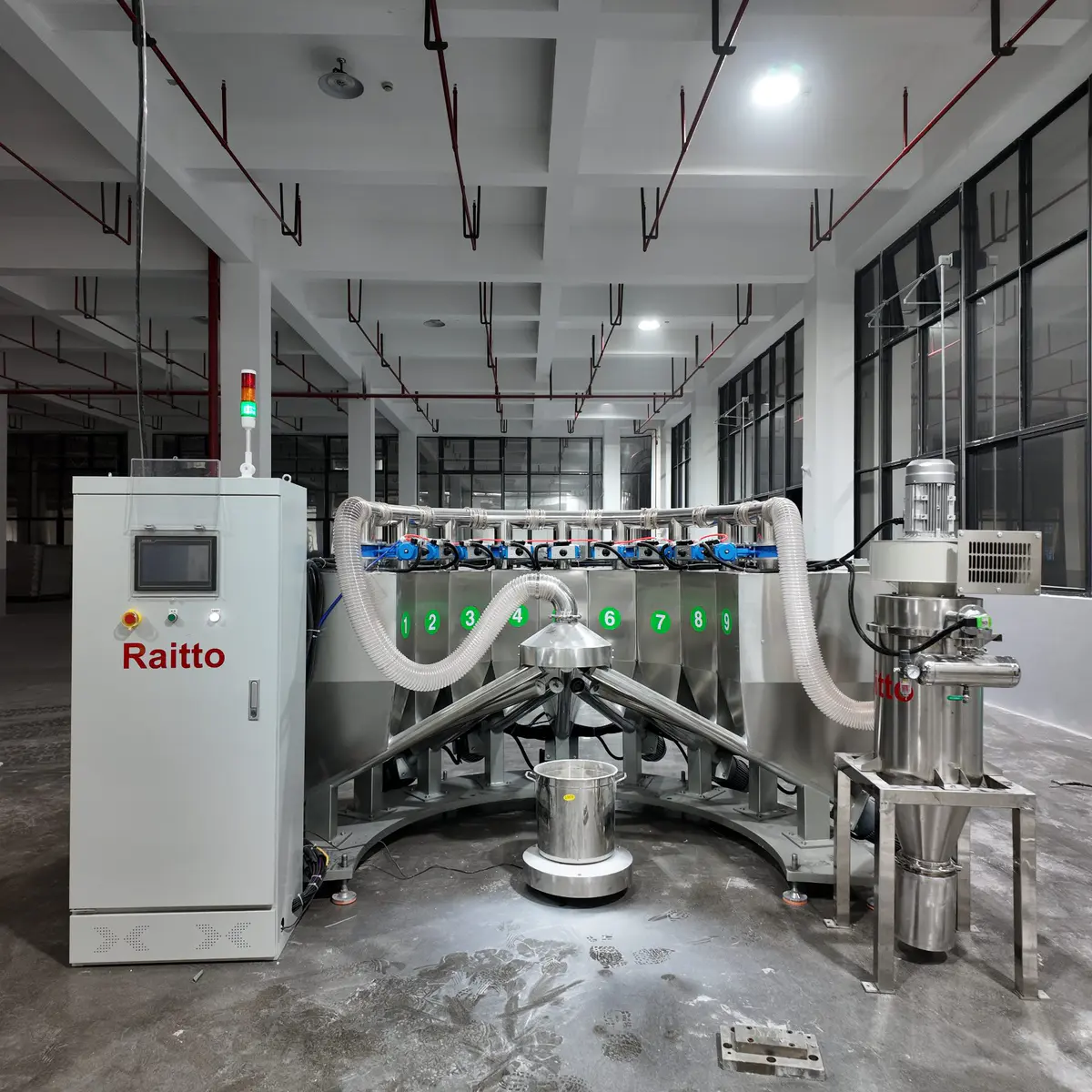
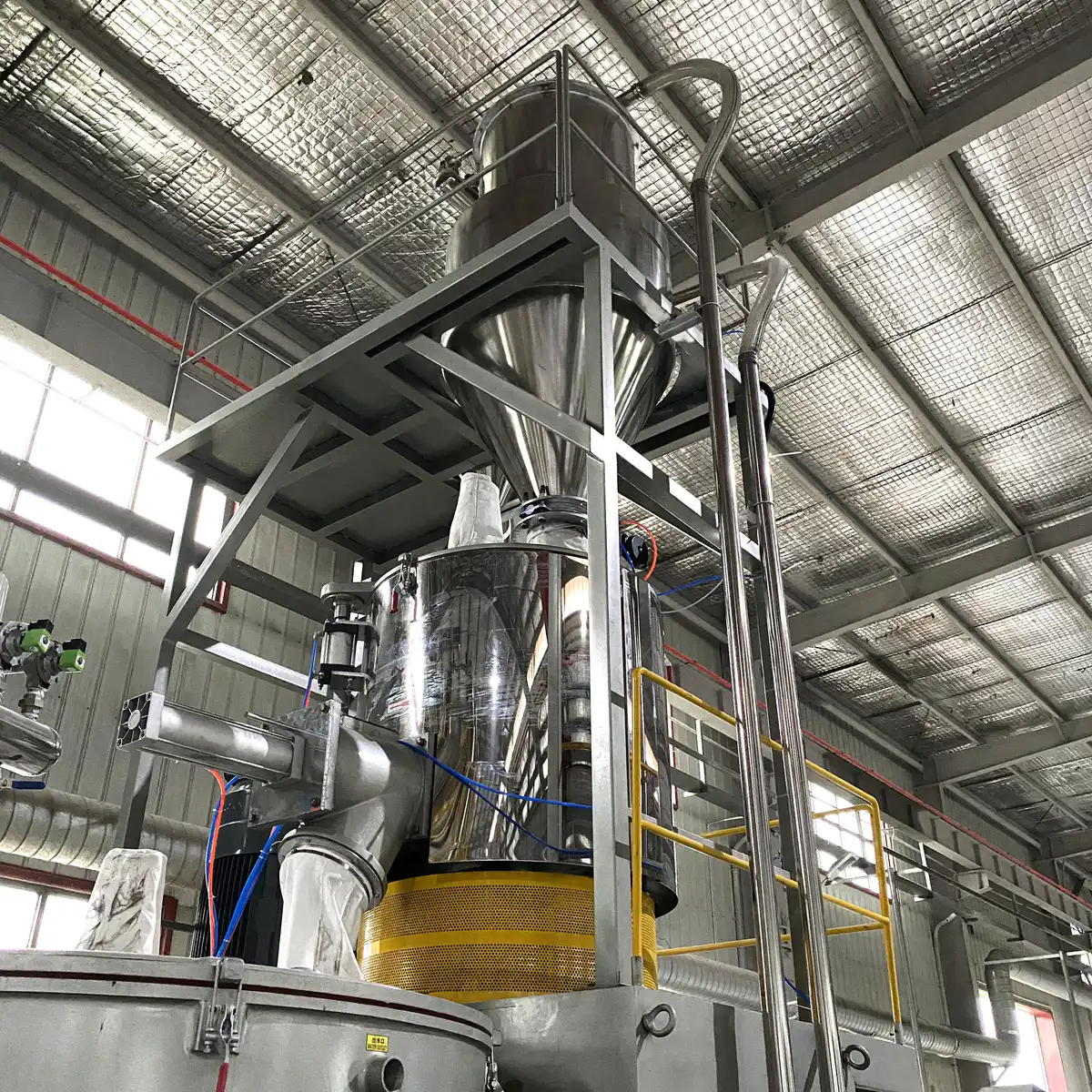
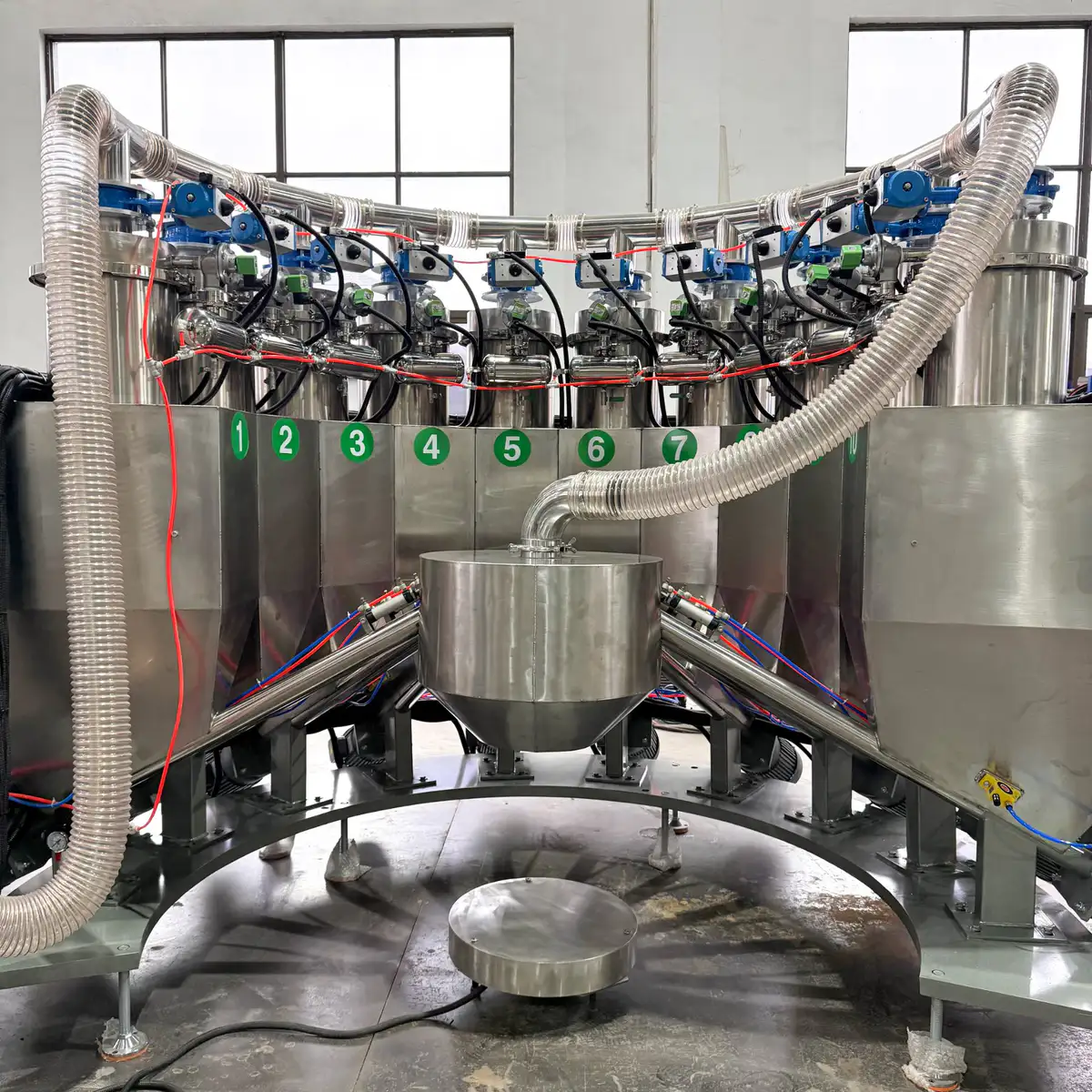
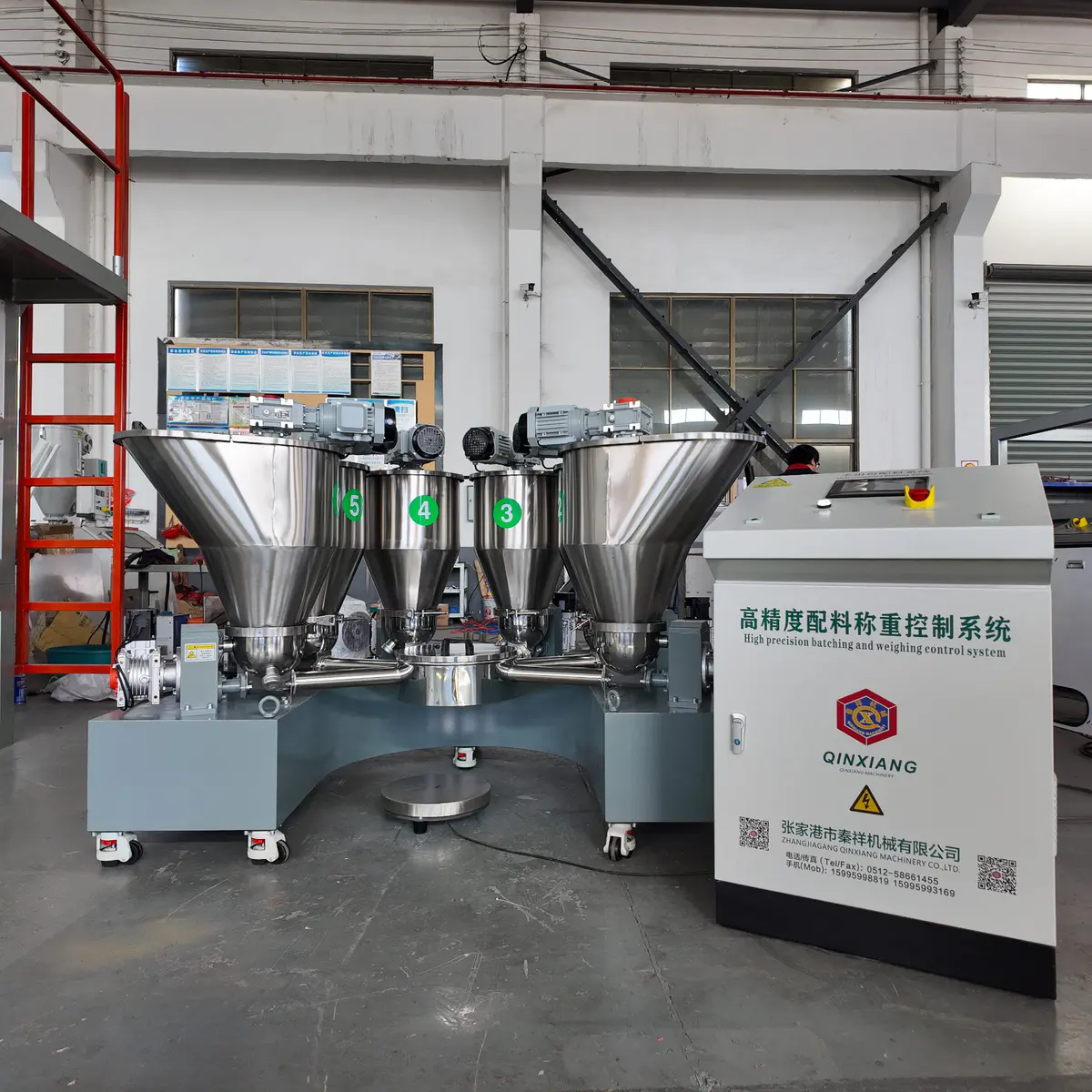
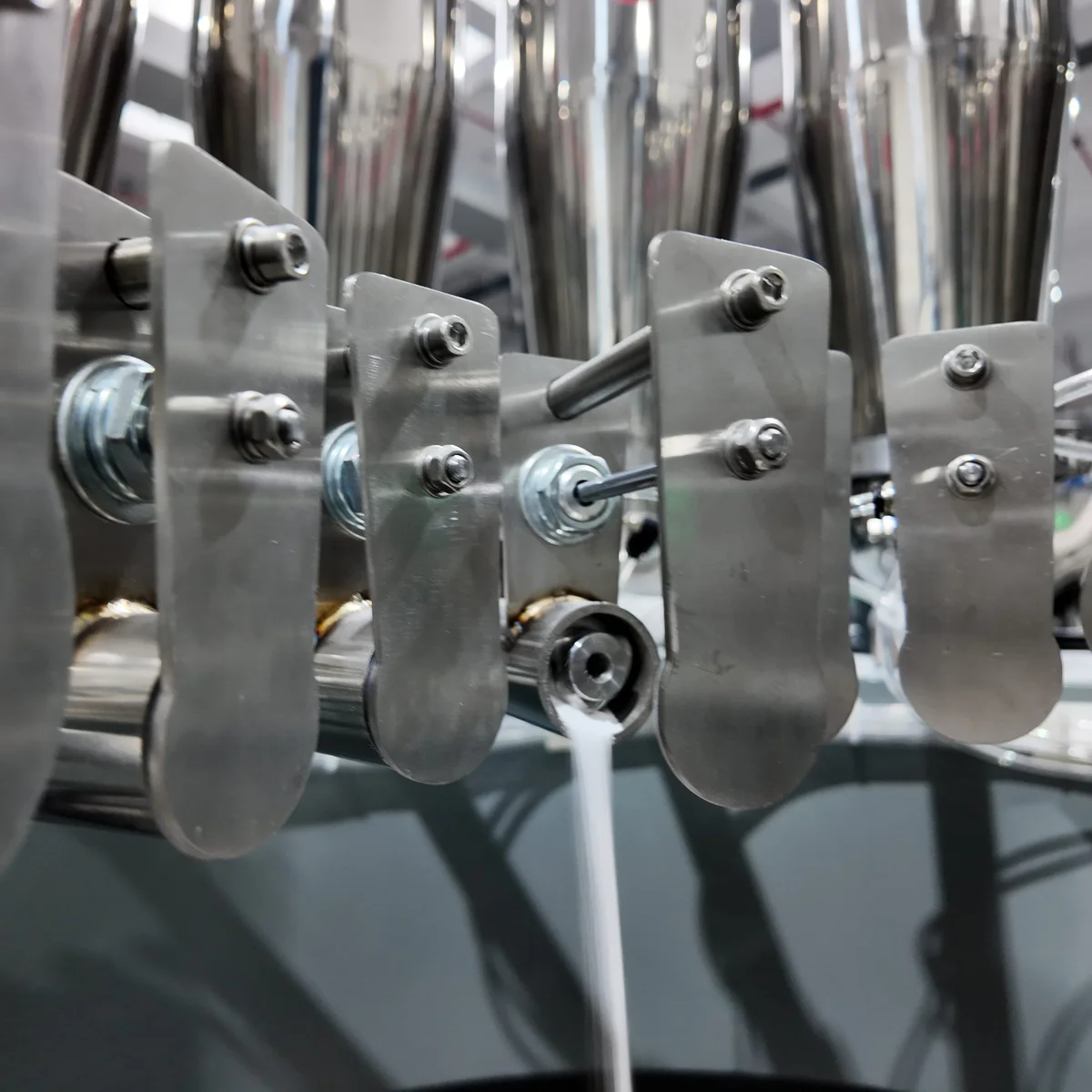
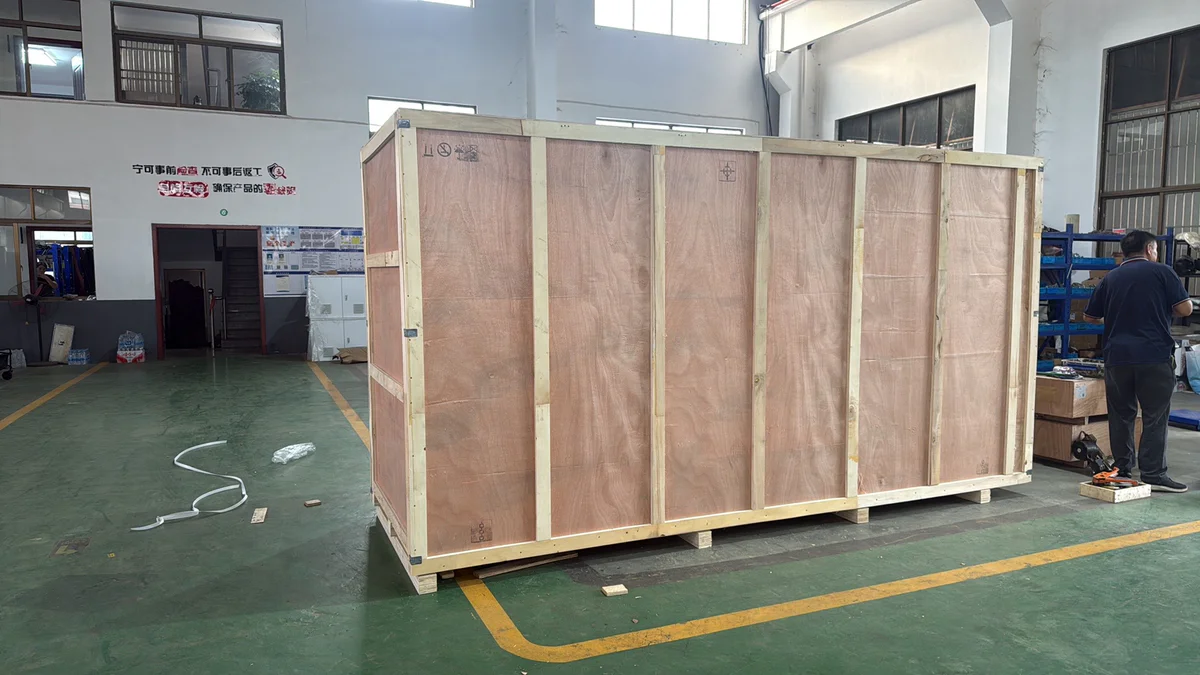
Swipe sideways for all twelve stages
Want to see your own system while it is being built? We send progress photos at the stages that matter, and you are welcome to visit the factory or join a video walkthrough before the run test.
Inspection Before Your Dosing System Leaves The Factory
A finished dosing and feeding system is checked by what it does, not by how it looks. Can it supply material continuously, measure it correctly, control it the way you configured it, and run without abnormal alarms or anything mechanically in the way.
Six checks, in the order they are run. You are welcome to watch any of them, in person or on video.
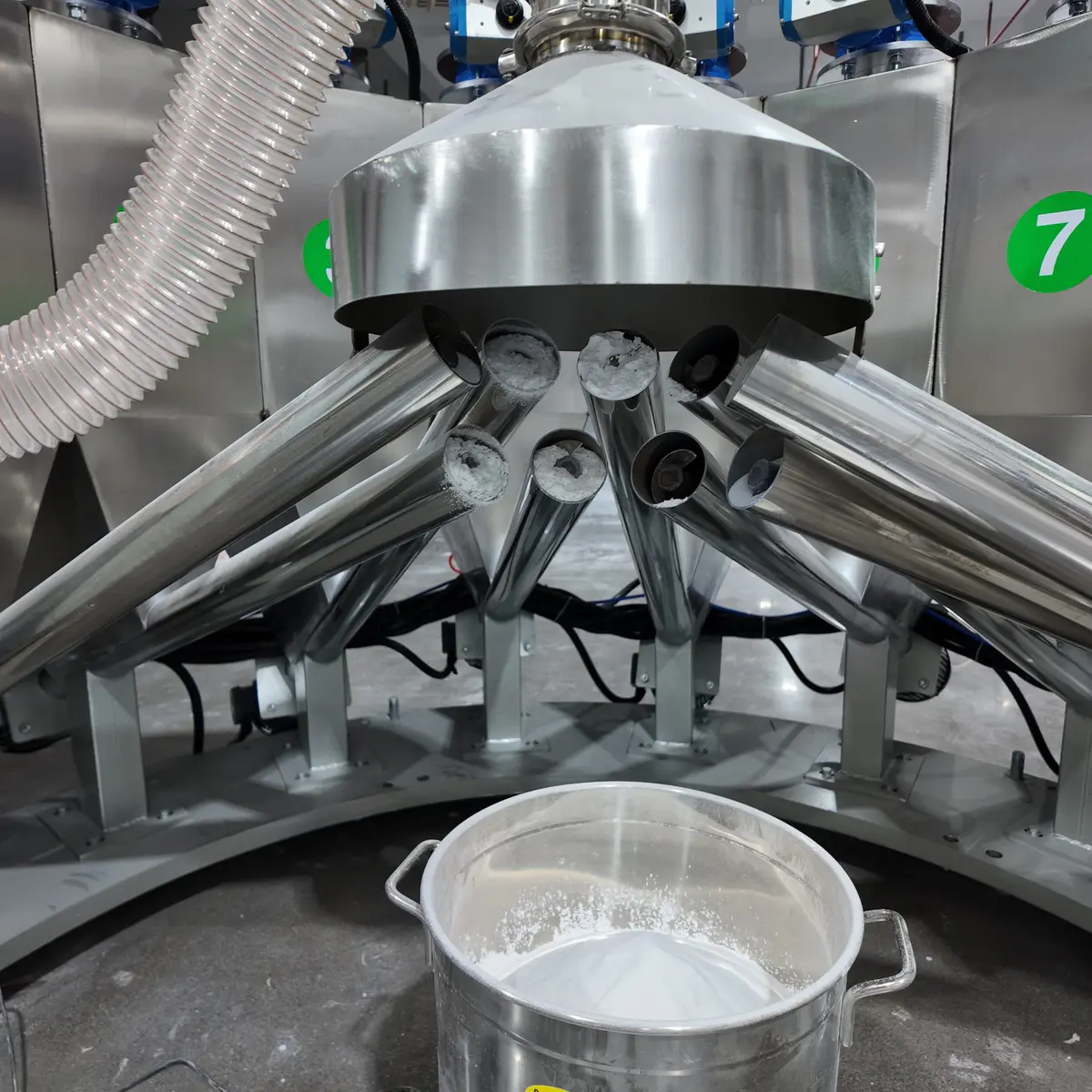
Feeding Test
We run material through the whole path, from the feeding hopper through the dosing unit, and confirm it discharges and feeds continuously under the test condition agreed with you. If it hesitates here, nothing downstream gets tested until it is fixed.
Focus: Material supply, hopper discharge, screw feeding, conveying, blockage
Dosing Function
The dosing unit runs at your agreed setpoints, then we change the required feed rate and watch it follow. On gravimetric systems the weighing and feedback loop are checked while it is running, not on a static bench.
Focus: Setpoint response, feed rate adjustment, dosing stability, component operation
Load Cell And Weighing
On gravimetric equipment the weighing system is checked before any functional test. We verify zero, calibration response with reference weights, and whether the signal holds steady without drift under the test setup. A load cell that drifts here will drift on your floor.
Focus: Zero, calibration, signal stability, weighing response
Refill And Alarm Functions
Where your system has automatic refill or material level monitoring, we run the configured refill sequence and trigger every related alarm on purpose. Low material, feeding fault, each interlock you specified, so you know they fire before you need them to.
Focus: Refill operation, low material alarm, feeding alarm, configured interlocks
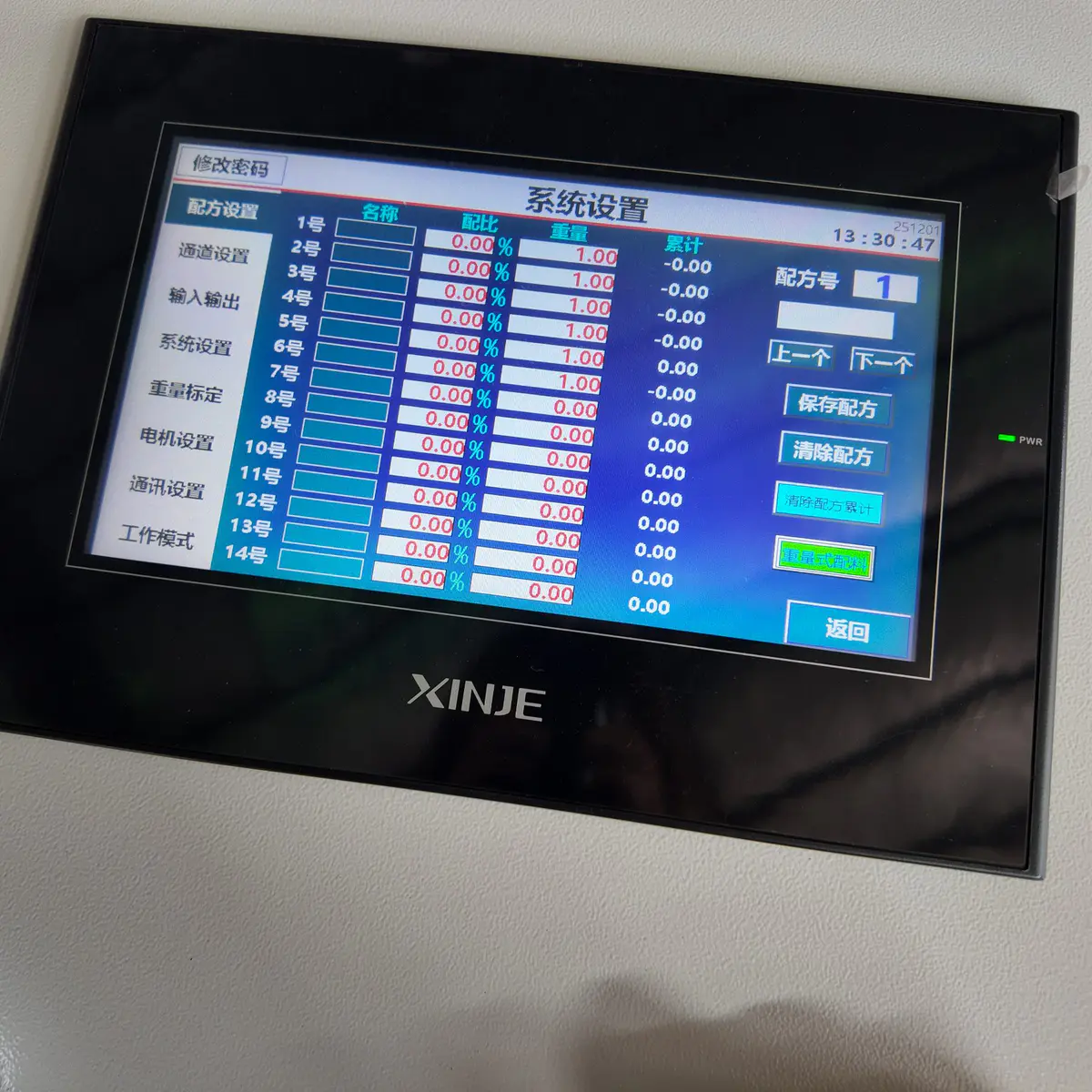
Control And Recipe Functions
The control system is checked against the configuration we agreed with you, recipe settings included. If communication with your extruder or another machine is part of the scope, that interface is tested to the control scope you confirmed, not to a generic protocol list.
Focus: Recipe setting, feeder speed control, displayed values, alarms, communication
Cleaning And Mechanical Access
Everything meant to be opened for routine cleaning or a material change is opened. We remove it, check the access, and put it back exactly as designed. Your operators will do this every changeover, so it has to work on the first try here.
Focus: Hopper access, screw removal, discharge points, cleaning access, reassembly
If you want the run test done with your own material and recipe, send a sample and the setpoints. The readings from that test go into your shipping documents.
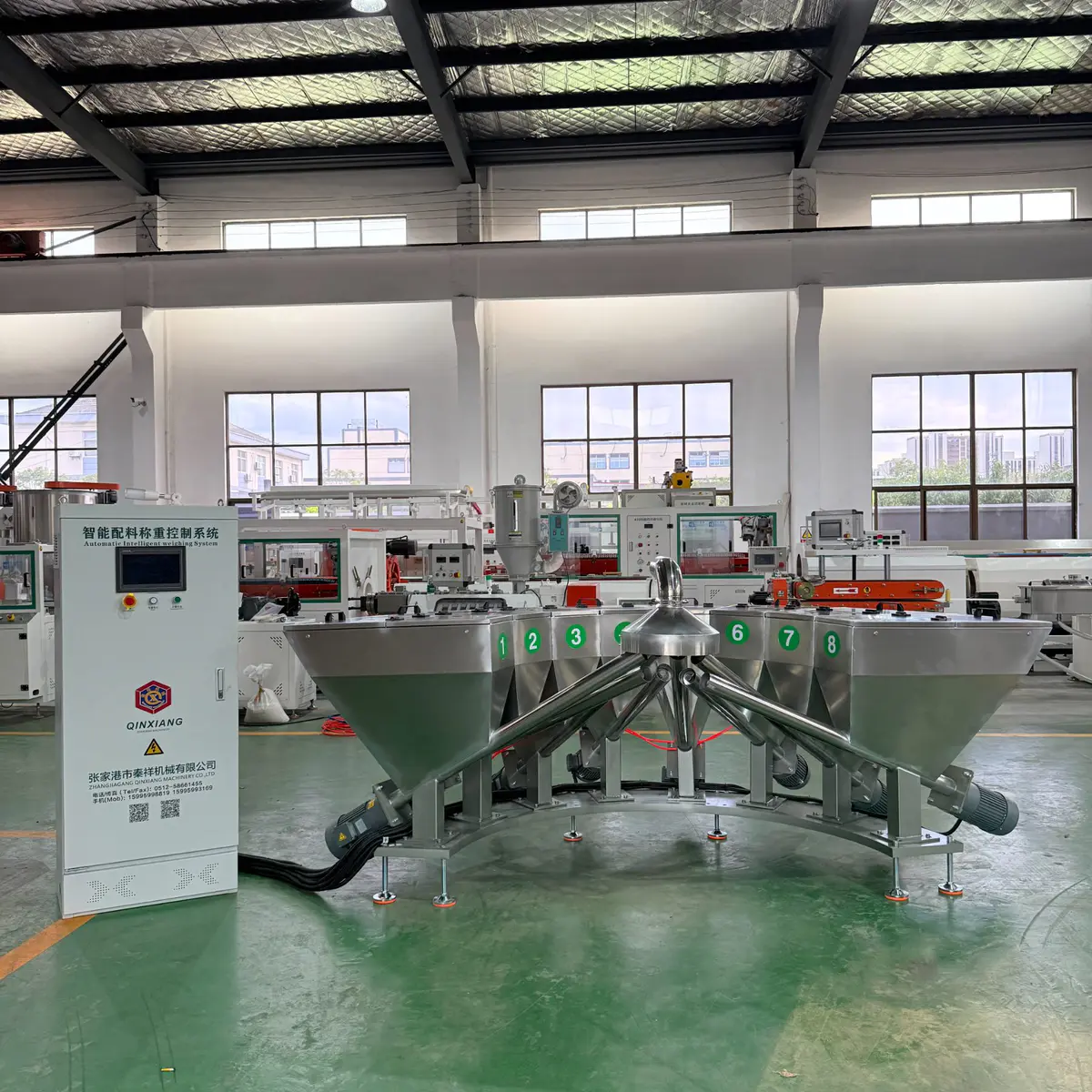
Factory acceptance is run against the same sheet we agreed at order stage. Same setpoints, same material, same functions.
Acceptance Based On The Agreed Configuration
Inspection criteria depend on the system you ordered, the material it handles and the project scope we agreed. There is no generic pass mark for a dosing system, only whether it does what your configuration says it should.
So three things get confirmed before production starts. The finished equipment is then checked against exactly those, and you can check it against the same list.
Configuration
Number of feeders, dosing principle, hopper sizes, control scope and interface to your extruder
Test Conditions
Material used for the run, setpoints per ingredient, target kg/h and how long it runs
Required Functions
Recipe storage, alarms, refill sequence, calibration and any communication you asked for
Questions Buyers Ask Before They Order
The ten we answer most often on dosing and feeding inquiries. If yours is not here, send it and Maggie will answer it directly.
What is the difference between feeding, dosing and blending?
Feeding moves material from storage or a loader to the extruder. Dosing controls how much of one ingredient is added. Blending combines several ingredients to your formulation.
A complete pipe line material system may use all three, but they are not the same process, and the equipment for each is selected differently.
Should I choose volumetric or gravimetric dosing?
Volumetric is usually enough when your bulk density holds reasonably steady and the process allows a moderate dosing tolerance.
Gravimetric fits better when actual material weight has to be watched continuously, especially with tight recipes, expensive additives, regrind, or materials whose bulk density moves.
The higher cost system is not automatically the right one. Choose from the accuracy and control your production actually needs.
When is gravimetric dosing worth the additional investment?
When small dosing deviations can add up into real material consumption or formulation variation over a full day of production.
Typical cases: high throughput lines, costly masterbatch or additives, a controlled virgin to regrind ratio, several recipes on one line, and any production where you need actual kg/h verified rather than estimated from screw speed.
Can one system handle virgin resin, masterbatch, additives and regrind together?
Yes. A multi component system can be configured for several ingredients, as long as each material gets a feeding and dosing method that suits it.
Confirm the number of components, the percentage of each, the material form, bulk density and total throughput before the hopper, dosing units and control are decided.
How do you handle PVC powder or CaCO3 that tends to bridge?
Powder and high filler materials are not treated like free flowing pellets.
Where bridging, compaction or unstable discharge is likely, the configuration changes at the hopper geometry, outlet size, agitation, feeder screw design or refill arrangement. A material sample or basic flow information helps a lot when the powder is difficult.
Can the dosing system be added to my existing extruder?
In most cases, yes. Your extruder stays in service while feeding or dosing control is added above or before the feed throat.
Before confirming the retrofit we check the extruder model, feed throat or hopper dimensions, available installation height, current feeding method, required throughput and which control signals are available.
How does recycled material affect feeder selection?
Regrind and flakes vary far more than virgin pellets in particle size, shape and bulk density, and irregular material bridges or interlocks inside the hopper.
So the feeder is selected on how consistently your regrind can enter and fill the dosing screw, not only on the kg/h figure. Hopper discharge, agitation and refill design are adapted to the actual material.
How do I avoid contamination when changing colors or recipes?
Clear the hopper, dosing screw, blender and connected material path before the new formulation starts.
If you change recipes often, cleaning access, screw removal, hopper dead zones and material discharge belong in the equipment selection. Recipe recall on the screen does nothing about material still sitting inside the system.
What dosing accuracy can you guarantee?
Accuracy is confirmed against a defined operating condition, not quoted as one universal number. Anyone who gives you a single figure without asking about your material is guessing.
Performance depends on material, bulk density, dosing percentage, feed rate, screw configuration, refill behavior and calibration. If you have a specific accuracy requirement, send the material and target operating range and we agree the acceptance condition before production.
What information do you need to configure a dosing and feeding system?
As much of this as you have:
- Pipe material and raw material form
- Number of ingredients
- Percentage of each ingredient
- Required throughput in kg/h
- Regrind or filler percentage
- Bulk density, if available
- Required dosing accuracy, if specified
- Existing extruder model
- Current feeding method
- Installation space, for retrofits
A recipe, line layout, equipment photos or a material sample also help when the application involves powder, filler, irregular regrind or an existing line upgrade.
Still have a question about your recipe, your material or your line? Ask it directly. Maggie answers technical questions herself, usually the same working day.
Send Your Recipe To Maggie
Material form, number of ingredients, rough percentages and your kg/h. That is enough for a real dosing configuration and a quote back within 24 hours.

Maggie
Sales, QTech Machinery
Replies within 24 hoursEvery message from this page reaches me directly. Tell me what goes into your extruder and I come back with a feeding and dosing configuration, drawings and a real quote, not a catalogue.
If a volumetric unit is enough for your recipe, I will say so. If your powder or regrind needs a different hopper, I will say that too, before you order.
Maggie
Sales, Zhangjiagang Qinxiang Machinery Co., Ltd.
- Feeder and hopper matched to your material, not a catalogue number
- Voltage, control standard and panel language set for your market
- Run test with your recipe before shipment, readings recorded
- Your details stay private, no sales spam
Get Your Dosing Configuration
Fields marked are required.