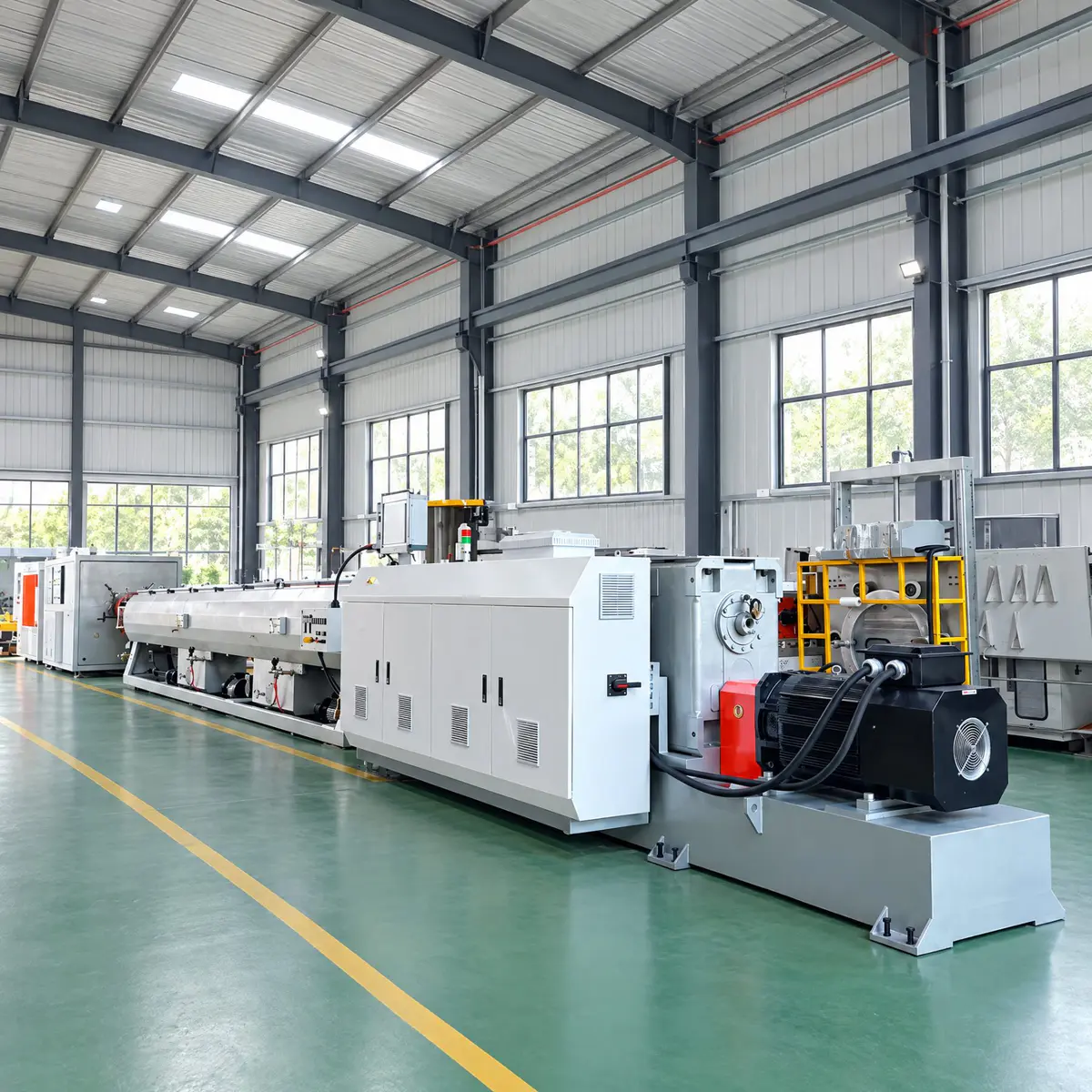
Technical Support For Extrusion Lines
Screw selection, fault diagnosis and process settings.
When pipe comes off the line out of tolerance, or a new compound has to run through an old screw, you want answers from the people who build the machines. Send photos, a short video and the settings you run, and our technical team works through the likely cause with you, from the hopper to the cutter.
- Screw and barrel matched to your compound
- Fault review from photos and video
- Setting guidance for each pipe size
- Spare parts list for your configuration
Screw And Barrel
Screw type, geometry and wear protection reviewed against your resin or formulation, filler share and output.
Pipe Faults
Wall thickness, ovality, surface marks, black spots and cutting problems traced back to the unit that causes them.
Process Settings
Temperatures, line speed, vacuum and cooling looked at as one system, not one dial at a time.
Go Straight To Your Question
Six topics cover most of what producers ask us after a line is running, from choosing a screw to ordering a worn part. Open the one closest to your problem, or skip to the form and describe it in your own words.
Screw And Barrel
Match the screw to the compound
Pipe Faults
Wall, ovality, surface, cutting
Process Settings
Temperature, speed, vacuum, water
What To Send
Details that shorten the review
Remote Support
How a support case runs
Parts And Upgrades
Wear parts and line changes
FAQ
Short answers to common asks
The Screw Has To Suit The Compound, Not The Catalogue
Plenty of faults that look like process trouble begin one step earlier, with a screw and barrel that were never matched to what goes through them. Before we suggest a screw, or a change to the one in your extruder, we look at the material you actually feed it.
Usual start: conical or parallel twin screw
PVC powder needs controlled feeding, plasticizing and temperature along the whole screw. Your formulation, filler share and output decide between conical and parallel designs, and how much torque the drive has to carry.
Usual start: single screw
For polyolefin pellets the screw must melt and homogenize evenly across your output range. Resin grade, the kg/h you need and your pipe range set the diameter and geometry. A larger screw is not automatically the better buy.
Wear protection reviewed
CaCO3, regrind and other abrasive content change feeding behavior, load and how quickly flights and bore wear. Screw and barrel material and the surface treatment follow from that, so tell us the approximate recipe.
Vented barrel considered
Moisture and volatiles leave bubbles, black spots and a poor surface. Depending on material condition and the pipe quality you need, a vented barrel with vacuum degassing and melt filtration may be part of the answer.

Five Points We Confirm With You
- 1Screw type and flight geometry for your compound
- 2Screw diameter and length-to-diameter ratio
- 3Screw and barrel steel for your operating conditions
- 4Surface treatment and wear protection where fillers demand it
- 5Heating zones and barrel cooling along the processing unit
Replacing A Worn Screw?
Send the extruder model or nameplate, the current screw diameter and the formulation you run today. If the material has changed since the line was bought, say so: the replacement may need different geometry, not a copy of the old screw.
Wear Shows On The Pipe Before It Shows On The Screw
Output dropping at the same screw speed, melt that will not settle, or defects that come and go can all point to a tired processing unit. The next section shows how to read those signs on the pipe itself.
Read The Fault On The Pipe, Then Trace It Back Along The Line
A pipe defect rarely belongs to a single machine. Each tab covers one fault that turns up again and again on pipe lines: what it looks like, which units to check first, and the evidence that lets us narrow it down from a distance.
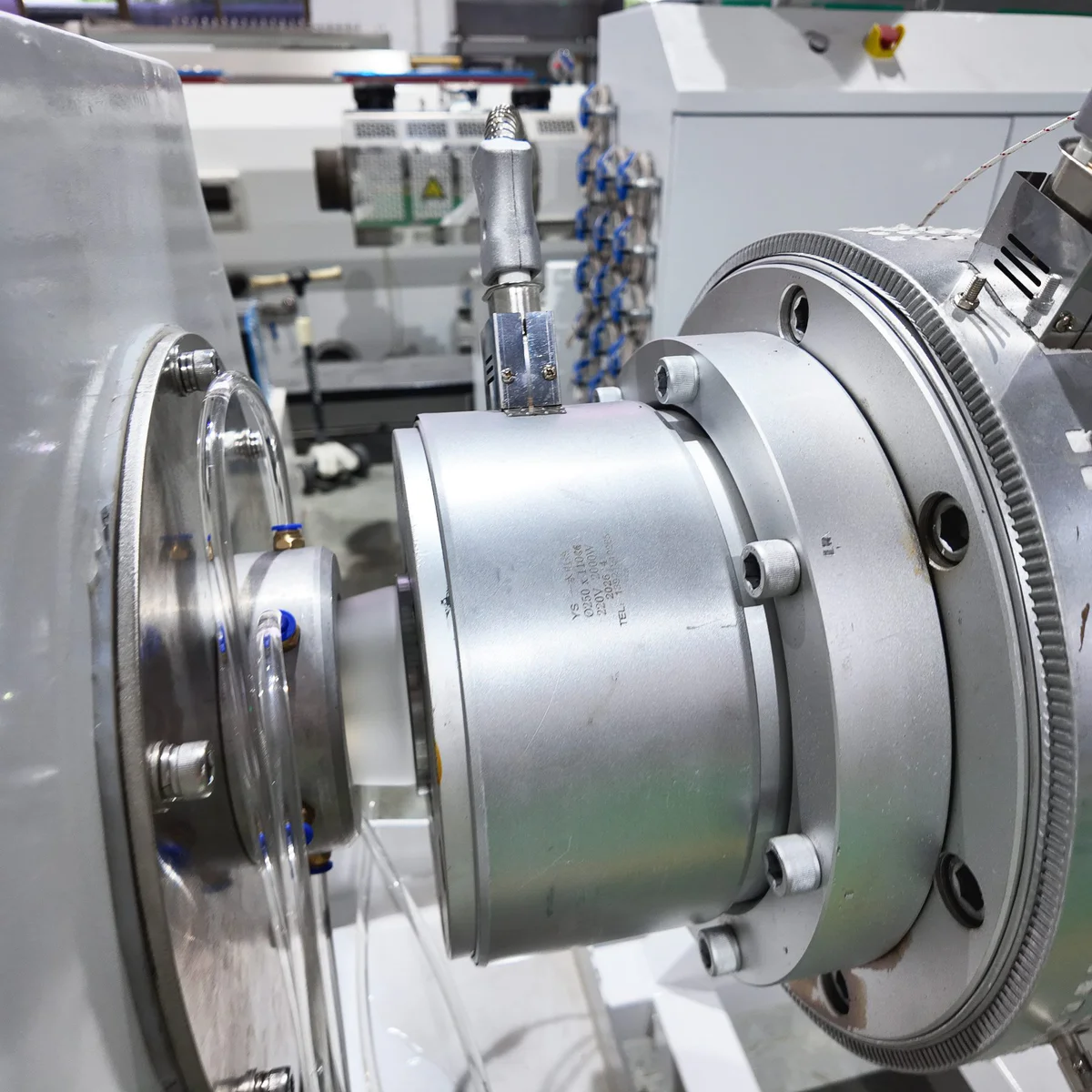
One Side Thick, The Other Thin
The wall runs heavy on one side and light on the opposite side, or it creeps out of tolerance along the length as the shift goes on. Material is wasted on the thick side while the thin side decides whether the pipe passes.
Check first
- Die centering, and how evenly melt spreads around the mandrel
- Swings in melt pressure or melt temperature at the die
- Vacuum level in the calibration tank and whether it holds
- Haul-off speed keeping step with screw speed
- Feeding: hopper level, loader cycle and blend consistency
Send us: wall readings taken at four or more points around the circumference, a photo of the cut end, and the time into the run when the drift starts.

Round At The Die, Oval At The Cutter
The pipe leaves calibration out of round, or loses its shape somewhere between the tanks and the cutter. Once a warm pipe has set oval, nothing further down the line will bring it back.
Check first
- Calibration sleeve size and wear for the pipe you are running
- Vacuum level, and whether it stays steady during the run
- Spray coverage, nozzle blockage and water temperature in the tanks
- Tanks, haul-off and cutter sitting on one center line
- Haul-off clamping pressure on warm or thin wall pipe
Send us: diameter measured at several angles, the point on the line where you measured it, and the line speed at which the problem appears.
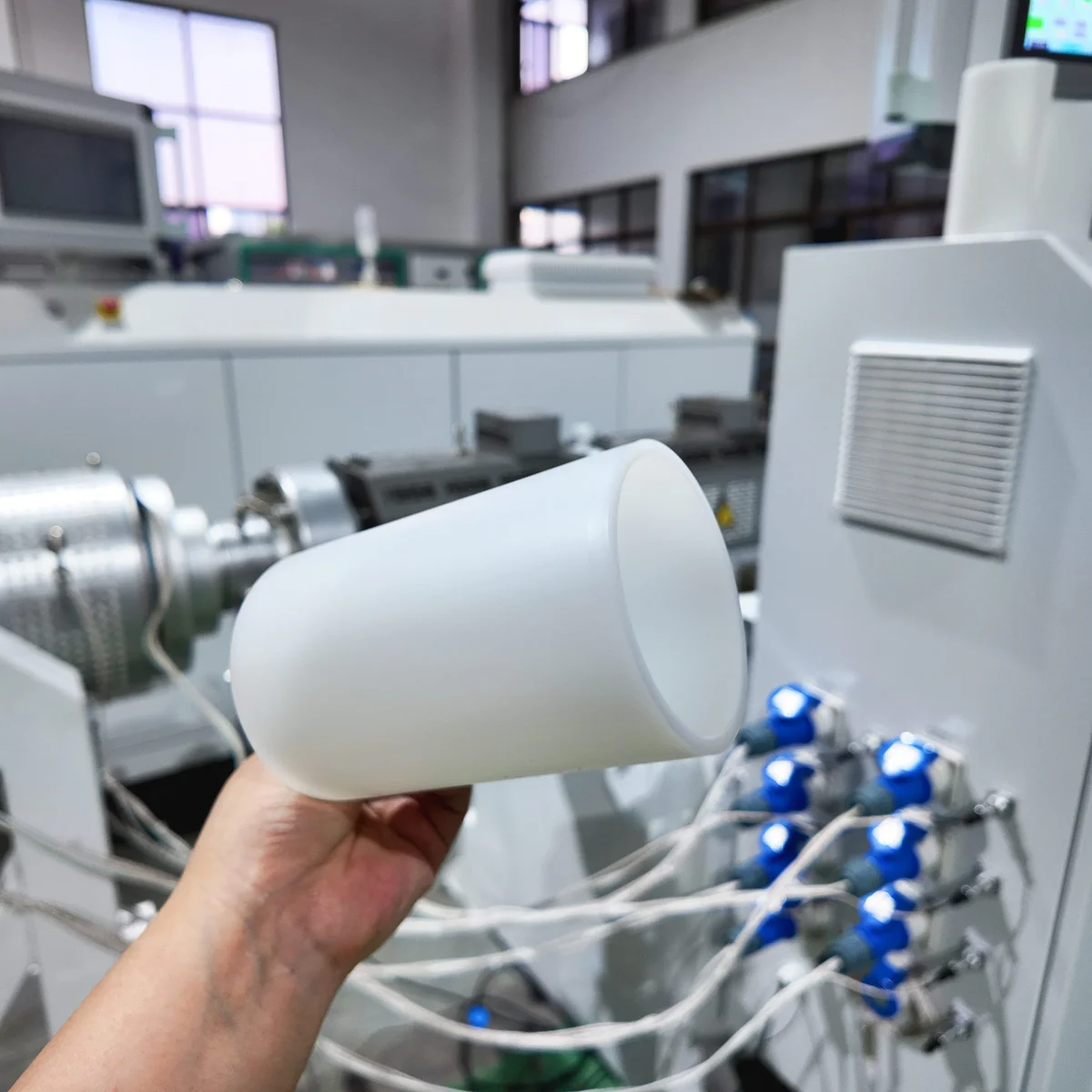
Lines, Scratches Or A Dull Finish
Lines running along the pipe, scratches, a rough or matt surface, or marks that repeat at a fixed spacing. Repeating marks usually come from something that turns or grips; continuous lines point further upstream.
Check first
- Die land and lips: build-up, damage or degraded material
- Calibration sleeve condition and the water film at its entry
- Vacuum pulled harder than the line speed needs
- Haul-off pad wear, contamination and clamping pressure
- Moisture or contamination in the incoming material
Send us: a close photo of the surface under side light, and a note on whether the marks run straight or repeat, and at what spacing.

Specks, Yellowing Or Brown Streaks
Dark specks, brown streaks or a yellow tint, often worst after a stoppage or late in a long run. PVC is the usual victim, because it degrades quickly wherever heat, shear and time add up.
Check first
- Barrel and die temperatures against the compound's processing window
- Places where melt can stop moving: die dead zones, screen, adaptor
- Screw and barrel wear that lengthens the time melt spends inside
- Recent changes to stabilizer, lubricant or the supplier of a raw material
- Venting and filtration when the feed is damp or recycled
Send us: the formulation or resin grade, the temperature profile from the screen, and when the spots appear: at start-up, after stops, or during steady running.
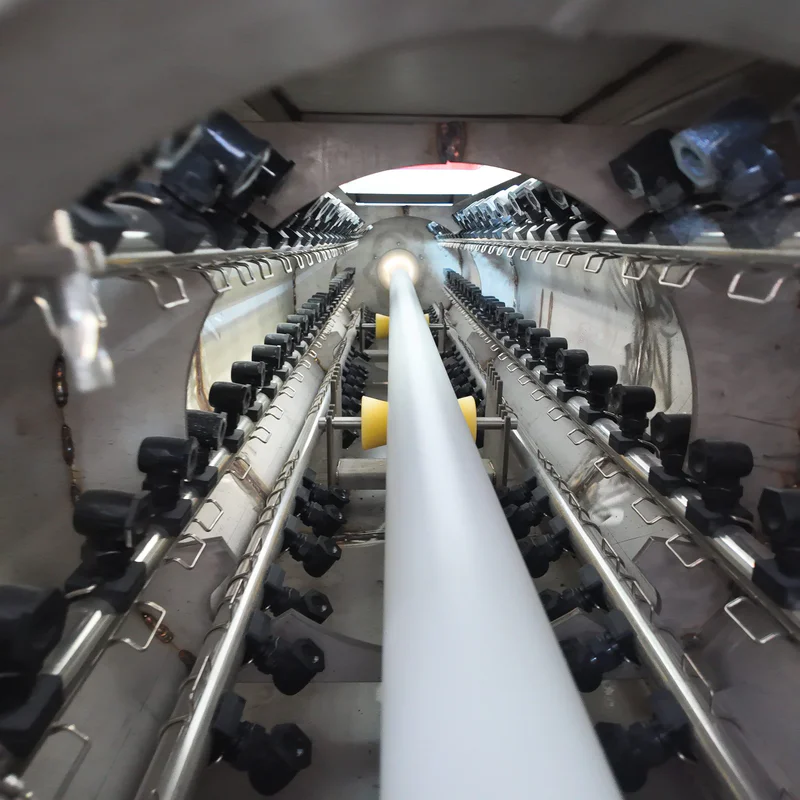
Burrs, Crooked Ends Or Wandering Length
Burrs and chips on the cut end, an end that is not square, cut length that drifts from piece to piece, or pipe slipping in the haul-off. Pulling and cutting are linked: a haul-off that slips makes the cutter look inaccurate.
Check first
- Saw blade or knife condition, and chip removal
- Clamp centering and pressure at the cutter, checked on the thinnest wall
- Haul-off pads, chain tension and the pressure actually needed
- The length signal from the haul-off or encoder to the cutter
- Pipe temperature on arrival, since warm pipe deforms under clamps
Send us: photos of the cut end, measured lengths of several pieces in a row, and the haul-off speed reading. Please do not just raise the clamping pressure while you wait.
Fault not listed? Bubbles, voids, sagging on large PE pipe or poor sockets on belled pipe follow the same approach: tell us what you see, where on the line it first appears, and what changed just before it started.
Most Faults Need Two Or Three Settings Read Together
Pull more vacuum to cure ovality and the surface may start to scratch; slow the haul-off and the wall gets heavier. The next section shows how we look at the settings as one line.
Temperatures, Speeds, Vacuum And Cooling, Set As One Line
There is no universal settings sheet worth publishing, because the right values depend on your resin or formulation, the pipe size and the machines in your line. What we can do is compare the settings you run against the pipe you get, and tell you which value to move first.
Barrel And Die Temperatures
They set how the compound melts and how evenly it arrives at the die. Run too cold and plasticizing stays incomplete; run too hot and PVC starts to break down, while larger PE pipe begins to sag on its underside.
Signs it is off: rough inner wall, unmelted particles, yellowing, sagging.
Screw Speed And Line Speed
Screw speed decides how much melt comes out; haul-off speed decides how that melt is drawn into wall thickness. The two must move together. Change one alone and the wall changes with it.
Signs it is off: wall thickness creeping over time, length errors at the cutter.
Vacuum Level
Vacuum holds the soft pipe against the calibration sleeve until it is cool enough to keep its size. You need enough to hold diameter and roundness. Beyond that point, more vacuum mainly adds drag and surface marks.
Signs it is off: oversize or oval pipe, lines that get worse as vacuum rises.
Cooling Water
Water temperature, flow and spray coverage decide how quickly heat leaves the wall. Spray that misses part of the pipe builds in ovality; warm water caps the speed you can run before the pipe reaches the cutter still soft.
Signs it is off: deformation after the tanks, ovality, soft pipe at the cutter.
Keep A Settings Record For Every Pipe Size
A record of the values that produced good pipe is the fastest way back after a fault, a size change or a new operator. These are the readings we ask for first.
| Reading | Where You Find It | What It Tells Us |
|---|---|---|
| Barrel zone temperatures | Control screen or zone controllers | The melting profile along the screw |
| Die zone temperatures | Control screen | Whether one side of the die runs hotter |
| Melt pressure and melt temperature | Sensors at the adaptor, where fitted | How stable the melt is reaching the die |
| Screw speed and motor load | Control screen or drive display | Output, and early hints of screw wear |
| Haul-off speed | Haul-off panel | How melt is drawn into wall thickness |
| Vacuum level | Gauge on the calibration tank | How firmly the pipe is held while sizing |
| Water temperature | Tank inlet or chiller display | How much cooling the line really has |
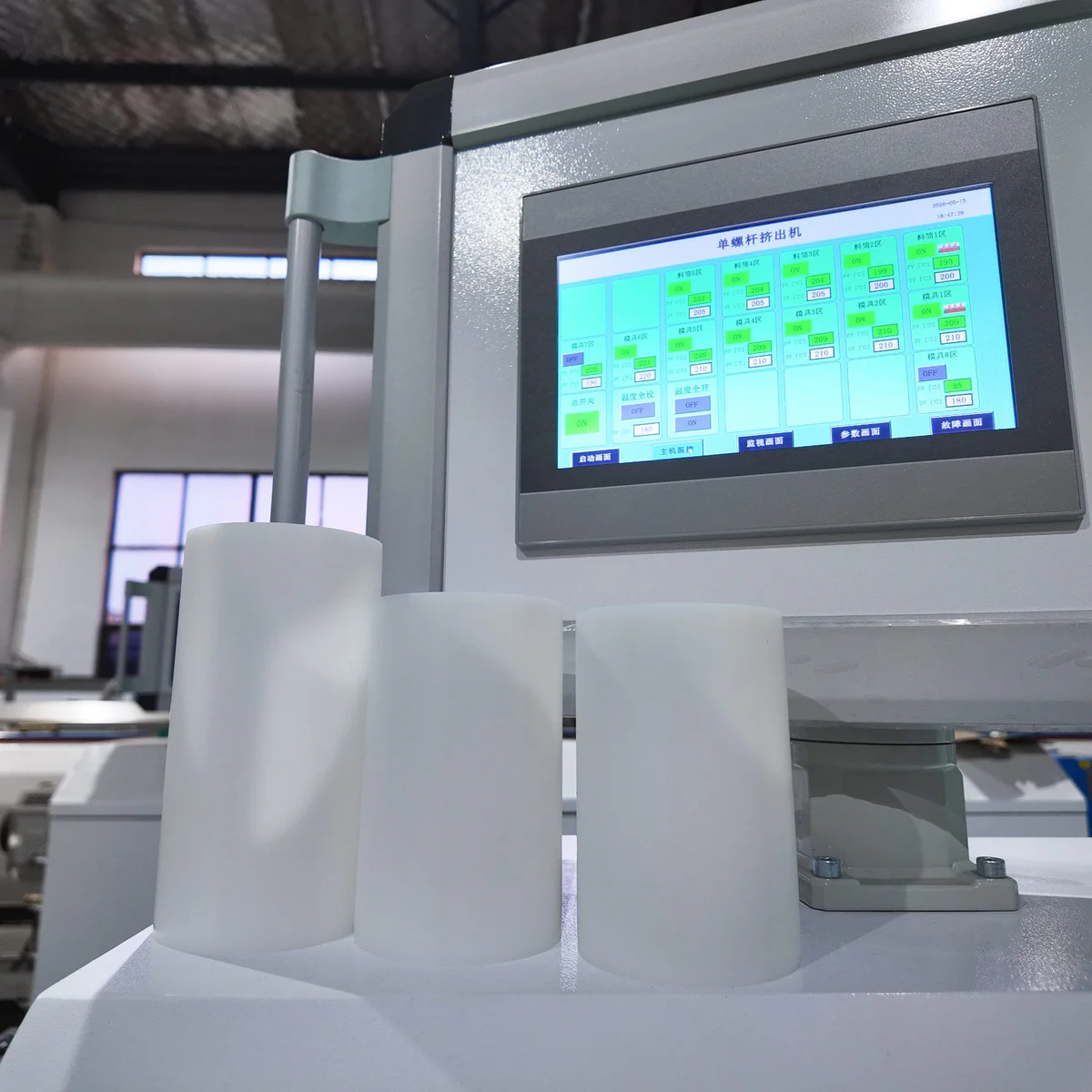
Save Proven Recipes
Where your control system can store parameter sets, save one per pipe size once the pipe is right. The next changeover then starts from known values and fine adjustment, instead of from zero.
A Photo Of The Screen Says More Than A Page Of Description
Settings, close photos of the defect and a short clip of the line running let us see what you see. Next is a plain list of what to gather before you message us.
The Details That Shorten A Support Case
No formal report needed. A short message covering the points below, with photos or a clip from your phone, is normally enough for a first review. Anything missing, we will ask for.
About The Line
- Machine nameplates, or your order details
- Pipe sizes the line runs, and the size showing the fault
- Resin grade or PVC formulation, with filler and regrind share
- Output and line speed at the time of the fault
About The Fault
- When it began, and what changed just before: material, size, a stop, a new part
- Constant, worse as the shift goes on, or on and off
- What your team has tried, and what each change did
- Alarm texts or codes shown on the control screen
Photos And Video
- The control screen with temperatures and speeds readable
- The defect itself: cut end, surface, wall cross section
- A short clip of the line running, from die to cutter
- Suspect parts beside a ruler, or beside a new one
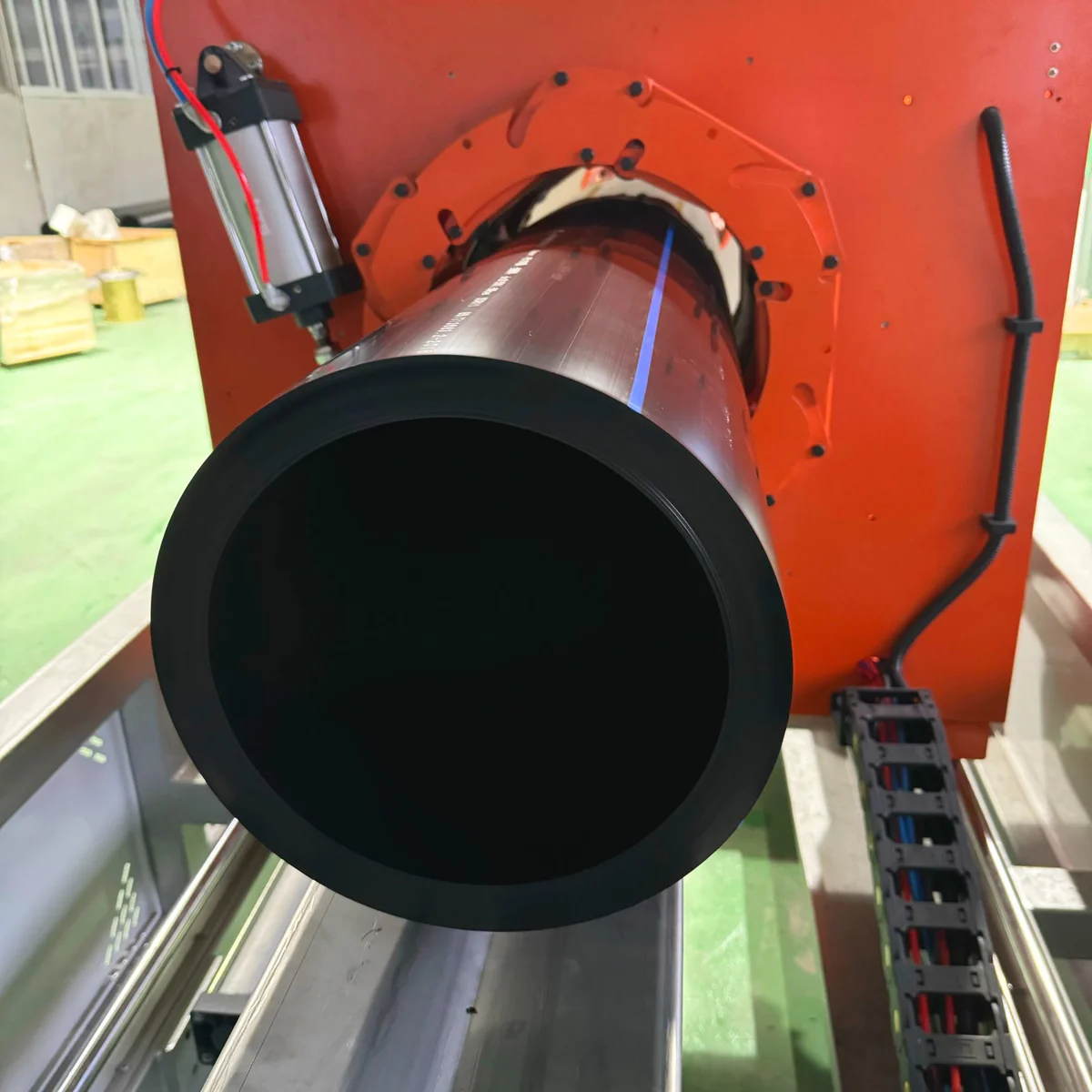
A Message That Works
"PVC drainage pipe, our largest size. The top of the pipe runs thick after a few hours, the bottom thin. Same formulation as last month. We changed a die heater last week. Photos of the cut end and the control screen attached."
Six lines, and the review can start: the material, the size, the pattern of the fault, its timing, the last change on the line and the evidence. Write in whatever language your team is comfortable with; short and specific beats long and general.
Your Message Turns Into A Case We Work Through With You
Once the details arrive, the review moves to chat or a call. Below, the steps of a remote support case from the first photo to the follow-up check.
-
1
You Send
Photos, settings, a clip
-
2
We Review
Causes ranked, with you
-
3
You Adjust
One change, then report
How A Remote Support Case Runs
Many questions can be settled without anyone getting on a plane. You share what the line is doing; our technical team checks it with you, explains the likely cause and suggests the change to try first.
-
1
You Share The Evidence
Photos, a clip, the settings and a few lines of description by WhatsApp or email. Maggie keeps the thread together and brings in an engineer whenever the question needs one, rather than guessing.
-
2
We Ask For What Is Missing
If one reading or one more photo would rule a cause in or out, we ask for it first. It saves your team from opening up machines that are working fine.
-
3
Likely Causes, In Order
You get the probable causes ranked from quickest to check to most involved, so nobody strips a die head to find a loose thermocouple.
-
4
One Change At A Time
We suggest a setting or part change and what to watch afterwards. Changing several values together hides which one actually helped.
-
5
Report Back
Tell us what happened. If the fault is still there, we move to the next cause, look at replacement parts, or talk through whether a visit to your plant makes sense.
Sometimes The Fix Is A Part, Sometimes A Change To The Line
A hardened pad or a failed heater calls for a replacement. A line asked for new sizes or more output may need an upgrade. Both are covered in the next section.
Replace The Part
Heaters, thermocouples, seals, haul-off pads, blades, belling molds.
Upgrade The Line
New pipe sizes, more output, an added layer or stripe.
Keep The Right Parts On Hand, Plan Changes Before They Are Urgent
Each line leaves our factory with a spare parts list drawn up for its own configuration, including advice on which wearing parts are worth keeping in stock. When the question is bigger than a part, we look at what the line has to do next.
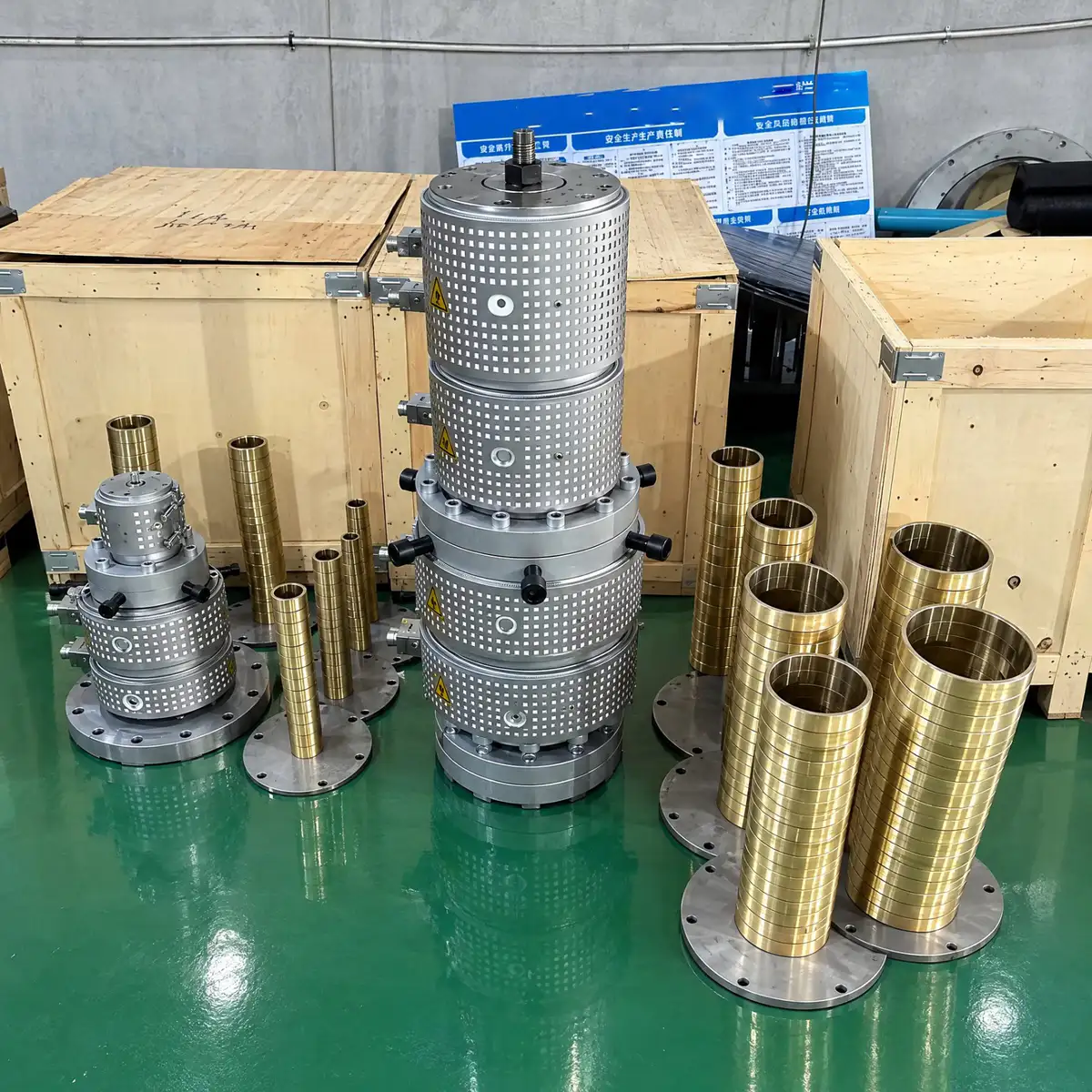
Spare Parts
Parts that wear in daily production, grouped by where they sit on the line.
Heating
Heater bands and thermocouples
Sealing
Seals for tanks, pumps and connections
Pulling
Haul-off pads
Cutting And Forming
Saw blades, knives and belling molds
Processing Unit
Screw and barrel, checked by condition, not by calendar
To match a part, send a photo of it, its position on the line and the machine nameplate.
Upgrades To A Running Line
If most of the line still does its job, the unit holding it back can often be changed on its own. Each upgrade is checked against what stays in place.
Replacement Extruder
When the main extruder limits output or melt quality, a new one can be matched to your existing die, center height, downstream and control system.
Extruder machinesCo-Extruder
Adds color stripes or an extra layer. It is sized to the main extruder's output, the layer ratio and the space beside the line.
Co-extrusion optionsMore Calibration Or Cooling
Faster running or heavier wall can outgrow the tanks. We check the cooling length already installed and your water conditions before suggesting more.
Spray cooling tanksHaul-Off And Cutter
Higher speed or larger sizes can push pulling and cutting past their range. Replacements are matched to center height, speed and control signals.
Haul-off machinesNew Pipe Sizes
Additional die tooling and calibration sleeves, checked against what the extruder, tanks and haul-off can carry at the new size.
Pipe die headsEnd Of Line Handling
Coiling, stacking or belling added to a line that finishes by hand today, fitted to the cutter discharge and the space you have.
Pipe stackersPlanning a full new line instead? Start from pipe extrusion lines.
Technical Support Questions
Short answers to what producers ask most often. If your question is not here, put it in the form below.
Start from the material, not the pipe type. PVC dry blend usually runs on a conical or parallel twin screw; HDPE, PE, PPR and PE-RT usually start from a single screw. Formulation, filler and regrind share, pipe range and the output you need then decide the geometry, the L/D and the wear protection.
Drift over time usually means something in the balance between melt delivery and pulling is moving: melt temperature or pressure, feeding consistency, vacuum level, or haul-off speed against screw speed. A thick side that stays in one place points more toward die centering or uneven die heating.
Mostly degraded material. PVC breaks down when heat, shear and time inside the machine add up: temperatures above the compound's window, spots in the die or adaptor where melt stops moving, or a worn screw and barrel. Moisture or volatiles in damp or recycled feed can add bubbles and specks of their own.
Not as the first step. Past a certain point more pressure only marks the surface and flattens thin or warm pipe. Check pad condition, pipe temperature at the haul-off, alignment and chain tension first. If slipping started after you raised output, the haul-off may simply be working beyond what it was sized for.
A generic profile would mislead more than it helps, because the right values change with resin grade, formulation, pipe size and the machines in your line. Send the profile you run now with photos of the pipe it produces, and we review it against your material and tell you what to adjust first.
The material, the pipe size showing the fault, when it started and what changed before it, plus photos of the defect and the control screen, and a short clip of the line running. Machine nameplates help us confirm exactly which configuration you have.
For complete line projects, sending engineers to your plant can be discussed. The scope is agreed case by case around the line, your timeline and local conditions. Most running questions are settled remotely first, because photos and settings often point to the cause without a trip.
Check the spare parts list that came with your line first. Then send a photo of the part, its position on the line and the machine nameplate, so the replacement is matched to your configuration rather than to a similar-looking item.
There is no honest fixed interval. Wear depends on the resin, filler and recycled content, running hours, processing conditions and the protection on the unit. Judge it by condition and performance: falling output at the same screw speed, unsteady melt pressure, or measured wear on flights and bore.
Often, with new die tooling and calibration sleeves. Whether it works depends on what the extruder, tanks, haul-off and cutter can handle at the new size and wall thickness. Send the sizes you want to add and the machines you run, and we check the whole line before suggesting tooling.
Tell Us What Your Line Is Doing
A screw question, a fault that will not go away, settings for a new size or a part to match. Describe it in a few lines and send photos or a clip by WhatsApp or email if that is easier.

Maggie
Your Contact At QTech Machinery
Engineers join when neededSend me what the line is doing and whatever evidence you have. I keep the case in one thread, bring in the engineer it needs, and follow it through with you until there is a clear next step.
Zhangjiagang Qinxiang Machinery Co., Ltd. builds the extruders and downstream machines in its pipe lines, so the people answering know how each unit is put together.
Maggie
QTech Machinery, Zhangjiagang Qinxiang Machinery Co., Ltd.
Describe Your Line And The Problem
Fields marked are required.