Installation And Commissioning
Engineer visit, remote start up and operator training.
A line only pays its way once it makes your pipe on your floor. We help you prepare the site before the crates leave Zhangjiagang, start the line with your team, with our engineer beside you or on a video call, and train the operators on the machines they will run every day.
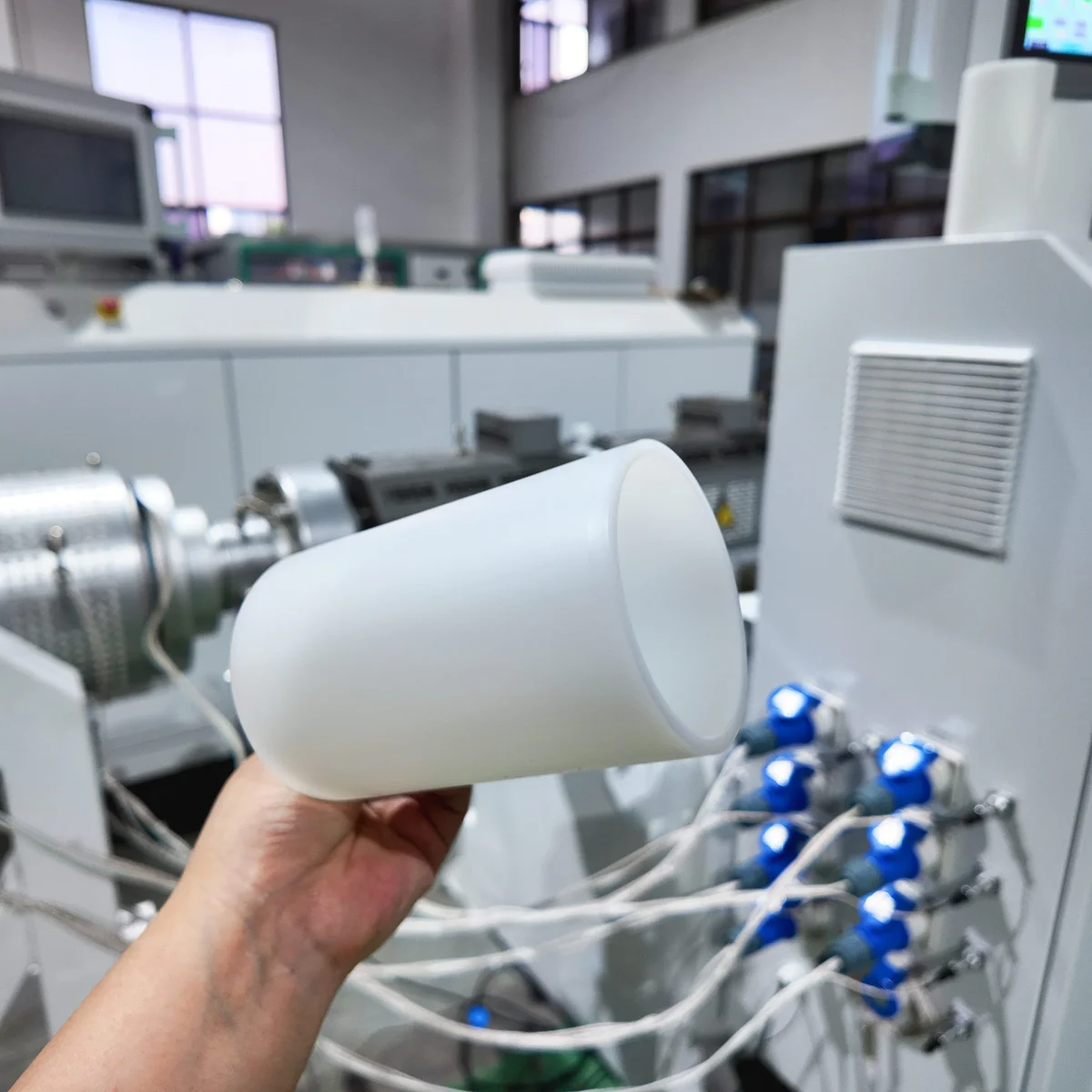
Before It Ships
Each line is trial run to your agreed pipe spec in our workshop first.
Before Delivery
Layout And Connections
Layout drawings and connection guidance, so the site is ready before the crates open.
Start-Up
On Site Or Remote
An engineer visit or a video-guided start-up, agreed for each project.
First Run
Your Pipe Spec
Diameter, wall, ovality, surface and cut length measured on your floor.
Handover
Training And Documents
Operators trained on the line, with manuals, diagrams and a spare parts list.
From Empty Floor To Running Line
The sections follow the order of a real project: prepare the site, receive the line, decide how it is started, prove it on your pipe, train the people who run it, and keep the support going afterwards.
Site Preparation
Power, water, air, floor, layout
Shipping And Unpacking
From container to floor
Engineer Or Remote
Choose how start-up runs
First Run
Proving the agreed pipe spec
Operator Training
Skills to repeat good pipe
Handover Documents
What stays with your team
After Start-Up
Support once you produce
FAQ
Voltage, visits, documents
Installation Request
Tell us about your site and team
Get The Floor Ready Before The Containers Arrive
Delays at start-up usually trace back to something on site that was not ready: a supply cable that is too small, no drain near the tanks, a door the cooling tank will not pass through. Before the line ships, you receive installation instructions, layout drawings and connection guidance, so your team knows what to prepare and exactly where.

Power Supply
The line is built to the voltage, frequency and safety standard you confirmed at order. Bring a supply sized for the installed power in your configuration to the main cabinet position, with cable routes to each unit planned before the floor is closed.
Have ready: supply voltage and frequency, cabinet position, cable route.
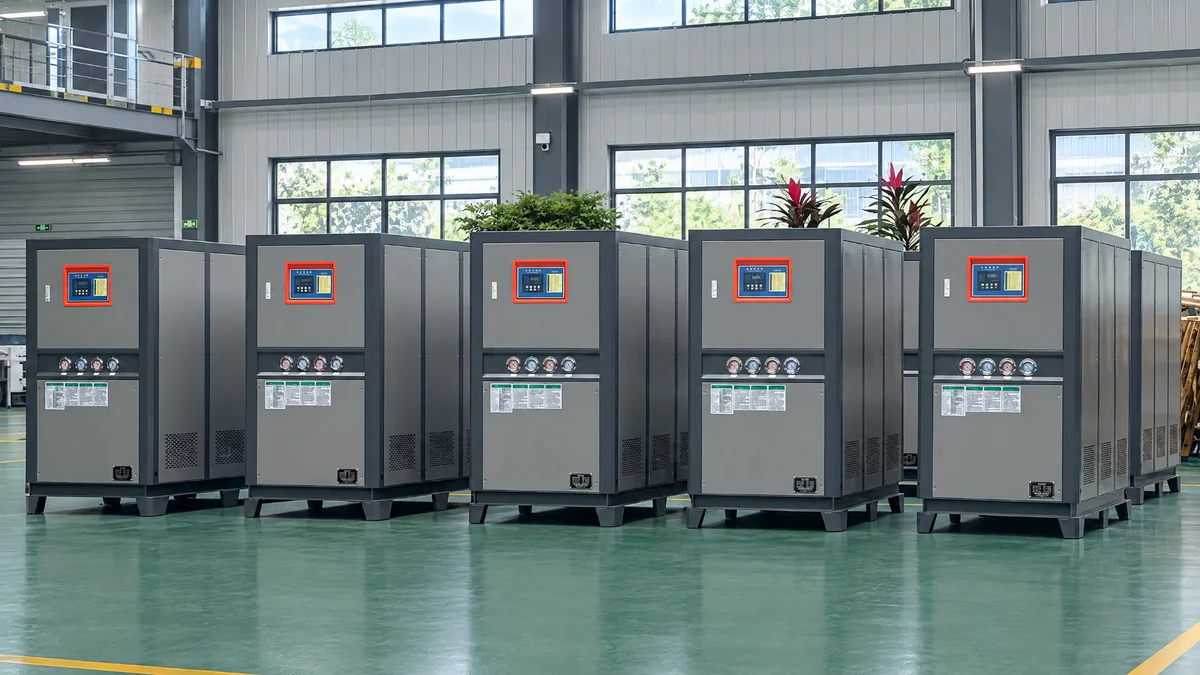
Cooling Water
Vacuum and spray tanks need a steady water supply and somewhere for it to go. Plan the supply, the return or drain and, if you use one, the chiller position against the connection points marked on the drawing.
Have ready: water source and temperature, drain or return, chiller location.
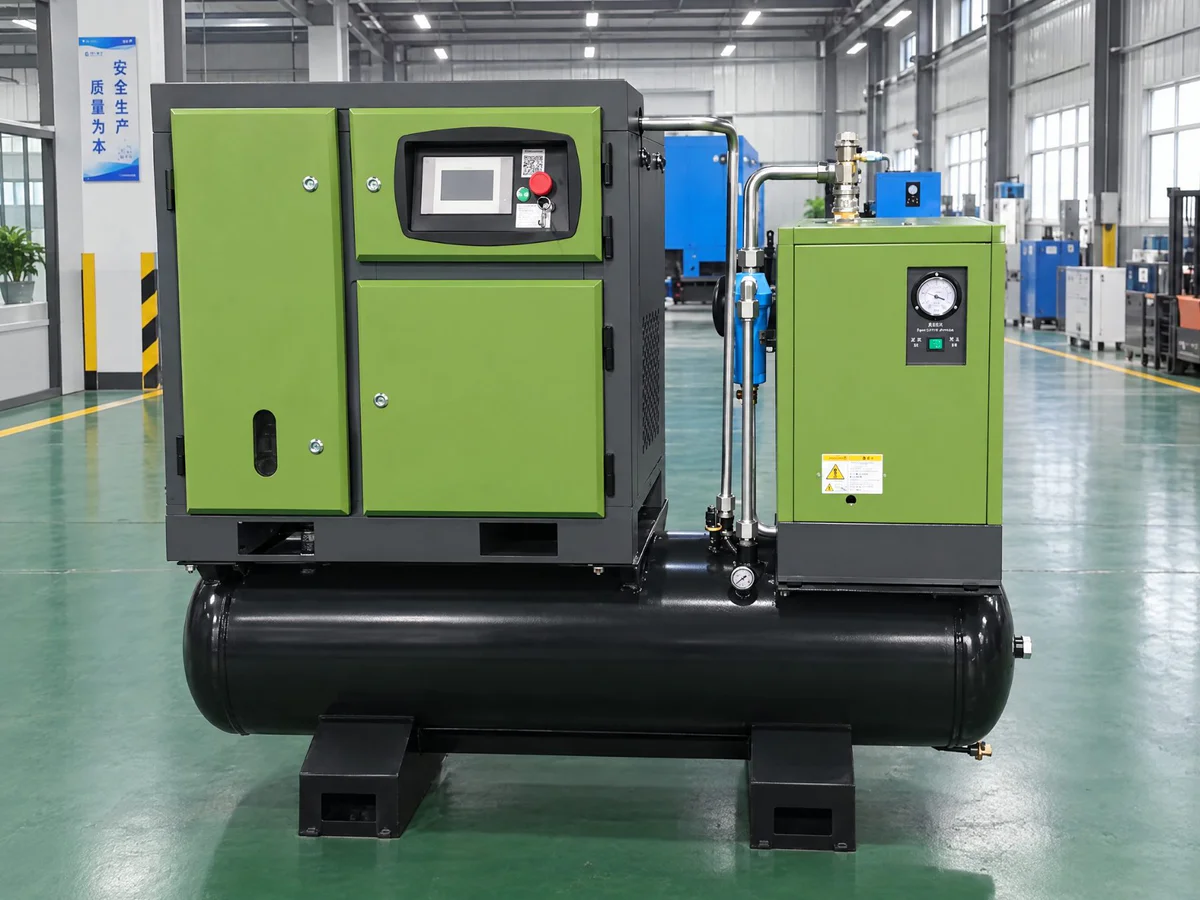
Compressed Air
Pneumatic clamps, cutters and stackers run on compressed air. Check on the drawing which units of your line need it, and bring a clean, dry supply to each of those points.
Have ready: compressor or plant air line, drops at the marked units.

Floor And Foundation
A level, solid floor along the whole line keeps extruder, tanks, haul-off and cutter on one center line. Mark the anchor points and check the floor where the extruder and the heavier tanks will stand.
Have ready: level floor, marked anchor points, line center line.
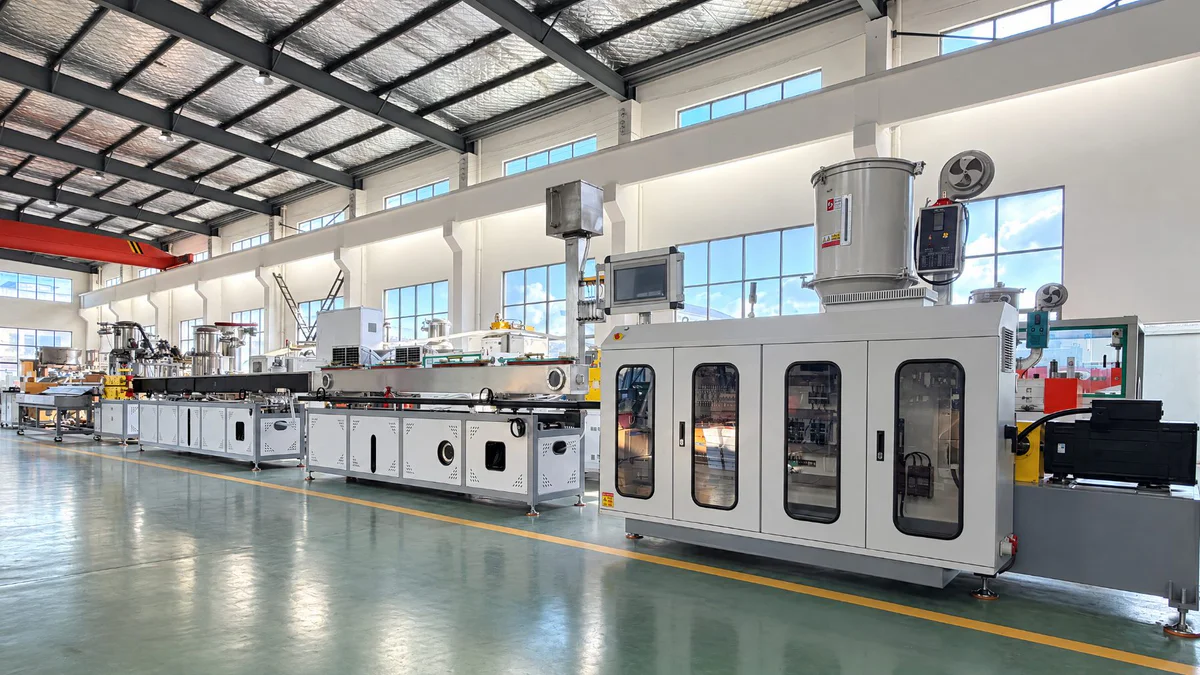
Layout And Access
Leave room for operators to reach every panel, for die and sleeve changes, for raw material coming in and finished pipe going out, and for a forklift or crane to set each machine on its mark.
Have ready: door sizes, lifting equipment, material and pipe storage areas.
Send Us Your Floor Plan
A sketch with dimensions, doors, columns and where power and water enter is enough to check the layout against your line before anything is shipped.
A Ready Floor Turns Delivery Day Into Setting Day
With power, water, air and anchor points in place, unloading leads straight into setting machines on their marks. Next: what arrives in the containers, and how to unpack it without losing a part.
- Power
- Water
- Air
- Floor
- Layout
From The Container To Its Mark On The Floor
The machines, spare parts and documents are packed for export, and you receive loading photos, the packing list, the manual and the shipping documents. What happens when the container doors open is up to your team, and a careful first hour saves days later.
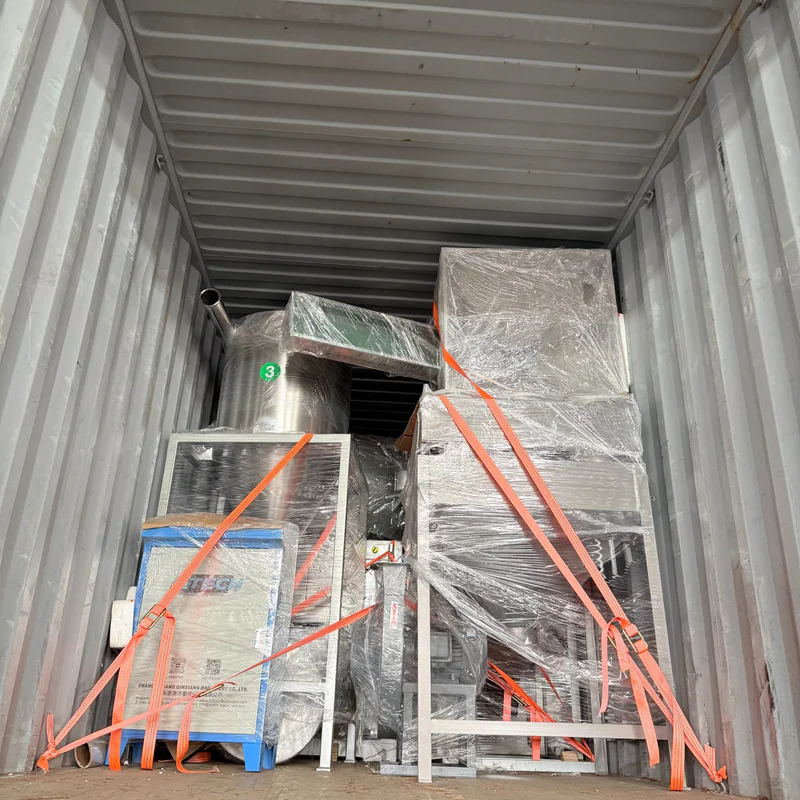
What Travels With The Line
- Every machine of the line, packed for export
- Spare parts agreed with the order
- Operation manual and electrical diagrams
- Packing list and shipping documents
- Photos of the loading, sent from our side
Unpacking Checklist
Six habits that keep a delivery from turning into a search.
- Photograph the container doors, the seal and the load as it stands, before anything is moved.
- Check each crate against the packing list and note any visible transport damage straight away.
- Lift only at the marked points. Leave the die head, calibration sleeves and tooling in their packing until installation.
- Keep electrical cabinets dry and covered until they are fixed in position.
- Put spare parts and documents in one place, so nothing disappears with the packaging.
- Move each unit to its position on the layout before connecting any power, water or air.
Damage or something missing?
Send the photos and the line of the packing list it concerns to Maggie before going further, so the next step can be agreed while the evidence is fresh.
Our Engineer On Your Floor, Or Your Team With Us On Video
Both routes end at the same first run. Which one suits you depends on the line and on your people, and the next section puts the two side by side.
Three questions to ask yourself
- Is this your first extrusion line?
- How many machines must start together?
- Has your team run similar equipment?
Two Ways To Start Up, Agreed Before The Line Ships
Remote or on-site commissioning is arranged to fit each project. The route, and what each side prepares, is settled in advance so nobody discovers the plan on the day the line is powered.
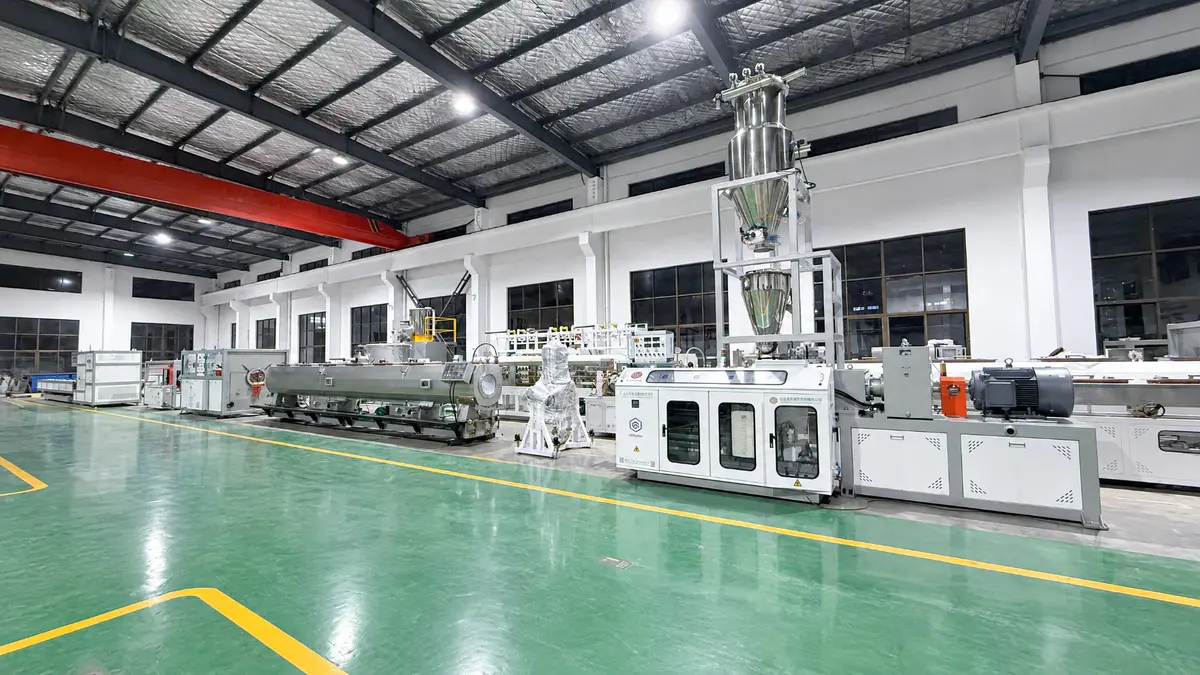
Engineer Visit
For a complete line project, sending engineers to your plant for installation support and commissioning can be discussed. The scope is agreed around your line, your timeline and local conditions, and your team works beside the engineer while the line is brought up to stable production.
Often suits
- A first extrusion line for the plant
- Several machines that must start together
- A team new to this pipe material or size range
You prepare
- The site finished to the drawings, machines set in place
- Power, water and air connected to the marked points
- Operators, a mechanic and an electrician on hand
- Raw material for the first run
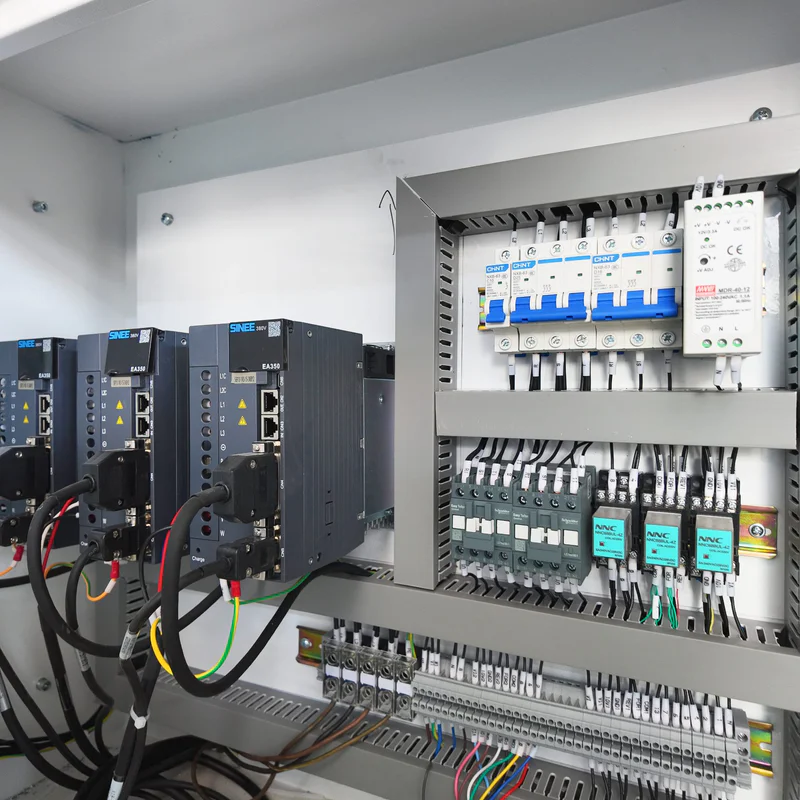
Remote Start-Up
Your team installs and connects the line from the layout drawings, wiring reference and manual, while our technical team guides each stage by video call, photos and messages, from the first connection to the first meter of pipe.
Often suits
- A team that already runs extrusion lines
- A replacement or added machine on a running line
- Shorter lines with fewer units to synchronize
You prepare
- A phone or tablet that can stream from the line
- Someone who can read the electrical diagrams
- Photos of each connection before power-on
- The same utilities and material as for a visit
Not sure which route fits, or want part of each? Tell us about the line and your team before shipment and the arrangement is agreed for your project. Replacing a single machine? Center height, die connection and control signals are checked against your line first.
The Line Is Commissioned When It Makes Your Pipe
Heaters reaching temperature and screws turning prove the machines move. The first run against your agreed pipe specification proves the line works, and that run is what the next section walks through.
- 1Power On
- 2Heat Up
- 3Thread The Pipe
- 4Reach Target Speed
- 5Measure Against Spec
The First Run, Measured Against The Pipe Spec You Approved
Before shipment the line is trial run in our workshop to your agreed specification, with sample pipe, running video or FAT details prepared as your project requires. The first run in your plant repeats that test on your own floor, with your material, your power and your cooling water.
-
01
Checks Before Material Goes In
Motor rotation direction, every heater zone reaching its set point, emergency stops, vacuum pump and water flow through the tanks, all confirmed with the line empty.
-
02
Heat And Hold
Barrel and die are brought to temperature and held there, so the die is evenly heated through before the screw turns under load.
-
03
Start Slow And Thread
At low speed the pipe is led through the calibration sleeve, the tanks and the haul-off, then on to the cutter, with vacuum and water brought in as it passes.
-
04
Bring It Up To Target
Screw speed and haul-off speed are raised together toward the agreed output, and vacuum and cooling are adjusted as the speed climbs.
-
05
Measure And Write It Down
Consecutive pieces are checked against the spec, and the settings that gave pipe in tolerance are recorded with your team for each size run during commissioning.
Outside DiameterWall Around The RingOvalitySurfaceCut Length
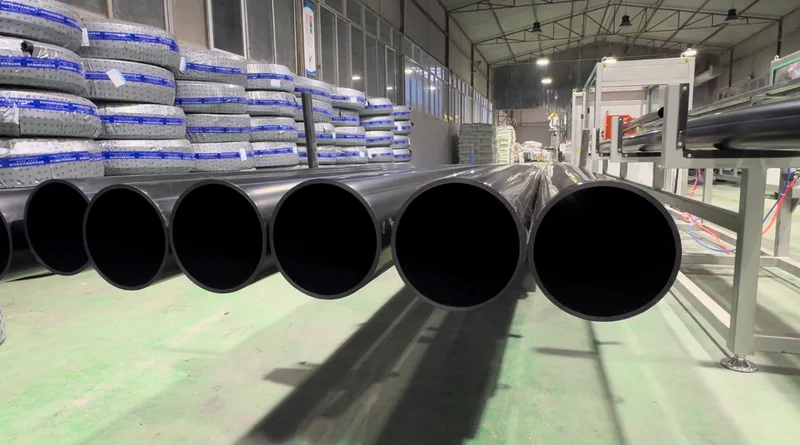
Compare With The Factory Record
The results and settings recorded at the trial run before shipment show what the line achieved on our floor. They help explain a difference on yours, such as another resin grade or warmer cooling water, instead of leaving it to guesswork.
Pipe Extrusion LinesNow Your Operators Have To Repeat It On Every Shift
Once the line runs to spec, the job is handing it to the people who will run it every day, including the night shift nobody from our side will ever meet. Training is next.
Training Built Around The Line Your Team Will Run
Training happens during commissioning, on your own machines, whether our engineer is beside the line or guiding by video. The manuals, electrical diagrams and maintenance guidance shipped with the line then become the reference your operators come back to.

Who Should Attend
Film the sessions
A phone video of your own line, your own panel and your own die change is easier to return to than any manual, and it trains the next new operator too.
What The Training Covers
Start-Up And Shutdown
The sequence for each machine, and why order matters.
Temperature Profiles
Setting zones and what to watch while heating.
Speed Matching
Moving screw and haul-off speed together.
Vacuum And Cooling
Adjusting both as speed and size change.
Size Changes
Die tooling, calibration sleeves and settings.
Haul-Off And Cutter
Clamping, length and cut settings per size.
Daily Checks
Cleaning, wear parts and what to log.
Alarms And Safety
Emergency stops, guards and safe access.
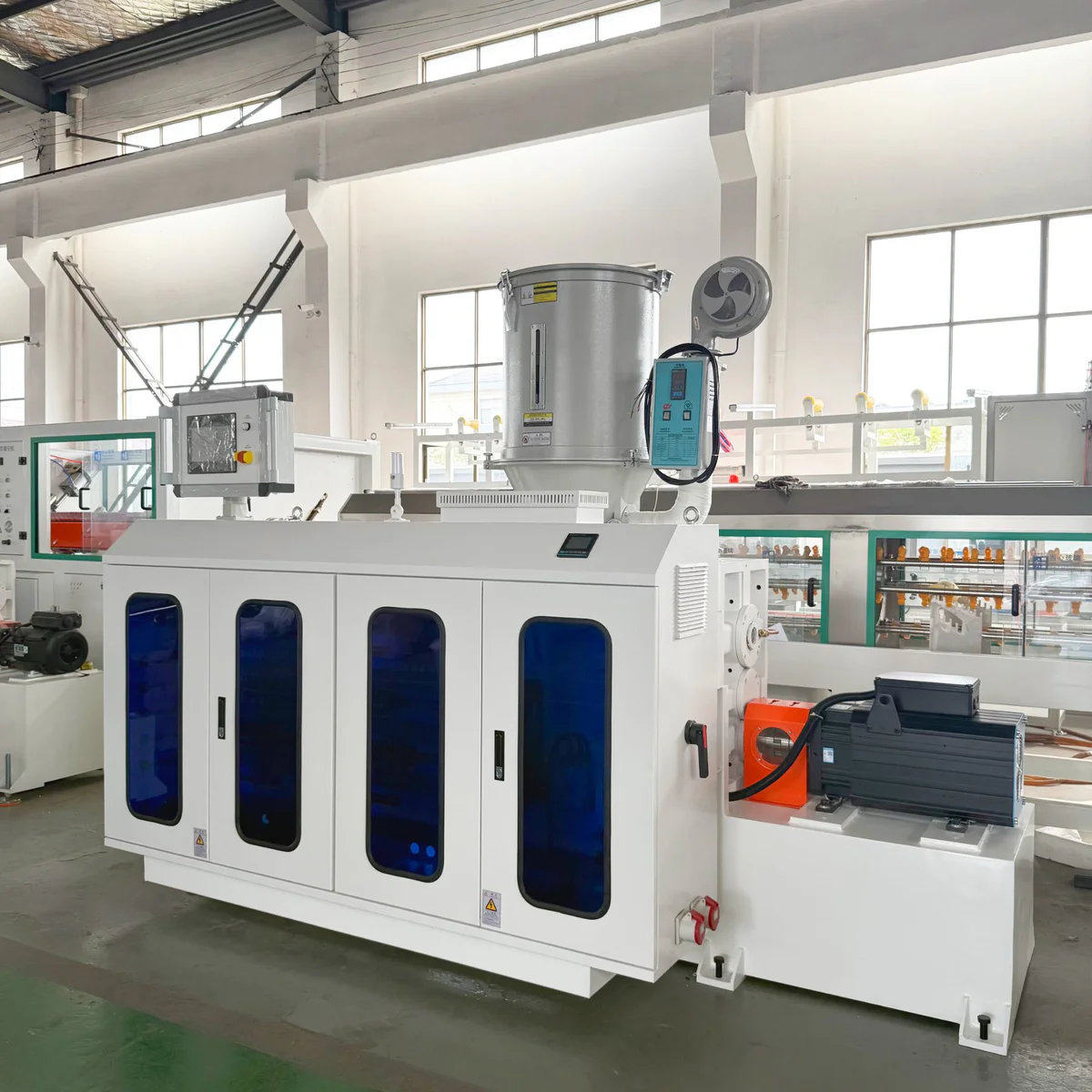
Where the control system can store parameter sets, operators also learn to save a proven recipe for each pipe size and recall it at the next changeover, so they start from values that already worked.
The Paperwork Outlasts The Commissioning
Engineers go home and shifts change; the documents stay with the line. Here is what your team should have on file the day the line is handed over.
What Your Team Keeps After Handover
Each document below is prepared for your configuration, not for a generic machine. Keep a printed set beside the line and a digital copy with your maintenance team.
Operation Manual
Start-up, running and shutdown for the machines in your line, with basic maintenance guidance written for daily production.
Electrical Diagrams
Cabinet wiring and terminal references for your voltage and standard, needed for any fault finding or later change.
Layout And Connections
Machine positions, center height, and where power, water and air connect on each unit.
Spare Parts List
Drawn up for your configuration, with the wearing parts worth keeping on the shelf marked out.
Packing List And Shipping Papers
What was shipped, crate by crate, for your receiving check, your records and customs.
Trial Run Record
Conditions and results from the test before shipment, with photos and video where they formed part of the agreed scope.
Your First-Run Settings
The values that gave pipe in tolerance on your floor, written down with your team for each size run at commissioning.
Missing One?
Ask For A Copy
Lost a manual or need the diagrams again? Send the order details or a nameplate photo.
Production Starts Here, And So Does A Different Kind Of Support
Once the line runs every day, the questions change: a fault on the night shift, a worn pad, a new size for a customer. The last section covers that support.
Support Once Your Line Is In Production
After shipment, support covers troubleshooting, spare parts, operation guidance, maintenance advice and adjusting the line for new pipe sizes. Most of it runs remotely: you share photos, video or running data, and our technical team works through it with you.
Work hours at our Zhangjiagang office: Monday to Friday 7am to 7pm, weekends 10am to 5pm. WhatsApp +86 159 5183 6628, email info@qtech-machinery.com.
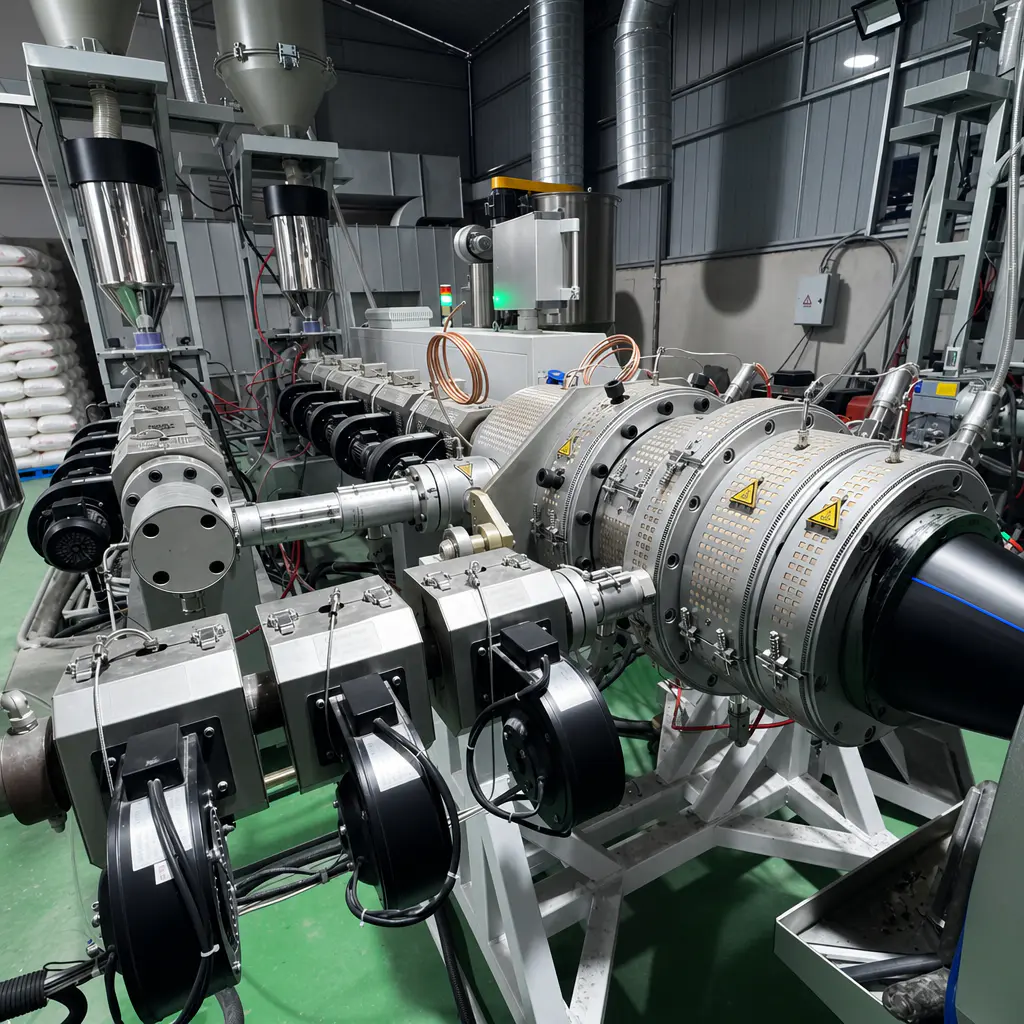
Troubleshooting And Settings
Pipe faults, setting questions and screw and barrel issues, worked through from your photos, video and the settings record made at commissioning.
Technical SupportSpare Parts
Matched to your configuration from the list shipped with the line. Send a photo of the part, its position and the machine nameplate.
Spare PartsNew Sizes And Upgrades
Additional die tooling and sleeves for new sizes, or a single unit replaced when the line is asked to do more than it was built for.
Extruder ComponentsMachines in a pipe line
Installation Questions
What buyers usually ask before a line arrives. Anything else, ask Maggie directly.
A power supply sized for the installed power of your configuration at the cabinet position, cooling water with a drain or return, compressed air at the units that use it, a level floor along the line with anchor points marked, and room to set and service each machine. The layout drawings and connection guidance you receive before shipment show where each of these is needed.
For a complete line project, sending engineers to your plant for installation support and commissioning can be discussed. The scope is agreed around your line, your timeline and local conditions before the line ships. A video-guided remote start-up is the other route, and the two are compared in section 03.
Yes, when your team can install and connect the machines from the drawings, wiring reference and manual. Our technical team then guides each stage by video call, photos and messages. It works best with people who have run extrusion lines before, or when one machine is added to a running line.
Yes. Motors, heating, cabinet and controls are built to the voltage, frequency and safety standard of your market, confirmed at order. Check the supply at your site against those values before the line arrives, and tell us early if anything differs.
The line is trial run to your agreed specification before shipment, and sample pipe photos, running videos or FAT details are prepared as your project requires. You are welcome to attend at our factory in Zhangjiagang, about two hours from Shanghai, or join a video walkthrough instead.
The operation manual with basic maintenance guidance, electrical diagrams, layout and connection drawings, a spare parts list for your configuration, the packing list and shipping documents, and the record of the trial run before shipment. The settings from your first run are added during commissioning.
On your own line, during commissioning, either beside our engineer or by video. Training covers start-up and shutdown, temperature profiles, speed matching, vacuum and cooling, size changes, haul-off and cutter settings, daily checks and safety. Operators from each shift, a mechanic and an electrician should attend.
The pipe specification you approved for the project: outside diameter, wall thickness around the circumference, ovality, surface and cut length, measured on consecutive pieces. The trial run record from before shipment is the reference for comparing results and settings.
Photograph it where it is, before moving anything else, and compare the crates with the packing list. Send the photos and the packing list line concerned to Maggie, so the next step can be agreed while the evidence is clear.
Troubleshooting, spare parts, operation guidance, maintenance advice and adjusting the line for new pipe sizes. Most of it runs remotely from your photos, videos and running data; the technical support page explains how a case runs.
Plan Your Start-Up With Maggie
Whether the line is still on order or already on its way, tell us where your site stands and how you would like the start-up to run. We plan the next steps with you from there.

Maggie
Project Contact, QTech Machinery
Start-up agreed per projectTell me where your project is. I bring the right engineer into the conversation and make sure the drawings, start-up route and training plan are settled before your line is packed.
- 1Your site status and preferred start-up route
- 2Layout and connection points checked with you
- 3Start-up, first run and training planned in writing
Maggie
QTech Machinery, Zhangjiagang Qinxiang Machinery Co., Ltd.
Tell Us About Your Site And Team
Fields marked are required.