PE Core Pipe Extrusion Line by QTech-Machinery
Practical Video Overview
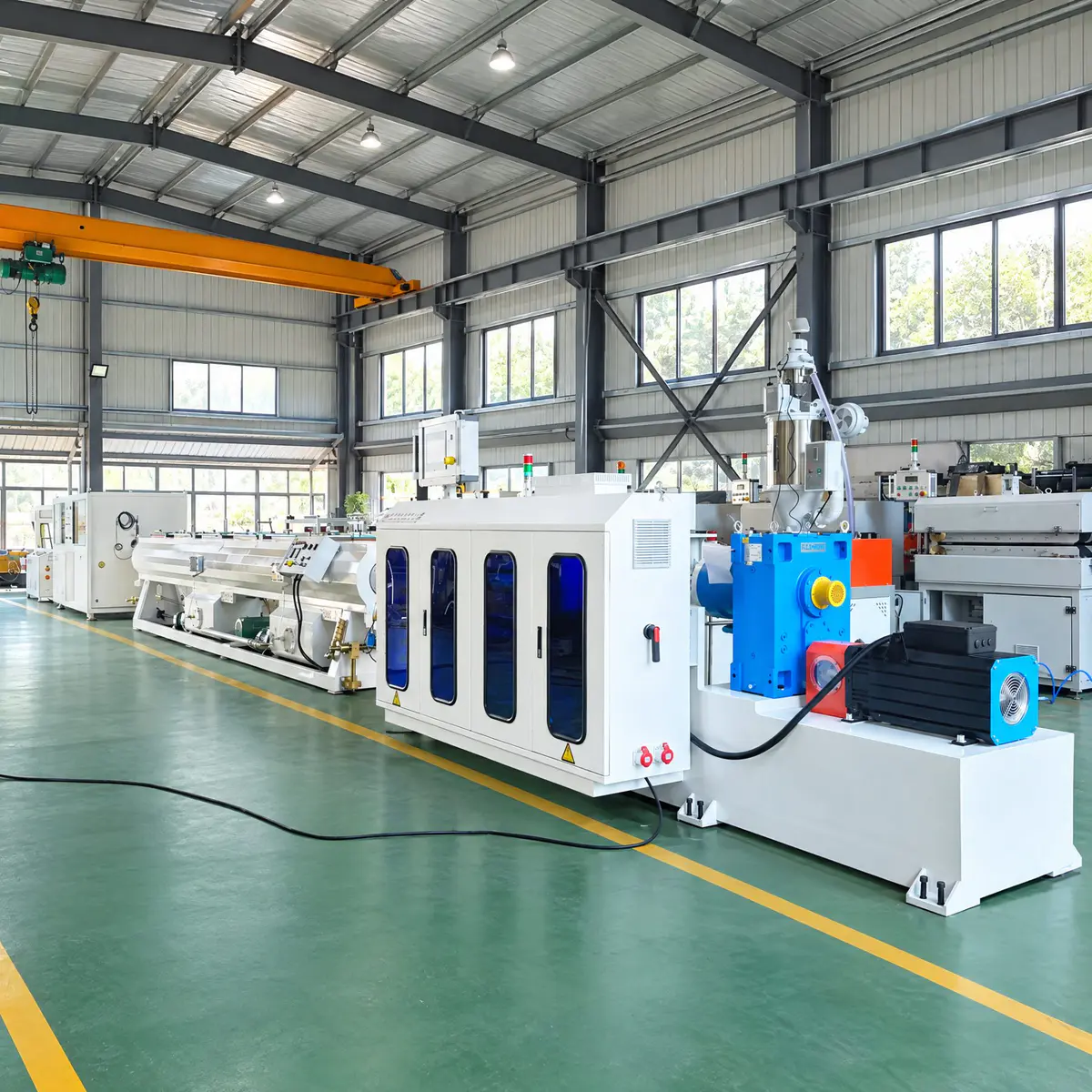
This video presents a complete PE core pipe extrusion line supplied by QTech-Machinery for the production of PE roll core tubes, PE winding core pipes, and industrial plastic core pipes. The line is designed for manufacturers that need stable pipe forming, accurate length control, reliable hauling, and clean cutting performance for roll core tube applications.
PE core pipes are widely used as winding cores for plastic film, packaging film, electronic materials, foil rolls, laminated materials, and other industrial roll products. Compared with ordinary pipe applications, roll core pipe production pays more attention to pipe roundness, wall thickness consistency, rigidity, cut length accuracy, and end-face quality. This video helps viewers understand how a complete extrusion system works from material processing to finished pipe cutting.
The video mainly shows the production process of the line, including extrusion, mould forming, vacuum calibration, spray cooling, three-claw hauling, encoder length measuring, and chipless cutting. It gives buyers a clear view of the equipment layout and the working relationship between each section of the PE core tube extrusion equipment.
Complete PE Core Pipe Production Process
From Raw Material to Finished Core Pipe
The production line shown in the video follows a continuous extrusion process. PE material is first plasticized by the main extruder, then formed through the pipe mould. After that, the hot pipe enters the vacuum calibration tank for sizing and cooling. The pipe is pulled forward by the haul-off machine, measured by the encoder system, and finally cut by the chipless cutting machine.
| Process Stage |
Equipment Used |
Main Purpose |
| Material plasticizing |
SJ75/33 single screw extruder |
Melts and processes PE material |
| Pipe forming |
PE core pipe mould |
Forms molten PE into pipe shape |
| Pipe sizing |
160 vacuum calibration tank |
Controls pipe roundness and dimensions |
| Cooling |
Spray cooling system |
Stabilizes pipe shape after extrusion |
| Traction |
Three-claw haul-off machine |
Pulls pipe at controlled speed |
| Length control |
Encoder measuring system |
Measures pipe length before cutting |
| Cutting |
160 chipless cutting machine |
Cuts pipe to required length |
This complete process makes the line suitable for continuous PE roll core tube production and helps manufacturers improve production efficiency and product consistency.
Project Background
Application of PE Roll Core Tubes
The customer required a practical production solution for manufacturing PE core pipes used in industrial roll-support applications. These pipes are not mainly used for fluid transportation. Instead, they are used as winding cores for roll-type products.
Typical applications include:
| Industry |
PE Core Pipe Application |
| Packaging film |
Winding core for flexible packaging rolls |
| Electronic materials |
Core tube for protective film and release film |
| Plastic film |
Support core for PE, PP, PET, and composite films |
| Foil products |
Core pipe for aluminum foil and laminated foil |
| Industrial materials |
Roll support for membranes, sheets, and coated materials |
| Printing and converting |
Core tube for processed film and roll materials |
For these applications, a stable core pipe is important because the quality of the core can influence the final roll shape, winding tension, storage stability, and handling efficiency.
Main Equipment Shown in the Video
SJ75/33 Single Screw Extruder
Function of the Extruder
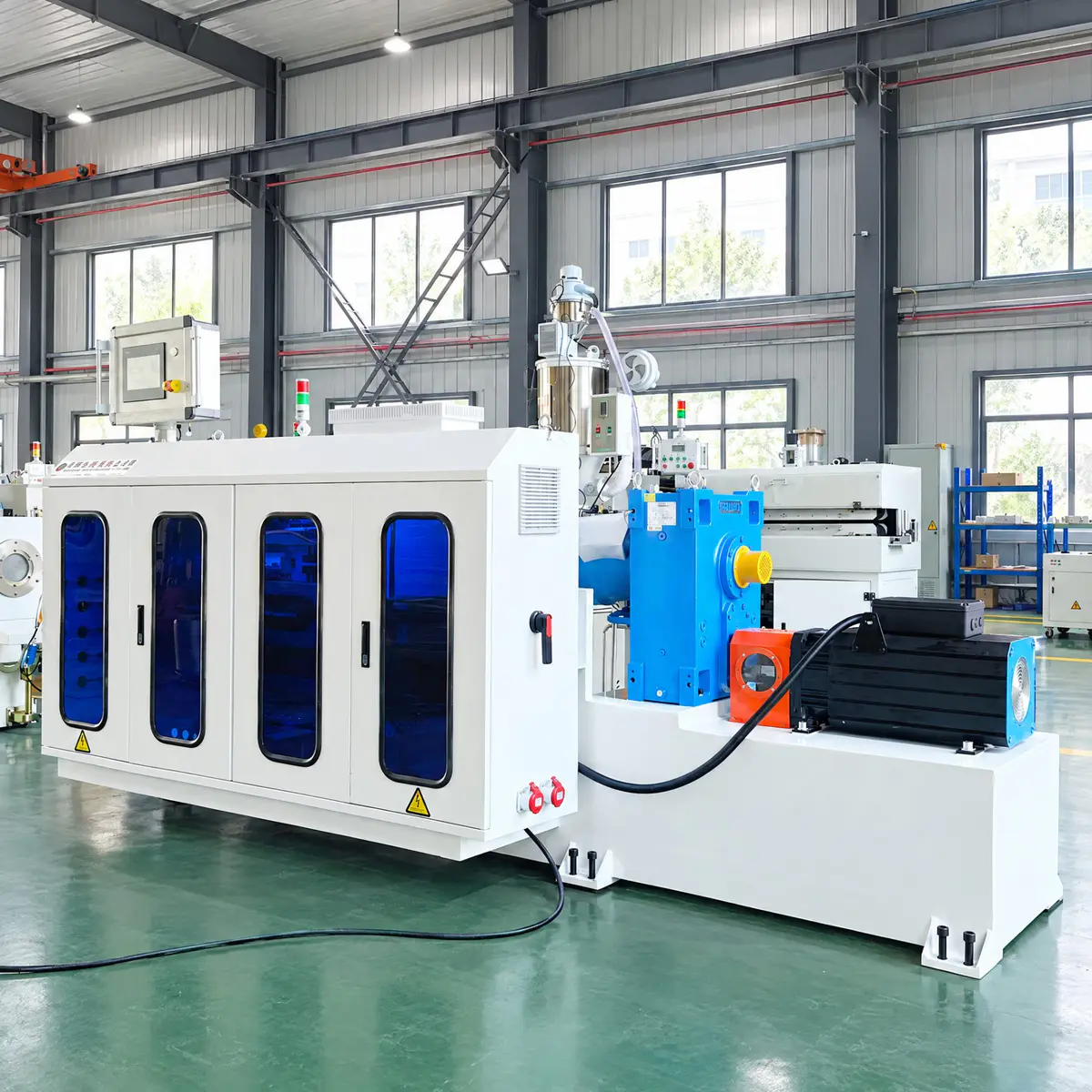
The SJ75/33 single screw extruder is the main machine of the PE core pipe extrusion line. It is responsible for melting, plasticizing, and delivering PE material continuously to the pipe mould. Stable extrusion output is the foundation of consistent pipe production.
In this video, the extruder is shown as the starting section of the complete production line. It works together with the mould and downstream equipment to support continuous pipe manufacturing.
Extruder Configuration
| Item |
Specification |
| Extruder model |
SJ75/33 single screw extruder |
| Application |
PE core pipe and PE roll core tube production |
| Screw diameter |
75 mm |
| Screw L/D ratio |
33:1 |
| Screw material |
38CrMoAlA alloy steel |
| Barrel material |
38CrMoAlA alloy steel |
| Surface treatment |
Nitriding treatment |
| Main motor power |
45 kW |
| Heating type |
Cast aluminum heating |
| Control |
PLC and touch screen operation |
Practical Advantages
The 33:1 screw length-to-diameter ratio supports stable plasticizing and uniform melt output. This is important for PE core pipe production because uneven melting may lead to unstable wall thickness or poor pipe surface quality.
The screw and barrel use alloy steel with nitriding treatment, which improves wear resistance and supports long-term industrial operation. The heating and cooling design helps operators maintain stable processing temperature during continuous extrusion.
PE Core Pipe Mould System
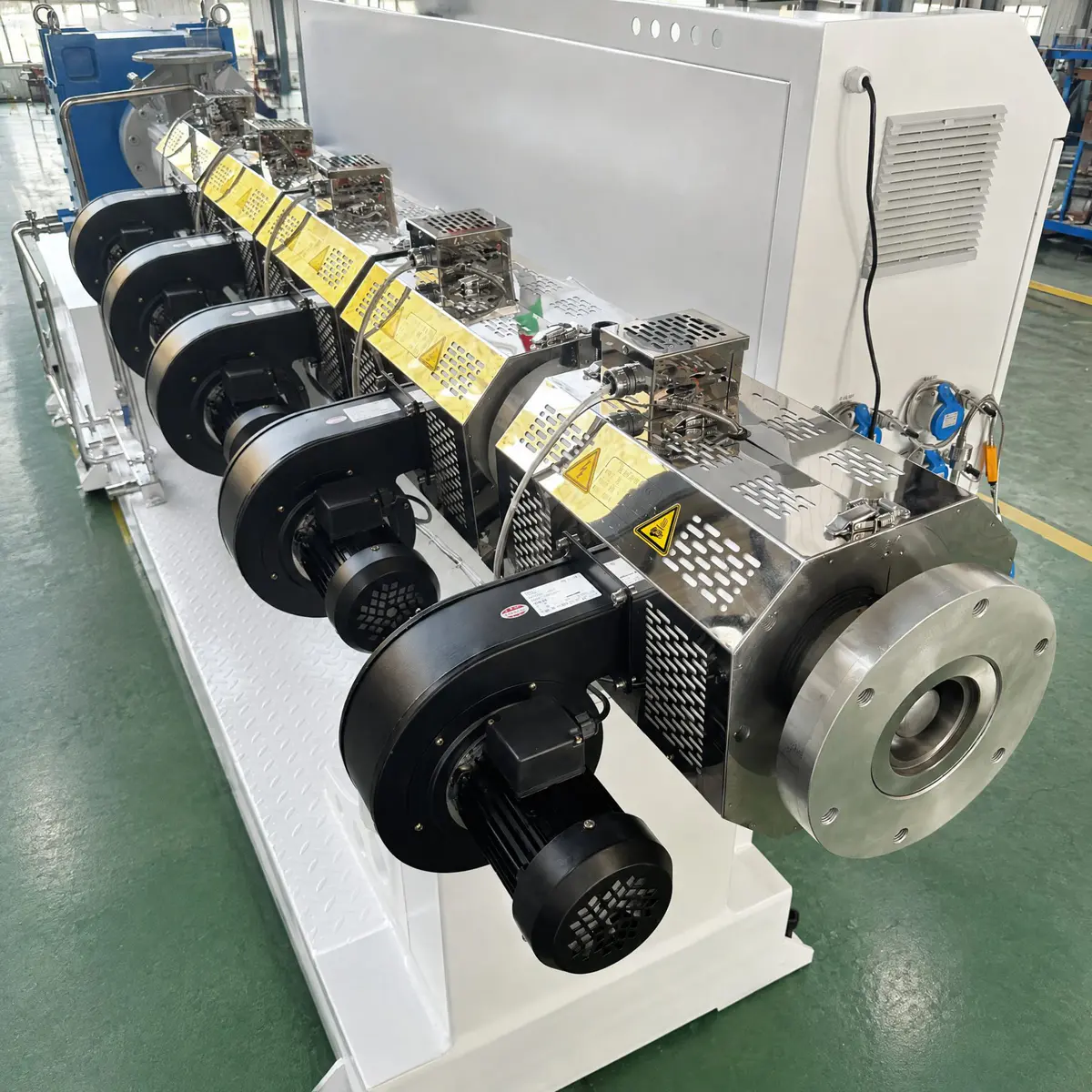
Role of the Mould
After PE material is plasticized by the extruder, it enters the pipe mould. The mould shapes the molten material into the initial pipe structure. For PE roll core tube production, the mould must support balanced melt distribution and stable forming.
The video shows the pipe leaving the mould and entering the vacuum calibration section. At this stage, the pipe is still hot and needs immediate sizing and cooling.
Mould Configuration
| Item |
Description |
| Mould type |
Customized PE core pipe mould |
| Product application |
PE roll core tube / PE winding core pipe |
| Target pipe size |
Around 77 mm inner diameter |
| Wall thickness options |
6 mm, 7 mm, 8 mm, 9 mm, 10 mm |
| Flow design |
Optimized melt distribution |
| Forming purpose |
Stable pipe wall and roundness |
| Heating interface |
Mould heating connection |
| Temperature sensing |
Thermocouple connection |
| Machine matching |
Compatible with SJ75/33 extruder |
| Downstream matching |
Works with 160 vacuum calibration tank |
Importance for Pipe Quality
The mould has a direct influence on pipe wall distribution, surface appearance, and forming stability. A suitable mould design helps reduce pipe eccentricity and supports more stable wall thickness. This is especially important for PE core tubes used in winding applications.
160 Vacuum Calibration Tank
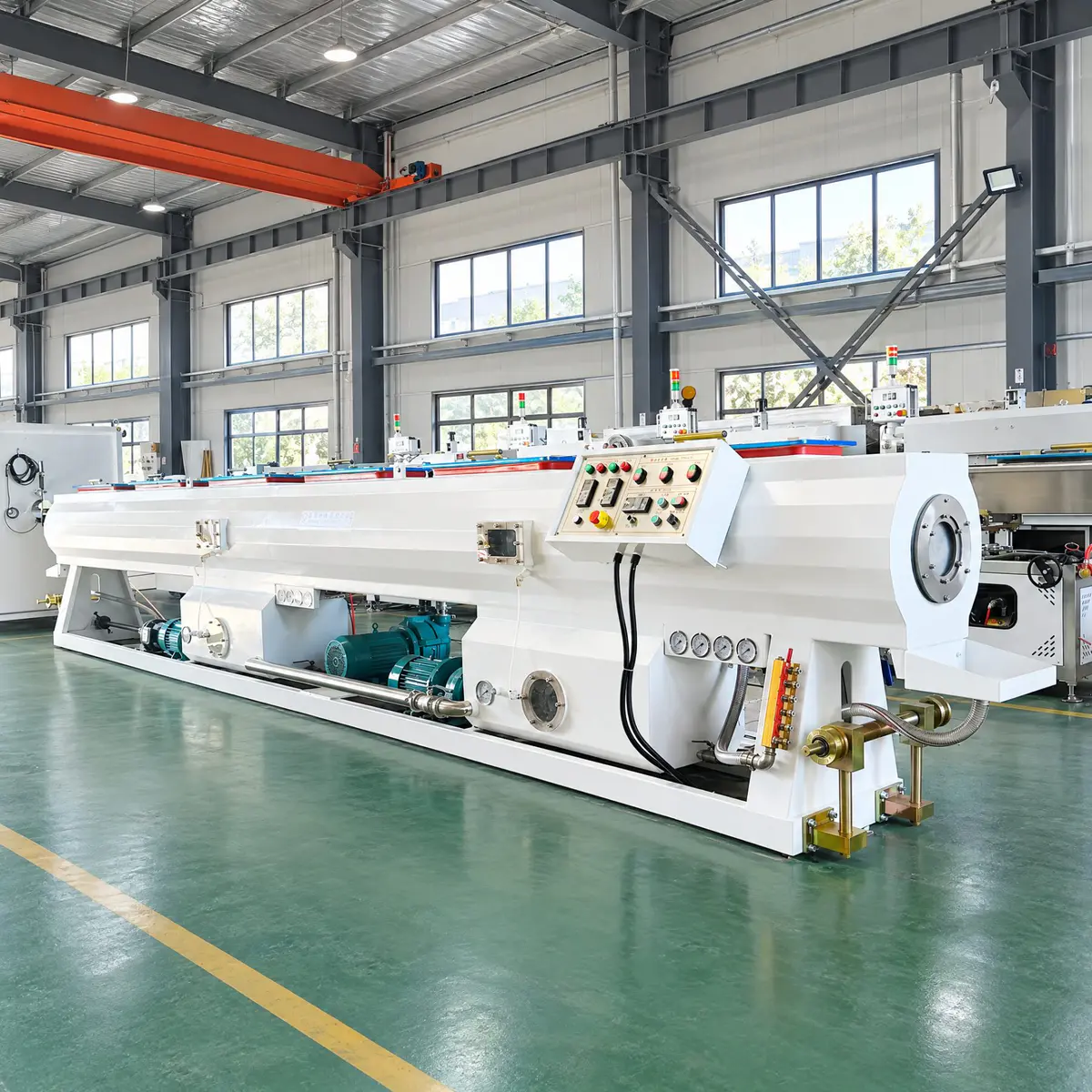
Function of Vacuum Sizing
The 160 vacuum calibration tank is used after the pipe mould. Its main functions are pipe sizing, initial cooling, and shape stabilization. The vacuum system helps control pipe roundness, while the spray cooling system helps the pipe become stable before it enters the haul-off machine.
Vacuum Tank Configuration
| Item |
Specification |
| Tank model |
160 vacuum calibration tank |
| Tank length |
9 meters |
| Vacuum range |
0.02–0.08 MPa |
| Tank material |
SUS304 stainless steel |
| Tank plate thickness |
3 mm |
| Vacuum pump power |
5.5 kW |
| Cooling method |
Spray cooling |
| Water circulation |
Water pump system |
| Adjustment |
Forward/backward, up/down, left/right |
| Auxiliary functions |
Water level control, temperature display, vacuum alarm |
Why This Section Matters
PE core pipe must keep good roundness and stable dimensions for roll winding use. If the pipe is not properly sized and cooled, it may deform after extrusion. The vacuum calibration tank helps reduce this risk by supporting controlled shaping and cooling.
The 9-meter tank length provides enough cooling and sizing distance for the pipe. The stainless-steel tank structure also improves durability and corrosion resistance in daily production.
Three-Claw Haul-Off Machine
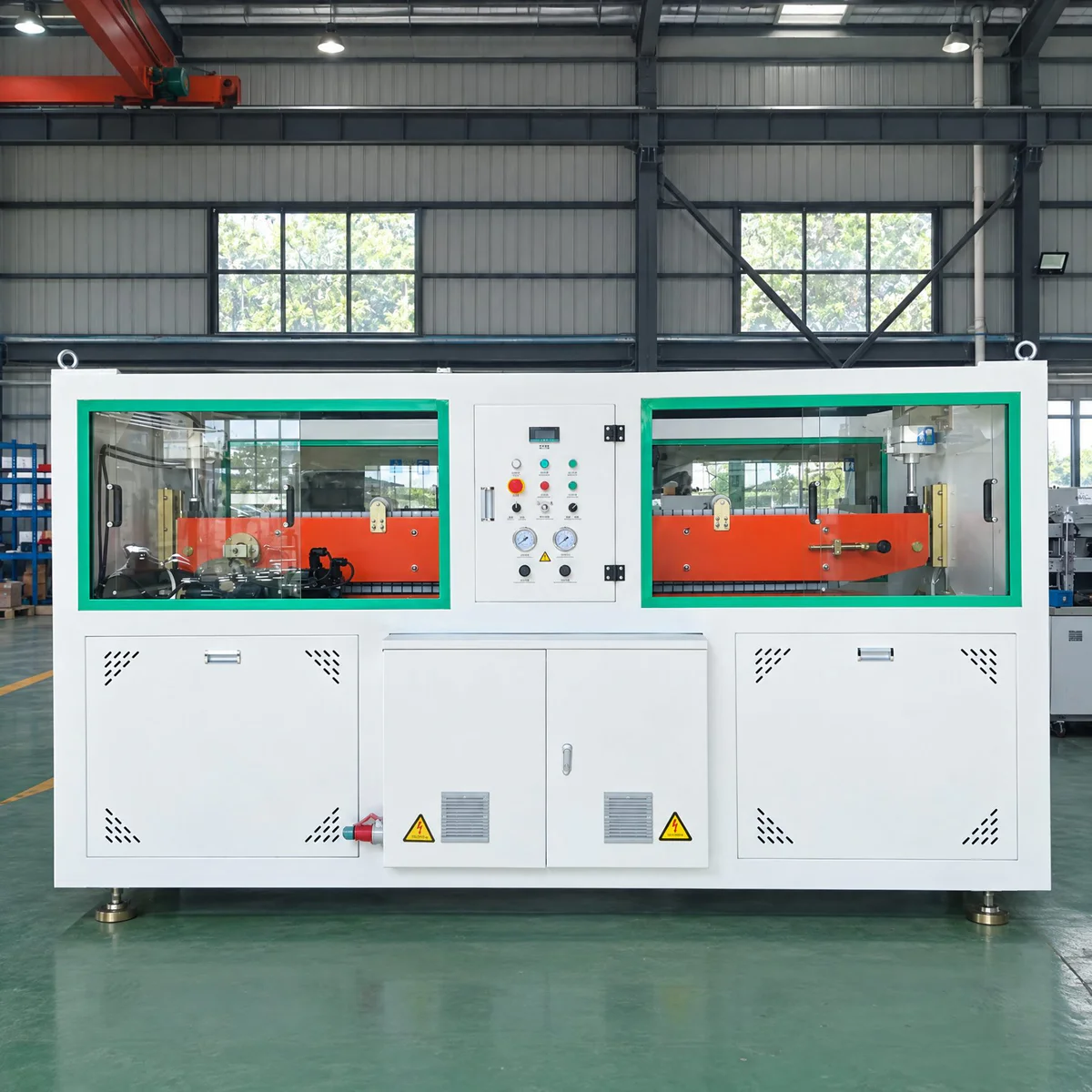
Role of the Haul-Off Unit
After the pipe is sized and cooled, it needs to be pulled forward steadily. The three-claw haul-off machine provides controlled traction and keeps the pipe moving at a consistent speed.
The haul-off speed must match the extruder output. If the pulling speed is too fast, the pipe wall may become thinner. If the pulling speed is too slow, the pipe wall may become thicker or unstable. Therefore, haul-off control is essential for pipe quality.
Haul-Off Configuration
| Item |
Specification |
| Haul-off type |
Three-claw haul-off machine |
| Machine length |
About 2800 mm |
| Effective hauling length |
About 2000 mm |
| Speed range |
0.2–3 m/min |
| Drive system |
3 × 1.5 kW servo motors |
| Reducer |
K-series reducer |
| Maximum traction force |
About 1200 N |
| Clamping method |
Pneumatic pressing |
| Speed control |
Servo control |
| Measuring support |
Encoder meter counting |
Benefits for PE Core Pipe Production
The three-claw structure provides stable contact around the pipe. This is useful for thick-wall PE core tubes because the pipe needs sufficient pulling force without surface damage or slipping.
Servo-driven traction allows more accurate speed adjustment. This helps maintain production stability when producing different wall thicknesses or adjusting output.
Encoder Length Measuring System
Accurate Fixed-Length Control
The video also shows the importance of encoder-based measuring before cutting. The encoder system records the pipe movement and sends a cutting signal when the preset length is reached.
For PE roll core tubes, accurate length is very important because the pipe must match the width of roll materials and winding equipment.
| Function |
Benefit |
| Continuous pipe length tracking |
Records pipe movement during production |
| Preset cutting length |
Allows automatic fixed-length cutting |
| Encoder signal output |
Connects measuring with cutting |
| Reduced manual measuring |
Improves production efficiency |
| Better length repeatability |
Supports consistent finished products |
Why Length Accuracy Is Important
PE core pipes are often supplied according to specific roll widths. If pipe length is not accurate, the core tube may not fit the winding process. The encoder measuring system helps improve repeatability and reduces manual error.
160 Chipless Cutting Machine
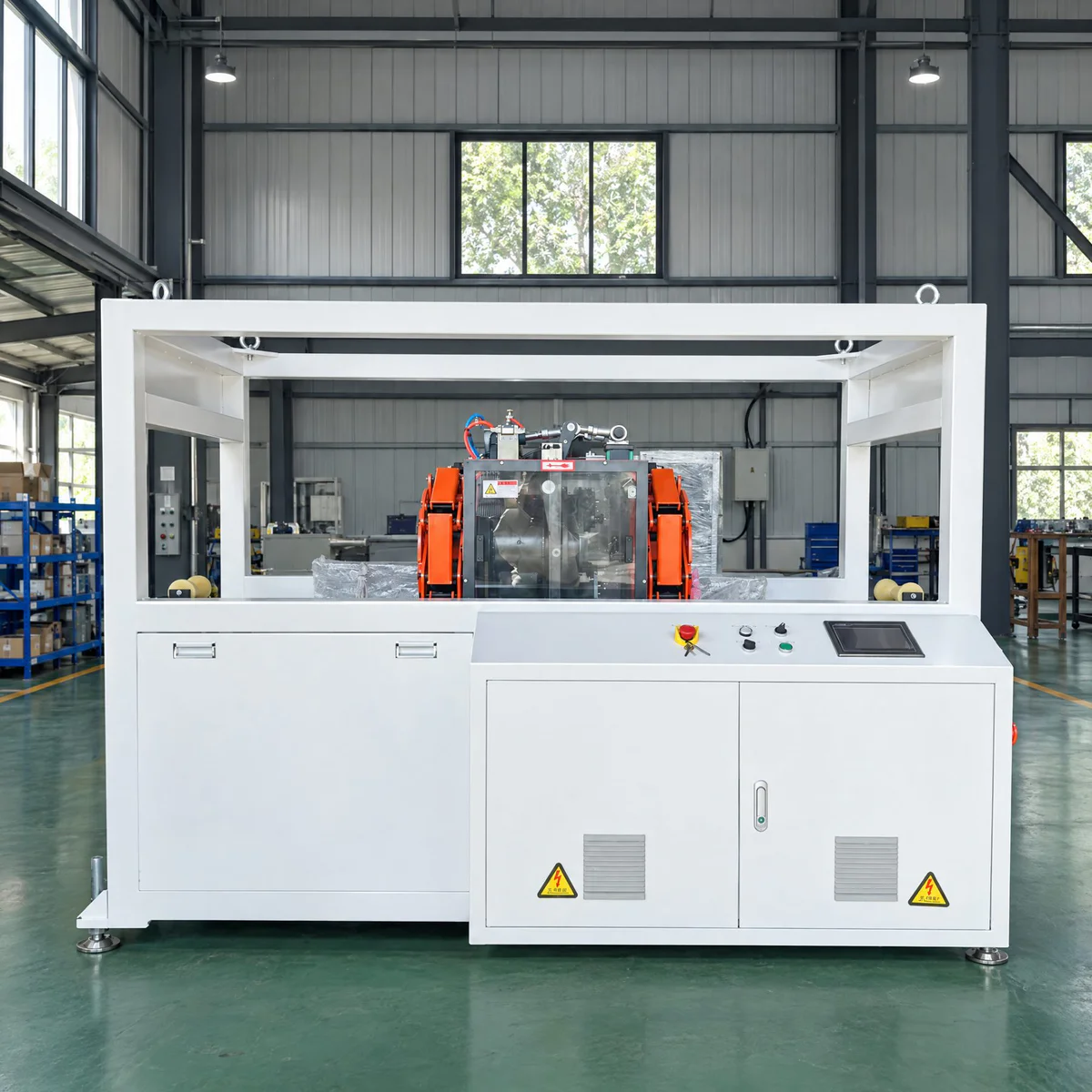
Cutting Function
At the end of the line, the 160 chipless cutting machine cuts the pipe automatically. The cutter receives the length signal from the encoder and completes fixed-length cutting.
Chipless cutting is suitable for PE core pipe production because it reduces cutting chips, dust, and rough pipe ends. This helps improve the appearance and usability of the finished pipe.
Cutting Machine Configuration
| Item |
Specification |
| Cutting machine model |
160 chipless cutting machine |
| Cutting range |
50–160 mm pipe diameter |
| Cutting method |
Rotary chipless cutting |
| Blade feeding |
Pneumatic blade feeding |
| Cutting mode |
Automatic fixed-length cutting |
| Length signal |
Encoder measuring system |
| Pipe support |
Clamping and supporting structure |
| End-face result |
Cleaner pipe end |
| Line connection |
Integrated with haul-off and PLC control |
| Application |
PE roll core tube and PE winding core pipe |
Advantages of Chipless Cutting
Chipless cutting reduces plastic debris compared with conventional saw cutting. For roll core tube products, cleaner pipe ends make handling easier and improve final product appearance.
Main advantages include:
- Reduced cutting chips
- Cleaner pipe end surface
- Lower dust generation
- Better appearance of finished pipe
- Improved suitability for packaging and winding applications
- Automatic cutting based on preset length
Integrated Line Control
PLC and HMI Operation
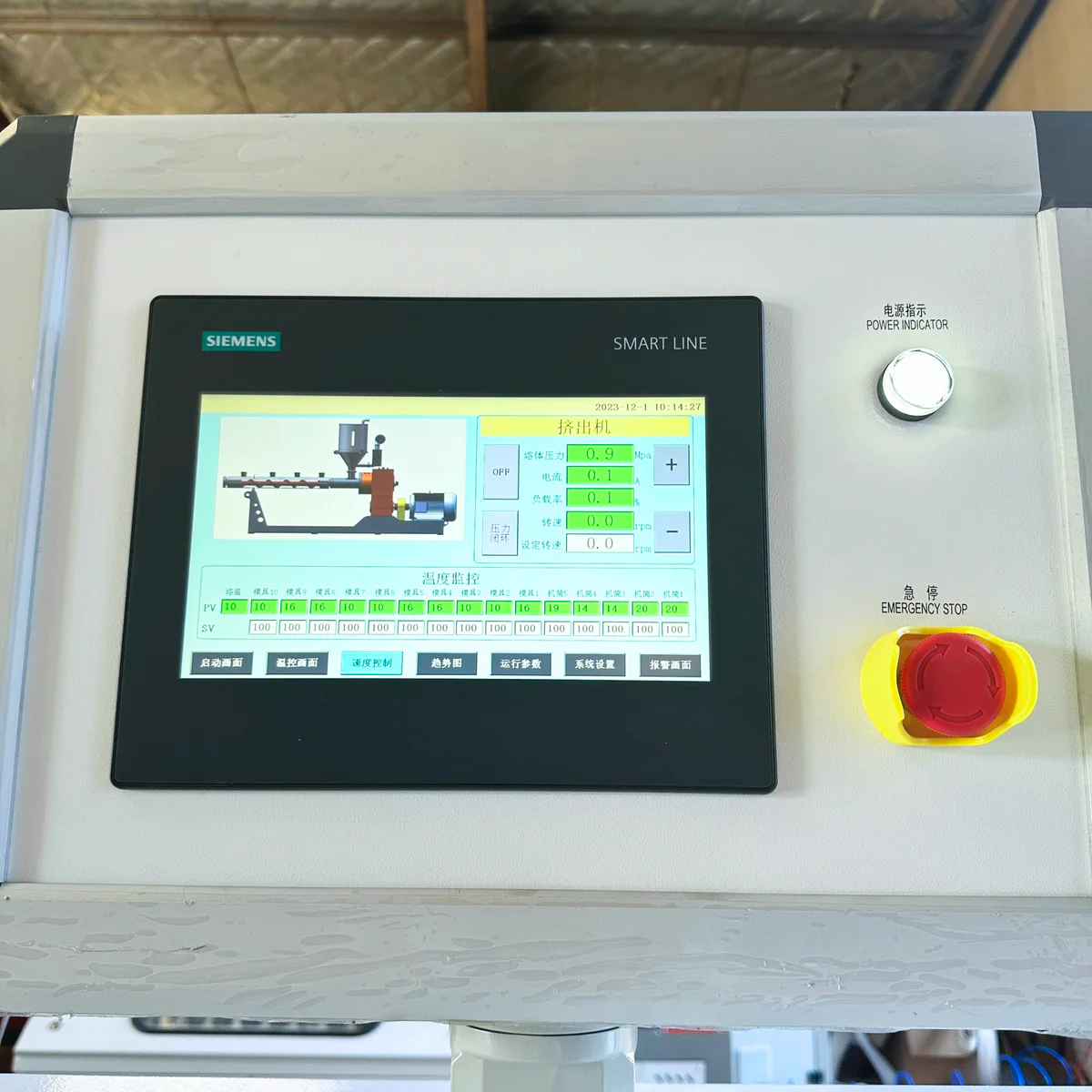
The complete PE core pipe extrusion line uses PLC and touch screen control. Operators can set and monitor production parameters more conveniently through the control interface.
Key control points include:
| Control Area |
Main Purpose |
| Extruder speed |
Controls PE material output |
| Barrel temperature |
Maintains stable plasticizing |
| Mould temperature |
Supports stable pipe forming |
| Vacuum level |
Controls pipe sizing condition |
| Cooling water system |
Helps stabilize pipe temperature |
| Haul-off speed |
Matches extrusion output |
| Encoder measuring |
Tracks pipe length |
| Cutting signal |
Triggers automatic cutting |
| Alarm system |
Supports safer production |
| Touch screen |
Simplifies operation and monitoring |
Importance of Synchronization
A PE core pipe extrusion line must work as one coordinated system. The extruder output, mould forming, vacuum calibration, haul-off speed, measuring system, and cutting machine all need to match each other.
This video clearly shows that the production line is not just a collection of separate machines. Each unit has a specific function and works together to support stable continuous production.
Technical Summary
| Category |
Details |
| Supplier |
QTech-Machinery |
| Line type |
PE core pipe extrusion line |
| Main product |
PE roll core tube / PE winding core pipe |
| Main extruder |
SJ75/33 single screw extruder |
| Screw diameter |
75 mm |
| Screw L/D ratio |
33:1 |
| Main motor |
45 kW |
| Mould |
Customized PE core pipe mould |
| Suggested pipe inner diameter |
Around 77 mm |
| Wall thickness range |
6–10 mm |
| Calibration tank |
160 vacuum calibration tank |
| Tank length |
9 meters |
| Vacuum range |
0.02–0.08 MPa |
| Haul-off type |
Three-claw haul-off |
| Haul-off speed |
0.2–3 m/min |
| Drive |
Servo motor drive |
| Cutting machine |
160 chipless cutting machine |
| Cutting range |
50–160 mm |
| Measuring method |
Encoder meter counting |
| Control system |
PLC and touch screen |
Key Benefits Shown in the Video
Stable Production Flow
The video demonstrates a continuous production process from extrusion to cutting. This helps buyers understand the actual working sequence of the PE core pipe extrusion line.
Clear Equipment Layout
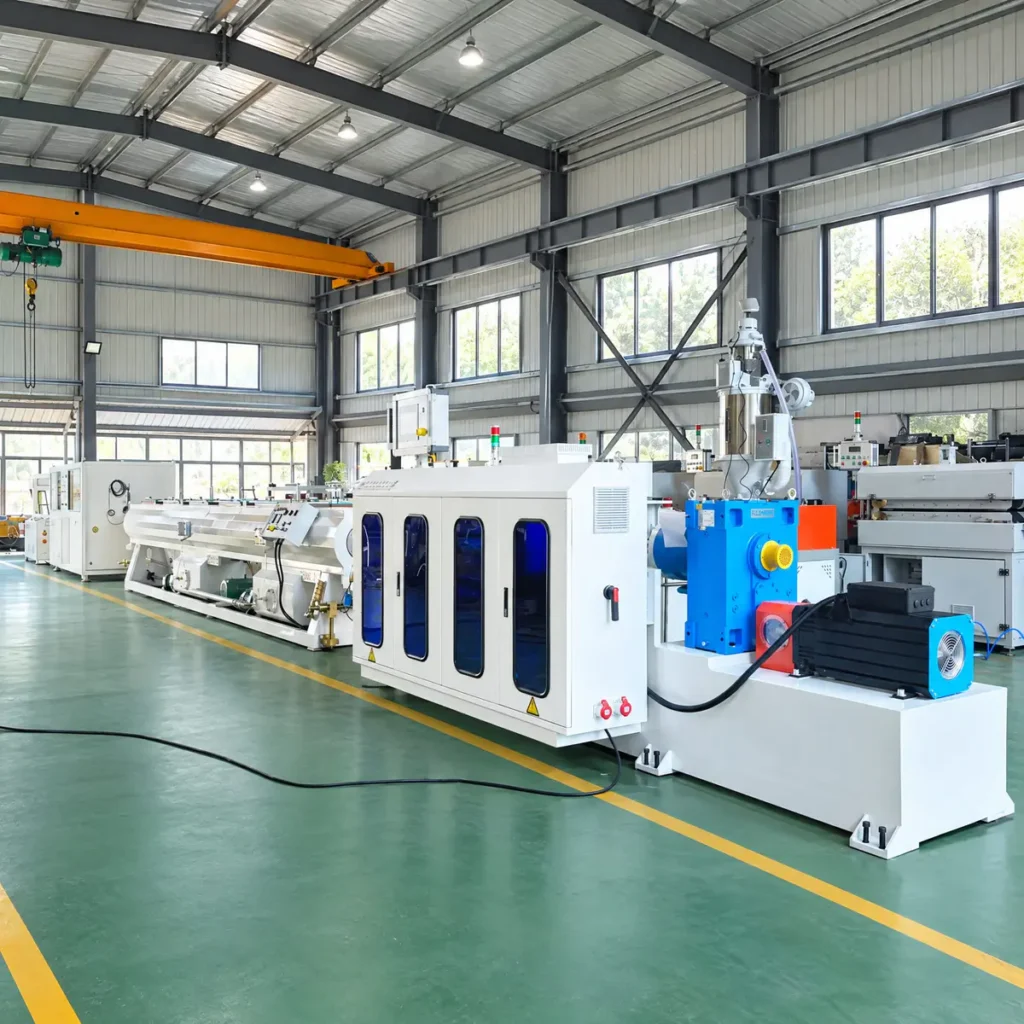
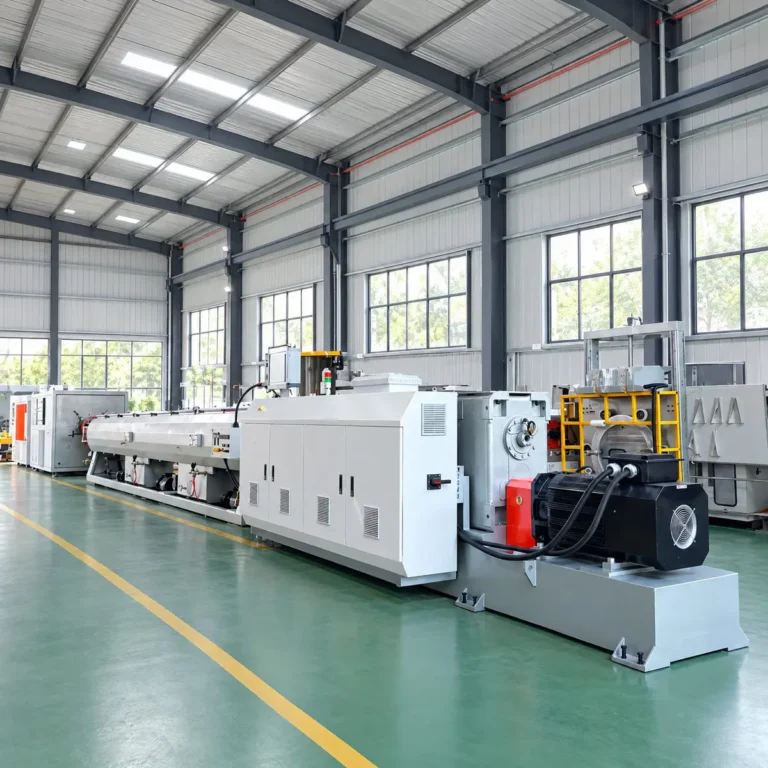
The line is arranged in a straight production direction. This supports smoother pipe movement and easier operation.
Reliable Pipe Forming
The combination of extruder, mould, and vacuum calibration tank supports stable pipe forming and cooling.
Controlled Hauling
The three-claw haul-off machine provides stable traction and helps maintain consistent line speed.
Accurate Length Measuring
The encoder measuring system supports automatic fixed-length cutting and reduces manual measuring work.
Clean Cutting Performance
The chipless cutting machine reduces plastic chips and helps produce cleaner pipe ends.
Buyer-Focused Notes
What Buyers Can Learn from This Video
This video is useful for buyers who want to evaluate a PE core pipe extrusion line, PE roll core tube production line, or PE winding core pipe machine before purchase.
Buyers can observe:
- How the extruder, mould, vacuum tank, haul-off, and cutter are arranged.
- How the pipe moves through the production line.
- How vacuum sizing supports pipe roundness.
- How the haul-off machine pulls the pipe continuously.
- How encoder measuring connects with automatic cutting.
- How chipless cutting improves pipe end quality.
- How the complete system supports roll core tube production.
Questions Buyers May Consider
| Question |
Why It Matters |
| What pipe diameter is required? |
Determines mould and downstream equipment size |
| What wall thickness is needed? |
Affects extruder output and pulling force |
| What cutting length is required? |
Determines encoder and cutting setup |
| What raw material will be used? |
Affects screw design and temperature settings |
| What production speed is expected? |
Influences line configuration |
| What factory layout is available? |
Affects full-line arrangement |
| What pipe end quality is required? |
Helps choose the cutting method |
| What automation level is needed? |
Influences PLC and HMI configuration |
 1:15