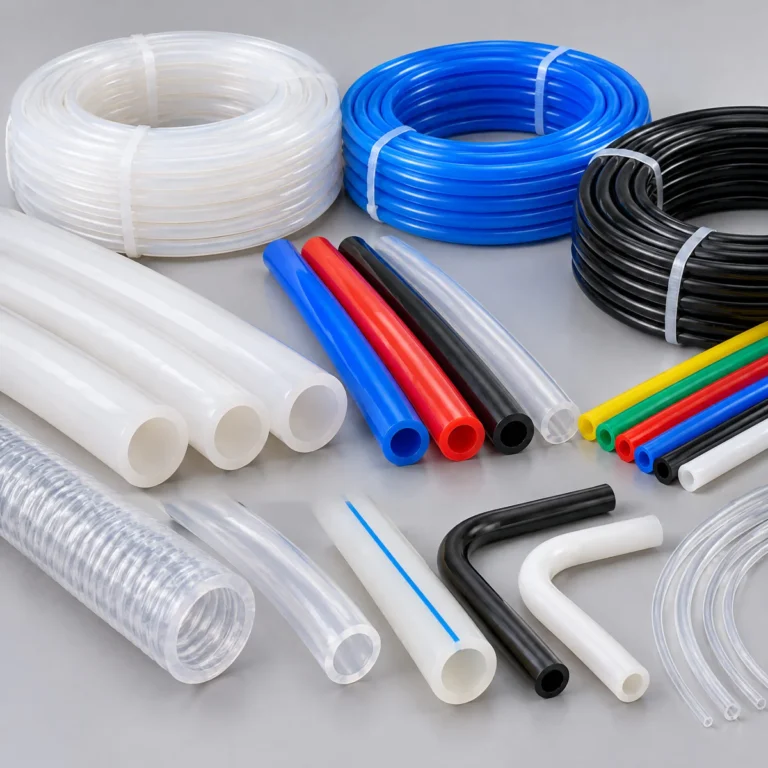
What machine is used to produce nylon tubes or PA tubes?
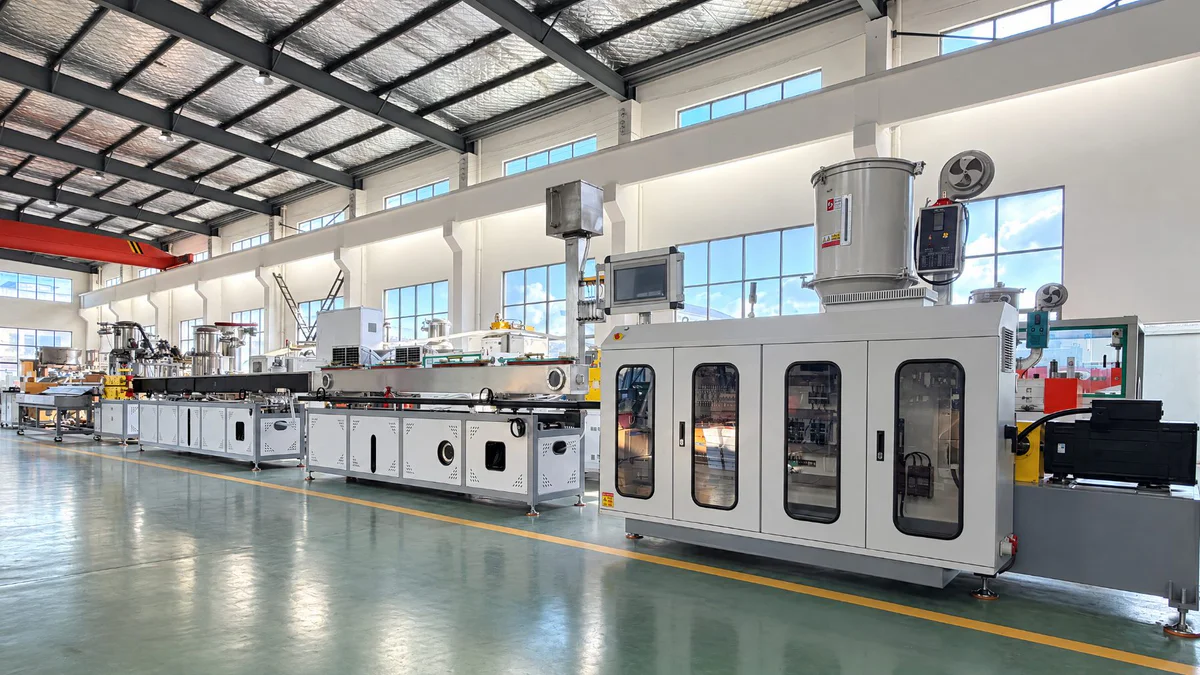
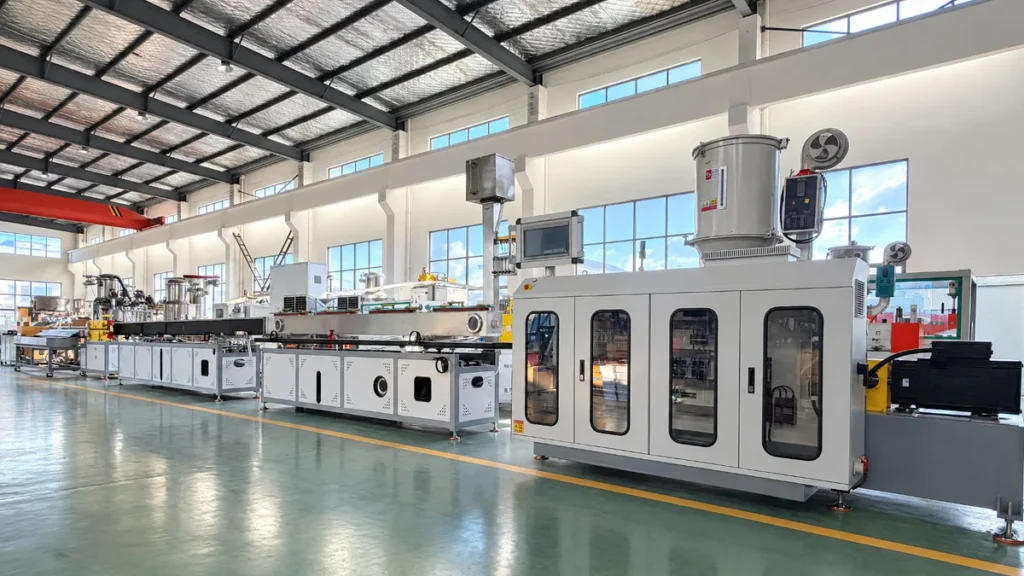
Nylon tubes and PA tubes are produced by a complete nylon / PA tube extrusion line, not by a single standalone machine. A professional production line normally includes material drying and feeding, a single screw extruder, customized tube die, vacuum calibration tank, cooling tank, servo haul-off, online cutting machine, conveyor, and automatic collection system.
For industrial buyers, especially those producing PA6 / PA12 tubes for automotive, pneumatic, industrial, cable protection, or general industrial applications, the best solution is an integrated extrusion line designed according to tube diameter, wall thickness, material grade, output requirement, and cutting length.
1. What machine is used to produce nylon tubes or PA tubes?
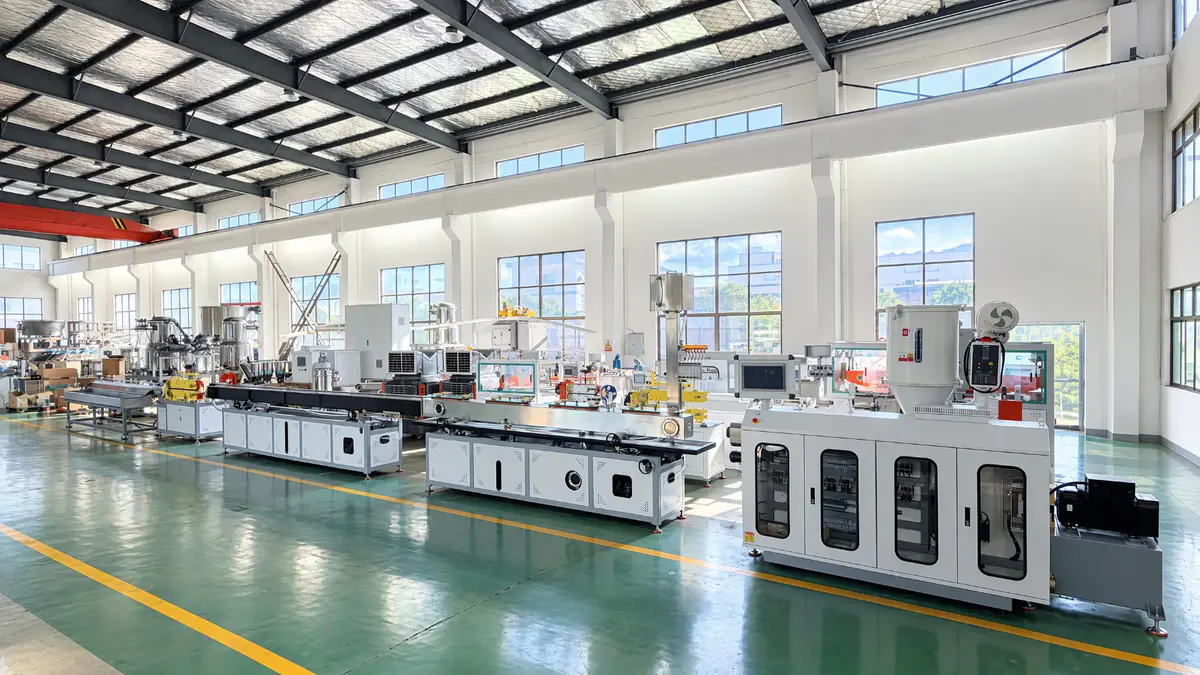
Nylon tubes or PA tubes are produced by a complete PA tube extrusion line, with the single screw extruder as the core machine.
A nylon tube extrusion line converts PA resin into continuous tubes through melting, forming, sizing, cooling, pulling, cutting, and collection. The main machine is usually a single screw extruder, but stable production depends on the whole line working together.
In our supplied project, the customer used a complete system including extrusion, forming, vacuum sizing, cooling, servo traction, precision cutting, conveying, and automatic finished product collection.
| Process | Machine Used | Function |
|---|---|---|
| Material preparation | Drying and feeding equipment | Reduces moisture and feeds PA material into the extruder |
| Plasticizing | SJ65/28 single screw extruder | Melts and homogenizes nylon material |
| Tube forming | Customized extrusion die | Forms molten PA into tube shape |
| Diameter control | Vacuum calibration tank | Controls outer diameter and roundness |
| Cooling | Immersion cooling tank | Stabilizes tube shape |
| Traction | Servo belt haul-off | Pulls tube at constant speed |
| Cutting | Rotary flying knife cutter | Cuts tubes online to fixed length |
| Collection | Conveyor and collection trough | Transfers and collects finished tubes |
Related case: Complete Nylon Tube Extrusion Line for PA Pipe Manufacturing
2. Why is a single screw extruder commonly used for PA tube production?
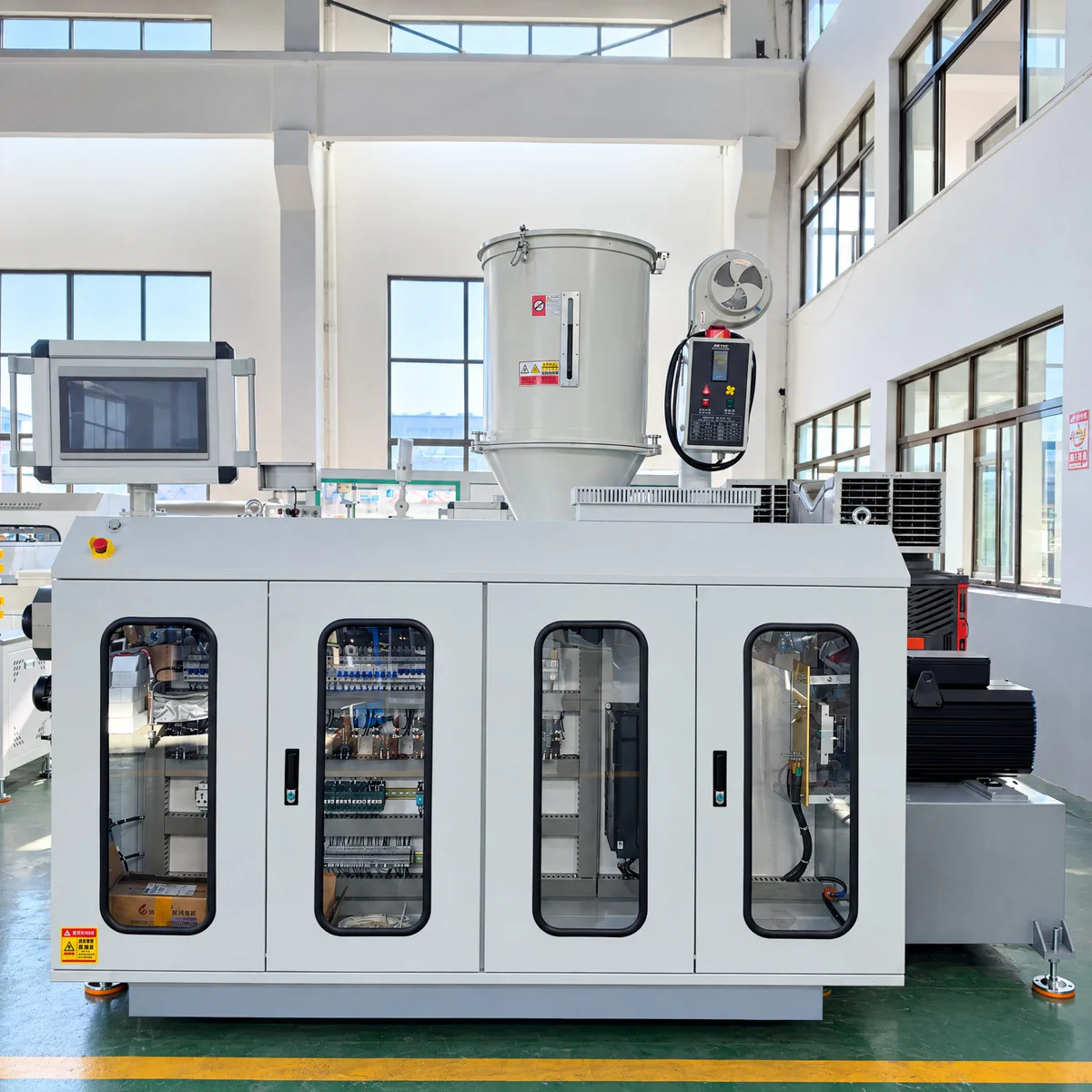
A single screw extruder is commonly used because it provides stable melting, continuous output, and efficient processing for nylon tube extrusion.
For nylon and PA tube production, the extruder must provide consistent plasticizing performance. PA material is sensitive to moisture, temperature, and residence time, so the extruder design is very important.
In our product configuration, the main extruder is an SJ65/28 single screw extruder.
| Item | Configuration |
|---|---|
| Extruder model | SJ65/28 single screw extruder |
| Screw diameter | 65 mm |
| L/D ratio | 28:1 |
| Output capacity | 0–60 kg/h, depending on material and tube size |
| Main motor | 37 kW permanent magnet synchronous servo motor |
| Screw and barrel material | 38CrMoALA with nitriding treatment |
| Heating zones | 5 barrel heating zones |
| Heating method | Ceramic heating bands |
| Control system | Siemens PLC with HMI touch screen |
This configuration is suitable for customers who need stable tube quality and long-term industrial production. The 37 kW servo motor provides precise speed control and helps improve energy efficiency. The 38CrMoALA nitrided screw and barrel offer good wear resistance, which is important for continuous PA processing.
Because nylon is hygroscopic, drying and stable temperature control are also important. In discussions from polymer and 3D printing communities, users repeatedly mention that nylon absorbs moisture easily and may cause bubbles, surface defects, or dimensional instability if not dried properly. Although those discussions often focus on 3D printing, the same material characteristic is relevant to extrusion processing.
External reference: Ultimaker Community – Nylon Problem
3. How does the extrusion die affect nylon tube quality?
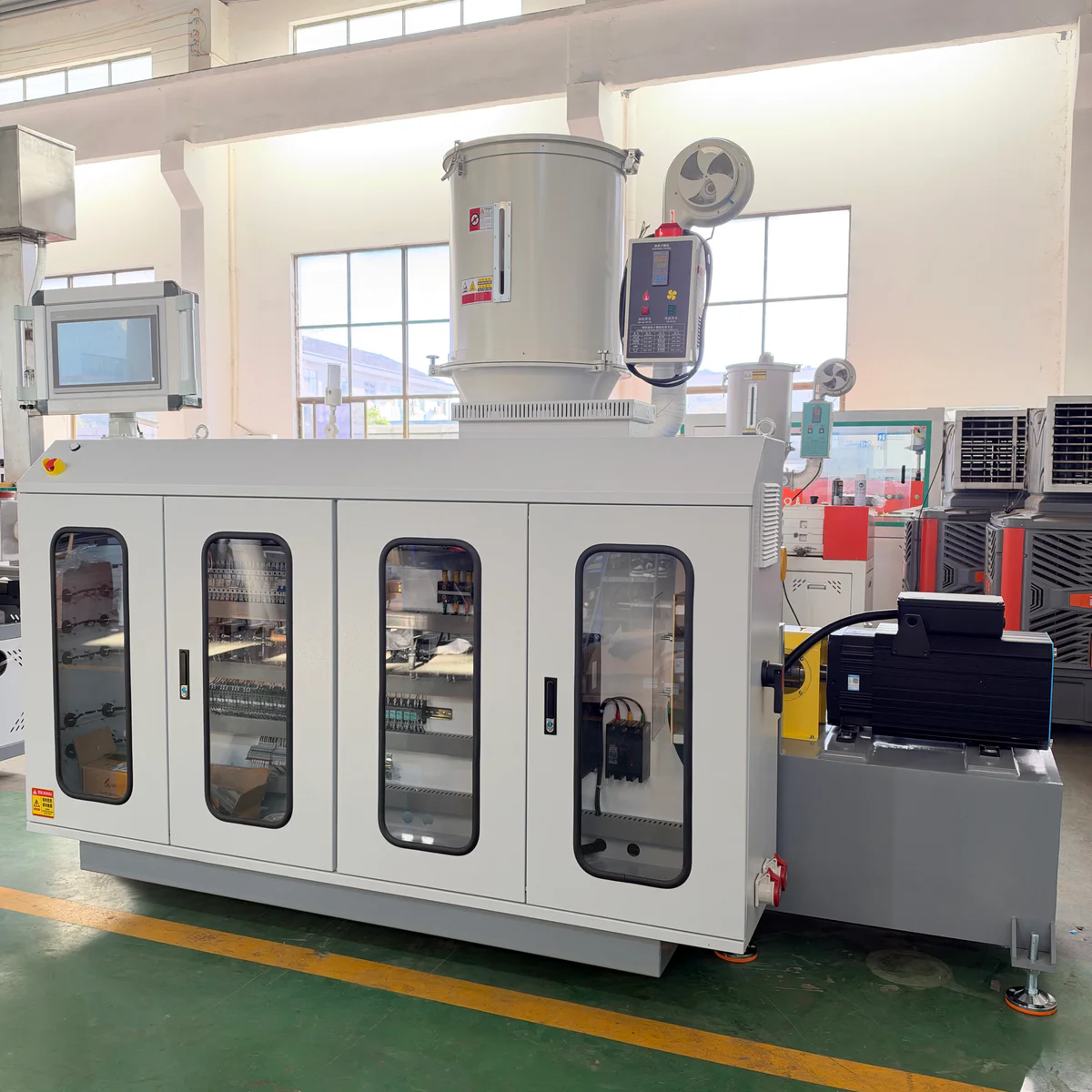
The extrusion die determines the tube shape, wall thickness distribution, melt flow stability, and final surface quality.
A nylon tube extrusion die is not a universal component. It should be designed according to the customer’s tube specification and production target.
Key die design factors include:
| Die Design Factor | Why It Matters |
|---|---|
| Tube outer diameter | Determines die and calibration sleeve design |
| Tube inner diameter | Affects mandrel design |
| Wall thickness | Influences die gap and melt distribution |
| Flow channel design | Reduces melt pressure fluctuation |
| Die temperature control | Improves surface smoothness |
| Calibration compatibility | Helps maintain accurate diameter |
| Precision machining | Improves tube roundness and stability |
In our nylon tube extrusion line, the die is customized for the customer’s required tube size and wall thickness. It is matched with the SJ65/28 extruder and the vacuum calibration system to ensure stable tube forming.
A well-designed die can reduce defects such as uneven wall thickness, rough surface, unstable diameter, and melt lines. This is one of the advantages of choosing a complete line supplier instead of buying separate machines from different sources.
Our advantage: QTech-Machinery can design the die together with the extruder, vacuum tank, haul-off, and cutter, so the whole line works as one integrated system.
4. Why does a nylon tube extrusion line need vacuum calibration and cooling tanks?
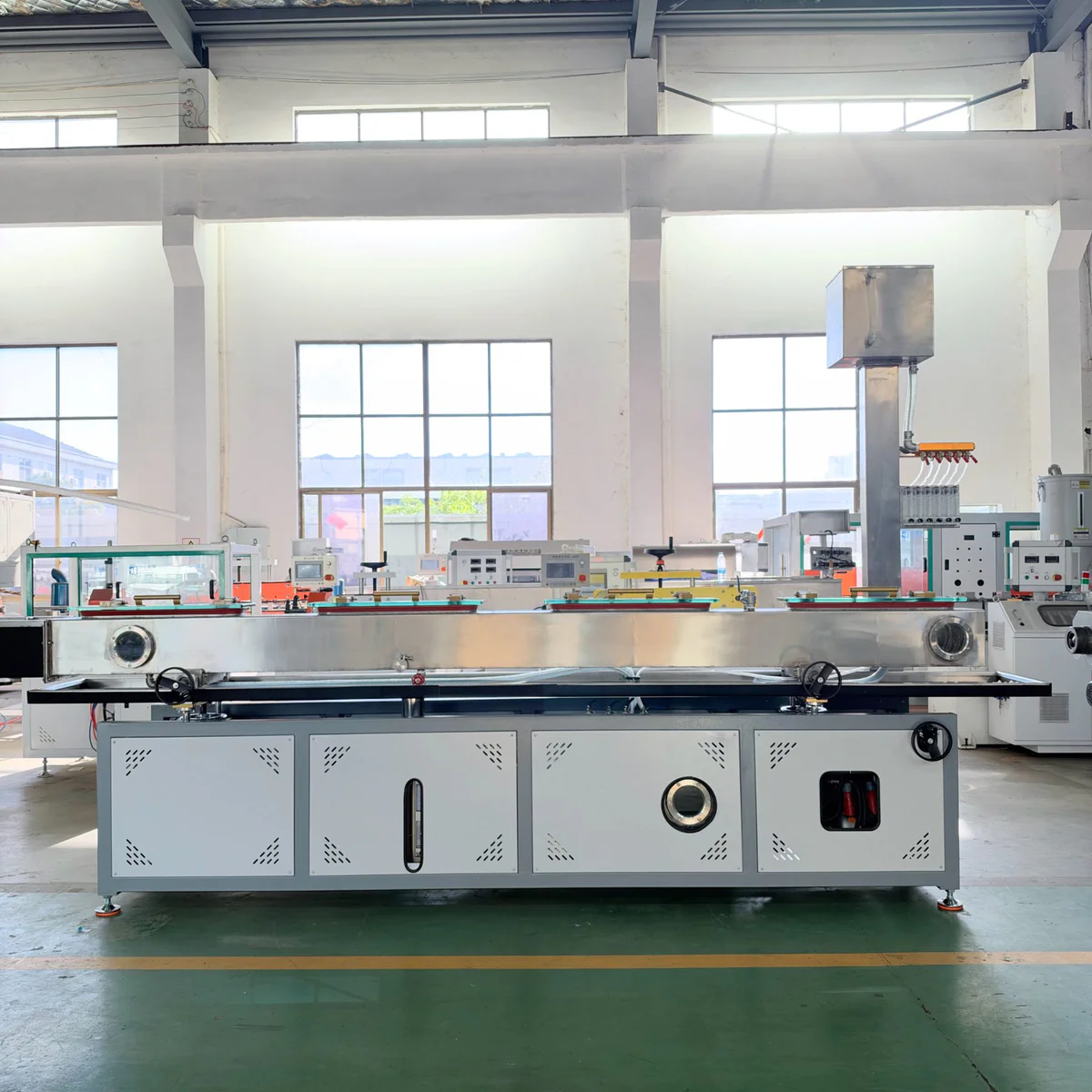
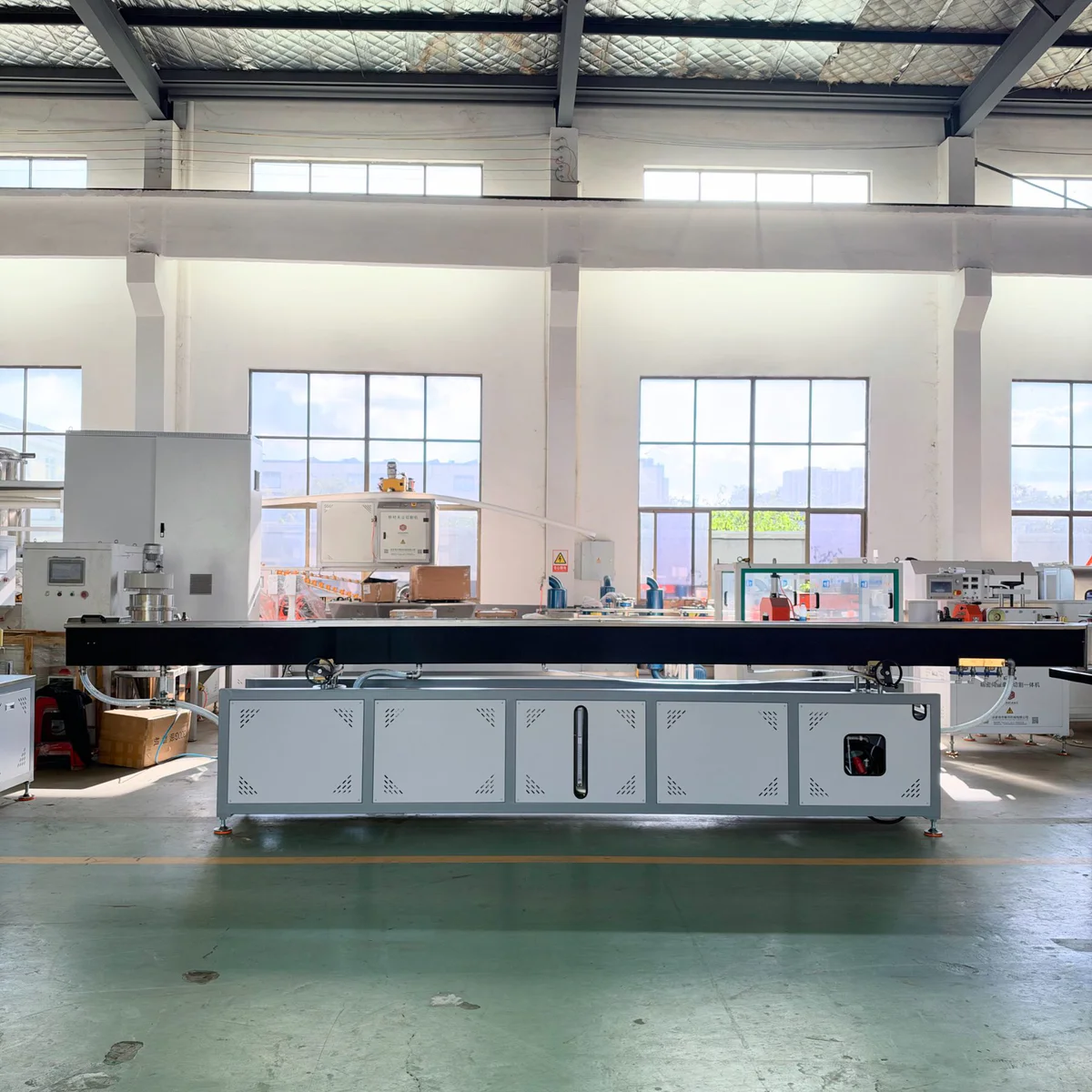
Vacuum calibration and cooling tanks are used to control tube diameter, roundness, surface quality, and dimensional stability.
After molten PA leaves the die, the tube is still hot and soft. It needs to be shaped and cooled immediately. This is why a vacuum calibration tank is essential.
In our product configuration, the line includes a stainless steel vacuum calibration tank and an immersion cooling tank.
| Equipment | Configuration / Function |
|---|---|
| Vacuum calibration tank | Controls tube OD and roundness |
| Tank material | 304 stainless steel |
| Tank size | 4500 × 230 × 235 mm |
| Calibration length | 4000 mm |
| Vacuum range | 0 to -50 kPa |
| Vacuum control precision | ±0.1 kPa |
| Vacuum pump | 2.2 kW |
| Stainless steel water pump | 1.5 kW |
| Cooling tank | 304 stainless steel immersion tank |
| Cooling tank size | 6000 × 230 × 235 mm |
The vacuum tank holds the tube against the sizing sleeve and helps maintain accurate outer diameter. The cooling tank then further reduces tube temperature and stabilizes the shape before traction and cutting.
For nylon tubes used in automotive, pneumatic, or industrial applications, dimensional stability is important. If the tube is not cooled evenly, common problems may include:
- Ovality
- Diameter fluctuation
- Shrinkage after cutting
- Bending or deformation
- Poor surface appearance
Our advantage: We use 304 stainless steel tanks and stable vacuum control to support long-term production, cleaner water circulation, and better dimensional consistency.
5. How does servo haul-off improve PA tube production stability?
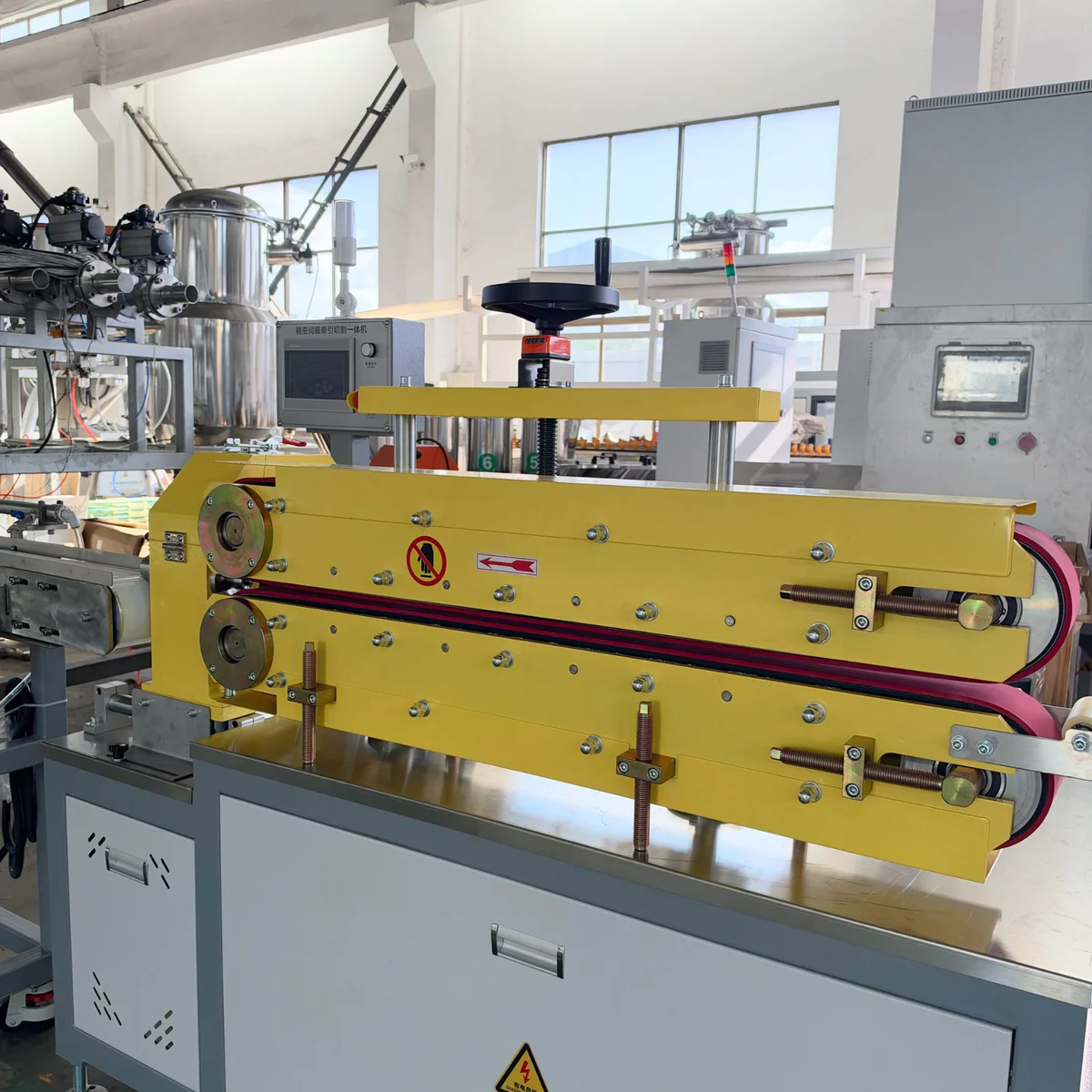
Servo haul-off keeps the tube moving at a stable speed, helping control wall thickness, diameter, and cutting accuracy.
The haul-off machine pulls the tube continuously after cooling. If the pulling speed fluctuates, tube diameter and wall thickness can also fluctuate. For PA tube production, this can directly affect product quality.
In our supplied configuration, the line uses a servo belt haul-off machine.
| Haul-Off Feature | Configuration / Benefit |
|---|---|
| Haul-off type | Servo belt haul-off |
| Servo motors | Two 1 kW servo motors |
| Speed range | 0–40 m/min |
| Belt material | Polyurethane belts |
| Speed synchronization | Matches extruder output and cutter |
| PLC integration | Easier parameter adjustment |
| Smooth pulling force | Reduces tube deformation |
Compared with simple motor-driven haul-off units, servo haul-off offers better control for precision tubes. It also works together with the PLC system and cutting machine to maintain accurate cutting length.
This is especially important for customers producing:
- Automotive nylon tubes
- Pneumatic PA tubes
- Industrial fluid tubes
- Cable protection tubes
- Small-diameter precision PA tubes
6. What cutting machine is used for nylon tubes?
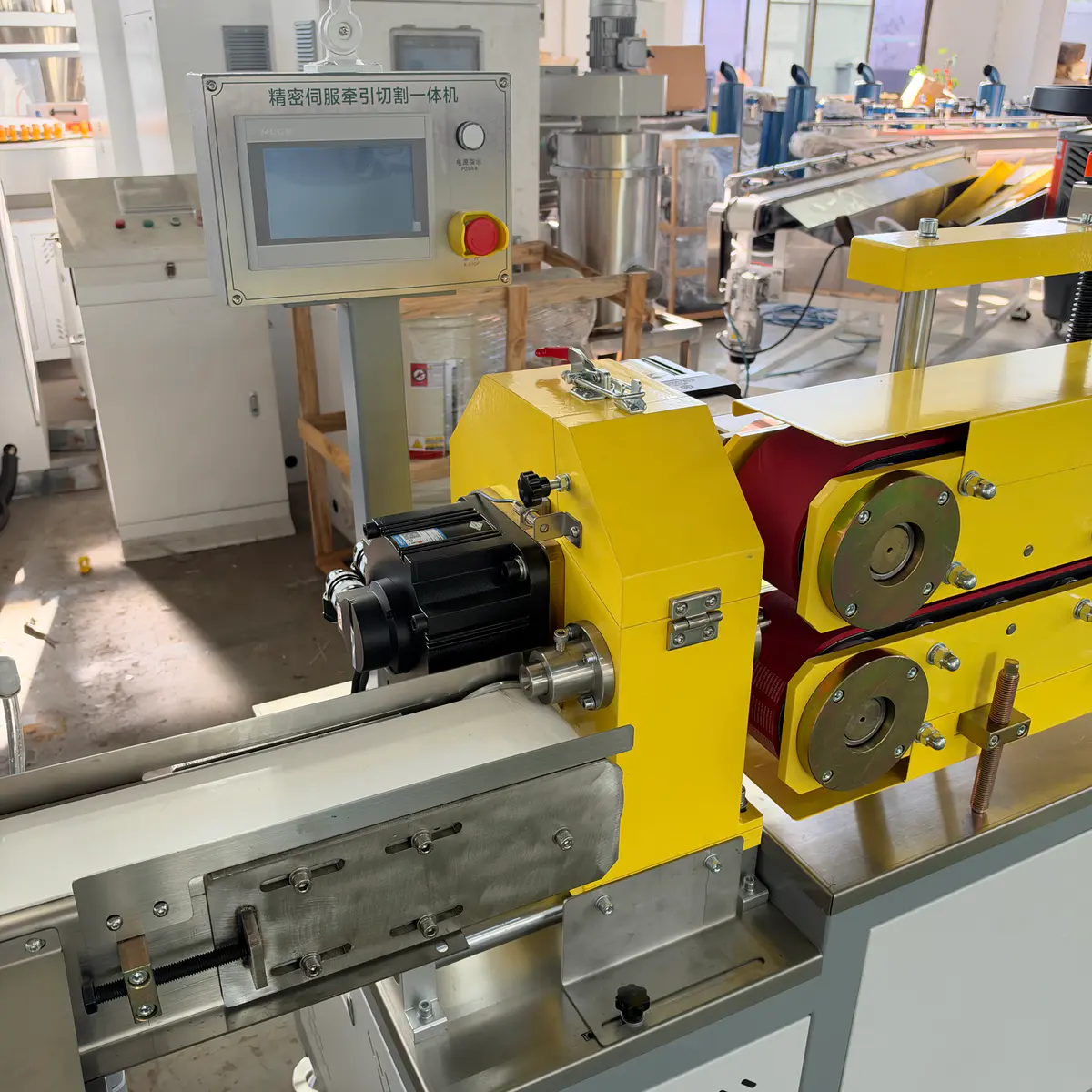
A rotary flying knife cutter is commonly used for online fixed-length cutting of nylon tubes.
In continuous extrusion, the tube does not stop moving. Therefore, the cutting system must synchronize with the line speed. A rotary flying knife cutter moves and cuts according to the production speed, allowing online cutting without stopping the extrusion process.
In our product configuration, the line includes a servo-controlled rotary flying knife cutter.
| Cutting System | Configuration / Benefit |
|---|---|
| Cutter type | Rotary flying knife cutter |
| Motor | 1.8 kW servo motor |
| Cutting mode | Online fixed-length cutting |
| Cutting accuracy | ±0.5 mm |
| Length adjustment | Through HMI |
| Line integration | Synchronized with haul-off and PLC |
This helps reduce manual cutting, improve consistency, and increase production efficiency.
For buyers, automatic cutting is a key upgrade because it can:
- Reduce labor cost
- Improve cutting length consistency
- Increase production speed
- Improve finished product organization
- Reduce waste caused by manual errors
Our advantage: We integrate the cutter with the haul-off and PLC system, so the cutting length can be set through the HMI and synchronized with actual line speed.
7. How should customers choose a suitable nylon tube extrusion line?
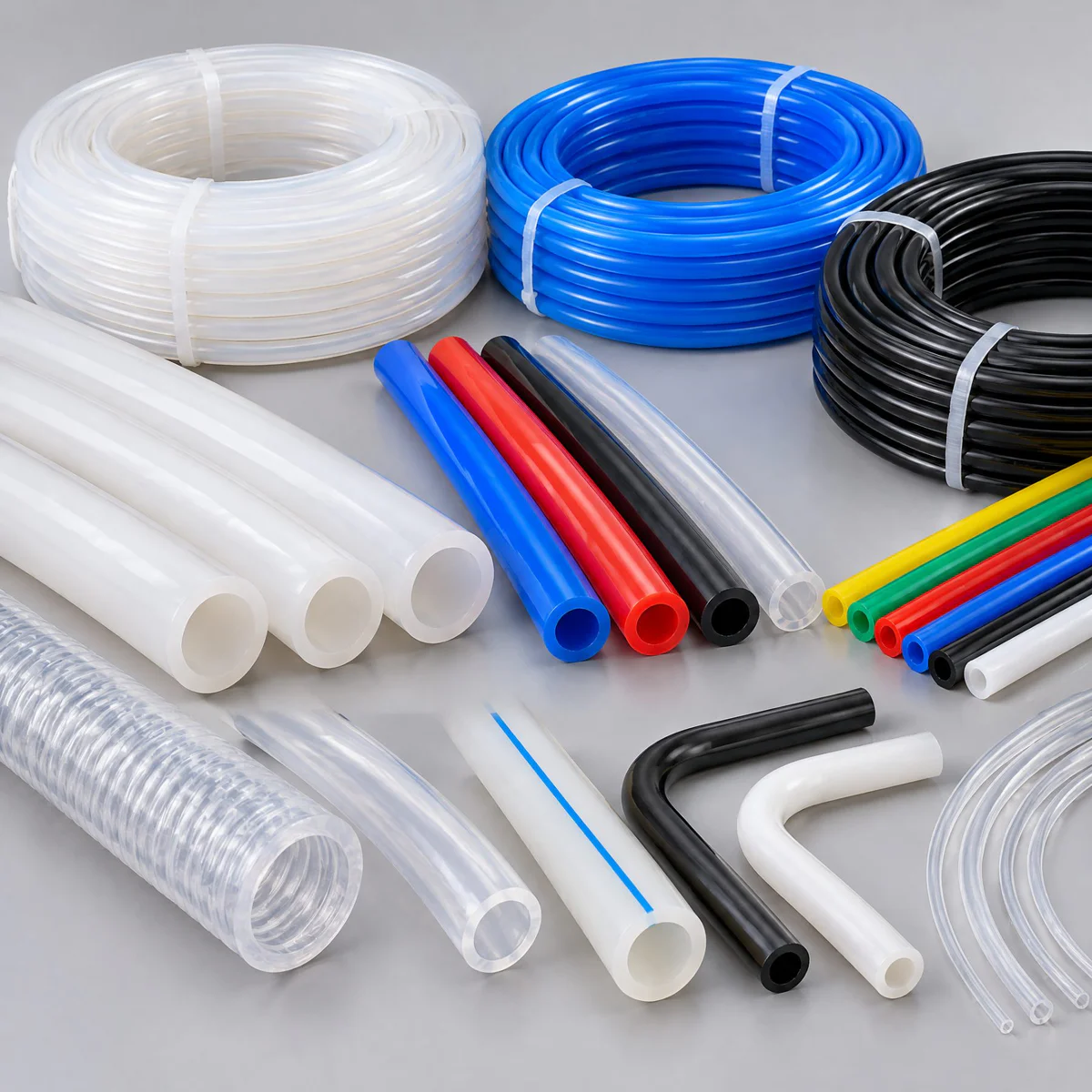
Customers should choose a nylon tube extrusion line based on material, tube size, output capacity, accuracy requirement, automation level, and factory layout.
Before selecting a machine, customers should prepare clear production information. This helps the manufacturer design the correct configuration.
Customer selection steps
| Step | What Customer Should Confirm | Why It Matters |
|---|---|---|
| 1 | PA material type, such as PA6 or PA12 | Determines drying, temperature, and screw design |
| 2 | Tube OD and ID range | Determines die, calibration sleeve, and haul-off |
| 3 | Wall thickness | Affects die design and line speed |
| 4 | Required output | Determines extruder size and motor power |
| 5 | Cutting length | Determines cutter and control settings |
| 6 | Tube application | Determines accuracy and surface requirements |
| 7 | Cooling water condition | Affects tank design and cooling efficiency |
| 8 | Local voltage and workshop layout | Affects electrical design and machine layout |
| 9 | Automation level | Determines conveyor, air blowing, and collection system |
| 10 | Budget and delivery schedule | Helps balance configuration and investment |
Recommended information to send us
Customers can send the following details when requesting a quotation:
- Material: PA6, PA12, modified nylon, or other plastic
- Tube outer diameter range
- Tube inner diameter or wall thickness
- Required production capacity
- Tube application
- Cutting length
- Factory voltage and frequency
- Workshop layout
- Photos or samples of current product
- Automation requirements
After receiving this information, QTech-Machinery can recommend a suitable configuration, layout, and quotation.
8. What can QTech-Machinery provide for a PA tube extrusion project?
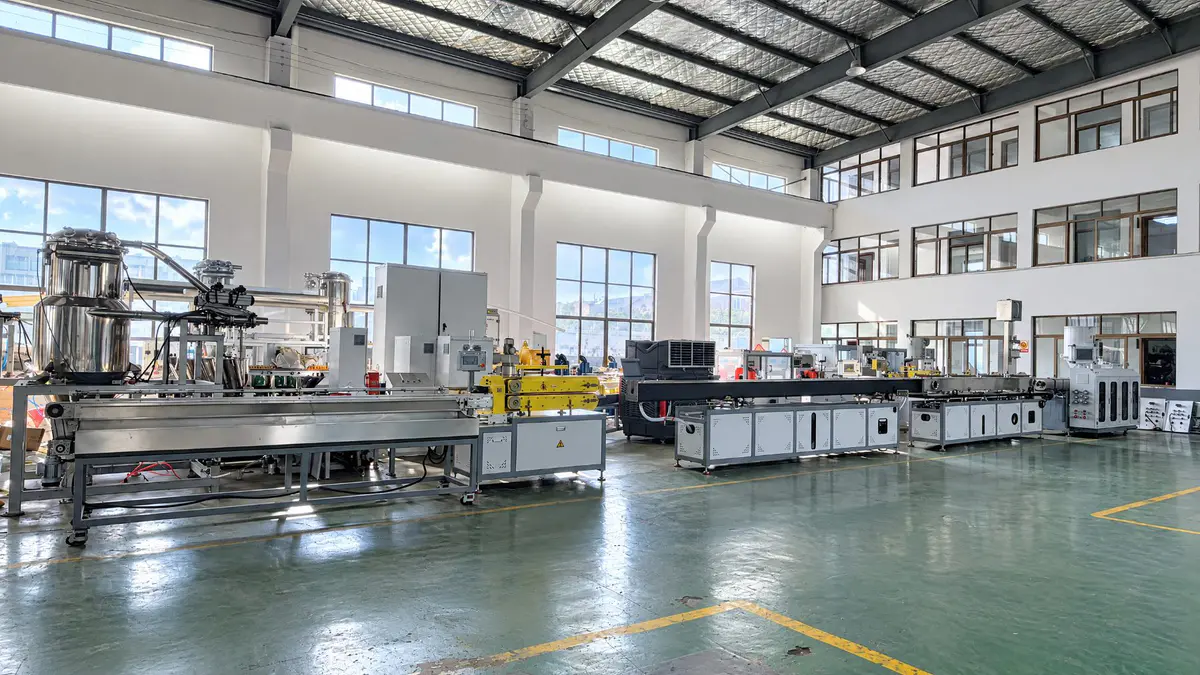
QTech-Machinery can provide complete PA tube extrusion line design, machine manufacturing, line integration, test running, technical documents, and after-sales support.
A successful nylon tube production project is not only about supplying machines. It also requires proper project communication, configuration selection, assembly, commissioning, and documentation.
Products we can provide
| Product / Machine | Function |
|---|---|
| Material dosing and feeding system | Feeds PA material into extruder |
| Material drying system | Reduces moisture before extrusion |
| SJ series single screw extruder | Melts and plasticizes nylon |
| Customized tube extrusion die | Forms tube shape |
| Vacuum calibration tank | Controls diameter and roundness |
| Spray or immersion cooling tank | Cools and stabilizes tube |
| Servo belt haul-off machine | Pulls tube at stable speed |
| Rotary flying knife cutter | Online fixed-length cutting |
| Conveyor system | Transfers cut tubes |
| Air-assisted collection trough | Helps collect finished tubes neatly |
| Siemens PLC control system | Centralized control and operation |
| HMI touch screen | Parameter setting and monitoring |
| Spare parts and tooling | Supports long-term production |
Documents we can provide
| Document | Purpose |
|---|---|
| Technical proposal | Confirms machine configuration |
| Quotation sheet | Shows price and supply scope |
| Line layout drawing | Helps plan workshop installation |
| Electrical diagram | Supports installation and maintenance |
| Operation manual | Guides daily operation |
| Maintenance guide | Helps maintain long-term performance |
| Spare parts list | Helps prepare replacement parts |
| Test running video | Shows machine performance before delivery |
| Packing list | Confirms shipment details |
| Commercial invoice and packing documents | Supports customs clearance |
| Installation guidance | Supports customer commissioning |
| Training materials | Helps operators understand the line |
Advantages of choosing QTech-Machinery
| Advantage | Explanation |
|---|---|
| Complete line integration | One supplier for extrusion, cooling, haul-off, cutting, and collection |
| Customized design | Configuration based on tube size, material, output, and layout |
| Servo control | Better speed stability and cutting accuracy |
| Siemens PLC and HMI | Easy operation and centralized control |
| 304 stainless steel tanks | Better durability and cleanliness |
| Practical project experience | Proven case for nylon / PA tube manufacturing |
| Factory support | Technical communication, testing, and after-sales service |
In the referenced project, QTech-Machinery helped the customer move from separate machine selection to a complete integrated solution. The line covered the full process from PA material plasticizing to finished tube collection, improving production consistency and reducing manual handling.
Complete PA Tube Extrusion Line Configuration Example
| Section | Machine | Example Configuration |
|---|---|---|
| Extrusion | SJ65/28 single screw extruder | 65 mm screw, 28:1 L/D, 37 kW servo motor |
| Heating | Barrel heating system | 5-zone ceramic heating |
| Tooling | Customized tube die | Designed according to tube size |
| Calibration | Vacuum calibration tank | 304 stainless steel, 4000 mm calibration length |
| Cooling | Immersion cooling tank | 6000 mm continuous water cooling |
| Traction | Servo belt haul-off | 0–40 m/min speed range |
| Cutting | Rotary flying knife cutter | ±0.5 mm cutting accuracy |
| Transfer | 3000 mm conveyor | Transfers cut tubes |
| Collection | SUS304 collection trough | Air-assisted discharge |
| Control | Siemens PLC + HMI | Centralized operation |
Customer Buying Process
-
Send tube specifications
Share tube OD, ID, wall thickness, material, and application. -
Confirm production requirements
Confirm output capacity, cutting length, accuracy, and automation level. -
Receive technical proposal
QTech-Machinery recommends the suitable extruder, die, cooling tank, haul-off, cutter, and collection system. -
Review layout and quotation
Check machine dimensions, factory layout, supply scope, and price. -
Confirm order and production
Machines are manufactured according to the approved configuration. -
Factory testing before delivery
The line can be tested and checked before shipment. -
Shipping and installation support
We provide documents, guidance, and technical support. -
Start production
Customer begins stable PA tube manufacturing after commissioning.
Internal Links
You may also find these pages useful:
- QTech-Machinery Home
- QTech-Machinery Cases
- Complete Nylon Tube Extrusion Line for PA Pipe Manufacturing
- QTech-Machinery Product and Solution Information
External References and Practical Notes
Nylon is widely known as a moisture-sensitive engineering plastic. In user discussions on polymer processing and 3D printing forums, many operators report that moisture in nylon can cause popping, bubbles, poor surface finish, and unstable results. While extrusion and 3D printing are different processes, the core material issue is similar: nylon should be dried properly before thermal processing.
Useful external discussion:
- In an Ultimaker Community discussion, users mention that moisture is a critical issue when processing nylon because bubbles and surface defects may appear if the material is wet.
Reference: Ultimaker Community – Nylon Problem
For extrusion buyers, these practical comments reinforce an important point: a complete nylon tube line should not only include an extruder, die, cooling tank, haul-off, and cutter, but should also consider material drying, storage, and stable process control.
Conclusion
The machine used to produce nylon tubes or PA tubes is a complete nylon / PA tube extrusion line. The core machine is the single screw extruder, but final tube quality depends on the complete system, including customized die tooling, vacuum calibration, cooling, servo haul-off, online cutting, and automatic collection.
For customers who need reliable industrial PA tube production, QTech-Machinery can provide a customized complete solution based on tube size, PA material, output, cutting length, factory layout, and automation requirements.
If you are planning a similar project, you can refer to our case here:
Complete Nylon Tube Extrusion Line for PA Pipe Manufacturing