Single-screw processing
The screw conveys and plasticizes the feed before delivering melt to the die. Geometry, material condition and operating settings should be evaluated together.
Choose the screw, drive and line connection for your thermoplastic extrusion process.
Specify an SJ single-screw extruder for your material, output and product range. Review the screw, heating arrangement and connection to retained equipment.
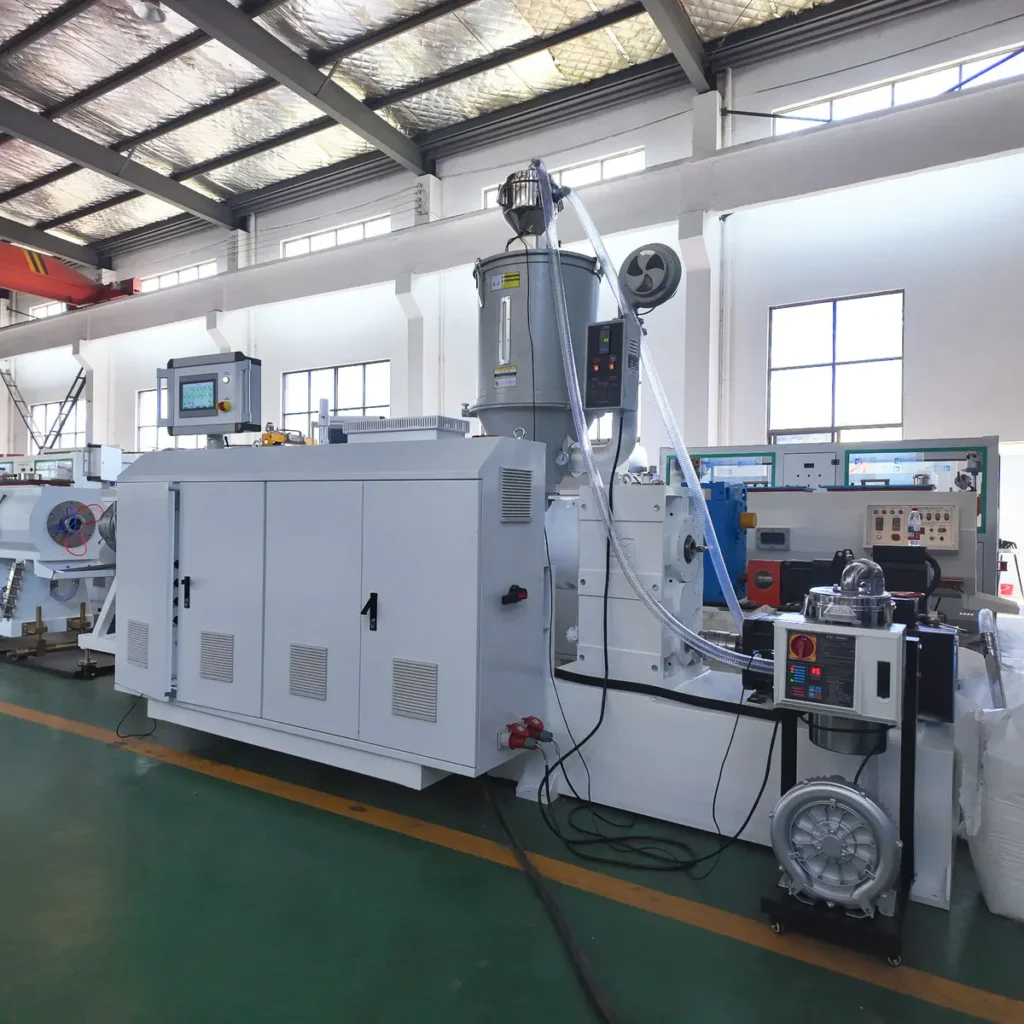 SJ Series
Series
SJ
Models in comparison
10
Machine Type
Extruders
Materials
PE, PP, PPR, ABS
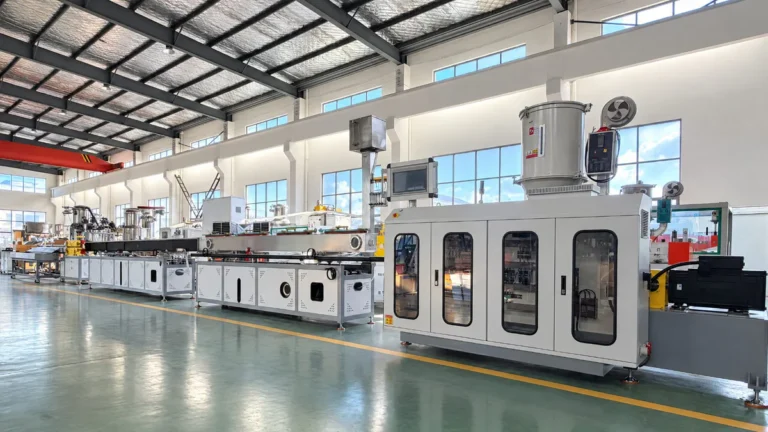
The SJ series is a single-screw extrusion platform for thermoplastic processing. A useful specification begins with the exact resin and material form, then connects the screw design and drive to the required melt delivery. Pipe, profile and other extrusion applications can place different demands on the same nominal screw size.
For an existing line, identify what will remain: feeding equipment, die, cooling section, haul-off and controls. For a new project, define the finished product and the production target so that the extruder is sized with the complete process in view.
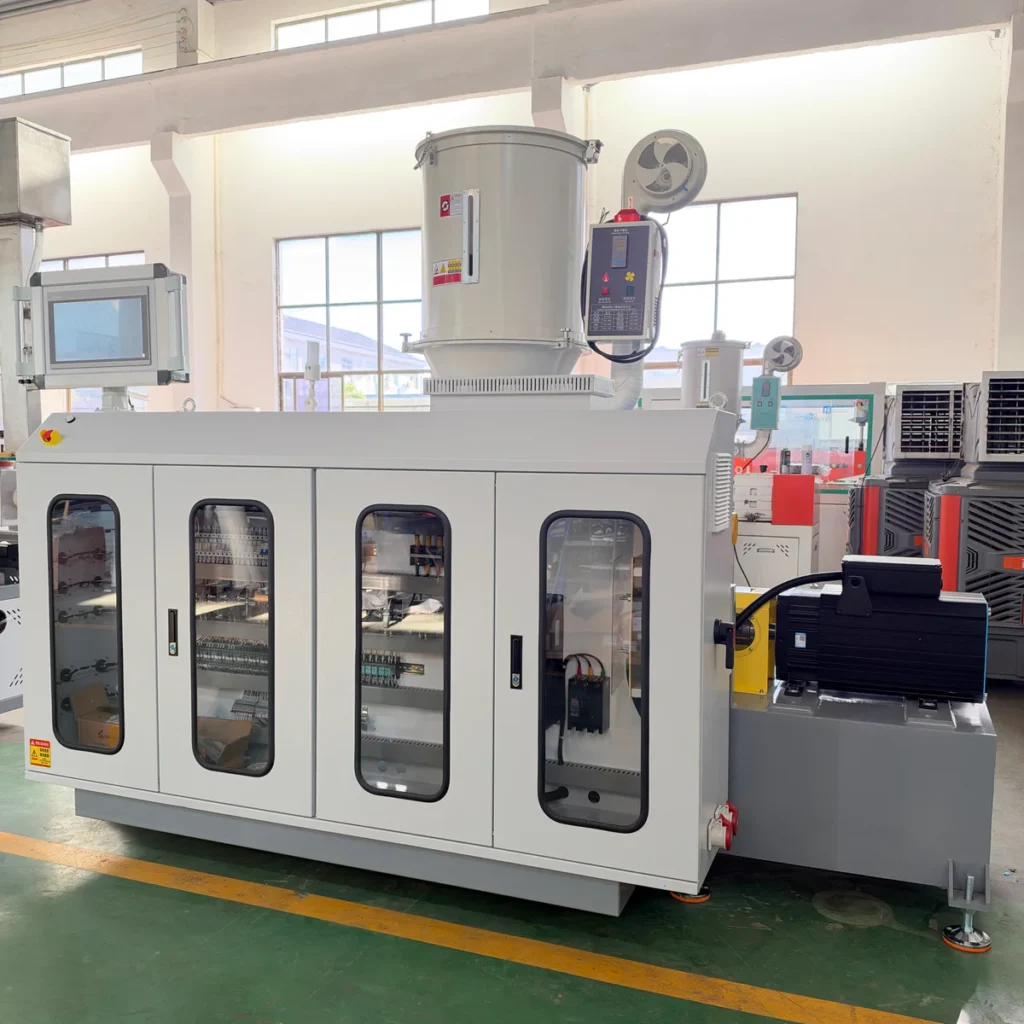
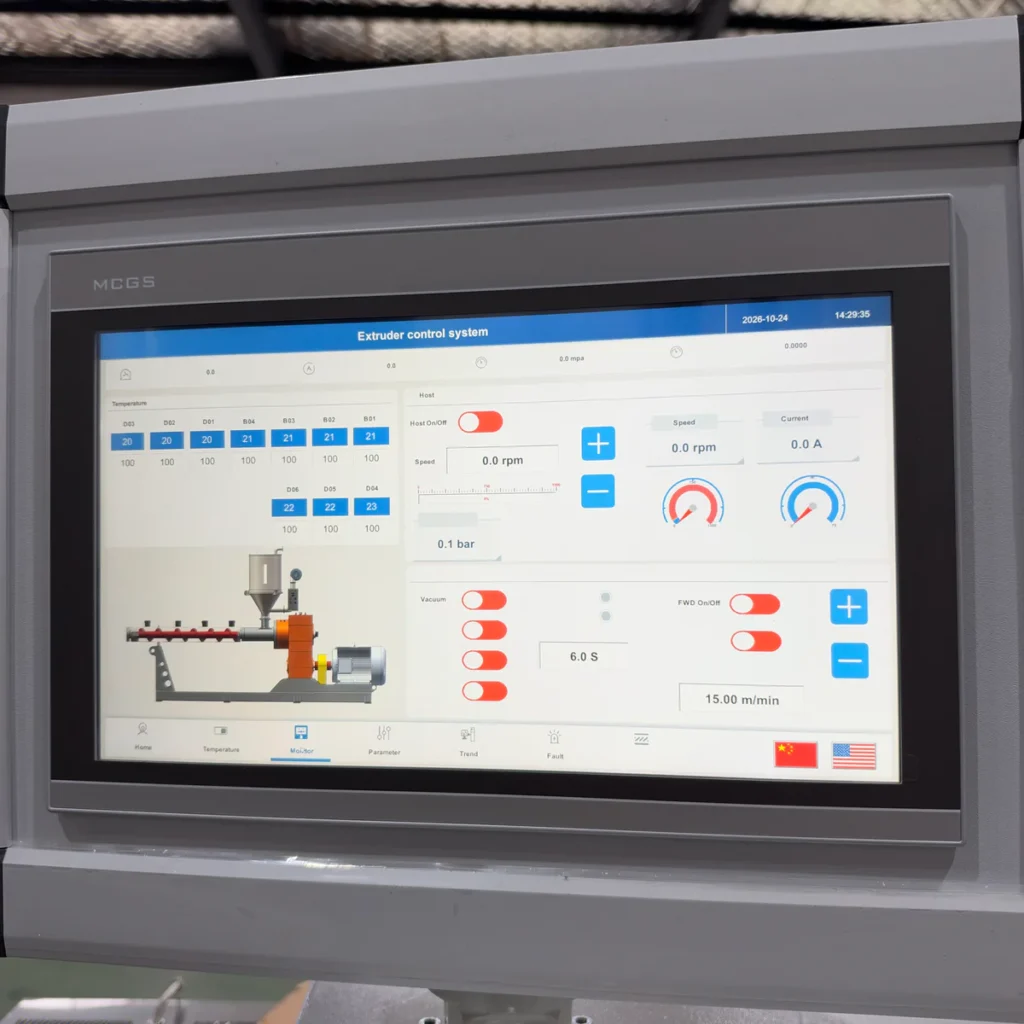
Compare the listed models against your material, product dimensions and operating requirements.
| Parameter | SJ-25 | SJ-30 | SJ-45 | SJ-50 | SJ-65 | SJ-75 | SJ-80 | SJ-90 | SJ-120 | SJ-150 |
|---|---|---|---|---|---|---|---|---|---|---|
| Screw diameter mm | 25 | – | 45 | 50 | 65 | 75 | 80 | 90 | 120 | 150 |
| Screw speed rpm | 20–120 | 20–120 | 20–150 | 20–150 | 20–150 | 20–150 | 20–110 | 20–110 | 20–90 | 20–75 |
| Screw L/D ratio (catalog range) | 25–28:1 | 25–30:1 | 25–33:1 | 25–33:1 | 25–33:1 | 25–33:1 | 25–33:1 | 25–33:1 | 25–33:1 | 25–33:1 |
| Extruder motor power (catalog configuration/range) kW | 0.75–2.2 | 2.2–5.5 | 7.5–30 | 7.5–35 | 22–90 | 55–110 | 37–120 | 37–185 | 75–280 | 90–355 |
| Barrel heating power (catalog) kW | 3 | 3 | 6–8 | 6–12 | 10–15 | 10–15 | 15–25 | 20–30 | 35–45 | 50–75 |
| Output (catalog figure/range) kg/h | 2–5 | 5–10 | 50–150 | 55–200 | 60–250 | 200–350 | 250–500 | 320–600 | 320–800 | 400–1200 |
| Center height (catalog) mm | 1000±50 | 1000±50 | 1000±50 | 1000±50 | 1000±50 | 1000±50 | 1000±50 | – | – | – |
Catalog power and output ranges describe available series configurations. Select the actual screw, motor and operating conditions for the named material and product.
A dash means no value is listed for that model. Confirm the final specification with the selected configuration.
The screw conveys and plasticizes the feed before delivering melt to the die. Geometry, material condition and operating settings should be evaluated together.
The model range provides a starting point for comparison. Use the table to shortlist machines, then confirm the selected configuration against your resin and product.
Extruder output describes one stage of production. Cooling, haul-off and cutting must also support the intended product and line speed.
Send your material, product size and output target. We shortlist the model and the options with you before quotation.
Specify resin grade, pipe diameter, wall thickness and material output. Include any color stripe or layer requirements when describing the die arrangement.
Provide the section drawing, surface requirements and downstream process. The die and calibration method influence the melt conditions required from the extruder.
Settle these points first and the quotation you receive can be compared line by line.
Identify pellets, regrind or another feed form, along with bulk density, moisture considerations and material blending. Do not describe unlike feedstocks only as plastic.
Review screw diameter, length-to-diameter ratio and processing purpose together. A different polymer or product may need a different screw configuration.
Before It In The Line
Material Batching MachineThese machines show the position in a typical line, not a confirmed match. Interfaces are checked for each configuration.
Complete Lines Using This Machine
Points worth writing into the order, so the run test before shipment proves what matters for your product.
Check feeding continuity, melt behavior and finished-product appearance under the agreed resin and operating conditions.
Measure material output alongside product dimensions and line speed. Keep the trial settings with the inspection record.
Machine Videos
 1:06
Machine Introduction · Nylon Pipe Extrusion Line
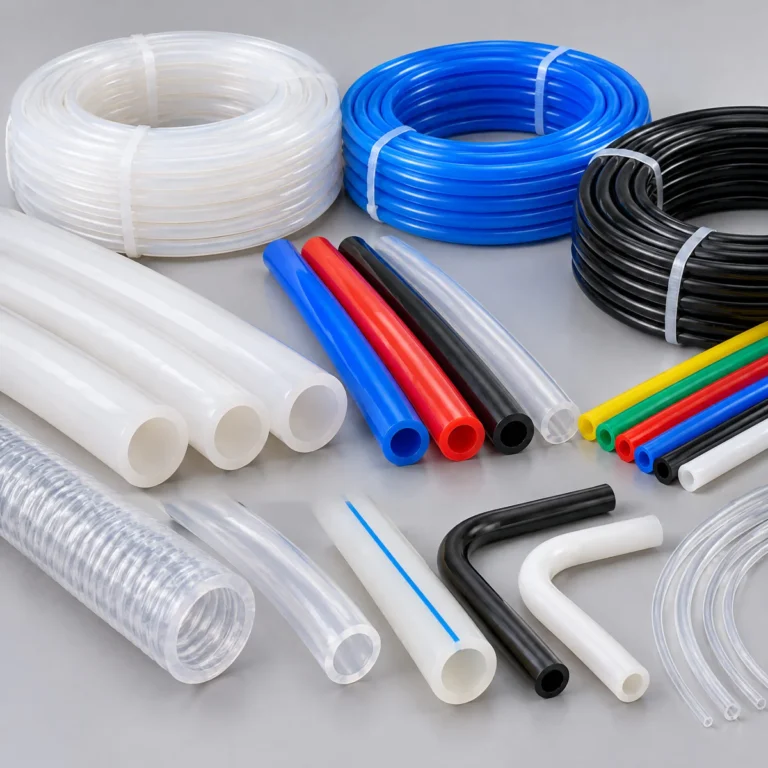
This video shows QTech-Machinery’s complete nylon tube extrusion line running after installation and commissioning. The line includes an SJ65/28 single screw extruder, customized tube die, vacuum calibration tank, immersion cooling tank, servo belt haul-off, rotary flying knife cutter, conveyor, and automatic collection system. Viewers can see the full production process from nylon material plasticizing to tube forming, cooling, traction, online cutting, and finished tube collection. It is a practical reference for manufacturers looking for nylon tube extrusion equipment, PA tube production lines, or automatic plastic tube cutting solutions.
Watch Video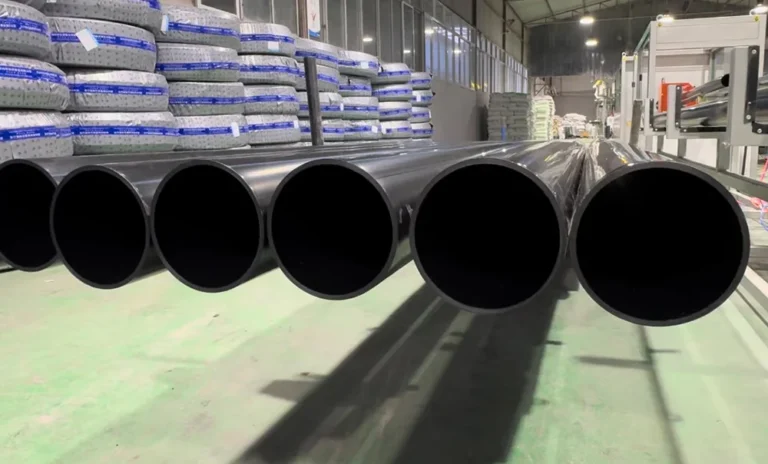 1:00
Machine Testing · Φ20–Φ110 mm HDPE Pipe Extrusion Line
Watch this video to see a complete Φ20–Φ110 mm HDPE pipe extrusion line supplied by QTech-Machinery for PE100 water supply pipe production. The line includes automatic feeding, SJ75/33 extrusion, color stripe co-extrusion, vacuum calibration, spray cooling, servo haul-off, cutting, winding, and stacking. It is a practical reference for customers looking for a reliable HDPE pipe extrusion line manufacturer in China.
Watch Video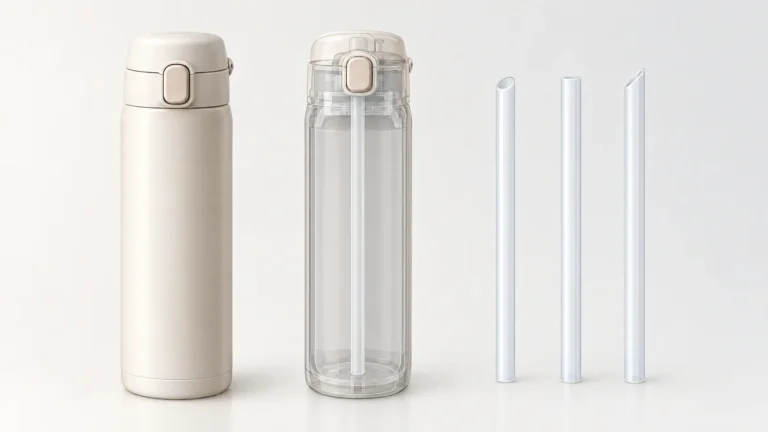 0:56
Machine Testing · Tumbler Straw Extrusion Line
Watch QTech-Machinery’s tumbler straw extrusion line for THERMOS, producing LLDPE and PCT reusable straws with automatic feeding, extrusion, cooling, servo cutting, chamfering, and V-shape opening.
Watch VideoTechnical Articles
Buying Guides · Oct 29, 2026
What machine is used to produce nylon tubes or PA tubes? Nylon tubes and PA tubes are produced by a complete nylon / PA tube extrusion line, not by a single standalone machine. A professional production line normally includes material drying and feeding, a single screw extruder, customized tube die, vacuum calibration tank, cooling tank, […]
Read Article
Buying Guides · Oct 24, 2026
What machines are included in a complete HDPE pipe extrusion line? A complete HDPE pipe extrusion line is not just one extruder. It is a coordinated production system that includes material feeding, drying, extrusion, co-extrusion, die tooling, vacuum calibration, cooling, haul-off, cutting, winding or stacking, electrical control, spare parts, and technical documents. For manufacturers planning […]
Read Article
Buying Guides · Oct 30, 2026
How to choose the right tumbler straw extrusion line? Choosing the right tumbler straw extrusion line is not only about buying an extruder. It is about matching material, straw size, output, cooling, cutting, finishing, automation, and supplier support with your real production needs. For reusable tumbler straw production, especially for drinkware brands, the line must […]
Read ArticleNeed an answer for your own material or product? Ask Maggie directly.
That depends on the screw, temperature range, feeding arrangement and tooling. List the required materials and identify which changes between runs are acceptable.
No. Motor power is one specification. Screw design, material behavior, die resistance and the required production result must also be considered.
Send the machine nameplate, material and output requirements, die connection drawing, center height, utility details and photographs showing the available space.
Tell us what you need to produce, the required output and whether this is a new installation or a replacement. Share the information you already have so we can review the next configuration details with you.
Have These Ready