Socket-forming process
Define the end shape and joint requirements before choosing tooling. A pipe outside diameter does not describe the complete socket geometry.
Define the socket drawing and heating cycle around the pipe you produce.
Compare SGK pipe belling equipment for socket-forming operations. Specify pipe material, diameter, wall thickness, socket geometry and the production sequence.
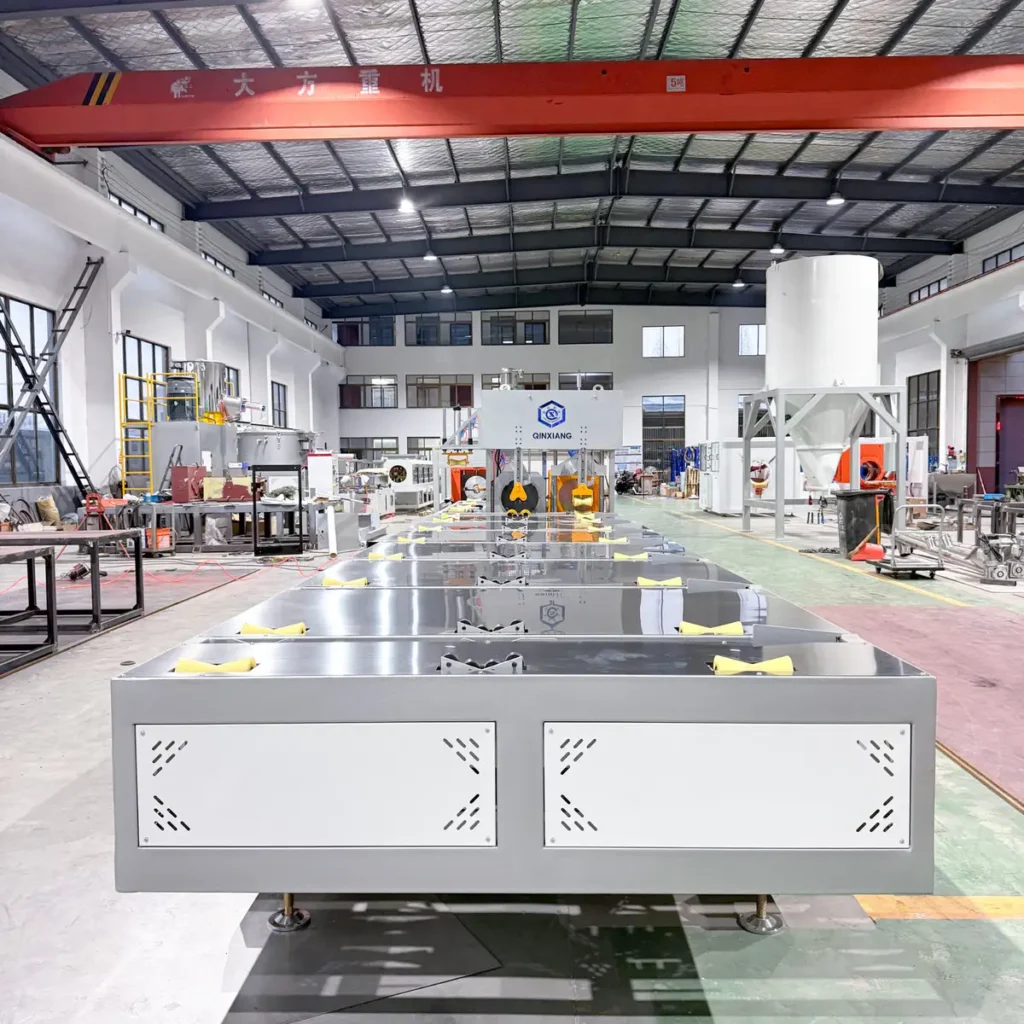 SGK Series
Series
SGK
Models in comparison
2
Machine Type
Pipe Belling
The SGK pipe belling machine forms a socket at the end of a pipe using a defined heating and forming sequence. Selection should begin with the pipe and socket drawing, because the joint design sets the dimensions that must be formed and inspected.
Use the model table to identify a possible size range, then confirm the tooling and operating arrangement for your material and pipe wall. The required throughput must be evaluated against the full heating, forming, cooling and handling sequence.
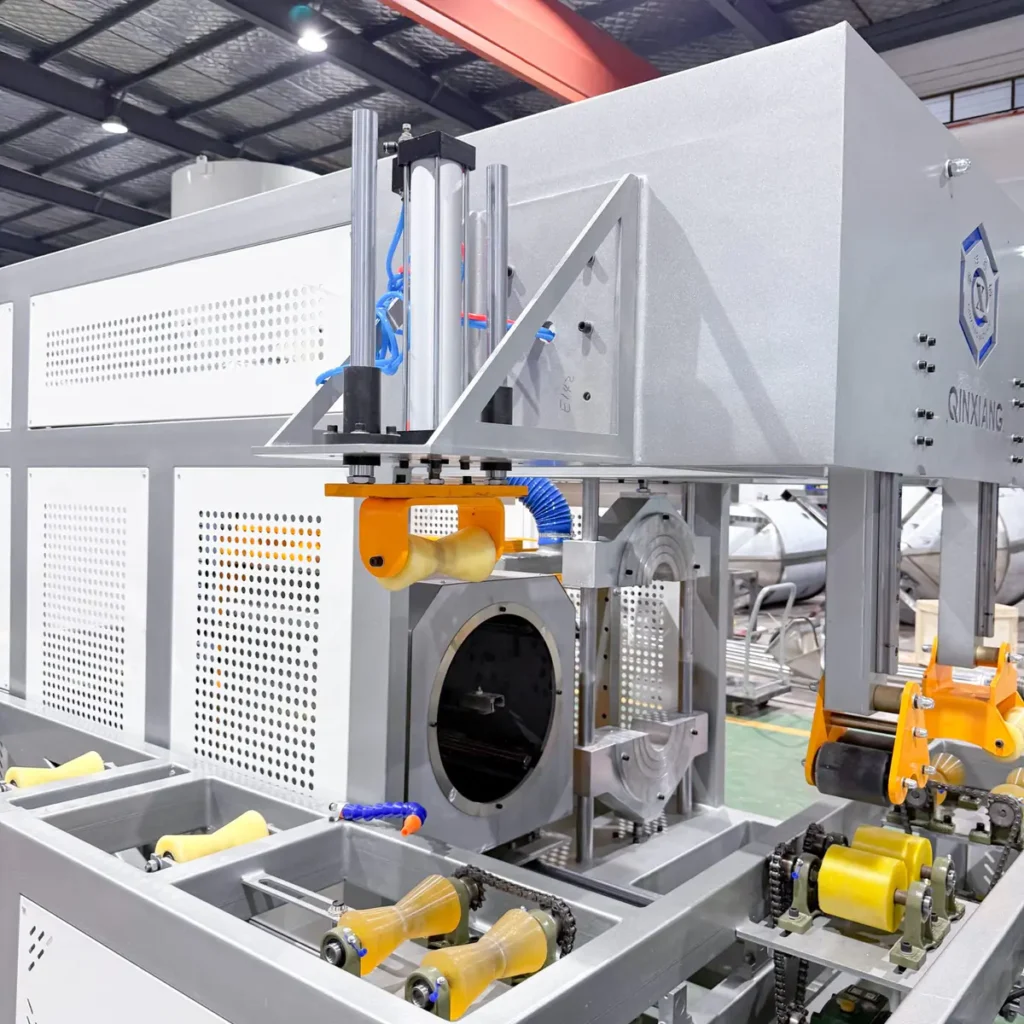
Compare the listed models against your material, product dimensions and operating requirements.
| Parameter | SGK-250 | SGK-315 |
|---|---|---|
| Pipe diameter range mm | 50–250 | 160–315 |
| Overall dimensions (catalog) mm | 7212×1320×1900 | 7500×1800×2500 |
| Weight (catalog) kg | 4000 | 4500 |
| Cooling method (catalog configuration) | Air cooling | Air cooling |
| Control (catalog configuration) | Siemens PLC | Siemens PLC |
Diameter range, dimensions, weight, air cooling and Siemens PLC are catalog-listed configurations. Confirm the final machine specification for your pipe material, socket drawing and production requirements.
Define the end shape and joint requirements before choosing tooling. A pipe outside diameter does not describe the complete socket geometry.
Compare the listed SGK configurations and their dimensional ranges. Confirm the applicable range with the actual pipe and socket specification.
Specify the heating arrangement, forming tool and cooling method for the intended material. Record these requirements in the machine scope.
Send your material, product size and output target. We shortlist the model and the options with you before quotation.
Provide the pipe material, wall thickness and joint drawing for the proposed belling operation.
Review how cut pipes are transferred, positioned and removed, including whether the belling operation is linked to extrusion or handled separately.
Settle these points first and the quotation you receive can be compared line by line.
Specify socket depth, inside dimensions and any sealing or joining features. Identify the drawing and inspection method used for acceptance.
State the desired production rate for a named pipe. Heating and cooling time, tool design and handling affect the actual cycle.
These machines show the position in a typical line, not a confirmed match. Interfaces are checked for each configuration.
Complete Lines Using This Machine
Points worth writing into the order, so the run test before shipment proves what matters for your product.
Measure the agreed socket dimensions and assess shape, surface and fit using the approved pipe and joint specification.
Review repeated heating, forming, cooling and transfer cycles using the named pipe at the agreed operating conditions.
Need an answer for your own material or product? Ask Maggie directly.
Diameter helps shortlist the equipment, but material, wall thickness, socket geometry, pipe length and production rate are also needed.
Tooling must match the required socket. List each size and joint design so the necessary tool sets and changeover method can be defined.
Provide cut-pipe lengths, discharge height, transfer method and control details. The handling sequence needs to be checked between the two machines.
Tell us what you need to produce, the required output and whether this is a new installation or a replacement. Share the information you already have so we can review the next configuration details with you.
Have These Ready