Small-batch preparation
Specify the quantity needed for testing and the material available for each trial. Consider material recovery and the amount left in the equipment.
Prepare test batches with a defined procedure and a useful sample record.
Plan a laboratory mixer for small-batch formulation work. Specify sample quantity, ingredient properties, process variables, cleaning and the evaluation method.
Mixing & Feeding
Typical Uses
Photos, drawings and a run video of this machine are sent with your configuration.
A laboratory mixer supports formulation development and small-batch material trials. Its compact arrangement is intended for experimental material preparation. The appropriate setup depends on the material question being investigated and the procedure used to compare results.
Begin with the batch quantity and formulation, then define which operating conditions must be controlled or recorded. A clear test procedure makes samples useful for comparison and for later work on production equipment.
Specify the quantity needed for testing and the material available for each trial. Consider material recovery and the amount left in the equipment.
List the mixing sequence and process measurements needed for the experiment. Confirm the corresponding equipment functions in the configuration.
Review access, cleaning and residue control where successive trials use different ingredients or colors.
Send your material, product size and output target. We shortlist the model and the options with you before quotation.
Compare test batches prepared under a consistent loading and mixing procedure.
Prepare material for a subsequent extrusion trial when the formulation-development route requires a separate mixing step.
Settle these points first and the quotation you receive can be compared line by line.
State what the experiment needs to demonstrate. The necessary measurements and sample quantity follow from that purpose.
Define ingredient preparation, loading order and sample collection so that changes in results can be interpreted correctly.
Related Parts To Identify
These part families are used on this type of machine. Send the nameplate, a photo or the drawing so the size and version can be matched.
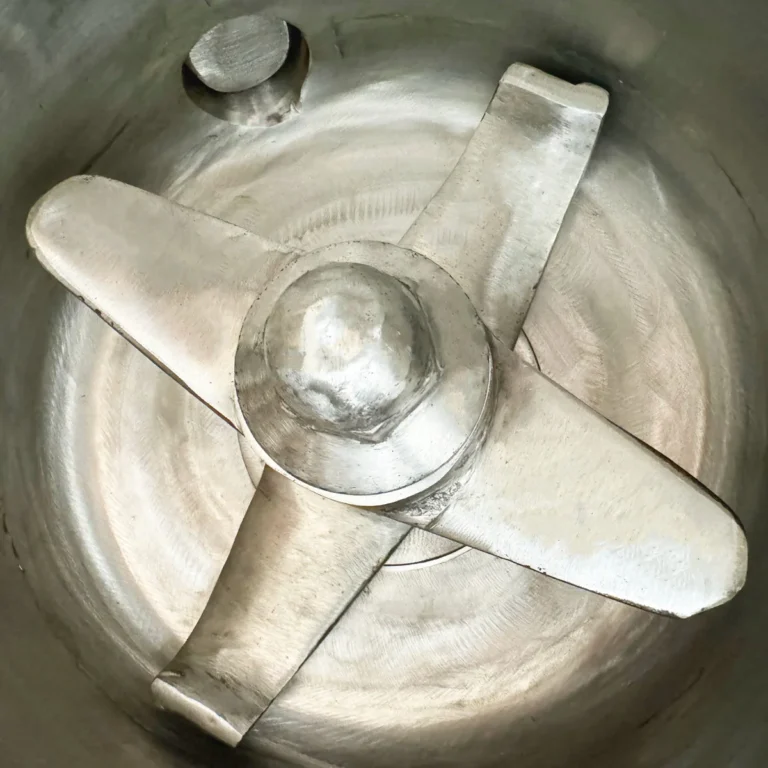
Part Family
Match replacement mixer blades to the shaft, blade arrangement and vessel geometry of your machine. Send the mixer identification, blade drawing and material information to define the correct replacement scope.
Identify The PartPoints worth writing into the order, so the run test before shipment proves what matters for your product.
Run the agreed formulation and verify that the equipment supports the required sequence and measurements.
Check the practical steps for recovering material and preparing the machine for the next batch.
Need an answer for your own material or product? Ask Maggie directly.
Start with the quantity needed for analysis or downstream trials, then consider material availability, working fill and recovery from the machine.
They provide a development basis, but larger equipment can differ in mixing action, heat transfer and cycle behavior. Production conditions need their own review.
Keep the formulation, ingredient preparation, loading order, selected operating conditions, mixing sequence and sample-identification information.
Tell us what you need to produce, the required output and whether this is a new installation or a replacement. Share the information you already have so we can review the next configuration details with you.
Have These Ready