Defined experimental purpose
Use the machine to investigate a specific processing question, such as formulation behavior or the effect of operating conditions. Establish which variables must be recorded.
Build a practical test setup around the material questions you need to answer.
Plan a laboratory extruder for material development and small-batch trials. Define the sample form, process measurements, die and downstream test equipment.
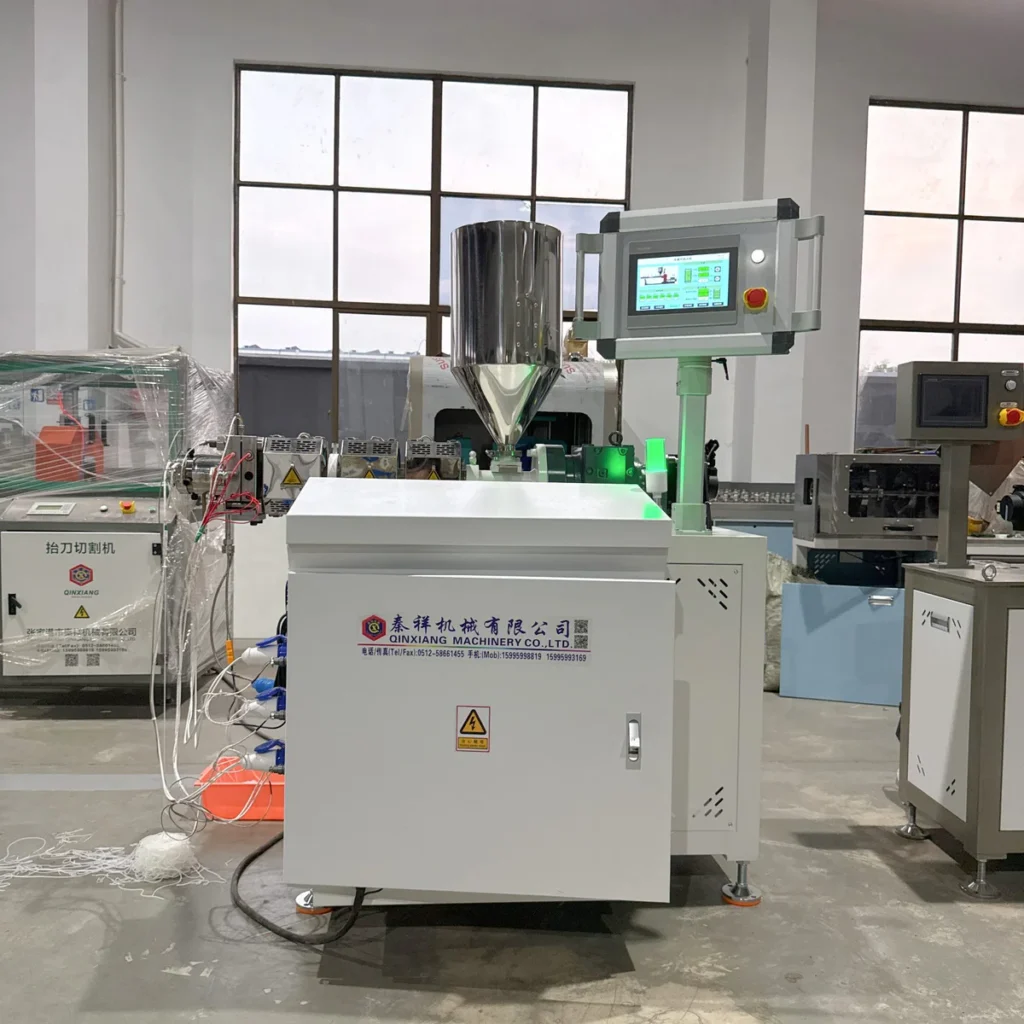
A laboratory extruder supports material development by allowing you to examine processing behavior in a controlled extrusion setup. Experimental extrusion allows small batches to be evaluated while selected process conditions are adjusted. The useful configuration depends on whether you need a material sample, an extruded section or evidence for a later production trial.
Start with the purpose of the experiment. Define the materials, sample quantity, measurements and changeover frequency before selecting the extrusion unit. A laboratory machine should fit the test method as well as the available laboratory space.
Use the machine to investigate a specific processing question, such as formulation behavior or the effect of operating conditions. Establish which variables must be recorded.
Specify the die and downstream handling needed to produce a usable sample. An extrusion unit alone does not define the final sample geometry.
Consider loading, material recovery, cleaning and the transition between formulations. These practical tasks influence the repeatability and time required for a trial.
Send your material, product size and output target. We shortlist the model and the options with you before quotation.
Compare named formulations under a consistent procedure. Keep the feed preparation and operating record with each sample.
Explore whether a material can be formed into the intended sample before defining a larger production configuration.
Settle these points first and the quotation you receive can be compared line by line.
List the temperatures, speeds, pressures or other values required by the experiment. Confirm the measurement points and recording method in the configuration.
Laboratory results inform the next stage of development. Scaling to production requires a further review of screw behavior, residence time, tooling and downstream equipment.
Points worth writing into the order, so the run test before shipment proves what matters for your product.
Use a written material preparation and operating procedure, and compare samples produced under the same settings.
Verify that the selected instruments and records capture the variables needed for the experiment.
Need an answer for your own material or product? Ask Maggie directly.
State the test purpose, material list, sample quantity and form, required measurements and expected changeover frequency. These inputs determine the useful configuration.
It can support process development, but direct scale-up needs further engineering. The production screw, tooling and downstream equipment introduce additional variables.
The die and any downstream equipment should be itemized for the intended test. Define the sample first so the complete experimental setup is clear.
Tell us what you need to produce, the required output and whether this is a new installation or a replacement. Share the information you already have so we can review the next configuration details with you.
Have These Ready