Plastic Extruder Components, Part By Part
Screw and barrel, gearbox, main motor, heating and control system. Each one has a job in turning resin into a steady melt, and each one shows up in your kg/h, your melt temperature and the pipe that leaves the die. This page walks through what every part does, what to check when you buy or replace it, and which readings tell you it has started to slip.
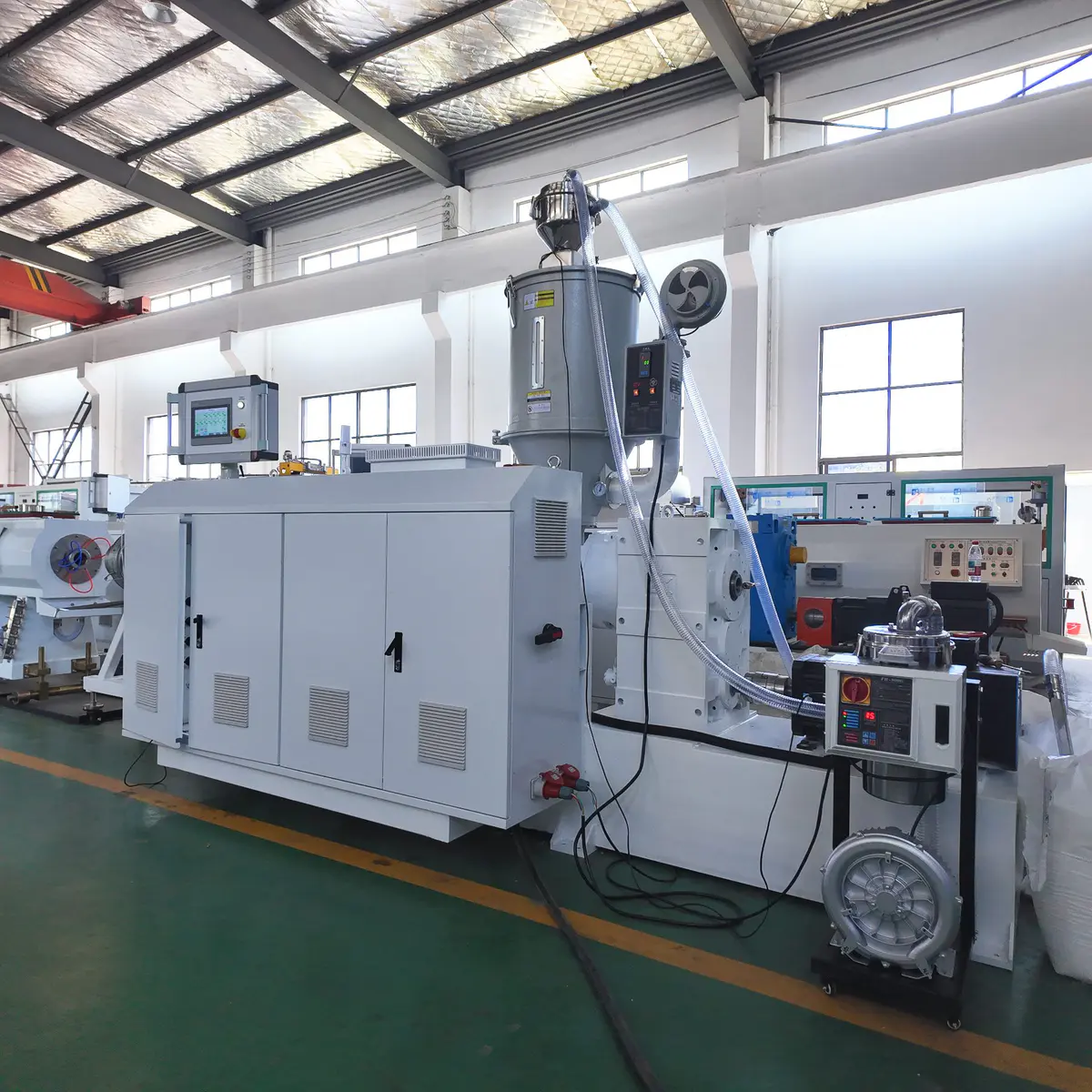
Screw Diameter
45mm To 120mm
The span of our pipe extruders, picked from your pipe range and kg/h.
Output
300 To 600 kg/h
Where a given machine lands depends on resin, formulation and pipe size.
Screw Types
Single, Twin, Co-Extruder
Single screw for PE and PPR, twin screw for PVC dry blend.
Before Shipment
Run Tested, Readings Kept
Drive, heating and controls checked, with the results written down.
Find The Component You Are Checking
Start from the part in front of you. Each card opens one component: what it does to the melt, how it ties into output and pipe quality, and what to look at before you sign an order or change a worn piece.
Parts At A Glance
How the six systems connect
Screw And Barrel
Zones, screw types, wear
Gearbox And Main Motor
Torque, speed, energy
Heating And Cooling
Zones, heaters, thermocouples
Control System
Cabinet, PLC, HMI, signals
Output And Quality
Symptoms traced to parts
Buying Or Replacing
What to send, what we check
FAQ
Wear, zones, brands, spares
Component Inquiry
Send your question to Maggie
Six Systems Turning Resin Into Melt
Follow the material from the hopper to the die and the extruder sorts itself into six systems. Only the screw and barrel touch your resin. The other four drive, heat, cool and watch them, and when one of the six is undersized or worn, the rest cannot cover for it for long.
Schematic only, not to scale. Barrel shown cut away so the screw is visible. Swipe sideways to see the whole machine.
Feeding
Hopper, loader and feed throat hand pellets, powder or dry blend to the screw at an even rate. Uneven feed shows up later as surging melt pressure.
Screw And Barrel
Carry the resin forward, squeeze it, melt it and push it to the die at a pressure that stays put.
Gearbox
Steps motor speed down to screw speed and carries the torque and thrust that the melt pushes back with.
Main Motor And Drive
The motor supplies the power, and the drive keeps screw speed where you set it while the load moves.
Heating And Cooling
Heater bands, thermocouples and blowers hold every barrel zone on its set point through a long run.
Control System
The cabinet, PLC and touch screen pull temperatures, speed, load and alarms into one place.
All six systems are sized from three inputs, the resin you run, the pipe range you make and the kg/h you need, and the screw is the first part those three decide.
The Screw Decides How Your Resin Melts
Screw and barrel are the only parts of the extruder in contact with the resin, so they set melt quality, melt temperature and the pace at which the unit wears. Every other component on the machine exists to support them.
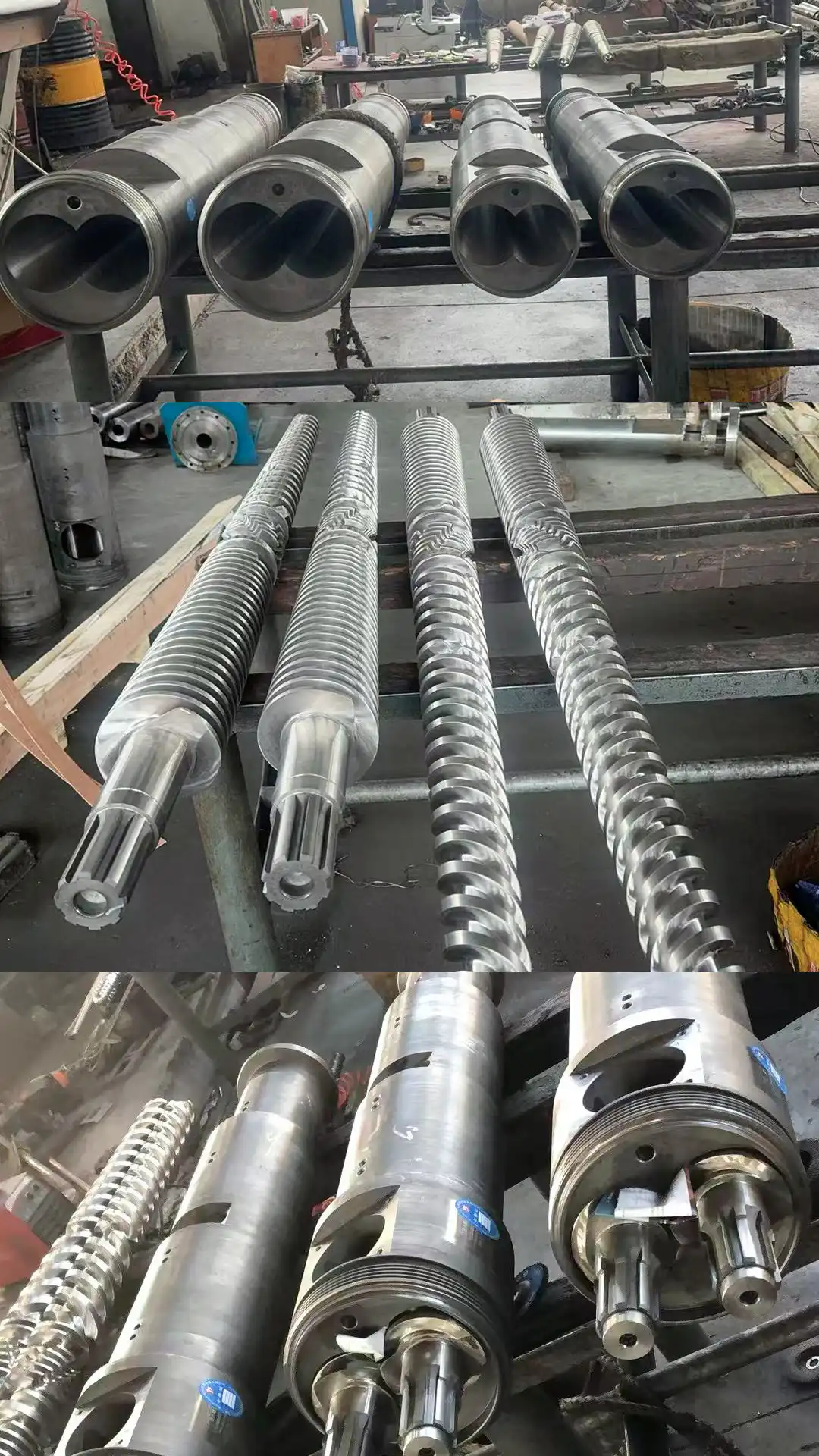
Three Zones Along One Screw
Feed Zone
Deep flights take in pellets, powder or dry blend and move them forward as solids. If intake is uneven here, it surfaces further down as pressure that rises and falls.
Compression Zone
The channel gets shallower, the resin is pressed against the hot barrel wall and melts. Screw shear and heater input have to be balanced in this stretch.
Metering Zone
Shallow, even flights hand a uniform melt to the die at steady pressure and temperature. A stable pipe wall starts here, not at the die bolts.
Which Screw For Which Pipe
HDPE, PE, PPR and PE-RT pipe. Pellet feed, stable melting and continuous output.
PVC and UPVC pipe from dry blend, where feeding and plasticizing need tight control.
Higher throughput PVC, or formulations a conical machine cannot keep steady.
A second, separately controlled melt for a color stripe or an added layer.
When You Buy
Five Points To Settle First
- Screw type and flight geometry for your resin and the form it arrives in
- Diameter and L/D ratio chosen for your pipe range and target kg/h
- Screw and barrel steel matched to the wear your formulation causes
- Surface treatment or wear protection when CaCO3 filler or regrind is in the mix
- Heating and cooling layout along the barrel for your full operating range
When It Is Running
Signs The Unit Needs Attention
- Output falls while screw speed stays where it was
- Melt pressure and temperature get harder to keep steady
- Plasticizing turns uneven and the pipe surface shows it
- Energy per kilogram creeps up on the same pipe
No honest supplier can give one wear life for every plant. It moves with resin, filler, recycled share and running hours, so judge the unit by measured output and condition rather than by the calendar.
A well matched screw still needs enough torque behind it at full rate, which is the job of the gearbox and the main motor that turn it.
Torque Turns The Screw, Not The kW Rating
The drive train has one task: keep the screw at the speed you set, under the load your formulation creates, shift after shift. The motor power printed on a quotation says very little about whether it will.
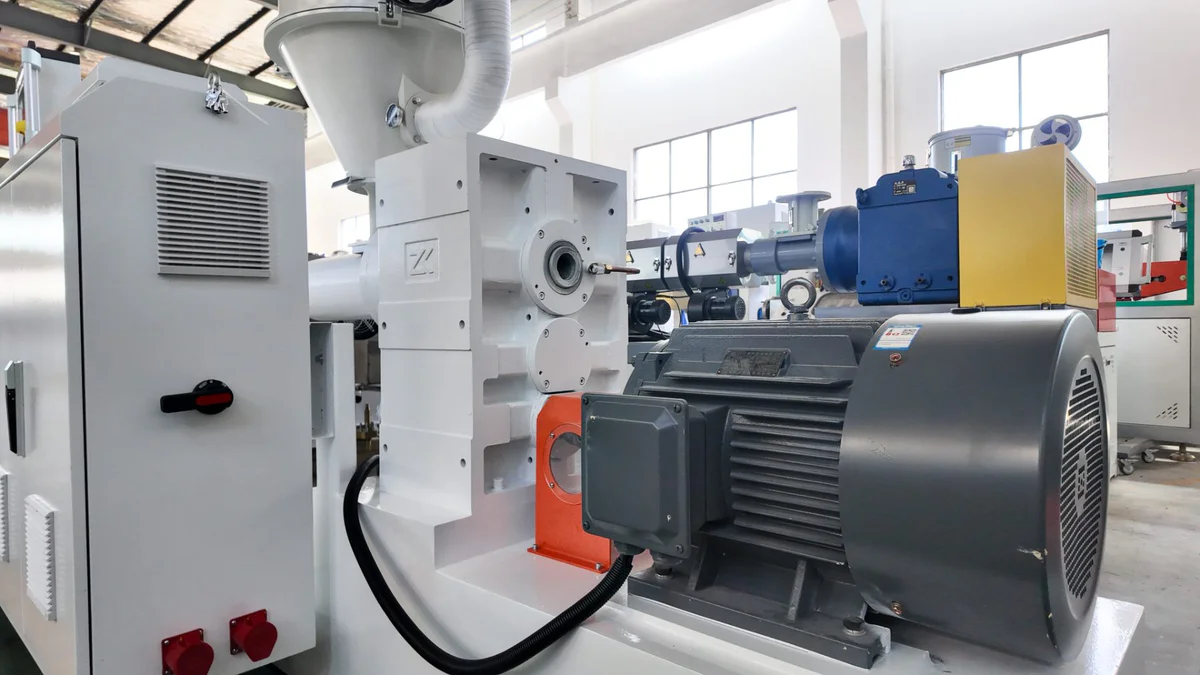
Sized To The Load You Run
We size the motor from the processing load, the screw speed and the output you need. A rating beyond that buys idle capacity and a larger electricity connection, not extra pipe. The drive then holds screw speed steady as the load moves across your operating range.
Check On The Quotation
- Rated power, and the production condition it was sized on
- Drive rating, not only the brand on its label
- A speed range that covers your slowest and fastest pipe
- Motor and drive built for your supply voltage and frequency
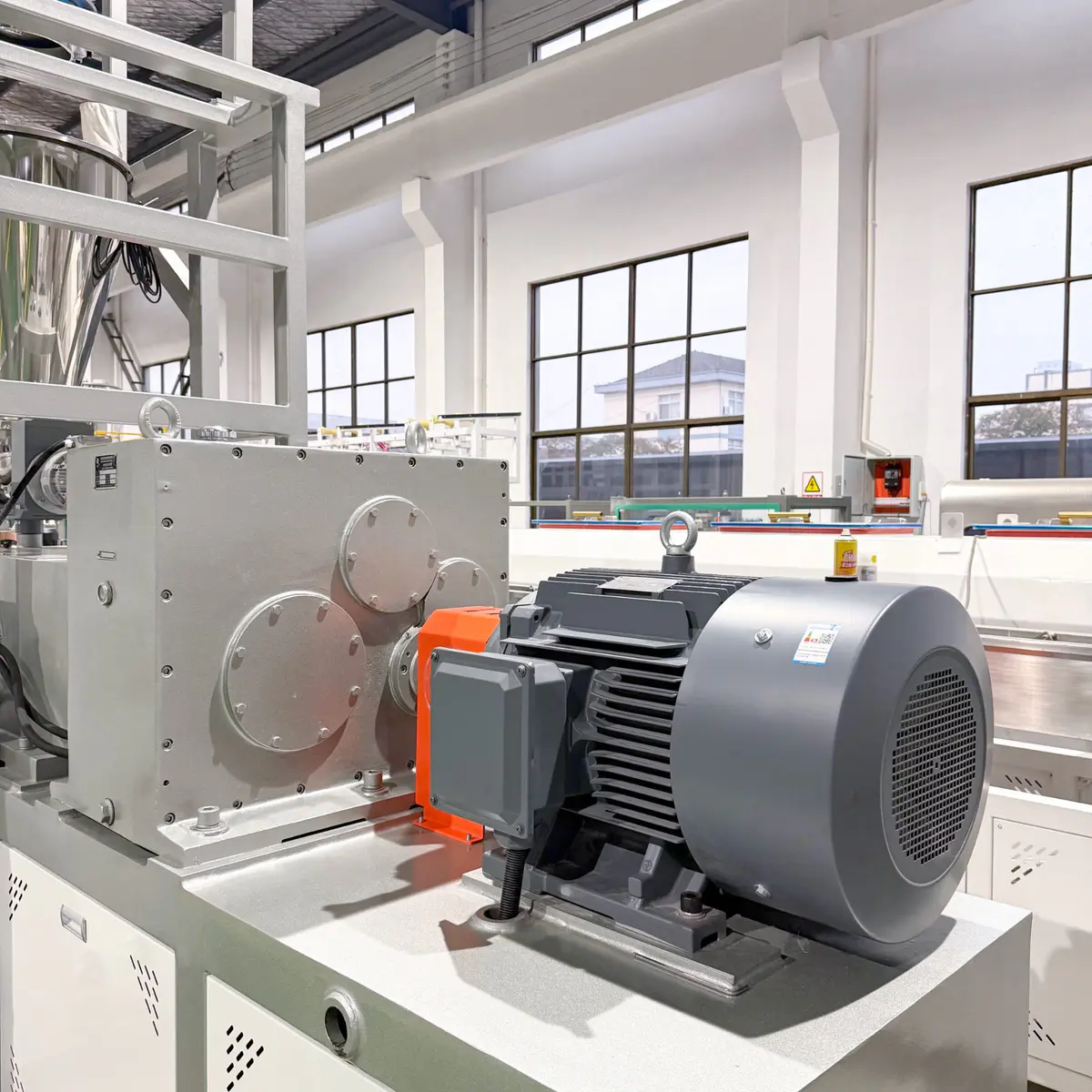
Built For Continuous Torque
The gearbox brings motor speed down to screw speed and carries the full torque of the process, plus the axial thrust from the screw. We pick it from the screw layout, the torque your process will demand, the speed band it runs in, and how it is lubricated and cooled. With a heavy formulation, it deserves as much attention as the motor brand.
Check On The Quotation And At The Run Test
- Torque rating against your screw and formulation
- Lubrication method and oil cooling for round the clock running
- Rotation direction, noise and oil leaks during the test run
- Seals and lubrication parts named on your spare parts list
Energy
Compare kWh Per Kilogram, Not Motor kW
Motor kW is installed capacity. Your cost sits in the kilowatt hours behind each kilogram of good pipe, and that figure only compares fairly when the material, the output and the measuring boundary are stated with it.
Ask Which Boundary Was Measured
Torque gets the resin moving, but temperature decides whether it melts cleanly, and that is set zone by zone along the barrel.
Every Barrel Zone Has To Hold Its Set Point
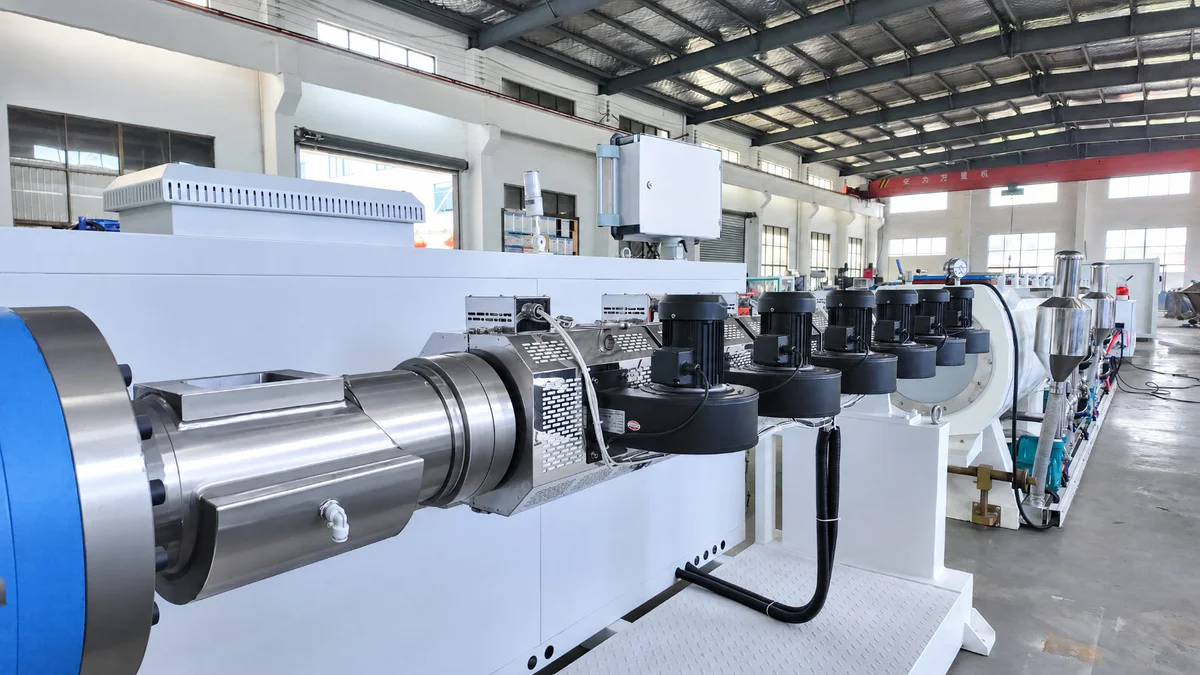
The barrel is divided into control zones. In each one a heater band adds heat, a thermocouple reads it and a blower takes heat away when screw shear pushes the zone over. Zones that hold give you a steady melt; zones that drift give you a drifting pipe.
One Control Loop Per Zone
Heater Band
Brings the zone up to temperature at start-up and tops it up while the line runs.
Thermocouple
Reads the zone and reports it. The controller can only be as accurate as this probe and its seating.
Controller
Compares the reading with the set point on the touch screen and decides whether to heat or cool.
Cooling Blower
Pulls out shear heat so the zone does not overshoot once the screw is at full speed.
More heater power is not the aim. What you want is a zone that stays where it was set from the first hour of a run to the last.
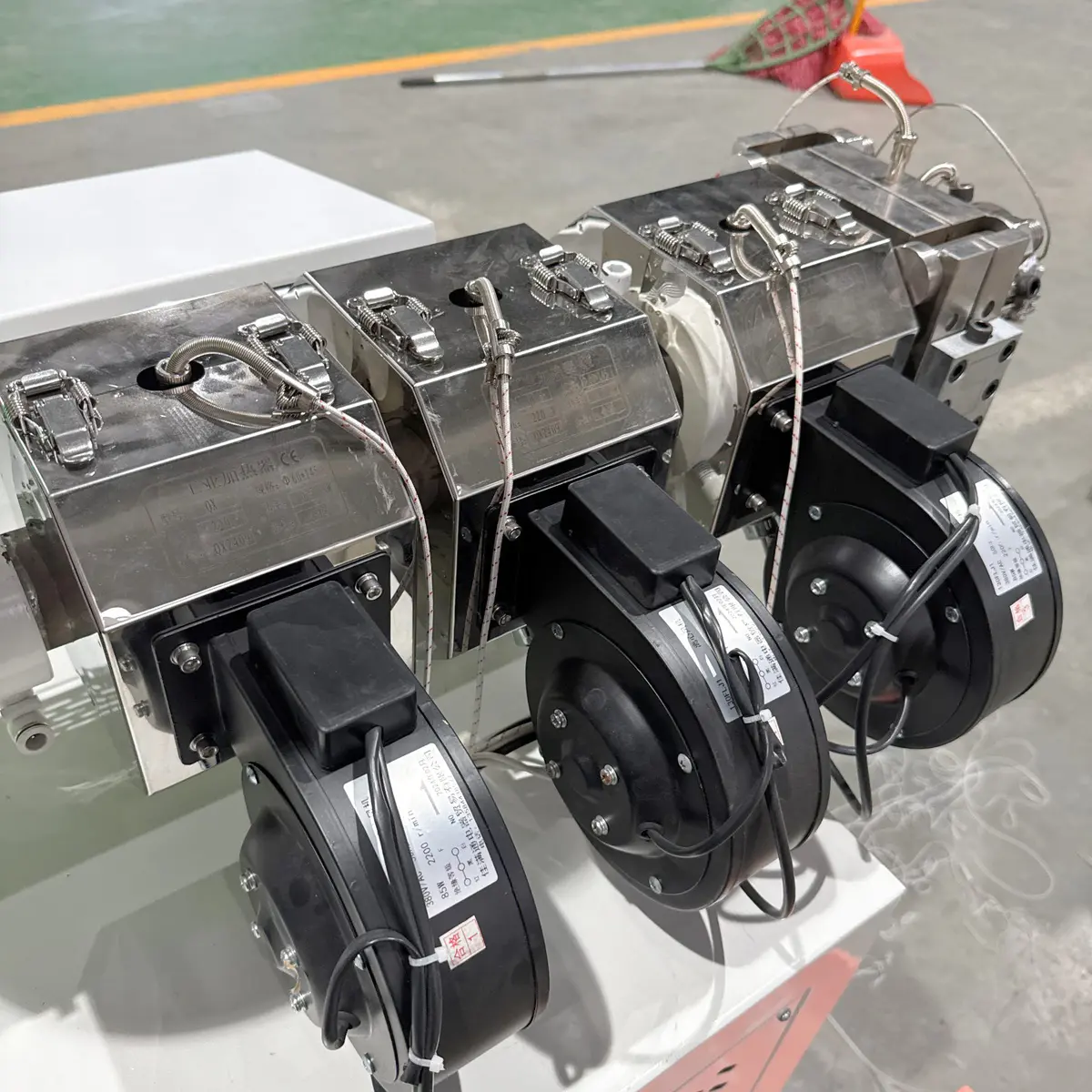
Heater Bands
A Zone That Will Not Hold
A failed band, or one that has lost contact with the barrel, shows up as a zone that will not reach its value or keeps sagging below it. Wire the bands for your supply and keep spares for every size on the machine.
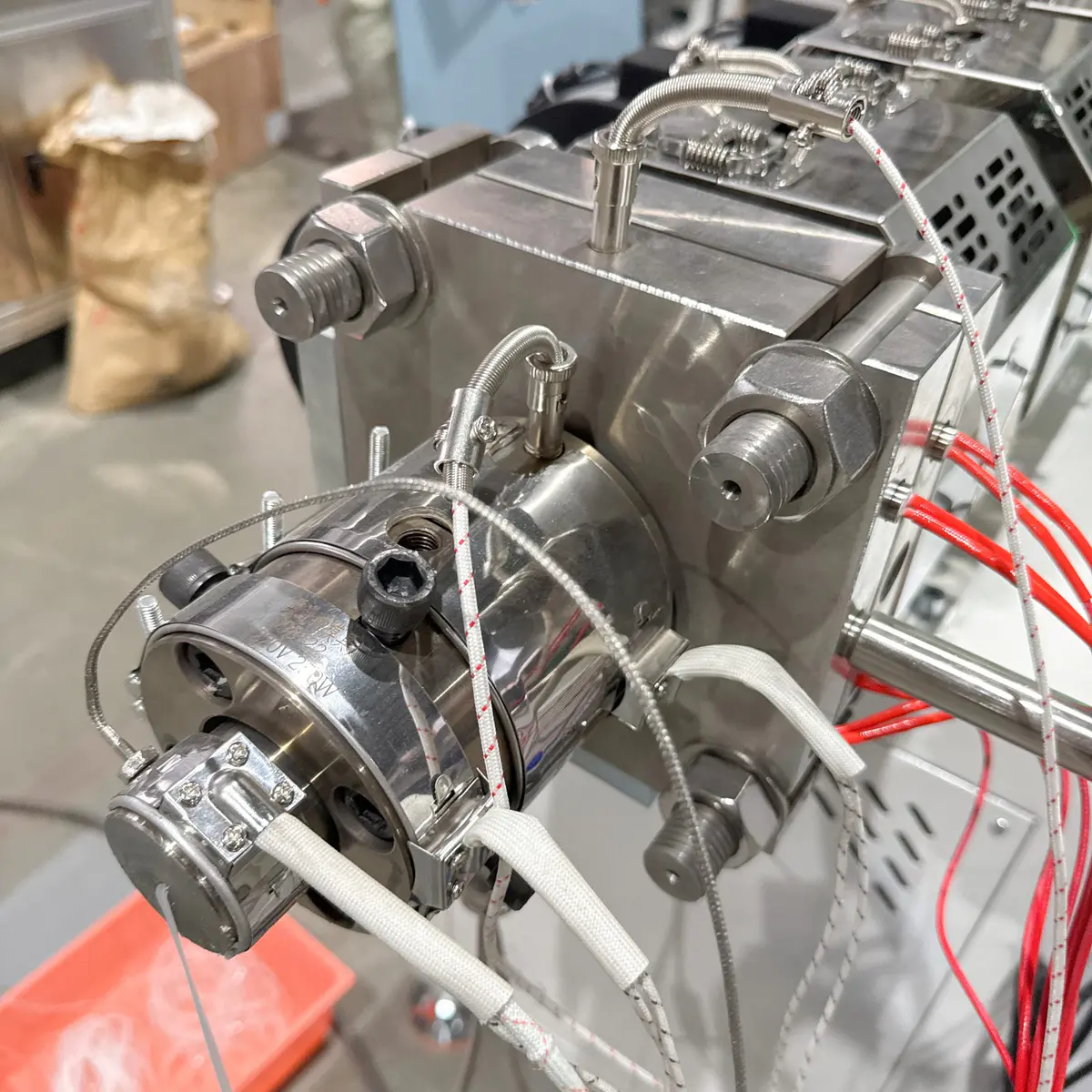
Thermocouples
The Number On The Screen
A loose, damaged or badly seated probe makes the screen look right while the barrel is not. The die head and adapter carry their own heaters and thermocouples too, so count them in the zone list.
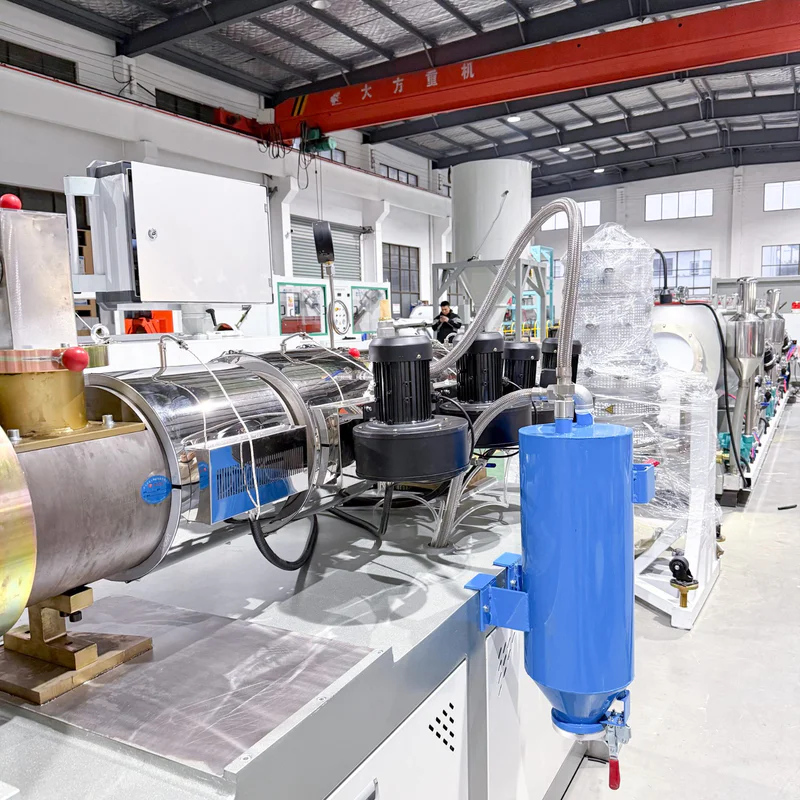
Cooling And Venting
Heat Out, Gas Out
Blowers or barrel cooling remove shear heat. Heat sensitive PVC can also call for screw cooling and a low shear screw so the melt does not yellow, burn or pick up black spots.
Where the material carries moisture or volatiles, a vented barrel with vacuum degassing goes on the machine because the process needs it, not to lengthen the spec sheet.
Zone temperatures, screw speed and motor load all end up on one screen, and the control system is what lets your operators catch a change before the pipe does.
Controls Your Operators Can Actually Read
The cabinet powers and protects the drive and the heaters. The PLC and touch screen show what the extruder is doing. Good controls do not run the process for you; they make a change visible while it is still small.
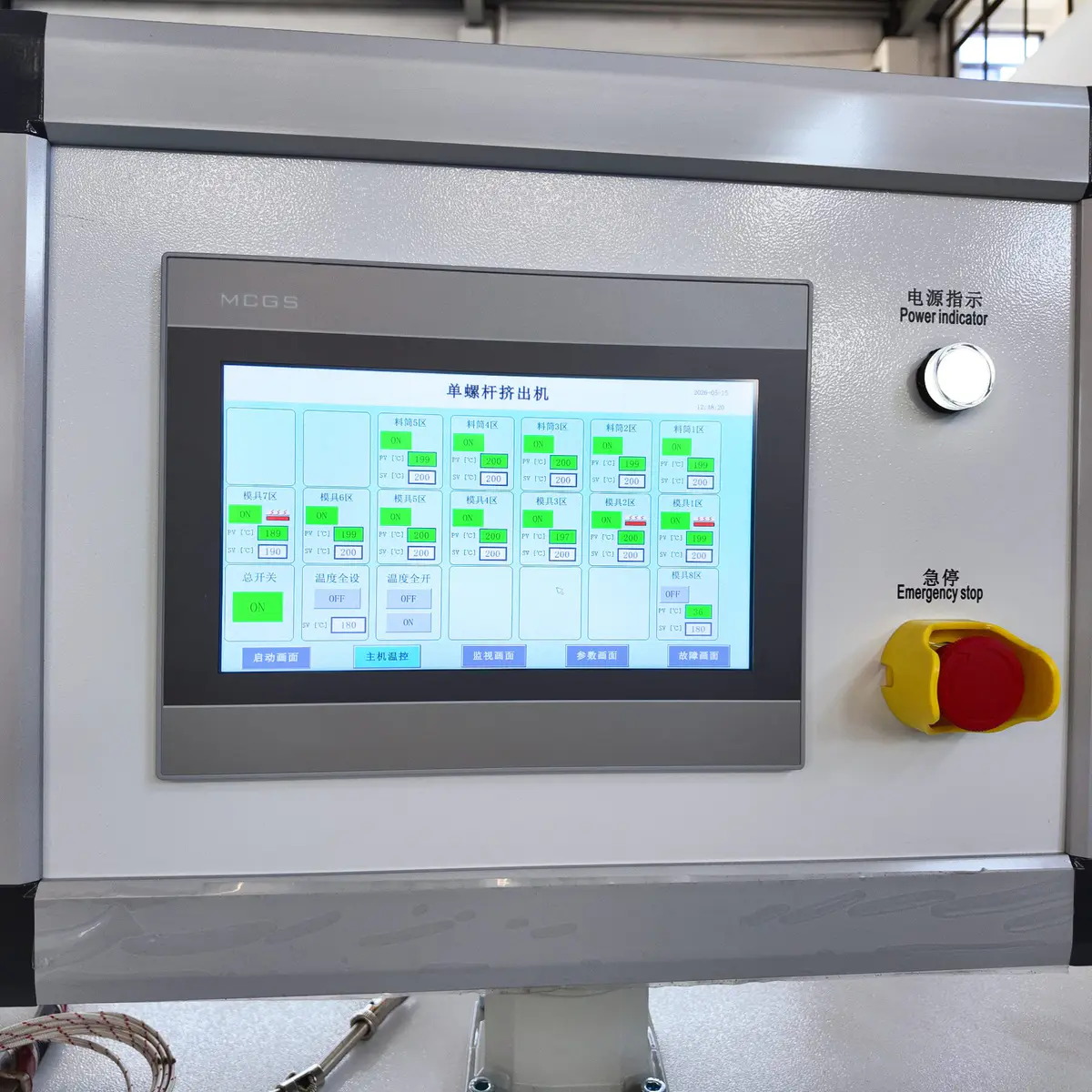
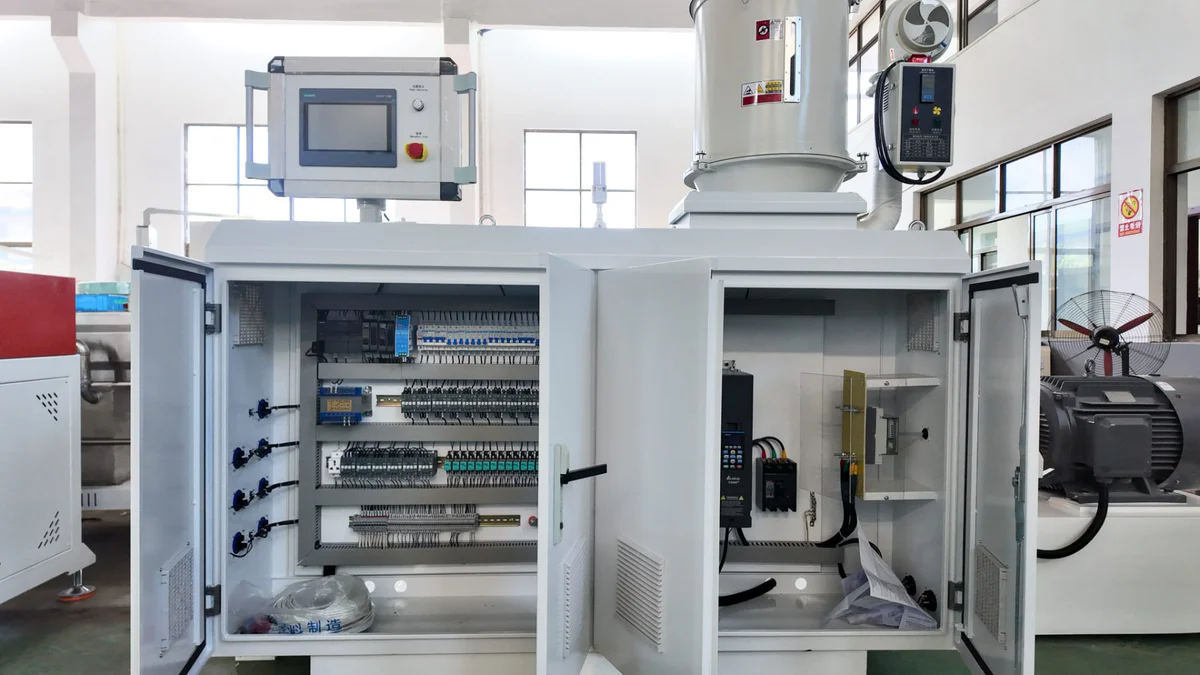
On The Touch Screen
Depending on the configuration, the PLC and HMI give your operators these readings and settings in one place:
Inside The Cabinet
Breakers, contactors, relays, temperature controllers and the motor drive, laid out so your electrician can trace and change a part on site. Everything is built for your supply, whether that is 380V 50Hz, 440V 60Hz or something else, and if local spare supply matters, name your preferred component brands before the cabinet is wired.
Talking To The Rest Of The Line
On a pipe line the extruder shares start and stop signals with the downstream machines, passes a speed reference to the haul-off and takes part in interlocks, so a fault stops the right machines. For a replacement extruder, send your existing electrical drawings so the signals match.
Checked Before It Ships
Wiring, buttons, temperature controllers, PLC, HMI and alarm functions are checked against the final configuration before the cabinet is packed.
Once you know what each part does, its readings start to explain your pipe, so the next section maps common line symptoms back to the component behind them.
Trace Pipe Problems Back To The Part
Most output and quality complaints start in one of the components above. The table pairs what you see on the line with the part to check first, so a fault gets fixed at its source instead of being tuned around.
| What You See | Check First | Then Look At |
|---|---|---|
| Output drops at the same screw speed | Screw and barrel wear | Feeding, a change in resin or filler |
| A zone will not reach or hold temperature | Heater band, thermocouple | Controller output, wiring, blower |
| Melt pressure surges, wall thickness wanders | Feeding stability, screw design | Temperature control, die resistance |
| PVC pipe yellows, burns or shows black spots | Zone temperatures and shear | Screw cooling, residence time |
| Bubbles or a rough pipe surface | Moisture or volatiles in the material | Venting and vacuum degassing |
| Motor load runs high or the drive trips | Drive sizing against the formulation | Filler level, temperature profile |
| New noise or heat at the drive end | Gearbox lubrication and bearings | Coupling alignment, motor fan |
Swipe sideways to read every column.
Keep A Baseline
Readings That Settle The Argument Later
Record these during the run test and file them. When the line behaves differently a year on, you compare against your own machine on its first day instead of a catalogue figure.
Facing one of these symptoms on a running line? Our technical support team covers screw selection, fault diagnosis and process settings.
Whether you are buying a new extruder or changing one worn component, the right details in the first message save a round of questions.
New Extruder, Or One Worn Component?
The two requests need different information. Pick the one that fits your situation and send what you already have; a partial list is enough to start, and we tell you which gaps actually matter.
Buying A New Extruder
The extruder gets sized from the pipe you want to sell, then matched to the die head and downstream machines.
- 1Resin, and whether it arrives as pellets, powder or dry blend
- 2Formulation, with any filler or recycled share
- 3Pipe diameter range and wall thickness or SDR
- 4Target output in kg/h
- 5Supply voltage and frequency at your plant
Replacing A Component
A replacement part has to fit the machine you own, so we work from what is on your floor rather than a catalogue.
- 1A clear photo of the machine nameplate
- 2Screw diameter and L/D, or the extruder model
- 3Photos of the part, fitted and removed
- 4A drawing, or measured dimensions where none exists
- 5What changed: output, temperature, noise or alarms
Before Any Extruder Ships
What Gets Checked On Our Floor
The machine is checked as a whole, while fixing anything costs only time. The spares packed with it normally include heater bands, thermocouples, seals, lubrication items and a handful of electrical parts, chosen from your configuration.
Mechanical Running
Screw rotation, noise and vibration
Heating Zones
Every zone heats and responds
Motor And Gearbox
Direction, noise and transmission
Control Cabinet
PLC, HMI, controllers and alarms
Material Trial
Where it is part of the agreed scope
Packing
Spare parts, manual and electrical diagram
Extruder Component Questions
The questions buyers and maintenance teams ask most about extruder parts. If yours is missing, ask Maggie and you get a direct answer.
Six systems: feeding (hopper, loader and feed throat), screw and barrel, gearbox, main motor with its drive, heating and cooling along the barrel, and the control system with cabinet, PLC and touch screen. On a pipe line the die head follows the barrel and is usually treated as a machine of its own.
Typical signs are falling output at an unchanged screw speed, melt pressure and temperature that are harder to keep steady, uneven plasticizing on the pipe and more energy per kilogram. When the screw is pulled, measure flight diameter and barrel bore, and compare kg/h with the figures recorded when the machine was new.
HDPE, PE, PPR and PE-RT pipe normally run on a single screw extruder. PVC pipe made from dry blend runs on a twin screw: conical for most ranges, parallel where throughput or the formulation asks for more. The final pick follows your formulation, filler level, pipe range and target kg/h.
No. Output comes from the screw, the material and what the die and downstream machines can take. The motor has to cover the torque at your target rate with a sensible margin; beyond that, extra kW adds cost and no pipe. Compare energy as kWh per kilogram under stated conditions instead.
There is no single number. Zone count follows barrel length, screw design and how temperature sensitive your material is, and the die head and adapter add zones of their own. What matters is that each zone has its own heater, thermocouple and cooling, and holds its value through a long run.
Tell us before the cabinet is wired. Buyers often name brands they can buy locally for breakers, contactors, drives or temperature controllers, so a failed part can come from a nearby supplier instead of crossing a border.
Often, if the rest of the extruder is sound. Send the nameplate, screw diameter and L/D, photos and your current output. We confirm whether a component change solves the problem or whether the machine itself has become the limit, before anything is quoted.
A first spares order is normally built around heater bands, thermocouples, seals, lubrication items and a handful of electrical parts. The real list comes from your configuration, your material and your running hours, and we agree it with you before the machine is packed.
Mechanical running and screw rotation, every heating zone, motor and gearbox direction and noise, then the cabinet, PLC, HMI and alarms. A material trial follows where it is part of the agreed scope, and spare parts, manual and electrical diagram are checked at packing.
Send photos or a short video of the part, the zone temperatures, screw speed and motor load from the touch screen, and what changed. That usually separates a part failure from a settings problem. The technical support page explains how fault diagnosis works.
Ask Maggie About Your Extruder Parts
Name the component, the machine it sits on and what it is doing. A few lines and a nameplate photo are enough for a real answer, whether you are specifying a new extruder or keeping an old one running.

Maggie
Sales, QTech Machinery
Replies within 24 hoursYour message comes straight to me. Tell me which part you are looking at and what the machine is doing. If the question needs an engineer, I bring one in rather than guess.
What Comes Back To You
- A straight answer on the component, and whether it is the real cause
- The part details or the extruder configuration we would recommend
- A spare parts list built from your machine when you need one
Maggie
Sales, Zhangjiagang Qinxiang Machinery Co., Ltd.
Send Your Component Question
Four fields, three of them marked as required. Anything you do not know yet can wait.